Choosing the right Dry Container starts with the cargo, not the catalogue. A standard general-purpose unit suits cartons, furniture, and palletized goods that need weather protection. A high-cube model adds roughly one foot of interior height, useful for bulky but lightweight loads. That choice matters.
Shipping historian Marc Levinson, author of The Box, has shown how standardized containers reshaped freight movement. A fair paraphrase of his work is: “Standardized containers made cargo easier to transfer between ships, trains, and trucks.” The practical lesson is simple: matching the box to the load can make handling smoother. It cannot fix poor packing.
This guide compares standard, high-cube, open-top, open-side, and double-door containers. Each design solves a different access or loading problem. Open-top units can accommodate tall cargo loaded from above, while open-side doors help when wide items cannot pass through end doors. Double-door models allow access from both ends. Small details count. Check internal dimensions, door openings, payload limits, and cargo-securing points against the actual shipment. A container’s advertised size does not guarantee that every pallet will fit through its doors. Carriers and routes may also affect availability. I would not choose by price alone; that shortcut can create costly loading delays. The comparisons ahead offer a practical starting point, though specifications and condition still need checking before booking.
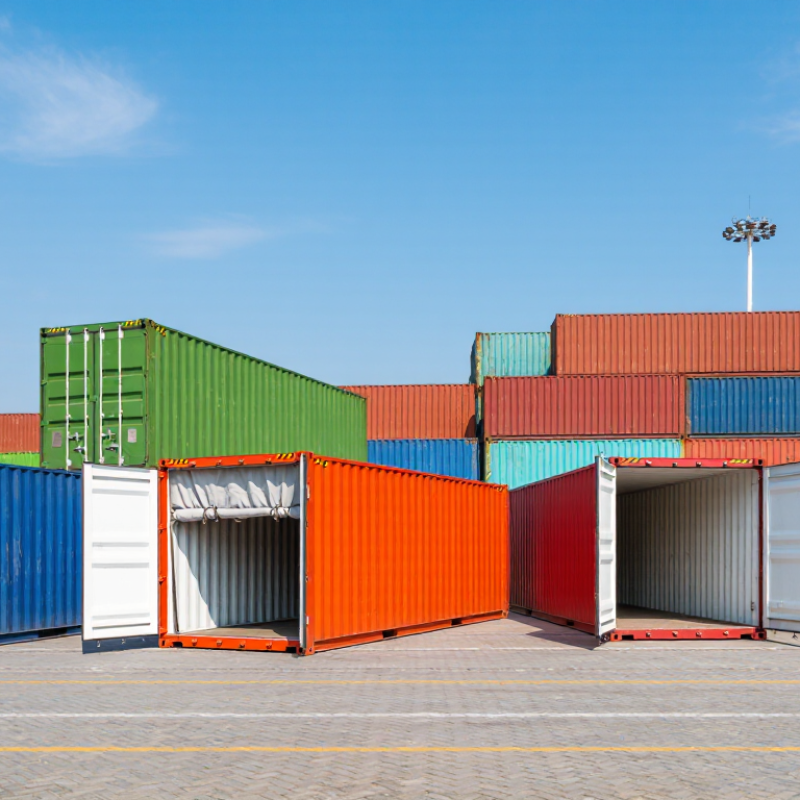
What Dry Shipping Containers Are and How They Work
A dry shipping container is an enclosed, non-refrigerated unit used to move goods that do not need active temperature control. Its rigid frame, corrugated metal walls, and lockable end doors protect cargo from weather and handling. The container’s corner fittings let equipment lift and secure it during transport. Standard and high-cube models are common choices. A high-cube unit has extra interior height, useful for bulky cartons or palletized loads. That extra space is not always the deciding factor.
Inside, cargo is arranged on a wooden or composite floor, then restrained to limit movement. Workers may use straps, blocking, or cushioning, depending on the load. Heavy items should be spread across the floor rather than concentrated in one small area. A careful load plan helps reduce shifting and damage, but real shipments are not always perfectly balanced.
Dry containers do not regulate humidity or temperature. Moisture from damp cargo, wet packaging, or temperature changes can still cause condensation inside. Before loading, check that the floor is dry, the doors close properly, and the cargo is protected from moisture. A quick visual check helps, but it cannot reveal every hidden risk. That matters for long journeys.
Standard Dry Containers: Sizes, Features, and Typical Uses
Standard Dry Containers: Sizes, Features, and Typical Uses
Standard dry containers carry packaged goods that need weather protection but no temperature control. The common 20-foot unit measures about 6.06 metres long externally; the 40-foot unit is about 12.19 metres. Both are roughly 2.44 metres wide and 2.59 metres high. A 40-foot high-cube container adds about 30 centimetres of height, useful for bulky cartons or light, voluminous cargo. Internal dimensions and payload limits vary by equipment, so these figures are a starting point, not a loading plan.
UNCTAD’s Review of Maritime Transport 2024 reports that containerized trade grew 0.3% in 2023, following a decline in 2022. That modest change still reflects a huge, varied flow of goods. In practice, 20-foot containers often suit dense cargo, while 40-foot units offer more floor space for lighter shipments. High-cubes help when cargo stacks tall. One detail is easy to overlook: door openings are smaller than the container’s full interior, and uneven loading can waste space.
Tips: Check the container’s actual dimensions, payload plate, and door opening before booking. Measure pallets and cargo with packaging included. A little spare space can be useful. Bulk estimates alone can mislead.
What Are the Top Dry Container Types for Shipping? — Standard Dry Containers: Sizes, Features, and Typical Uses
| Container Type |
Nominal Length |
Approx. Internal Dimensions (L × W × H) |
Approx. Capacity |
Typical Payload |
Features and Typical Uses |
| Standard Dry Container |
20 ft |
5.90 × 2.35 × 2.39 m |
About 33 m³ |
About 28,000 kg |
Compact general-purpose unit suited to dense, heavy cargo such as machinery, metal products, and bagged goods. Often practical when cargo weight is reached before container volume is filled. |
| Standard Dry Container |
40 ft |
12.03 × 2.35 × 2.39 m |
About 67 m³ |
About 26,500 kg |
General-purpose enclosed container for palletized goods, cartons, furniture, and other cargo that does not require temperature control. Offers roughly twice the floor length of a 20 ft unit. |
| High-Cube Dry Container |
40 ft |
12.03 × 2.35 × 2.69 m |
About 76 m³ |
About 26,000 kg |
Approximately 30 cm taller than a standard-height 40 ft container. The extra cubic space is useful for bulky, lightweight cargo such as packaged consumer goods, plastics, and furniture. |
| High-Cube Dry Container |
45 ft |
13.55 × 2.35 × 2.69 m |
About 86 m³ |
About 27,000 kg |
Provides additional length and height for high-volume, relatively lightweight cargo. Availability and acceptance can vary by route, vessel, terminal, and inland transport equipment. |
Note: Dimensions, capacity, tare weight, and payload are approximate examples. Actual specifications differ by container design and manufacturer; always check the unit’s data plate and confirm carrier, route, and local weight limits before loading.
High-Cube Dry Containers: Extra Height for Bulky Cargo
High-cube dry containers provide extra vertical space for cargo that is too tall or awkward for a standard dry container. They are commonly about one foot taller, though exact interior dimensions vary by container and manufacturer. That extra clearance can help with stacked cartons, tall machinery, or furniture protected by thick packing materials. Measure the actual cargo, including pallets and wrapping, before choosing a container.
The added height is useful. It is not extra payload capacity. A high-cube container may reach its weight limit before all its space is filled, so check cargo weight and distribution as well as volume. Leave room for safe loading and secure the load against movement; a few centimeters of clearance can make a difference when equipment lifts bulky items into place. Door openings may also be lower or narrower than the interior suggests. Check them separately.
In practice, a neat volume estimate can still be wrong. I would allow a little margin for irregular shapes, but too much unused space can raise shipping costs. High cubes suit light, bulky cargo best when its dimensions fit through the doors and the load can be secured properly. Sometimes a standard container is the better fit.
Specialized Dry Containers: Open-Side, Double-Door, and Half-Height Types
Open-side dry containers have doors along one long wall, creating a broad loading opening. This helps when pallets, machinery, or awkward bundles cannot turn easily through standard end doors. Forklifts can approach from the side. Still, the wider opening does not remove the need to distribute weight evenly and secure cargo against movement. Check door clearance and loading equipment before booking; small site constraints can erase the advantage.
Double-door containers open at both ends, allowing crews to load from one end and unload from the other. This can reduce reshuffling when cargo follows a planned sequence. Useful in tight workflows. Both door sets need clear working space, and seals and locking bars should be checked after loading. An extra access point helps, but it also means another closure to inspect.
Half-height containers are shorter than standard dry units and suit dense cargo such as stone, metal pieces, or bulk materials. Lower sides can make top loading and inspection more practical. A lower center of gravity may also aid stability, but it is not a substitute for proper restraint. These units can offer less volume, so compare dimensions, payload limits, and handling needs with the cargo plan. In practice, the right fit may be less obvious than a drawing suggests. Specifications vary.
How to Choose the Right Dry Container for Your Shipment
Choosing a dry container starts with the cargo’s size, weight, and handling needs. A standard 20-foot container suits compact, heavy loads such as boxed metal parts. A standard 40-foot container offers more floor space for lighter, bulky goods. For tall cartons or stacked furniture, a 40-foot high-cube container provides extra interior height. Measure the cargo, not just its packaging. Measure twice.
Check the container’s internal dimensions, door opening, and payload limit before booking. Pallets may fit inside but fail to pass through the doorway, especially when wrapped or tilted. A heavy shipment can also reach its weight limit before using all available floor space. It is tempting to choose the largest option for flexibility, but unused space still costs money and cargo may shift during transit. Use suitable blocking and securement, and ask the carrier to confirm the equipment’s specifications. Container condition matters too: inspect for holes, damp smells, damaged flooring, or doors that do not seal evenly. A slightly imperfect fit can be manageable; an unmeasured one is a costly guess.
Conclusion
A Dry Container is an enclosed, weather-resistant unit designed to transport general cargo that does not require temperature control. Its solid walls and doors help protect goods from the elements, while standardized dimensions make containers practical for handling and moving between ships, trucks, and rail. Standard dry containers commonly come in different lengths and are suited to boxed goods, furniture, equipment, and other cargo that fits through the end doors.
For larger or unusually shaped shipments, a high-cube container offers extra interior height, while specialized options provide different access and loading arrangements. Open-side containers allow access along a longer side, double-door types have doors at both ends, and half-height containers can suit dense, heavy cargo. To choose the right type, consider the shipment’s dimensions, weight, loading method, access needs, and available space. Matching these factors to the container helps make packing, handling, and transport more efficient.

