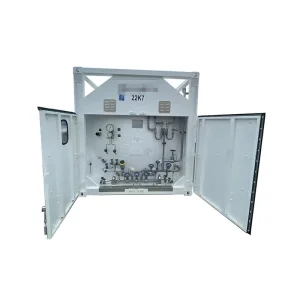
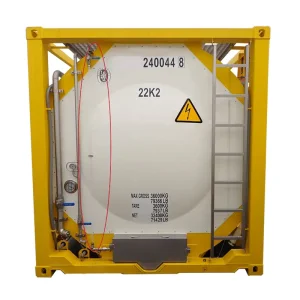
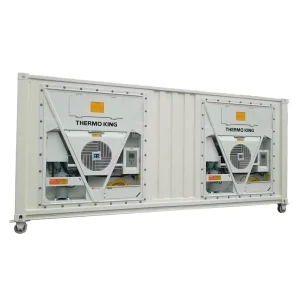
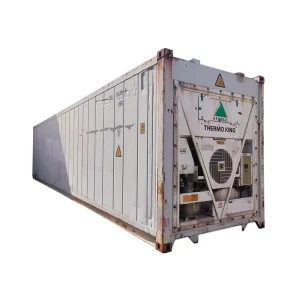
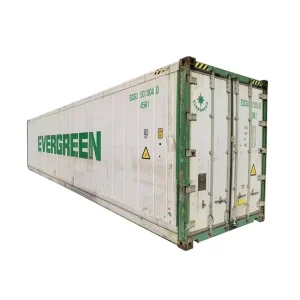
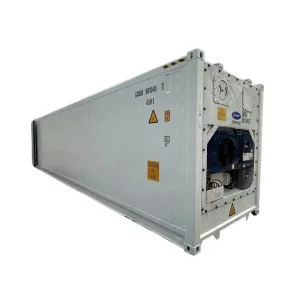
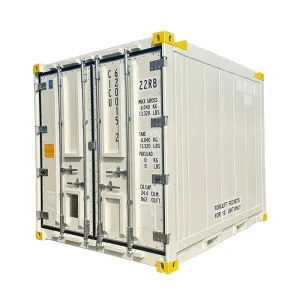
40FT HC REEFER

Immediate dispatch available from Chinese transshipment hubs. Factory pre-tripped, gas-charged, and load-tested for commercial compliance.
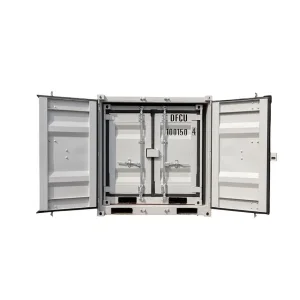
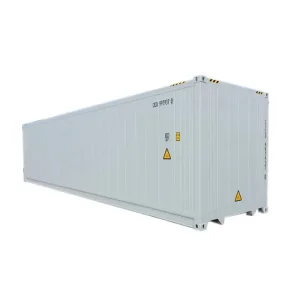
Navigating macro cold-chain pressures, supply volatility, and lifecycle optimization across emerging commercial corridors.
With global maritime building costs fluctuating due to alloy tariffs and fluctuating compressor production, international agro-exporters and 3PL warehousing providers face elevated balance sheet exposure. High-spec remanufactured used reefer containers unlock immediate cold-storage scaling at 50% to 60% of original factory capex, preserving cash reserves for working operations.
A common risk in second-hand reefers is insulation foam outgassing and moisture ingress within sandwich panels. Our factory remediation protocols deploy infrared thermal imaging and polyurethane foam core density checks, assuring the overall heat transmission coefficient (K-value) stays under 0.38 W/(m²·K) to meet ATP standards for perishables.
We stock and engineer units carrying Carrier Transicold ThinLINE®/PrimeLINE®, Thermo King Magnum PLUS®, and Daikin LXE10E systems. Every unit undergoes complete descaling, refrigerant charging with eco-friendly R134a or R452A, scroll compressor overhaul, and contactor replacements to achieve operational readiness for intermodal journeys.
From farm-gate pre-cooling to sub-zero pharmaceutical cold hubs, explore the versatile real-world deployment of secondary cold containers.
Deployed directly on horticultural plantations across East Africa, Latin America, and Southeast Asia. Used 40ft High Cubes serve as post-harvest field cooling modules, dropping field heat from avocado, mango, and berry harvests within two hours of picking to suppress cellular respiration.
Coastal fishing ports utilize our deep-freeze reefer boxes calibrated to -25°C to -35°C. Positioned directly alongside dockside trawler discharge berths, they stabilize pelagic catch, shrimp, and tuna catches immediately without tying up capital in immovable masonry freeze plants.
Meeting GDP (Good Distribution Practice) guidelines via factory retrofitting. Outfitted with dual-redundant compressors, independent UPS battery links, and continuous IoT cloud data loggers to store active pharmaceutical ingredients (APIs), blood plasma, and vaccines in the +2°C to +8°C envelope.
Urban logistics developers integrate refurbished reefers into metropolitan fulfillment yards. Featuring custom roll-up or side-access doors, these units function as pop-up distribution nodes for dark stores, grocery delivery startups, and peak seasonal holiday inventory surges.
Strategic access to the world's dense port ecosystems backed by deep manufacturing expertise dating back to 1983.
Located within 100 kilometers of the world's leading deep-water container terminals (Port of Tianjin and Shanghai/Ningbo cluster), CIMIC Group capitalizes on the global return flow of maritime empties. When world shipping lines phase out 7-10 year maritime containers, our facilities ingest prime Corten steel units before salt degradation damages critical frameworks.
This short inland transit enables immediate export bookings on backhaul vessel loops, minimizing container repossession overhead and lowering FOB port costs by up to $1,200 per container compared to inland refurbishment hubs.
We do not simply resell decommissioned boxes; our factory subjects every chassis to a certified industrial overhaul:
Clear physical and thermodynamic grading specifications to help buyers match the right container class to operational demands.
| Fleet Grade | Refrigeration Unit Spec | Temp Capability | Insulation (K-Factor) | Exterior / Structural Quality | Intended Application |
|---|---|---|---|---|---|
| Grade A+ (Premium) | Carrier PrimeLINE / Thermo King Magnum+ (3-5 Yrs) | -35°C to +30°C (±0.25°C) | ≤ 0.32 W/(m²·K) | Zero corrosion; minor scuffs; flawless door seals | Pharma, deep-frozen tuna, trans-ocean shipping |
| Grade A (Cargo Worthy) | Carrier ThinLINE / Daikin LXE10E (6-9 Yrs) | -25°C to +25°C (±0.5°C) | ≤ 0.38 W/(m²·K) | Surface patch repairs, blasted & painted; CSC valid | Agro fresh fruit export, meat freight, ocean logistics |
| Grade B+ (Domestic Static) | Carrier / Daikin / TK (Serviced, tested PTI pass) | -20°C to +15°C (±1.0°C) | ≤ 0.44 W/(m²·K) | Cosmetic denting, non-structural floor wear | On-site cold room, brewery malt store, farm-gate |
| Grade B (Insulated Shell) | Non-operational machinery / De-gassed | Ambient (Thermal buffer) | ≤ 0.48 W/(m²·K) | Airtight box shell, sound T-floor and wall panels | Passive insulation, dangerous chemical storage, modular build |
Refurbished reefers are being transformed by clean power adaptations and telematics upgrades.
We design and integrate roof-mounted bifacial photovoltaic racking systems and lithium iron phosphate (LiFePO4) battery banks onto modified reefer roofs. This reduces grid power reliance by up to 40% during daylight hours, lowering generator fuel draw in off-grid agricultural regions.
Refurbished units can be equipped with satellite/cellular hybrid telematics. Remote users manage setpoints, run on-demand automated PTI tests, observe real-time compressor amperages, and receive automated temperature deviation alerts via browser or mobile dashboard.
In compliance with the Kigali Amendment and EU F-Gas restrictions, our engineering teams offer factory conversions for legacy Carrier and Thermo King units to R-452A and R-513A refrigerants. This halves global warming potential while maintaining high coefficient-of-performance (COP) ratings.
Direct factory supply is matched with complete customs clearing documentation, classification surveys, and field spare parts kits.
Every export unit is supplied with an active International Convention for Safe Containers (CSC) safety plate validated by Bureau Veritas (BV), ABS, or China Classification Society (CCS). This ensures seamless approval for intermodal rail and ocean loading worldwide.
To reduce repositioning costs for overseas importers, we collaborate with leading freight forwarders to dispatch second-hand reefers under "One-Way Use" (Shipper Owned Container - SOC) loaded with compatible dry freight, delivering near-zero ocean positioning fees to ports across Europe, Africa, and the Americas.
We provide complete operational spare-part bundles alongside equipment orders: including backup microprocessor boards, thermistors, contactors, expansion valves, evaporator fan motors, and silicone door gasket profiles, ensuring your maintenance engineers can support field operations without shipping delays.
Direct answers to the most common questions raised by procurement managers, depot operators, and cold-chain engineers.
A Pre-Trip Inspection (PTI) is a multi-step test routine performed by certified refrigeration technicians before release. It exercises electrical resistance, contactor cycles, compressor pressure stages, heat exchangers, defrost heaters, and microprocessor self-diagnostics. A passed PTI certificate confirms the machine starts safely, pulls down smoothly to -18°C or lower within standard cycle times, and maintains tight control around user setpoints.
Standard marine reefer units run on 3-phase 380V/440V AC at 50/60 Hz, typically drawing 15A to 25A under standard load (up to 32A during initial motor start or full-capacity defrost cycles). For commercial locations with 220V power, a step-up auto-transformer or clip-on diesel generator set (genset) is required. Our technical team can supply factory-fitted transformer modules upon request.
Unlike domestic walk-in chillers that blow chilled air from the ceiling down, ISO reefer containers employ bottom-air delivery. Air is forced downward through the evaporator coil, traveling underneath the aluminum T-bar floor grating and moving up through cargo pallets before returning across the ceiling. This requires keeping the floor clear of debris and ensuring cargo is evenly loaded to preserve uniform thermal distribution.
Containers decommissioned from shipping lines at 8 to 12 years of age typically offer another 10 to 15 years of static land-based cold storage service when maintained properly. Key factors include regular coil washdowns in salty environments, timely replacement of door gasket sections, and basic periodic refrigeration maintenance.
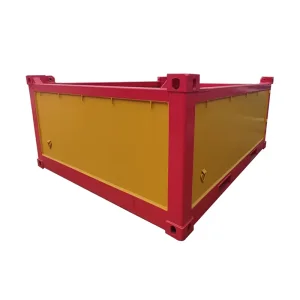
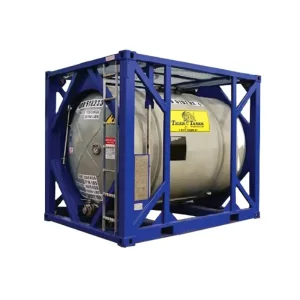
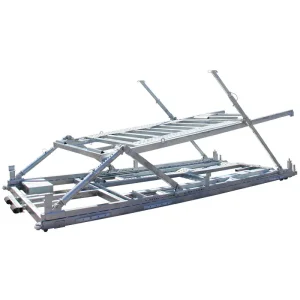
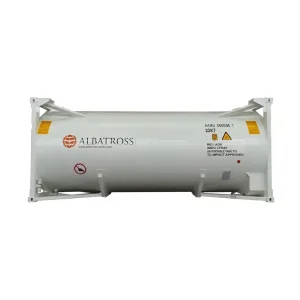
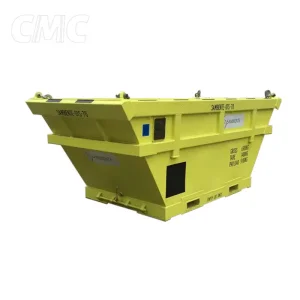
Explore our broader manufacturing portfolio, including cryogenic transport units, offshore baskets, vehicle transport frames, and certified ISO tank containers.