
Cold Chain
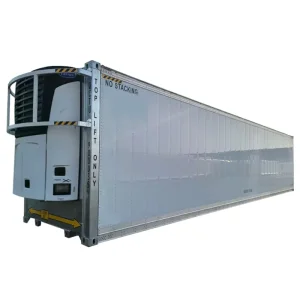
Engineered for severe trans-Eurasian rail shunting impacts, high-speed chassis road vibration, and extreme climatic excursions across multimodal trade corridors.
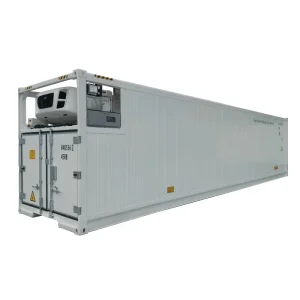
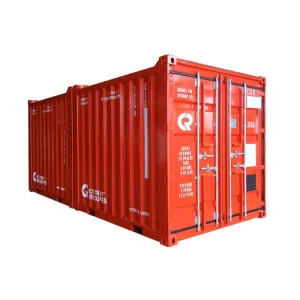
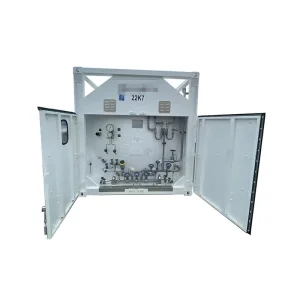
Global transport infrastructure is undergoing its most radical transformation since the advent of standard ISO containerization, propelled by structural changes in supply chain resilience and carbon taxation.
Cross-border continental freight requires a departure from pure over-the-road drayage due to escalating driver shortages, strict driver hours-of-service limitations, and urban congestion. Railway transport produces up to 75% fewer greenhouse gas emissions per ton-kilometer compared to heavy diesel trucking.
Consequently, global shippers and Third-Party Logistics (3PL) conglomerates are shifting high-density corridors into combined road-rail models, utilizing heavy-duty intermodal containers that transition smoothly between highway flatbed trailers and specialized double-stack or pocket railway wagons.
The expansion of the Silk Road economic belt and Eurasian transcontinental rail networks connecting hubs across China, Central Asia, and Western Europe has rewritten transit expectations. Ocean transit windows of 35–45 days are bypassed by 12–16 day direct freight rail express schedules.
However, this environment subjects transport equipment to harsh conditions: sub-zero Siberian chills dropping to -40°C, high-velocity atmospheric dust across the Gobi Desert, and severe longitudinal acceleration shock pulses during rail yard classification and shunting maneuvers.
True intermodal efficiency depends on international standard unification. Containers must maintain strict dimensional compliance under ISO 668 and ISO 1496-1, while satisfying European UIC 592/UIC 596-2 railway swap body criteria and TIR convention customs sealing specifications.
Engineering these assets requires precision corner fitting alignment (ISO 1161), certified structural racking integrity under dynamic forces, and standardized chassis grappling tunnel pockets capable of withstanding rough handling in intermodal transfer terminals.
Designing road and rail freight containers demands a higher level of structural resilience than standard maritime-only shipping boxes due to cyclic road vibrations and intense rail shunting forces.
Our primary load-bearing profiles are forged from certified SPA-H atmospheric corrosion-resistant Corten steel. When exposed to harsh meteorological cycles, the alloy forms a dense, passivating oxide protective patina that halts rust penetration, preserving structural tensile strength (minimum yield strength ≥ 345 MPa).
During continuous rail curving and high-speed highway chassis articulation, containers face severe transverse and longitudinal racking forces. Reinforced dual-structure rear corner posts, boxed header sills, and hot-rolled tubular bottom rails ensure racking resistance that exceeds ISO 1496-1 trans-racking thresholds by 150%.
Engineered to support heavy forklift axle loadings, our sub-floor assemblies feature heavy-duty 4.5mm cold-formed omega and I-beam crossmembers. Flooring options range from 28mm certified maritime hardwood plywood with water-resistant edge sealing to non-slip corrugated steel plates and extruded aluminum T-bar profiles.
Refrigerated and insulated rail-road containers use robotic high-pressure polyurethane foaming with cyclopentane blowing agents. Featuring double-lip EPDM perimeter gaskets and thermal-bridge-free stainless steel interior linings, these units achieve a K-value of less than 0.38 W/m²·K.
Inside our advanced manufacturing centers in Tianjin and Suzhou, digital engineering, robotic precision, and integrated industrial supply chains lower production costs while improving consistency and structural quality.
Fully automated multi-axis gantry welding cells build the side panels, base assemblies, and roof sheets. Robotic tracking ensures consistent weld penetration without slag inclusions or hot cracking, resulting in hermetic container joints capable of withstanding heavy operational abuse.
Our factories operate complete zero-VOC automated blasting and multi-tier robotic coating lines. Steel undergoes SA 2.5 shot blasting to remove mill scale, followed by zinc-rich primers, epoxy barrier mid-coats, and waterborne acrylic polyurethane topcoats that survive over 1,500 hours of continuous salt spray testing.
Located in Tianjin and Suzhou within 100 kilometers of deep-water berths and transcontinental rail marshaling yards, our manufacturing plants minimize inland haulage overhead. We can dispatch bulk unit orders directly from the assembly line onto ocean flat-racks, bulk break ships, or direct rail wagons.
Procurement leaders evaluate container assets beyond initial purchase price, factoring in tare weight efficiency, maintenance overhead, payload limits, and multi-decade lifecycle durability.
Through finite element analysis (FEA), we strip deadweight from non-critical load sections without compromising structural rigidity. Using high-tensile steels and hollow-flange roll-formed sections can reduce container tare weight by 300 to 500 kilograms per unit.
For continental railway operators facing strict gross axle load limits, this reduced tare weight directly translates to increased cargo payload, fewer total trips, and recurring fuel savings across multi-year operations.
Containers built with standard carbon steels incur recurring maintenance costs from frequent shot-blasting, repainting, and wall repairs. Corten-A engineering combined with marine-grade 304/316 stainless steel hardware lowers ongoing fleet maintenance overhead by over 40% over a 15-year service window.
Heavy-duty grease nipples, galvanized forged hinge pins, and anti-seize bushings prevent door hardware seizure in corrosive maritime and snowy rail environments.
Fleet operators can balance their capital investments by deploying new custom containers alongside certified pre-owned units. For high-mileage, frontline intermodal routes, our newly built 40HC and 45ft units offer long, reliable service lives.
Meanwhile, our seaport-stocked pre-owned containers (rated at 85% to 90% condition) deliver a practical solution for on-site industrial storage, static buffer yards, and secondary short-haul drayage.
Engineered container configurations serve diverse industrial sectors, handling sensitive high-value electronics as well as hazardous chemicals and bulk minerals.
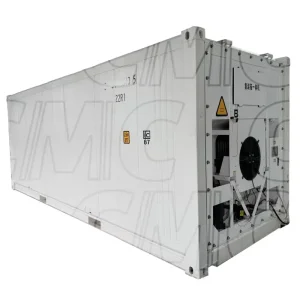
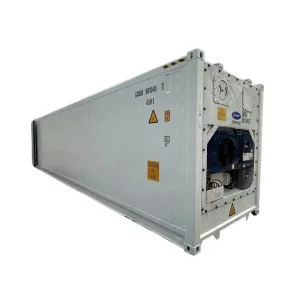
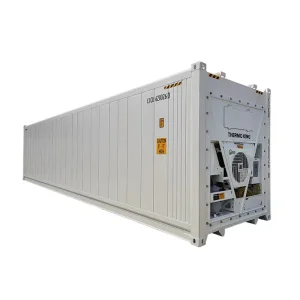
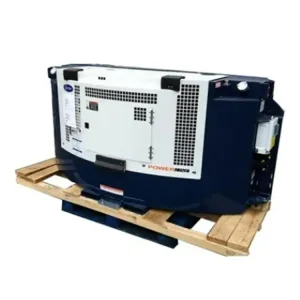
Transporting fresh fruits, frozen meats, and pharmaceuticals along transcontinental rail routes requires steady temperature control despite wide ambient fluctuations. Using 40ft and 45ft high-cube dual-fuel reefer units fitted with clip-on diesel generator sets (gensets) and integrated 1,000-liter diesel tanks, our refrigerated containers can maintain consistent temperatures between -30°C and +25°C continuously for up to 25 days across un-electrified rail routes.
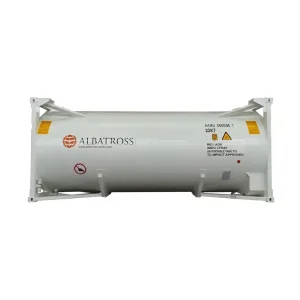
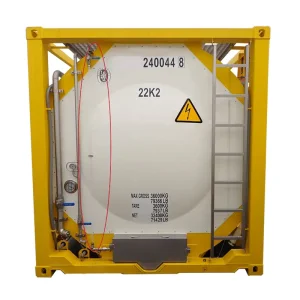
Transporting liquid argon, nitrogen, natural gas, and food-grade alcohols involves strict safety requirements. Our T75 cryogenic and 25,000-liter ISO tank containers are engineered with multi-layer high-vacuum insulation and ASME 'U' stamped pressure vessels. Certified for both road trailers and rail wagons, they allow bulk transfers without the risks and costs of intermediate decanting.
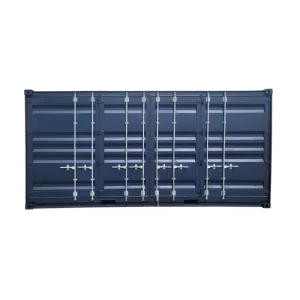
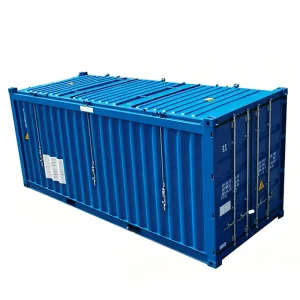
Moving structural components, heavy equipment, and bulk minerals requires flexible loading options. Our open-top hard lid and full side-opening containers provide complete top crane access and wide lateral forklift clearance. Heavy-duty interior lashing rings (rated at 5,000 kg each) ensure secure tie-downs that resist transit shifting during sudden rail brakings.
Compare structural configurations, dimensional envelopes, tare weights, and payload capacities across our standard and custom intermodal road-rail container models.
| Class Designation | External Dimensions (L×W×H) | Internal Volume | Tare Weight | Max Gross Mass (MGM) | Primary Intermodal Certification |
|---|---|---|---|---|---|
| 20ft Dry ISO Intermodal (20GP) | 6,058 × 2,438 × 2,591 mm | 33.2 m³ | 2,180 kg | 30,480 kg | ISO 1496-1 / CSC / UIC |
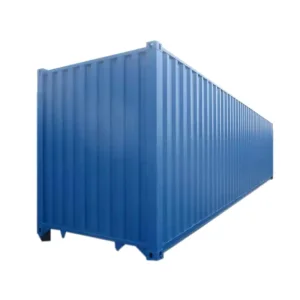
| 40ft High-Cube Intermodal (40HC) | 12,192 × 2,438 × 2,896 mm | 76.4 m³ | 3,820 kg | 32,500 kg | ISO 668 / TIR / BV |
| 45ft Pallet-Wide High Cube (45PW) | 13,716 × 2,500 × 2,896 mm | 89.2 m³ | 4,680 kg | 34,000 kg | EN 283 / UIC 592 / CSC |
| 40ft High-Cube Dual-Power Reefer | 12,192 × 2,438 × 2,896 mm | 67.6 m³ | 4,520 kg (inc. unit) | 34,000 kg | ATP / ISO / Carrier / Thermo King |
| 20ft T75 Cryogenic Liquid Tank | 6,058 × 2,438 × 2,591 mm | 20,000 Liters | 7,850 kg | 36,000 kg | IMDG / ASME / ADR / RID |
| 20ft Hard Open Top / Side Door | 6,058 × 2,438 × 2,591 mm | 31.8 m³ | 2,750 kg | 30,480 kg | ISO 1496 / CSC / DNV |
Direct answers covering structural standards, intermodal certifications, refrigeration unit compatibility, and factory production workflows.
While standard ISO maritime containers are designed primarily for vertical stacking on cellular container ships, road-rail intermodal units are engineered to endure frequent dynamic lateral sway on highways and severe longitudinal acceleration shock pulses during railway shunting. Our road-rail series incorporates reinforced corner castings, heavier cold-rolled Corten bottom side rails, robust grappling arm pockets for gantry crane lifting, and full compliance with UIC 592/596-2 and EN 283 intermodal testing specifications.
For long-distance rail routes where rail wagons cannot provide continuous electric power, we integrate heavy-duty diesel clip-on generator sets (gensets) with Carrier Transicold, Thermo King, or Daikin refrigeration machinery. Supported by oversized, cold-resistant 1,000-liter fuel reservoirs, these self-contained hybrid units maintain uninterrupted temperatures for up to 25 continuous days across harsh Siberian and Central Asian corridors without external refueling.
Every container manufactured in our facilities carries formal safety approval plates under the International Convention for Safe Containers (CSC), inspected and stamped by leading classification societies such as Bureau Veritas (BV), ABS, or DNV. Our production management processes are governed by ISO 9001, ISO 14001, and ISO 45001 frameworks. Offshore units comply fully with DNV 2.7-1 / EN 12079 dynamic lifting criteria, while gas and chemical tank containers meet ASME Section VIII, RID, ADR, and IMDG global safety standards.
Following customer approval of technical CAD engineering drawings, initial prototype validation runs take roughly 10 to 14 working days. Full batch assembly moves at high output, producing between 50 and 200 units weekly depending on customization requirements. Because our primary assembly facilities in Tianjin and Suzhou are located within 100 kilometers of deep-water port terminals, we handle inland drayage efficiently, minimizing staging delays and keeping shipping schedules on time.
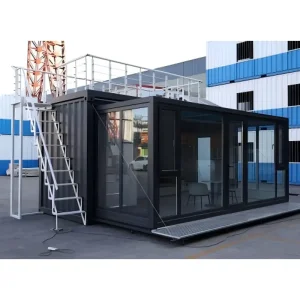
Explore heavy industrial containers engineered for hazardous fluids, bulk minerals, site-based cold rooms, and international maritime and rail operations.

Whether planning a high-capacity 45ft pallet-wide fleet migration, configuring customized side-door dry freight containers, or sourcing certified cryogenic T75 ISO tank units, our Tianjin and Suzhou engineering teams provide complete design validation, finite element analysis (FEA), and custom OEM/ODM manufacturing.