Direct-From-Factory Deployment
Specialized Offshore Units & Certified Stock
Engineered to withstand extreme hydrodynamic impact, sub-zero brittle fracture, and severe North Sea corrosive operational regimes.
Industry Economics
Offshore Container Pricing Architecture & CapEx Benchmarks
Direct factory pricing models are shaped by volatile raw materials (Corten-A steel), Lloyd's Register / DNV witness auditing costs, non-destructive testing (NDT), and specialized zinc thermal spraying.
| Offshore Container Classification | Standard Footprint | Structural Tare / Payload | Indicative Price Range (FOB China) | Primary Sector Application |
|---|---|---|---|---|
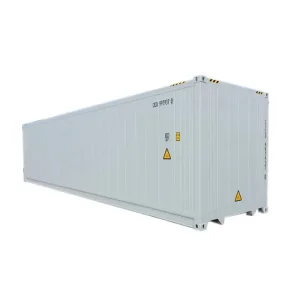
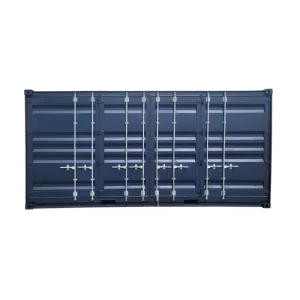
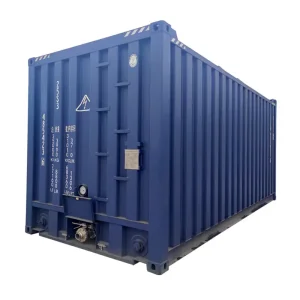
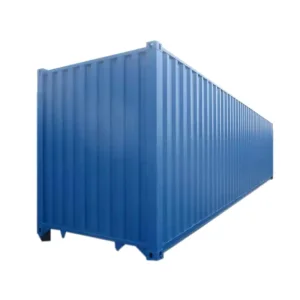
| DNV Standard Dry Cargo Unit | 10ft / 20ft CCU | 2,100 kg / 10,000 kg | $4,200 – $7,800 | Rig drills, topside consumables, exploration spares |
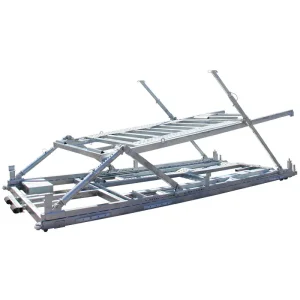
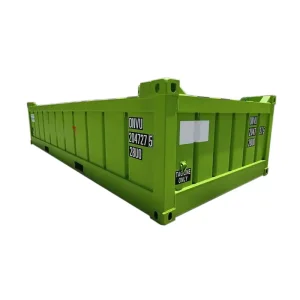
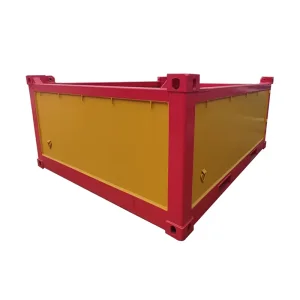
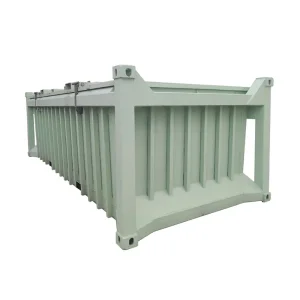
| Half-Height Cargo Basket / Carrier | 20ft / 33ft Half-Height | 2,800 kg / 13,500 kg | $4,900 – $9,600 | Heavy drill pipe, casing, subsea manifolds, drill bits |
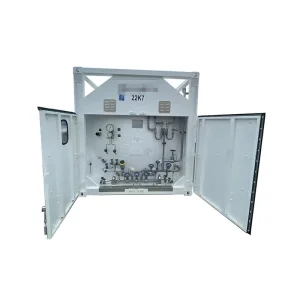
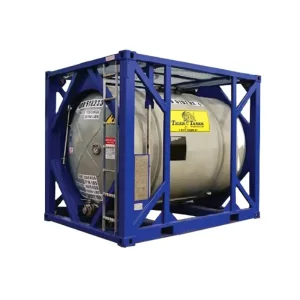
| DNV 2.7-1 Offshore ISO Tank (T75/T11) | 10ft / 20ft Beam Type | 3,600 kg / 18,000 L – 24,000 L | $16,500 – $38,000 | Helifuel, acids, chemical muds, liquefied cryogenics |
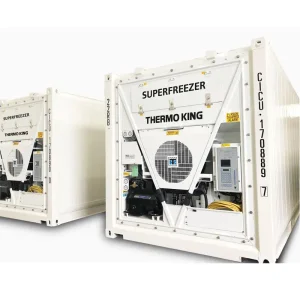
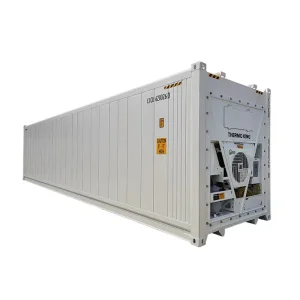
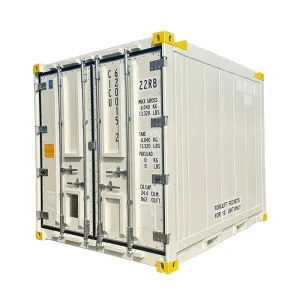
| Offshore Reefer (Thermo King/Carrier) | 10ft / 20ft DNV Reefer | 4,200 kg / 9,000 kg | $18,000 – $32,000 | Offshore platform catering, chilled core sample preservation |
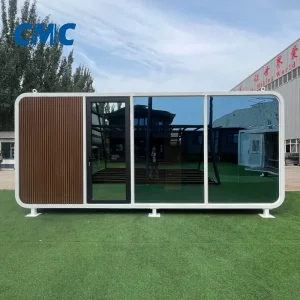
| Modular Living Quarters / Lab Pod | 20ft A60 / H120 Module | 5,500 kg / Engineered | $35,000 – $85,000 | Safe area / Zone 1 & 2 topside engineering accommodations |
*Note: Unit prices fluctuate based on international LME nickel/iron indices, certification body survey fees (BV/DNV/LR), pad eye magnetic particle inspection (MPI) criteria, and destination lifting sling specifications.
Industrial Excellence
China Factory 4.0: Supply Chain Resilience & Lean Metallurgy
Operating strategically out of Tianjin and Suzhou clusters within 100 kilometers of deepwater container berths, CIMIC harnesses comprehensive vertical integration to mitigate engineering failure and lead-time delays.
Automated Submerged-Arc Welding
Structural integrity centers on high-yield structural steels (SPA-H, S355NL, or Q345E). Robotic tandem GMAW/SAW ensures full-penetration welding on primary critical load paths, pad eyes, and corner castings, eliminating cold-cracking risks.
C5-M Heavy Anti-Corrosion Systems
Automated grit blasting to SA 2.5 standard followed by zinc silicate primers, intermediate epoxy barriers, and polyurethane topcoats (total dry film thickness ≥ 300 μm). Backed by salt spray testing exceeding 3,000 hours per ISO 12944-6.
Zero-Defect Nondestructive Testing
Every structural weld is 100% inspected via Visual Testing (VT) and Magnetic Particle Inspection (MPI). Ultrasonic Testing (UT) is conducted on 100% of lifting pad eye welds. Pressure drops in ISO tank modules are verified via calibrated helium mass spectrometry.
Next-Gen Marine Tech
Technology Roadmap & Engineering Horizons (2025–2030)
As global energy sectors transition toward floating offshore wind, hydrogen logistics, and deepwater exploration, standard offshore logistics equipment is evolving with intelligent telemetry and composite metallurgy.
Satellite-Linked IoT Telematics
Direct integration of ATEX Zone 1 certified low-power satellite transceivers, streaming 3-axis dynamic impact G-forces, door status, internal thermal balance, and ullage monitoring across open waters.
Advanced Lightweight Composites
Targeted integration of carbon-fiber and high-strength dual-phase lightweight steels into non-structural cladding, reducing container tare weights by up to 22% while boosting maximum allowable payload on deck.
Cryogenic Hydrogen Topside Bunkers
Transition from standard LNG ISO tanks to ultra-high vacuum multi-layer insulated T75 liquid hydrogen (LH2) offshore containers, engineered to maintain -253°C holding times over extended voyages.
Fatigue Life Dynamic Modeling
Finite element analysis (FEA) calibrated against sea-state spectra (Hs 16m), predicting lifecycle fatigue micro-fractures in welded nodes to extend operational safe lifecycle beyond 15 consecutive offshore operating years.
Global Assurance
Worldwide Engineering Support & Compliance Assurance
International marine safety authorities require strict conformity during dynamic crane transfers between platform decks and offshore support vessels (OSVs).
Certified Sling Assemblies
Each unit is matched with fully certified 4-leg or 5-leg wire rope slings conforming to DNV 2.7-1 / EN 12079 specifications, equipped with Crosby shackles and master oval links proof-load tested under surveyor supervision.
Turnkey Classification Data Dossiers
Delivered with full manufacturer data books (MDB) including mill test certificates (EN 10204 Type 3.1/3.2), certified WPS/PQR records, NDT inspection signatures, hydrotest curves, and authentic Lloyd’s Register / DNV / BV stamping plates.
Regional Distribution & Spares Hubs
Strategically deployed engineering support across key logistics hubs in Aberdeen, Stavanger, Houston, Singapore, and West Africa to ensure fast replacement of certified hatch seals, door mechanisms, valves, and sacrificial anodes.
Procurement Strategy
Enterprise Procurement Protocols: Auditability, Traceability & ESG
Global offshore engineering operators and energy majors demand strict structural traceability, carbon accounting, and verified factory capacity during CapEx tenders.
Heat Number & Material Provenance
Every structural profile, gusset, and corner casting traces back to individual raw steel ladle numbers. Heat records, chemical spectrometry, and mechanical test results are embedded directly into production lot records.
Tier-1 Vendor Vetting & Factory Audits
Direct accessibility for third-party auditing agencies (DNV, ABS, Bureau Veritas, SGS) to execute factory witness milestones: 2-point drop tests, pad eye dynamic overload pull tests, and leak containment verifications.
Low-Carbon Metallurgy & ESG Metrics
CIMIC utilizes clean-energy electric arc furnace (EAF) secondary steel lines where specified, waterborne low-VOC marine primers, and 100% recyclable floor systems to comply with modern ESG sustainability scorecards.
Technical Clarifications
Frequently Asked Questions: Offshore Engineering & Logistics
Crucial structural, certification, and commercial insights for technical directors, offshore operations superintendents, and logistics procurement teams.
What is the core distinction between an ISO shipping container and a DNV 2.7-1 offshore container?
Standard ISO containers are designed primarily for static stack-loading inside vessel cellular guides and rely on corner castings for lifting with spreaders. In contrast, DNV 2.7-1 offshore containers are engineered without reliance on guide rails; they withstand severe dynamic shock loads, single-point snatches, side-impact forces from OSV decks, and -20°C wave impacts, utilizing primary load-bearing pad eyes and specialized impact-resistant steel grades.
Why is material Charpy V-notch impact testing mandatory for offshore containers?
In offshore sub-zero operating environments, conventional structural steels experience sudden ductile-to-brittle transitions, creating elevated risks of catastrophic failure under dynamic crane snatches. DNV 2.7-1 and EN 12079 mandate that all primary structural steel sections, plates, and pad eyes demonstrate verified Charpy V-notch energy absorption (typically ≥ 27 Joules at -20°C or -40°C).
Can CIMIC customize offshore containers to ATEX / IECEx specifications?
Yes. For Zone 1 and Zone 2 offshore hazardous topside areas, our engineering team manufactures customized units fitted with explosion-proof electrical systems, certified HVAC pressurization pods, fire dampers, gas leak detection loops, and A60/H120 thermal and blast fire-rated bulkheads.
What is the standard production lead time and minimum order quantity (MOQ)?
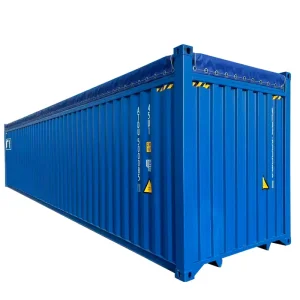
For standard DNV-certified dry cargo units, baskets, and open-tops, the MOQ is 1 unit. Standard batch builds typically require 4 to 6 weeks from structural drawing sign-off to classification surveyor witness sign-off. Bespoke engineering modules or specialized T75 cryogenic tank units carry an average lead time of 8 to 12 weeks.
Expanded Portfolio
Specialized Heavy Equipment & Intermodal Solutions
Explore our full line of cryogenic tank containers, refrigerated marine boxes, high-cube dry cargo boxes, and custom automotive shipping modules.