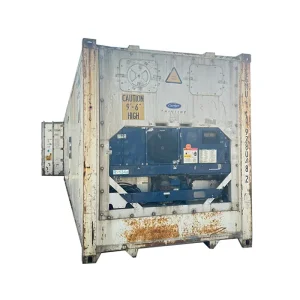
Engineered Intermodal Fluid & Dry Cargo Equipment
Precision-manufactured cryogenic vessels, ISO food-grade liquid tanks, and specialized offshore operational hardware certified to global class standards.
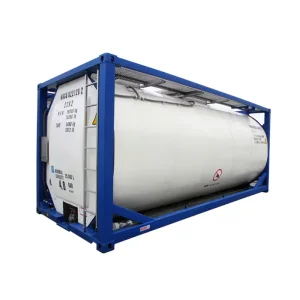
Buy ISO Standard 20ft Versatile Tank Container for Transport Chemicals Exporter, Product
Technical Specs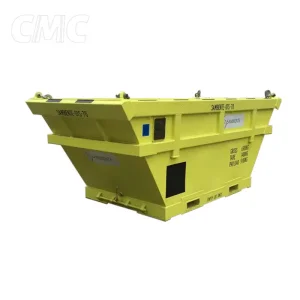
Famous DNV Certification Silt Basket Container Used in Offshore Operations Factories, Exporters
Technical Specs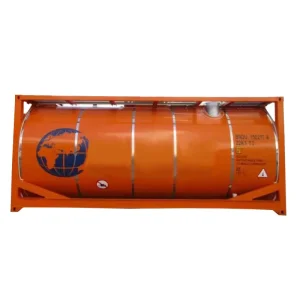
China 20 Foot ISO Liquid Tank Container for Water Manufacturer, Product
Technical Specs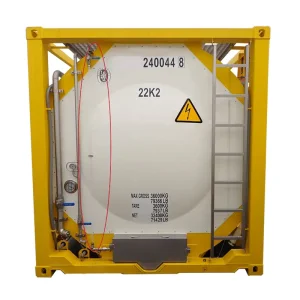
ODM 20ft Tank Container for Alcohol Manufacturer, Quotes
Technical Specs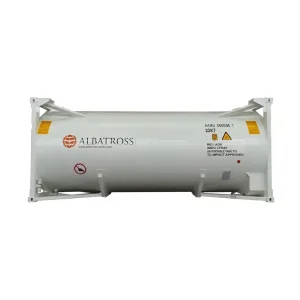
China 25000 Liters ISO 20ft Gas Tank Container for Sale Product, Factories
Technical Specs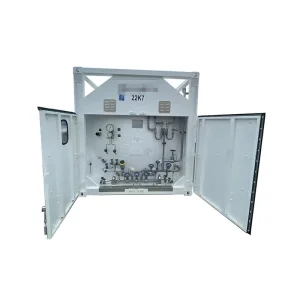
Famous T75 20ft Cryogenic Liquid Tank Container Products, Exporters
Technical Specs
China 20 Foot ISO Liquid Tank Container for Water Manufacturer, Product
Technical Specs
China 25000 Liters ISO 20ft Gas Tank Container for Sale Product, Factories
Technical SpecsGlobal Intermodal Tank Logistics: State of the Sector
Evaluating structural shifts in bulk liquid distribution, ESG compliance pressures, and the migration from traditional chemical packaging toward sustainable ISO tank container infrastructure.
The global tank container market is navigating a decisive transformation. Driven by stringent international environmental mandates and an imperative for risk-mitigated supply chains, chemical conglomerates, energy providers, and multinational food producers are systematically phasing out intermediate bulk containers (IBCs) and steel drums in favor of intermodal ISO tank containers (isotanks). Operating under strict UN Portable Tank designations (T11, T14, T50, and T75 cryogenic units), these standardized pressure vessels deliver a sealed, door-to-door bulk transit mechanism spanning ocean liner, freight rail, and roadway chassis networks without secondary transloading.
Structural Market Pressures & Transition Dynamics
According to continuous operational surveys by ITCO (International Tank Container Organisation), the global operating fleet has surpassed 800,000 units. The demand trajectory is governed by three macro forces: chemical feedstocks moving across intercontinental trade routes, the global clean-energy transition stimulating cryogenic T75 liquefied gas logistics (LNG, liquid nitrogen, argon, and high-purity hydrogen), and elevated sanitary standards within the global beverage and edible oil sectors requiring dedicated 316L stainless steel tanks equipped with food-grade sanitary steam or electrical heating conduits.
Engineering Architecture & Chinese Factory Scalability
How automated precision forming, vertical supply chain integration, and deep sea-corridor proximity deliver unmatched cost-to-performance ratios for worldwide fleets.
Automated Submerged Arc Welding
Our Tianjin & Suzhou manufacturing bases utilize robotic dual-side submerged arc welding and robotic longitudinal seam trackers. Every vessel shell achieves pore-free penetration, structural equilibrium, and minimized heat-affected zones across high-tensile 316L, 304, and carbon steel profiles.
Corrosion Barrier Metallurgy
Vessels handling hyper-corrosive media (hydrochloric acid, ferric chloride, caustic alkalis) receive ultra-dense internal coatings including PTFE, PFA, and vulcanized natural rubber. Every lining undergoes high-voltage pinhole spark testing and vacuum immersion validation.
100KM Port Corridor Advantage
Situated within 100 kilometers of the Port of Tianjin and key maritime arteries in Suzhou, our production facilities eliminate long-distance inland staging fees. Units roll directly off automated test bays onto deep-sea terminals, preserving customer freight budgets and lead-time guarantees.
Specialized Deployment Across Global Industry Verticals
Configuring modular vessel profiles to withstand harsh maritime atmospheres, extreme dynamic loads, and cryogenic thermal shifts.
Offshore Exploration & Energy
Deploying specialized DNV 2.7-1 / EN 12079 certified offshore chemical dosing units, silt basket configurations, and waste containment units engineered to absorb dynamic platform heave, rough sling hoisting, and North Sea maritime salinity without weld fatiguing.
Pharma & High-Purity Food Logistics
Fabricated using electropolished interior surfaces (Ra < 0.4μm) paired with external insulation coats (polyurethane/rockwool) and top-grade steam/electrical trace heating systems to maintain precise viscosity and microbiological integrity for food oils, spirits, and medical inputs.
T75 Cryogenic Intermodal Energy
Double-walled vacuum insulated tanks incorporating multi-layer super insulation (MLI) designed to transport liquefied natural gas (LNG), liquid oxygen (LOX), liquid argon (LAR), and carbon dioxide with hold times exceeding 90 days across intercontinental rail and maritime lanes.
Technical Guidance for Enterprise Procurement Teams
Critical engineering criteria for sourcing ISO tanks: design pressure margins, structural framing limits, internal finishes, and class inspection audits.
Procurement directors and fleet operations heads face acute risks when acquiring pressurized intermodal assets. Sourcing decisions cannot be based solely on empty tare weight and base unit pricing. A comprehensive lifecycle value evaluation must account for cyclic mechanical stress, tare-to-payload ratios, and class approval frameworks.
1. Shell Metallurgical Integrity & Wall Calibration
A rigorous specification begins with chemistry. Standard T11 tanks designated for non-corrosive or moderately corrosive chemicals are typically ordered with 316L cold-rolled stainless steel shells featuring a nominal thickness of 4.4 mm to 6.0 mm. For hazardous substances requiring higher test pressures (e.g., T14 or T20 classifications), nominal shell thickness increases accordingly, and shell geometry must accommodate hydrostatic test pressures up to 6.0 bar (87 psi). Procurement officers should insist on certified mill test certificates (MTC 3.1) showing trace element composition (carbon < 0.03%, molybdenum content 2.0-2.5%) to avoid intergranular corrosion post-welding.
2. Valve Trains, Safety Relief, and Gasket Compatibility
Gasket failure represents the single most frequent vector for non-accidental chemical releases in transit. We furnish valves and manway assemblies fitted with high-integrity PTFE envelope seals, Chemraz, or Kalrez elastomeric compounds tailored to the cargo's specific UN hazard number. Primary discharges feature a triple-closure mechanism: internal foot valve, external ball/butterfly valve, and a blind flange or quick-release coupling. Pressure relief valves (PRVs) must be configured with bursting discs and tell-tale pressure gauges for hazardous media to catch pinhole leakage prior to disc rupture.
3. Structural Frame Dynamics & Anti-Corrosion Finishing
The external support frame bears extreme static and dynamic loads during ocean vessel stacking (up to 9-high fully laden rating, capable of supporting gross loads up to 192,000 kg). We construct frames using cold-formed rectangular hollow sections (RHS) of high-strength structural steel (Corten-A or Q345D). The entire framework undergoes automatic shot-blasting to ISO 8501-1 Sa 2.5 purity, coated with a high-build zinc-rich epoxy primer, an intermediate epoxy barrier coat, and an aliphatic polyurethane topcoat delivering salt-spray endurance exceeding 1,500 hours.
The Horizon of Tank Containerization
How real-time telemetry, advanced composites, and sustainability are shaping future fleet operations.
ATEX-Certified Telematics
Modern fleets are moving toward end-to-end transparency. Integrated IoT nodes monitor tank inner temperature, hydrostatic headspace pressure, continuous GPS location, and dynamic tri-axial shock incidents. Sensor modules carry ATEX / IECEx Zone 0 intrinsic safety certification for volatile zones.
Carbon Footprint & Circularity
By swapping out single-use IBC steel-plastic arrays for modular ISO tanks with a 20-30 year service life, operators achieve up to 70% Scope 3 carbon emission reductions per metric ton transported. Re-lining innovations allow decommissioned acid tanks to be repurposed for non-hazardous materials.
Advanced Composite Insulation
Next-generation tank containers deploy vacuum insulated panels (VIP) and carbon aerogels, trimming tare weight by up to 450 kilograms per unit. This tare reduction directly translates to increased payload capacity, reducing fuel consumption across intermodal haulage routes.
Engineering & Procurement Knowledge Base
Clear answers to frequent technical, compliance, and custom fabrication inquiries submitted by fleet engineering directors.
What is the distinction between T11, T14, and T75 ISO tank container classifications?
What statutory approvals and classification certificates accompany your tank containers?
How do you verify weld integrity and seal longevity before delivery?
Can CIMIC customize heating systems and insulation for temperature-sensitive cargo?
What is the typical production timeline and logistics turnaround from your Chinese facilities?
Specialized Modular, Reefer, & Cold Chain Containers
Expanding beyond pressure vessels: view our full production range of modular housing, deep-chill refrigerated units, and heavy-duty storage equipment.
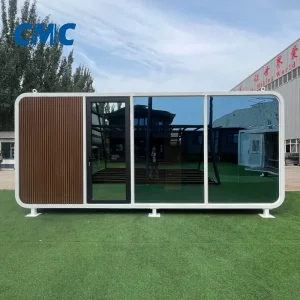
Famous 20ft Prefab Container House Flat Pack Modular House Office Tiny House Outdoor apple Cabin Office Pod Garden Office Pod Manufacturer, Product
Technical Specs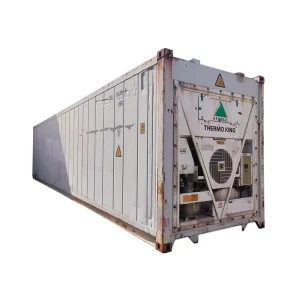
ODM New 40ft Refrigerated Freezer Container for Sale Factory, Exporter
Technical Specs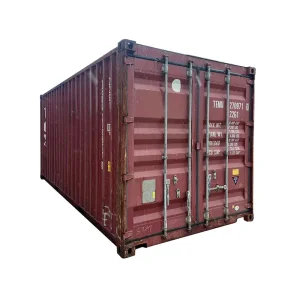
Buy 20ft Used Shipping or Storage Container Manufacturer, Products
Technical Specs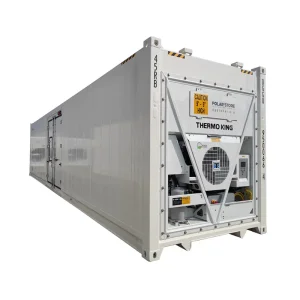
Famous 40ft High-Cube Side Open Door Reefer Container Manufacturer, Factories
Technical Specs
ODM The Smart Chain Cold Storage 20ft/40ft Solar Refrigerated Container 220V With DC Inverter Unit Pricelist, Exporters
Technical Specs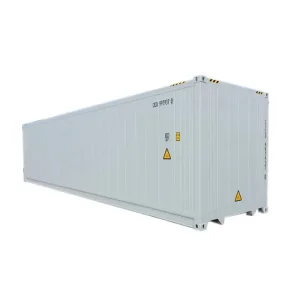
Buy New 40ft High Cube Thickened Foam Insulation Container Factory, Exporters
Technical Specs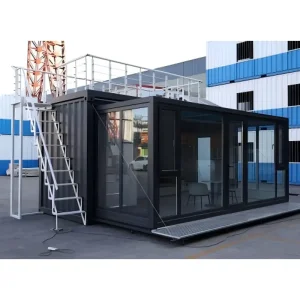
Famous 20ft Foldable Prefab Modular Homes Mobile Expandable Container House Prefabricated House with Bathroom Manufacturer, Exporters
Technical Specs