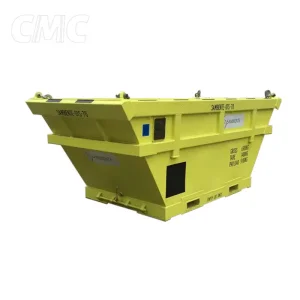
High-Spec Offshore & Specialized Logistics Fleet
Engineered for brutal dynamic wave impacts, sub-zero oceanic operations, and certified heavy-lift compliance in demanding offshore maritime corridors.
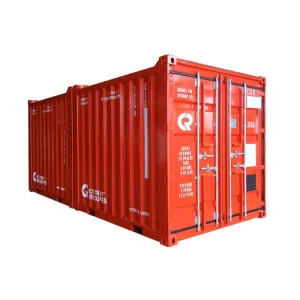
Buy New DNV Certification Offshore Dry Cargo Container Factory, Product
Product Details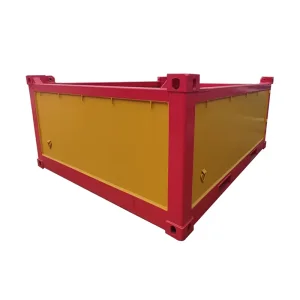
High-Quality New Offshore Basket Container for Offshore Operations Exporter, Exporters
Product Details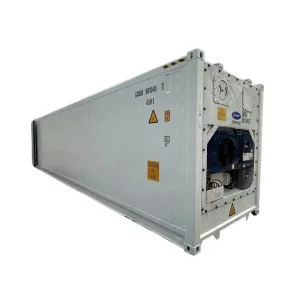
Buy Ninety Percent New Used 40ft HC Carrier Refrigerated Container Product, Quotes
Product Details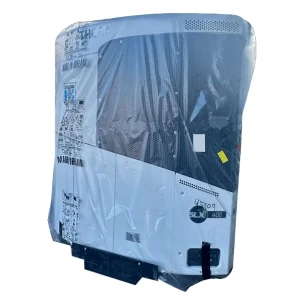
Famous TK SLXI Mobile power generation trailer cooling unit Product, Manufacturers
Product Details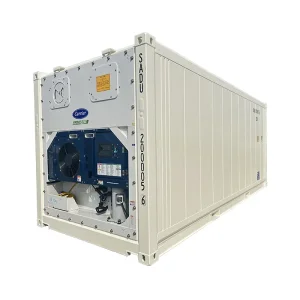
High-Quality New 40ft High Cube Carrier Refrigerator Freezer Cold Room Product, Exporters
Product Details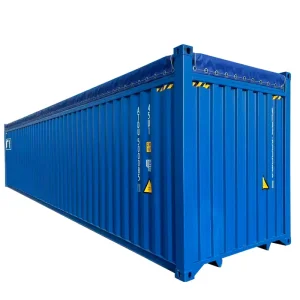
Buy 40ft High-Cube New Soft Open Top Shipping Container with Tarpaulin Cover Manufacturer, Product
Product Details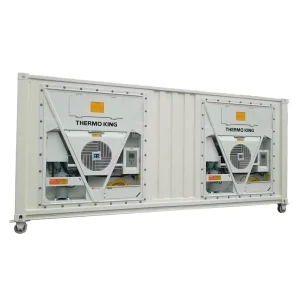
High-Quality The new blast reefer containers are certified by classification societies Manufacturers, Factories
Product Details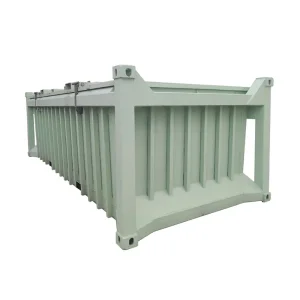
Buy New Half Height Ore Carrier Container Offshore Container Manufacturers, Quotes
Product DetailsOffshore Container Market Evolution: The Convergence of Safety & Clean Tech
Beyond standard intermodal freight, offshore containers represent high-integrity marine engineering assets designed for deep-sea environments, harsh weather, and rigorous lifting cycles.
Global Offshore Energy Transition
The offshore maritime footprint has expanded dramatically from historical hydrocarbon extraction into offshore wind farms (OWF), floating solar platforms, and green hydrogen synthesis hubs. This transformation requires specialized tool baskets, cable spooling open-tops, and pressurized modular workshops equipped with fire suppression ratings up to A60 / H120 blast proofing.
Turbine installation vessels (WTIV) and subsea cabling barges operate under strict maritime authorities, demanding that every containerized payload withstand severe heave, roll, and pitch motions with zero primary frame deformation.
Structural Physics: ISO vs. Offshore Standard
A standard ISO container (ISO 1496/668) relies entirely on its corner castings and vertical corner posts to absorb stacked compressive loads during shipboard cell-guide transit. In contrast, an offshore container (governed by DNV 2.7-1 / EN 12079 / ISO 10855) must survive dynamic sling lifting directly from an offshore supply vessel (OSV) pitching in Sea State 6.
Consequently, primary frame structural steels must provide high yield strengths paired with mandatory low-temperature Charpy V-notch impact toughness (down to -20°C or -40°C), eliminating brittle fractures under sudden snatch loads.
Rigid Classification Compliance
International exploration operating companies (IOCs) such as Shell, Equinor, ExxonMobil, and TotalEnergies require complete end-to-end traceability. An uncertified or sub-par cargo unit is systematically barred from offshore quayside cranes and supply vessels.
Every offshore container fabricated under BV, DNV, or ABS third-party witness protocols features unified design verification reports (DVR), weld non-destructive testing (NDT) via Magnetic Particle and Ultrasonic inspections, and certified pad eye pull testing at twice the maximum gross weight.
China Factory 4.0: Modern Supply Chain Resilience & Heavy Fabrication
Combining automated welding gantries, cryogenic steel supply lines, and advanced surface coating lines located within proximate distance to major global shipping terminals.
Robotic Seam Welding & Precision
Multi-axis automated submerged arc welding (SAW) and robotic GMAW cells ensure continuous, uniform deep-penetration weld beads on primary hollow structural sections (HSS). This minimizes micro-defects and delivers defect-free Charpy impact test results at the critical heat-affected zones (HAZ).
Port-Centric Logistics Cluster
Integrated manufacturing bases in Tianjin and Suzhou are situated within 100 kilometers of the world's most connected container terminals. This eliminates thousands of miles of complex inland transport, guarantees reliable FOB vessel bookings, and minimizes port handling risks for sensitive units.
ISO 12944 C5-M Coating Integrity
Marine atmospheric corrosivity category C5-M demands ultra-high blast profiles (Sa 2.5) paired with multi-tier epoxy zinc-rich primer, polyamine intermediate barriers, and aliphatic polyurethane topcoats. Chinese Factory 4.0 facilities utilize temperature- and humidity-controlled drying halls for 15+ year operational lifespans.
Digital Traceability & Class Approval
From mill test certificates (MTC 3.1) of micro-alloyed structural steels to WPS/PQR documentation and batch sling certifications, our quality assurance systems link physical pad-eye stamping with verified digital material archives for straightforward audits by marine warranty surveyors.
Engineering Specifications: Standard Intermodal vs. Offshore Units
A rigorous examination of design standards, mechanical material specifications, lifting geometries, and dynamic loading limits between standard ISO and offshore containers.
| Evaluation Parameter | Standard ISO Shipping Container | DNV 2.7-1 / EN 12079 Offshore Container | Engineering Significance for Buyers |
|---|---|---|---|
| Primary Governing Standard | ISO 1496-1, ISO 668, CSC Convention | DNVGL-ST-E271 (DNV 2.7-1), EN 12079, ISO 10855 | Legal maritime compliance on open ocean offshore oil rigs & wind farms. |
| Primary Structural Steel | Corten-A / SPA-H weathering steel | S355NL, S355J2G3, or equivalent normalized marine steels | Ensures ductile behavior; prevents catastrophic brittle fracture under cold shocks. |
| Impact Toughness (Charpy V-Notch) | Not mandatory for baseline standard panels | 27 Joules minimum at -20°C (standard) or -40°C (Arctic service) | Guarantees structural resistance to snatch loads caused by ocean swell oscillations. |
| Lifting Configuration | Corner castings via top-spreader or vertical twistlocks | Integral high-tensile Pad Eyes + 4-leg certified wire rope slings & master links | Enables safe offshore dynamic crane handling from fluctuating supply boat decks. |
| Dynamic Design Factor (ψ) | 1.0 (Static crane lift in calm port environments) | Typically 1.33 to 3.00 depending on Gross Mass (Rating) | Safety overhead resisting offshore wave heave accelerations and vessel motion. |
| Non-Destructive Testing (NDT) | Spot visual inspection (VT) during line manufacturing | 100% Visual (VT), 100% Magnetic Particle (MPI) / Ultrasonic (UT) on pad eyes | Eliminates risk of internal weld flaw failures during live platform lifting operations. |
| Protective Paint Systems | Standard industrial paint (~120 μm DFT) | Marine C5-M heavy corrosion system (>250 to 320 μm DFT) | Protects structural members from aggressive salt-fog corrosion across extended field rotations. |
In high-latitude offshore fields such as the North Sea, the Barents Sea, and the Grand Banks of Newfoundland, temperature drops degrade the toughness of standard carbon steels. When an offshore platform crane hoists cargo from the pitching deck of an offshore vessel, the instantaneous dynamic snatch load can exceed twice the static weight of the container. If the steel has transitioned from ductile to brittle mode, structural failure of the lift eyes or corner frames can occur with catastrophic consequences.
This is why premier Chinese manufacturing facilities operate strict pre-qualification audits for all incoming hot-rolled plates and hollow structural sections. Every heat number is verified via third-party chemical spectrographic analysis and Charpy impact validation prior to cutting, shaping, and assembly.
Mission-Critical Offshore Application Architectures
Tailored container structures designed to secure specialized drill strings, hazardous materials, sensitive control modules, and cold chain supplies across deep-water assets.
Tubular Goods & Drill Basket Logistics
Long-format offshore baskets (up to 70ft in continuous length) feature low-profile structural envelopes, internal tie-down lashes, and heavy-duty drainage grids. They transport subsea wellheads, bottom-hole assemblies (BHA), downhole drill collars, and offshore umbilical reels directly to rig drill floors with balanced center-of-gravity lift configurations.
Offshore Blast Freezers & Provisions Reefers
Maintaining biological temperature margins (-25°C to +4°C) for offshore crews across 28-day drilling rotations requires DNV 2.7-1 certified reefer units. Equipped with integrated Carrier, Thermo King, or Daikin cooling units, these containers feature high-density closed-cell polyurethane foam insulation and 304/316 stainless-steel inner liners that withstand washdowns and humid maritime conditions.
Environmental Mud & Cuttings Skips
Zero-discharge drilling environmental mandates require vacuum-sealed, leak-proof mud skips. Built with sloped floors for efficient discharge, heavy mechanical seals, and hydraulic counterbalanced lids, these units transfer oil-based drill cuttings and industrial process silts from shale shakers to land-based processing facilities without environmental contamination.
Hazardous Chemical & Dangerous Goods
Equipped with low- and high-level spark-proof ventilation, flame-retardant internal lining, containment bunds with drain valves, and grounding studs, these units safely transport chemicals, biocides, fuel lubricants, and battery energy storage modules (BESS) into hazardous offshore Zone 1 and Zone 2 atmospheres.
Pressurized Modular Labs & Living Pods
Custom DNV 2.7-1 / EN 12079 / DNVGL-ST-E272 certified control centers, ROV (Remotely Operated Vehicle) control stations, and MWD (Measurement While Drilling) cabins feature positive pressure HVAC systems with gas detection auto-shutoff dampers, ensuring personal safety in explosive hydrocarbon vapor zones.
Half-Height Bulk Heavy Mineral Skips
Engineered for high-density payloads including iron ore, slurry minerals, subsea subassemblies, and heavy marine chain anchors. Featuring reinforced lower rub rails, removable tailgates, and low-profile centers of gravity, these units prevent dangerous free-surface shifting during high-acceleration sea voyages.
Regional Procurement Dynamics & Field Challenges
Operational realities vary across maritime provinces. Engineering containers for these conditions requires an in-depth understanding of regional waters, maritime laws, and climate hazards.
North Sea & Norwegian Continental Shelf (NCS)
The standard benchmark for offshore structural stringency. Operators subject to NORSOK standards and NORSOK M-501 surface preparation demand Charpy testing at -20°C or -40°C, zero tolerance on weld undercut, and rigorous third-party surveyor witness stamping by DNV or Bureau Veritas before loading onto platforms in Aberdeen, Stavanger, or Bergen.
Gulf of Mexico (GoM) & Latin America
Governed by US Coast Guard (USCG) regulations and API specifications, deepwater developments in the Mississippi Canyon and Santos Basin demand high-capacity, multi-point sling arrangements capable of handling dynamic heave during tropical storm seasons. Units must withstand high ambient humidity without internal condensation buildup that could damage sensitive avionics and hydraulic assemblies.
Middle East Arabian Gulf & APAC Wind Belts
High ambient thermal loads (exceeding +50°C solar radiation) combined with hypersaline marine moisture lead to severe corrosion and seal degradation. Meanwhile, APAC offshore wind developments in the Taiwan Strait face intense seismic activity and high tidal currents, requiring specialized transport cradles that can be quickly transferred between construction barges and shore bases.
The Rigorous Factory Audit Protocol: Verification Checklist for Importers
Before issuing irrevocable Letters of Credit or approving production, technical procurement teams should confirm these seven primary quality checkpoints at the manufacturer's facility.
1. Material Heat Numbers & MTC 3.1
Every structural member, corner post, lifting pad eye, and side rail must be cross-referenced with its original steel mill batch certificate, verifying chemical composition (carbon equivalents) and low-temperature Charpy toughness.
2. Qualified Welding (WPQR / WPS)
Ensure that manual and robotic welding operators hold active qualification certificates according to AWS D1.1, EN ISO 9606-1, or ASME Section IX, specific to the joint geometries and steel thicknesses utilized.
3. Pad Eye & Critical Weld NDT
Require 100% Non-Destructive Testing on pad-eye full penetration welds using Magnetic Particle Inspection (MPI) and Ultrasonic Testing (UT), backed by level II / III certified inspection sign-offs.
4. Prototype & 2-Point Lift Proof Test
Confirm the execution of physical prototype 2-point diagonal lifting tests at 1.5x to 2.5x Max Gross Mass without permanent yield, validating structural deflection characteristics under unbalanced load distributions.
Frequently Asked Questions on Offshore Container Procurement
Clear, engineering-driven answers to the primary compliance, design, and logistics questions asked by equipment asset managers, project contractors, and offshore buyers.
Q Why can't standard ISO shipping containers be lifted onto offshore platforms?
Standard ISO containers are engineered solely for calm-water dockside lifting using rigid twistlock spreaders. They are not designed to withstand the sudden vertical and angular dynamic shock loads caused by offshore vessel heave and crane snatch operations. Without normalized low-temperature ductile steels and certified multi-leg wire rope slings attached to dedicated pad eyes, lifting standard ISO containers offshore carries a severe risk of catastrophic brittle weld failure, container structural collapse, or dropping cargo onto supply vessel decks.
Q What are the key differences between DNV 2.7-1, EN 12079, and ISO 10855?
Historically, DNV 2.7-1 was the dominant classification standard issued by Det Norske Veritas, while EN 12079 served as the European standard. Recognizing the need for global alignment, the International Organization for Standardization developed ISO 10855, which harmonizes the testing, fabrication, and design methodologies of both DNV 2.7-1 and EN 12079. Modern high-tier Chinese fabrication runs are designed and certified to simultaneously fulfill DNV 2.7-1, EN 12079, and ISO 10855 requirements.
Q Why is Charpy V-notch impact testing mandatory at -20°C or -40°C?
Structural steels undergo a ductile-to-brittle transition when exposed to sub-zero temperatures. In marine operating zones, an unverified steel can experience sudden brittle fracture under high strain rates, such as crane snatch loads, even well below its nominal yield point. DNV 2.7-1 mandates that both primary structural steels and welded joints demonstrate an absorbed energy value of at least 27 Joules at -20°C (or -40°C for Arctic operations) to verify dynamic fracture toughness.
Q Can offshore containers be custom-engineered for special cargo (OEM/ODM)?
Yes. Our engineering departments develop custom OEM/ODM designs using finite element analysis (FEA) software. Custom builds range from low-profile mud skips and 70-foot pipe baskets to side-door reefers, offshore blast freezer units, pressurized ROV mobile workshops, and high-cube power generator modules. Every custom design undergoes complete structural calculation appraisals and formal design approval before production starts.
Q What certifications accompany every export shipment?
Standard delivery documentation includes the Official Third-Party Class Certificate (issued by Bureau Veritas, DNV, or ABS), Manufacturer's Data Report (MDR), Mill Test Certificates (EN 10204 3.1) for all structural steels, Non-Destructive Testing (NDT) Reports for pad eyes and primary load paths, Surface Treatment and DFT Inspection Reports, Dimensional QC Verification, and Proof Load Lift Test Certificates.
Q What lifting sling assemblies are required for offshore containers?
Offshore containers must be fitted with certified 4-leg or 5-leg wire rope or chain sling assemblies that match the container's Maximum Gross Mass (Rating) and design sling angle (typically 45° from the vertical). These slings must comply with DNVGL-ST-E271 / EN 12079-2 standards, featuring high-tensile master links, sub-links, and safety pin shackles with individual serial number traceability.
Advanced Modular, Cryogenic & Intermodal Product Systems
Explore our extended line of mobile power units, cryogenic ISO tanks, solar reefers, and hazardous cargo containers built to international transport regulations.
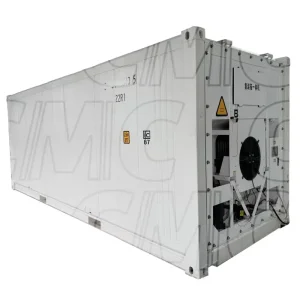
ODM The Smart Chain Cold Storage 20ft/40ft Solar Refrigerated Container 220V With DC Inverter Unit Pricelist, Exporters
Product Details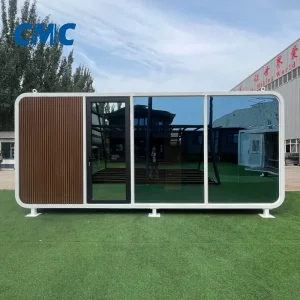
Famous 20ft Prefab Container House Flat Pack Modular House Office Tiny House Outdoor apple Cabin Office Pod Garden Office Pod Manufacturer, Product
Product Details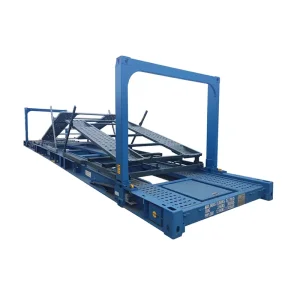
China New 20ft Car Carrier Container Special Container Exporter, Quotes
Product Details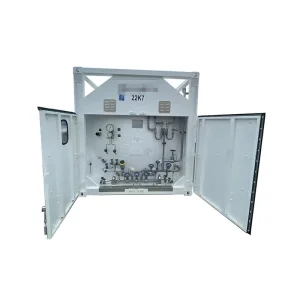
Famous T75 20ft Cryogenic Liquid Tank Container Products, Exporters
Product Details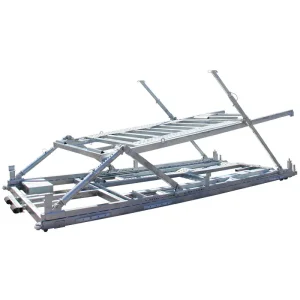
China vehicle transport rack Product, Exporters
Product Details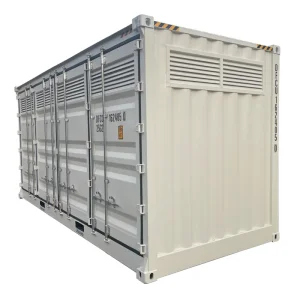
Famous 20FT High-cube Dangerous Goods Container Side Open Door with Ventilation Opening Manufacturer, Exporter
Product Details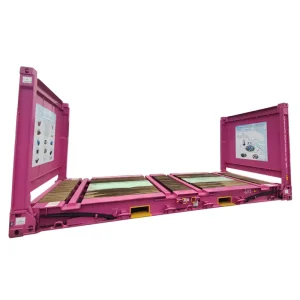
ODM New 20ft Platform Frame Container Pricelist, Exporters
Product Details