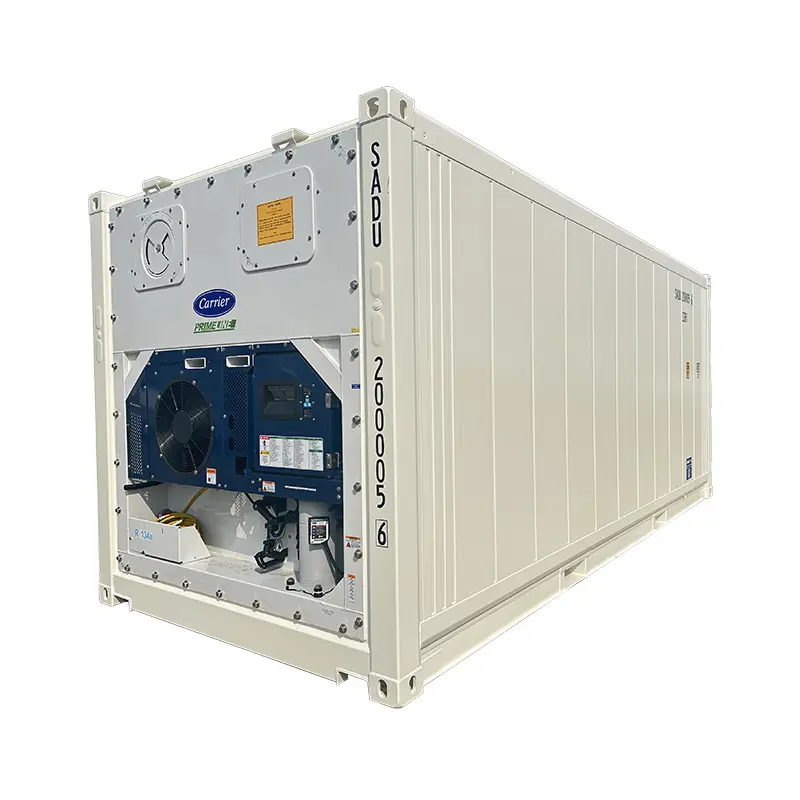
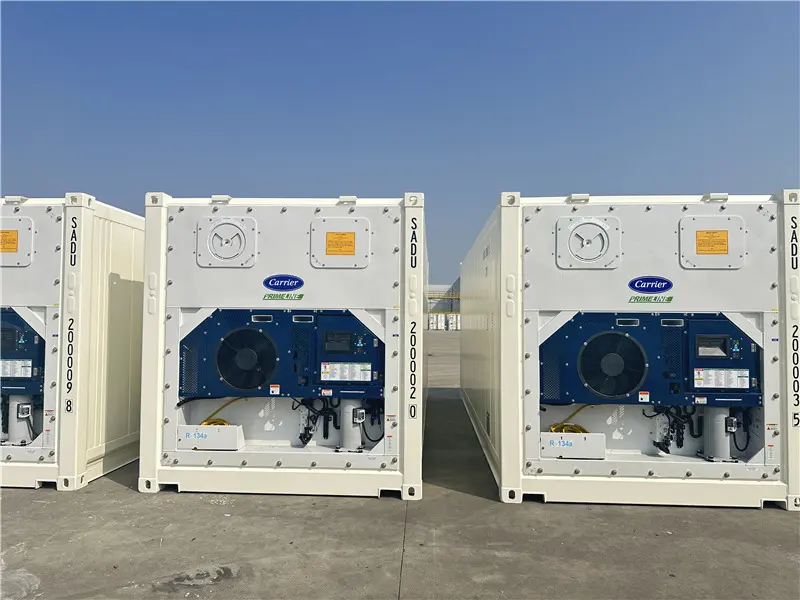
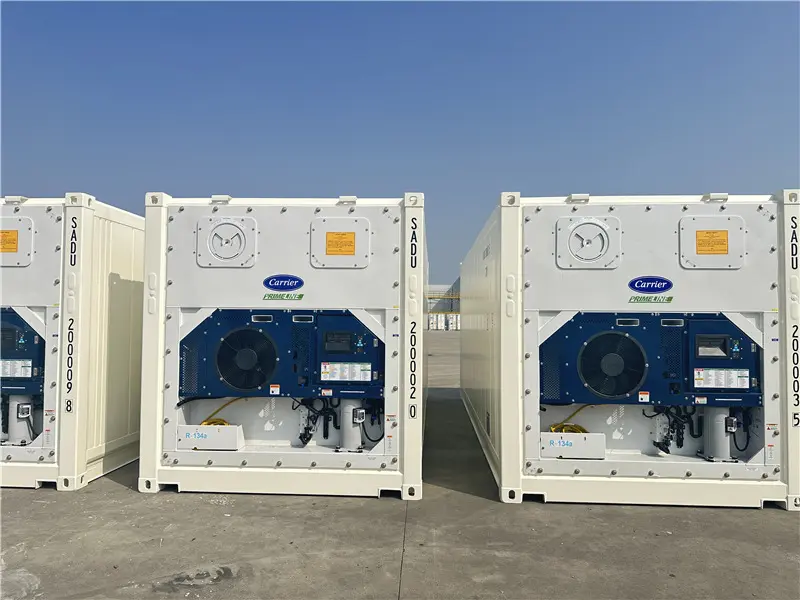
High-Quality New 40ft High Cube Carrier Refrigerator Freezer Cold Room Product, Exporters
Product Description
Product Overview
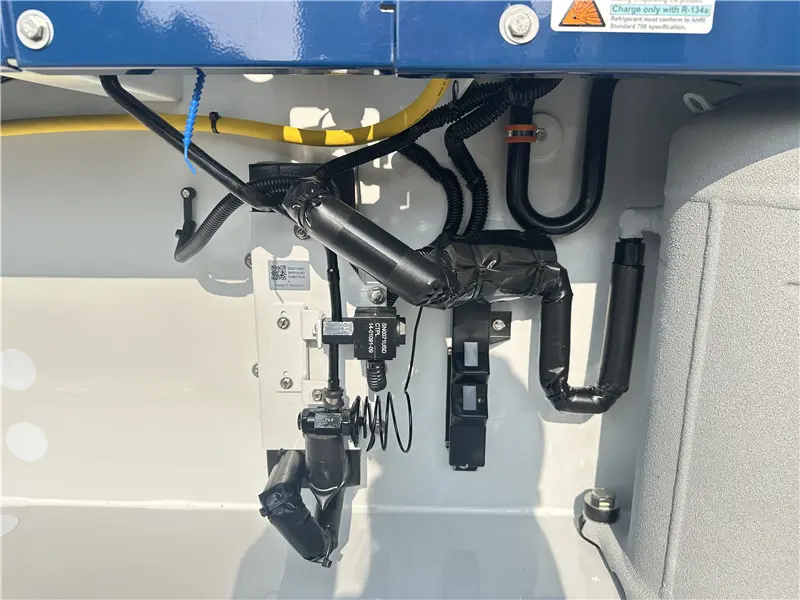
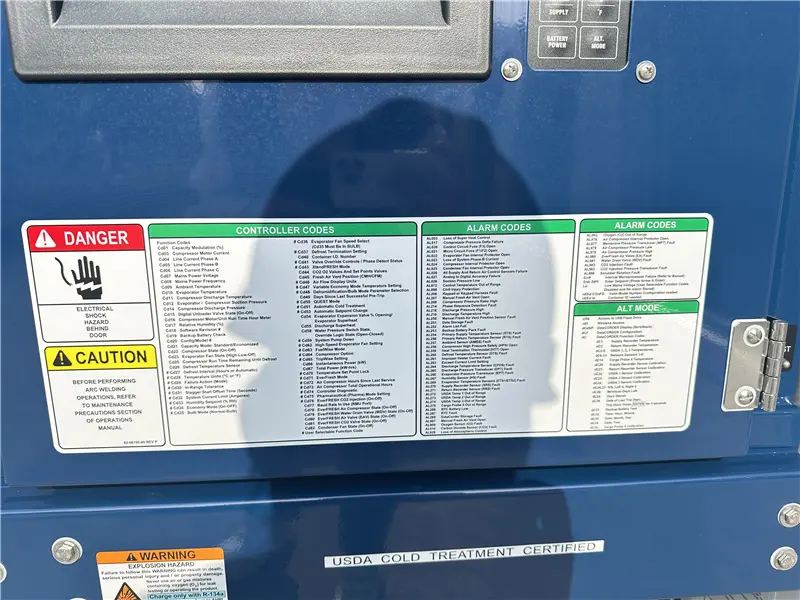
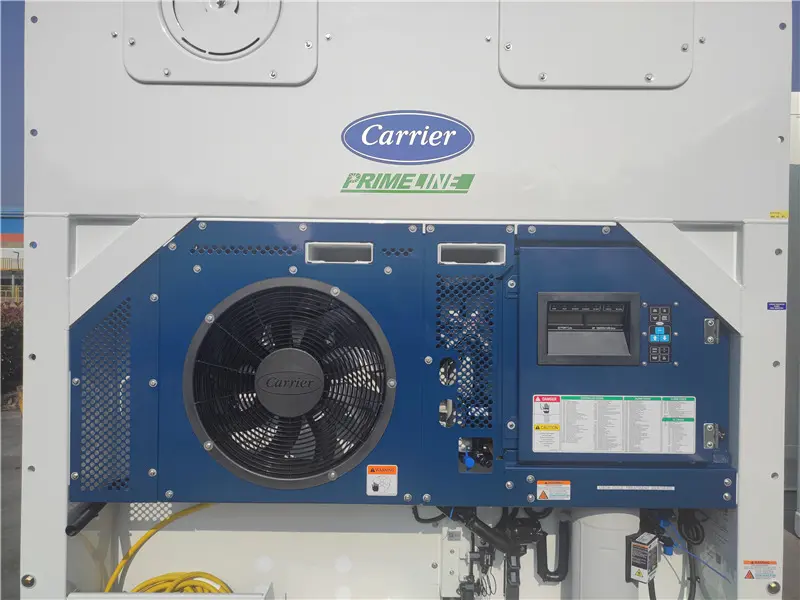
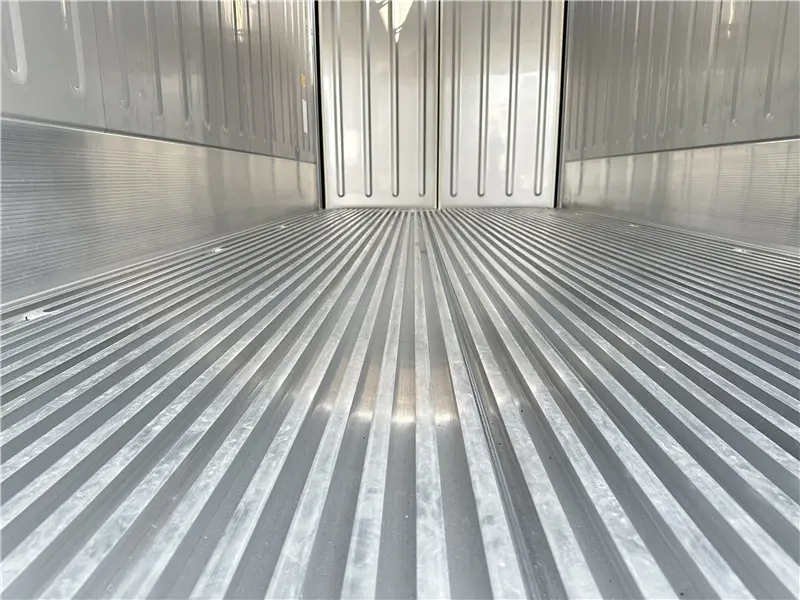
Product Specifications
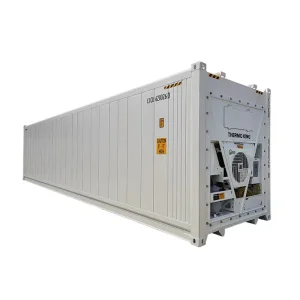
| External Dimensions (L × W × H) | 12192 × 2438 × 2896 mm (40' × 8' × 9'6") |
| Internal Dimensions (L × W × H) | 11590 × 2294 × 2554 mm |
| Door Opening Width | 2290 mm |
| Door Opening Height | 2569 mm |
| Maximum Gross Weight | 34,000 kg / 74,960 lbs |
| Maximum Payload | 29,250 kg / 64,490 lbs |
| Tare Weight (±2%) | 4,210 kg / 9,280 lbs |
| Cooling Machine Working Voltage |
400 to 500 V, 3 ph @ 60 Hz ± 2.5% 360 to 460 V, 3 ph @ 50 Hz ± 2.5% |
| Refrigerant Specification | R134A and POE Oil |
| Internal Temperature Range | -40°C to +50°C (-40°F to +122°F) |
Key Advantages
Refrigerated containers support smooth multimodal transitions across ocean, road, and railway systems. Eliminating the necessity to transfer goods or swap refrigeration equipment during transfers drastically accelerates delivery timelines, lowers handling overhead, and minimizes cargo compromise risk.
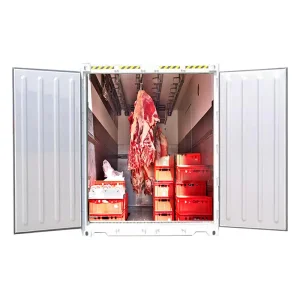
The container integrates high-efficiency thermal insulation barriers with an engineered bottom-air T-floor circulation pattern. This layout isolates cargo from ambient temperature swings, maintains balanced climate homogeneity, and significantly extends the preservation lifespan of sensitive perishables.
Frequently Asked Questions
Yes. You have the flexibility to select industry-standard cooling machinery based on your preference, including Carrier, Thermo King, and Daikin units.
Under routine operating conditions and regular preventive maintenance, the expected service lifespan of a reefer container ranges between 15 and 20 years.
Selection depends on cargo volume, payload capacity, and shipping route requirements. Common standard sizes include 10ft, 20ft, 40ft Standard, and 40ft High Cube (HC) containers.
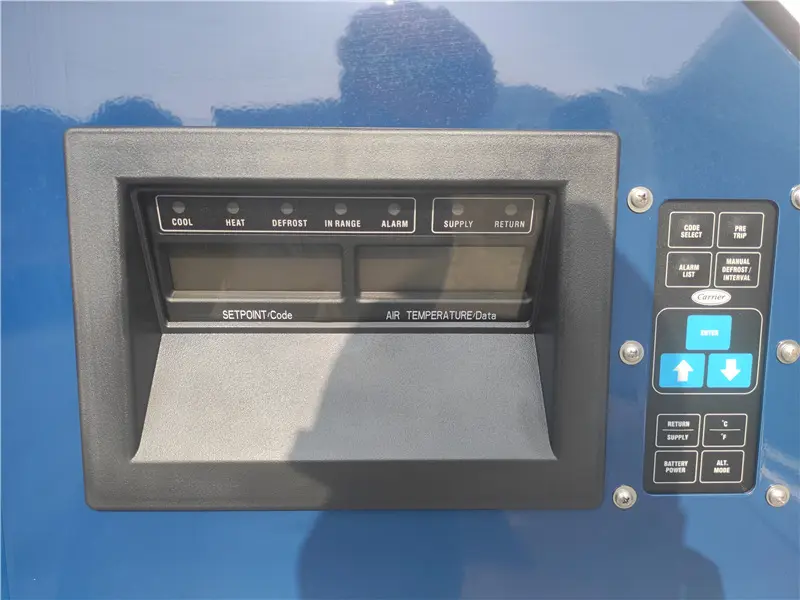
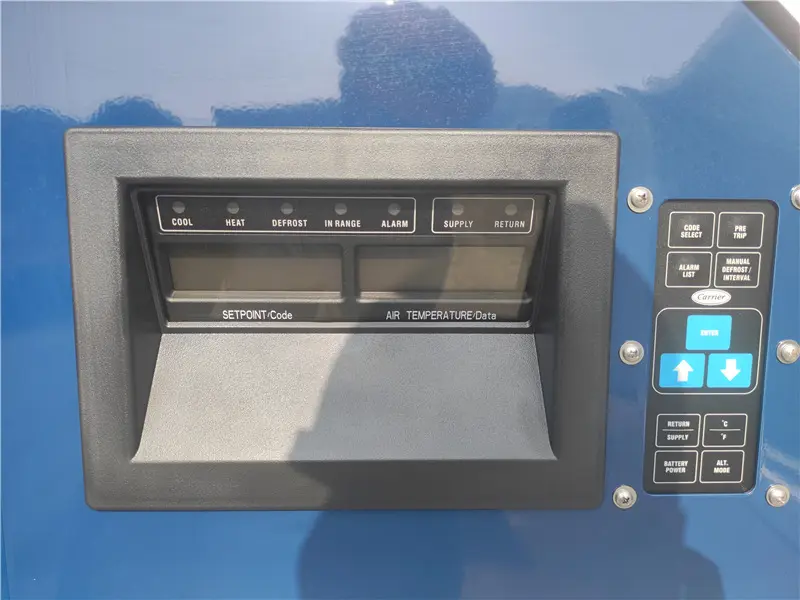
The internal climate is precisely adjustable between -40°C and +50°C (-40°F to +122°F), with temperature precision controlled within ±0.5°C to handle deep-frozen or temperature-sensitive goods.
The cooling machine operates on standard dual-frequency 3-phase industrial power: 400–500V @ 60Hz (±2.5%) or 360–460V @ 50Hz (±2.5%).
Yes. Engineered according to ISO marine freight specifications, it seamlessly transfers across cargo ships, semi-trailer chassis, and railway flatcars without repackaging goods.