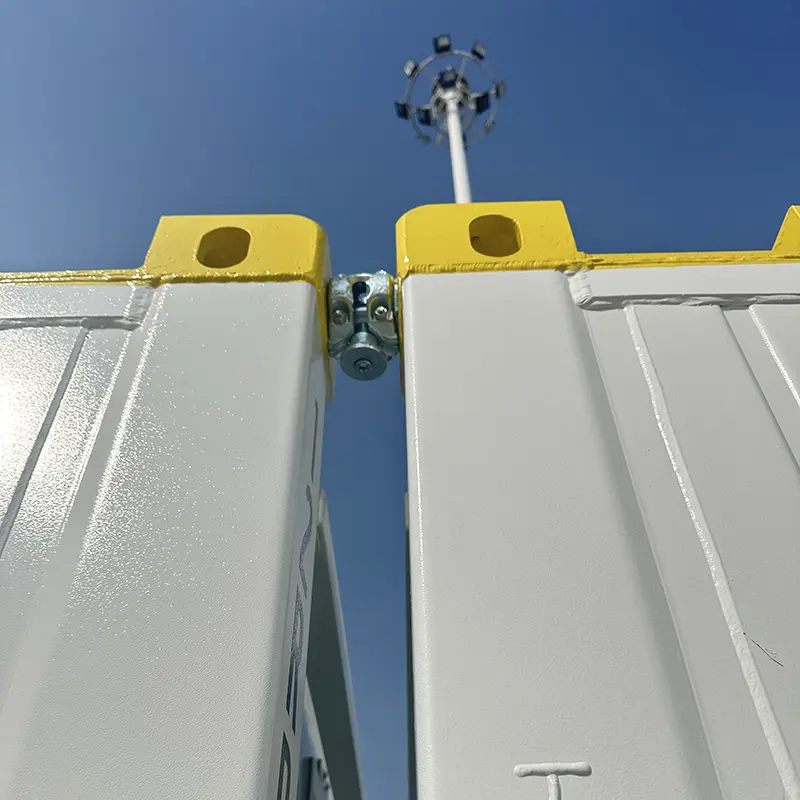
High-Quality New 10ft Certified Thermo King Freezer Container Exporter, Manufacturers
Product Description
Product Introduction
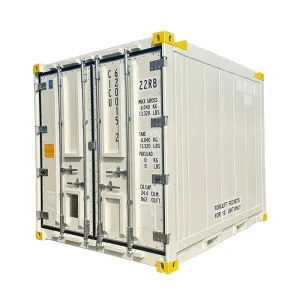
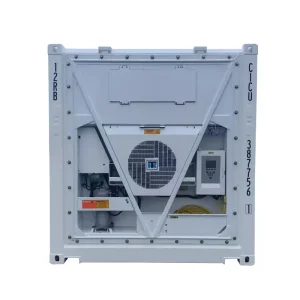
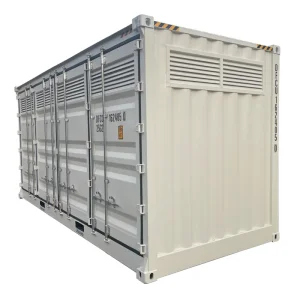
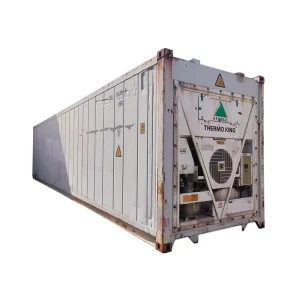
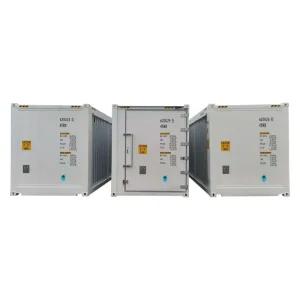
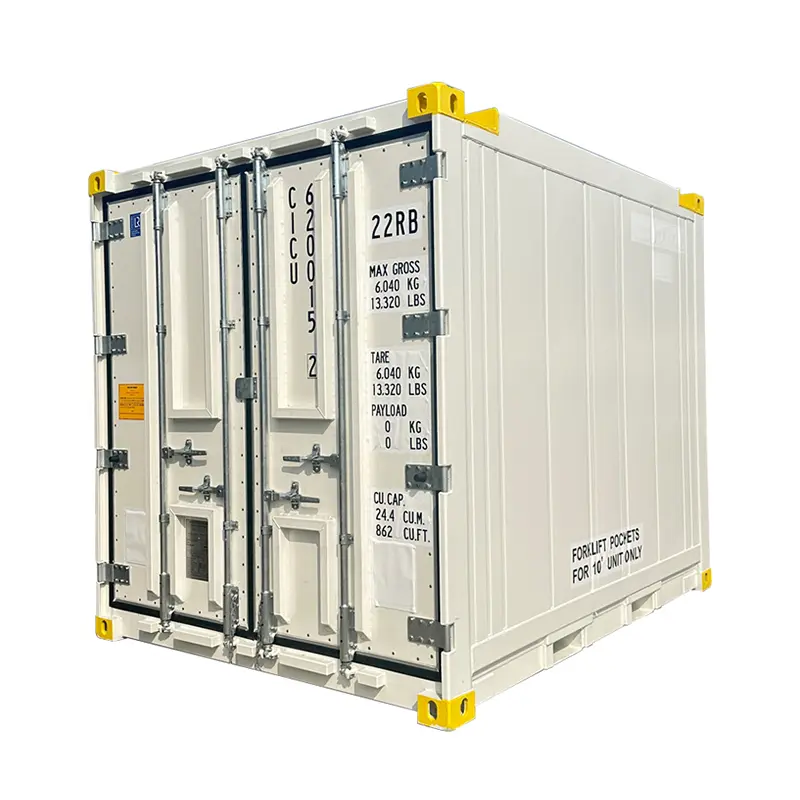
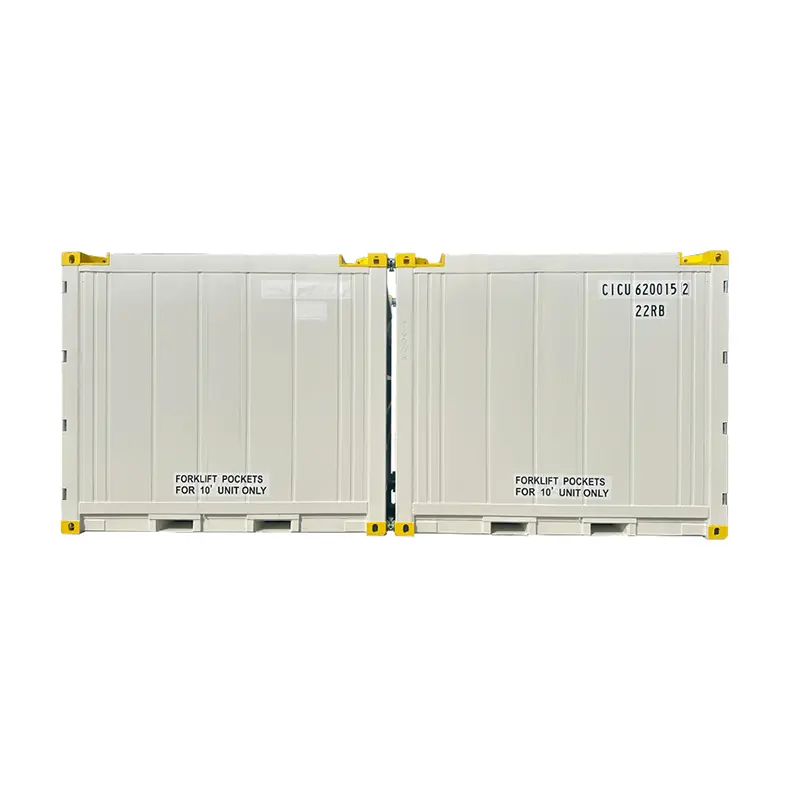
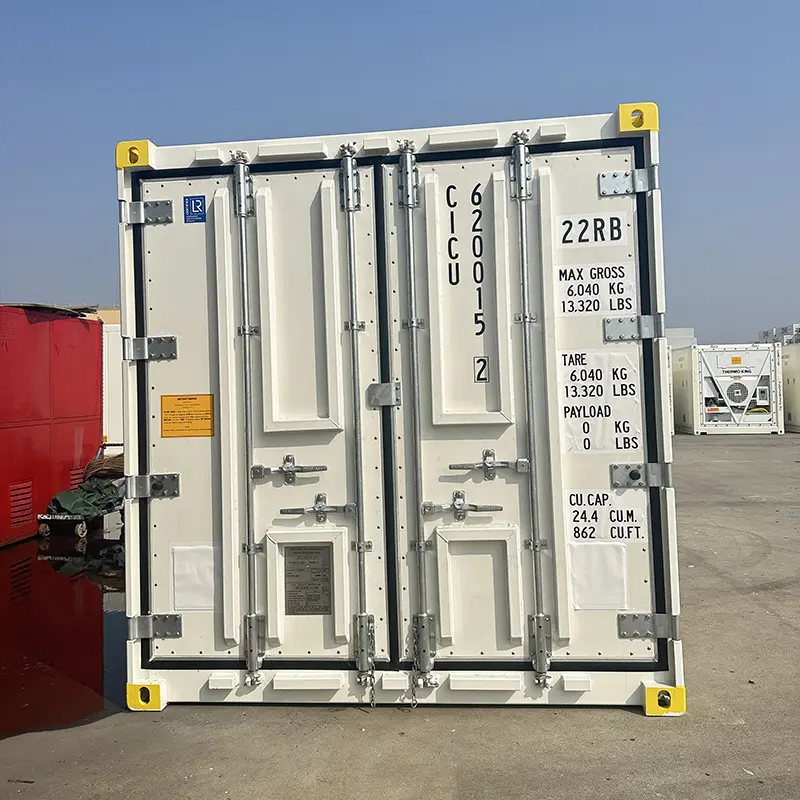
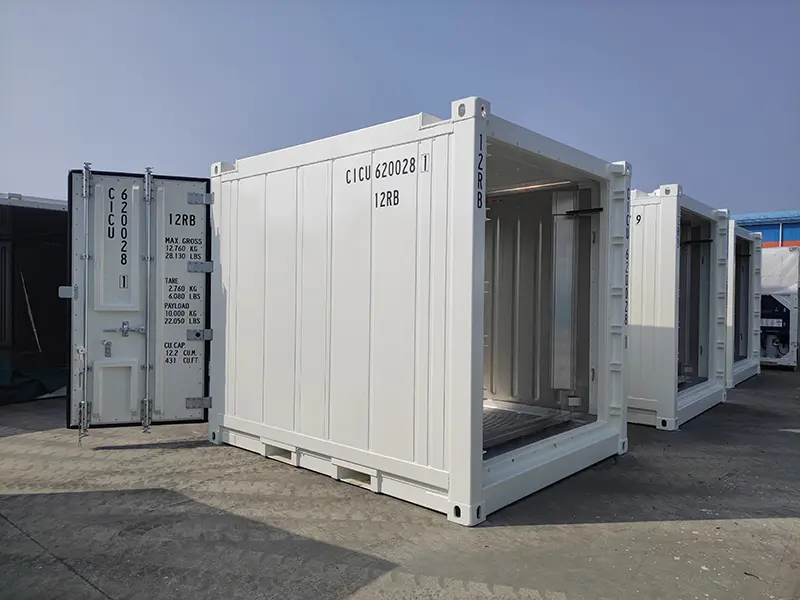
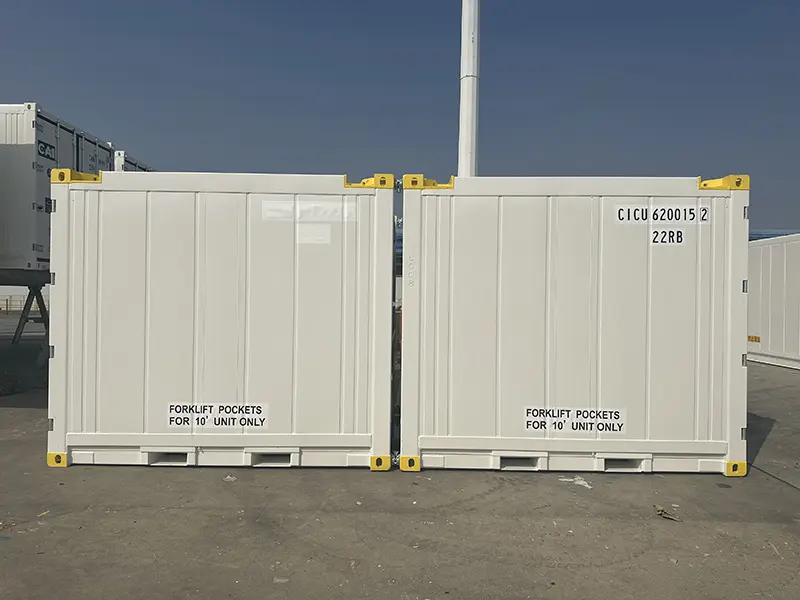
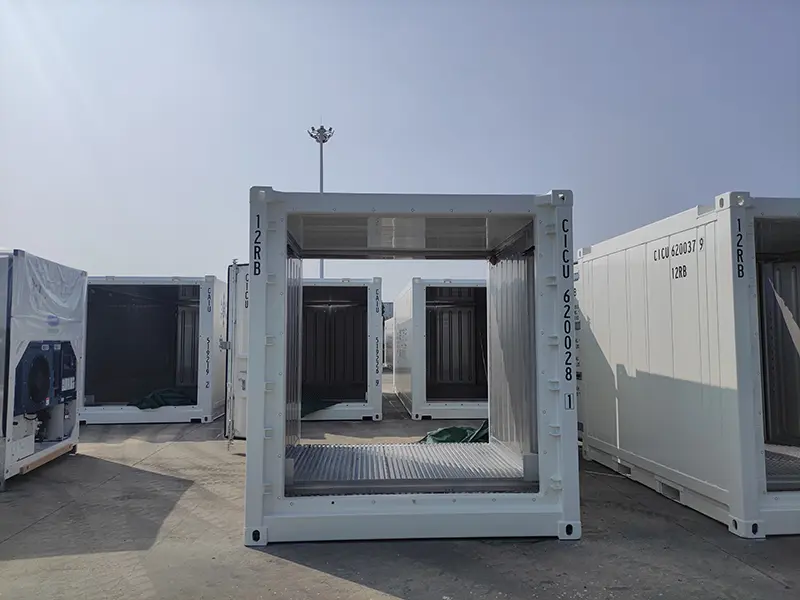
A 10-foot refrigerated container is a small container specially designed for transporting goods that require a specific temperature environment. It is a mobile "cold storage" that can provide suitable refrigeration or freezing conditions for goods during transportation to ensure that the quality of perishable goods is not damaged.
Product Specification
| External Dimension (MM) | 2991 * 2438 * 2591 |
| Internal Dimension (MM) | 2838 * 2330 * 2197 |
| Door Opening (Width) | 2340 mm |
| Door Opening (Height) | 2180 mm |
| Maximum Gross Weight | 6040 kg / 13320 lbs |
| Tare Weight (±2%) | 6040 kg / 13320 lbs |
| Cooling Machine Working Voltage |
400 to 500 V ac 3∅ 60 Hz ±2.5%
360 to 460 V ac 3∅ 50 Hz ±2.5%
|
| Refrigerant | R134A, R404A / R452A - 4.0 kg (8.8 lb) |
| Internal Temperature Range | -40°C to 30°C (-40°F to 86°F) |
Advantages
Size Flexibility
The 10-foot length is relatively small, and it is easier to flexibly arrange and stack in some transportation scenarios with limited space, such as small ships, feeder transportation or specific storage areas. It can better adapt to different loading needs and improve space utilization, especially when the cargo volume is small but refrigerated conditions are required, the 10-foot refrigerated container can provide just the right transportation space, avoiding the space waste that may be caused by using larger containers.
Good Cargo Protection
With good thermal insulation and sealing performance, it can effectively block the input of external heat and prevent the leakage of cold air, reducing the impact of temperature fluctuations on cargo. At the same time, the internal ventilation system can adjust the air composition and humidity in the box to prevent cargo from being damaged due to lack of oxygen or excessive humidity, providing a stable and suitable storage and transportation environment for cargo, reducing the risk of deterioration and damage of cargo during transportation.
Mobility & Temporary Use
It can be used as a temporary refrigerated storage device. In some special cases, such as temporary storage needs, refrigerated storage of emergency relief materials, etc., 10-foot refrigerated containers can be quickly deployed to provide immediate refrigeration solutions. Its mobility also allows it to be flexibly deployed to different locations according to actual needs to meet various temporary refrigeration needs.
Frequently Asked Questions
There should be an appropriate gap between goods so that the cold air can circulate between the goods and ensure uniform cooling effect. It is generally recommended to keep a gap of 5-10 cm between the goods and the inner wall of the freezer and between goods. At the same time, the goods should be placed according to their temperature requirements and whether they will affect each other.
It is generally recommended to perform professional maintenance every 3-6 months. Maintenance includes cleaning the condenser (removing dust, debris, etc.), checking the refrigerant level and pressure, checking the operating status of the compressor (such as the operating current and temperature of the motor, etc.), and checking whether the evaporator has excessive frost.
Usually there is a control panel on the outside of the freezer with temperature adjustment buttons or knobs. You can set the temperature by pressing buttons or turning knobs according to the specific requirements of the goods. After setting the temperature, the temperature sensor and controller in the freezer will automatically adjust the working state of the refrigeration system to reach and maintain the set temperature.
The internal temperature range of the unit can be adjusted from -40°C to 30°C (-40°F to 86°F), enabling suitable conditions for both deep freezing and standard chilled cargo transportation.
The cooling unit operates across standard industrial ranges: 400 to 500 V ac 3∅ 60 Hz ±2.5%, or 360 to 460 V ac 3∅ 50 Hz ±2.5%, allowing for stable operation under different power supplies.
The system utilizes R134A or R404A/R452A with a charge specification of 4.0 kg (8.8 lb) to provide stable and efficient thermal performance.