ODM New 20ft Platform Frame Container Pricelist, Exporters
Product Description
Product Introduction
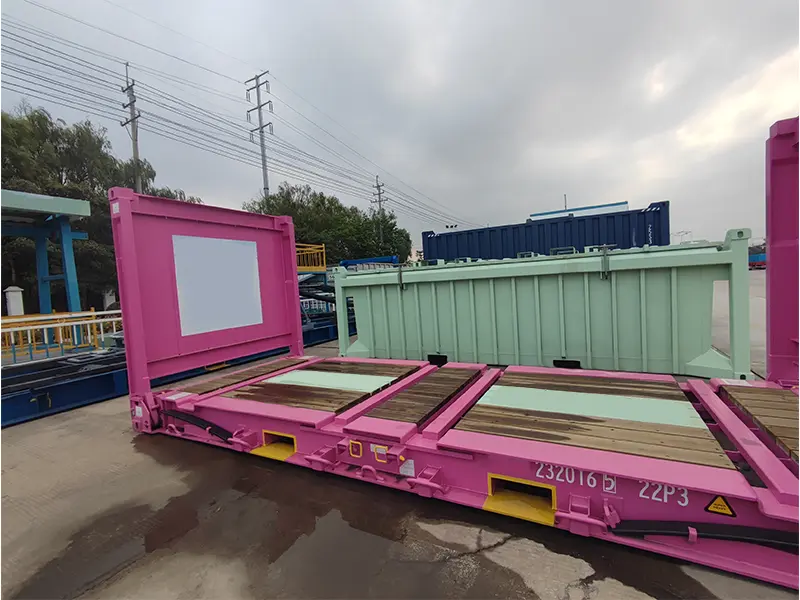
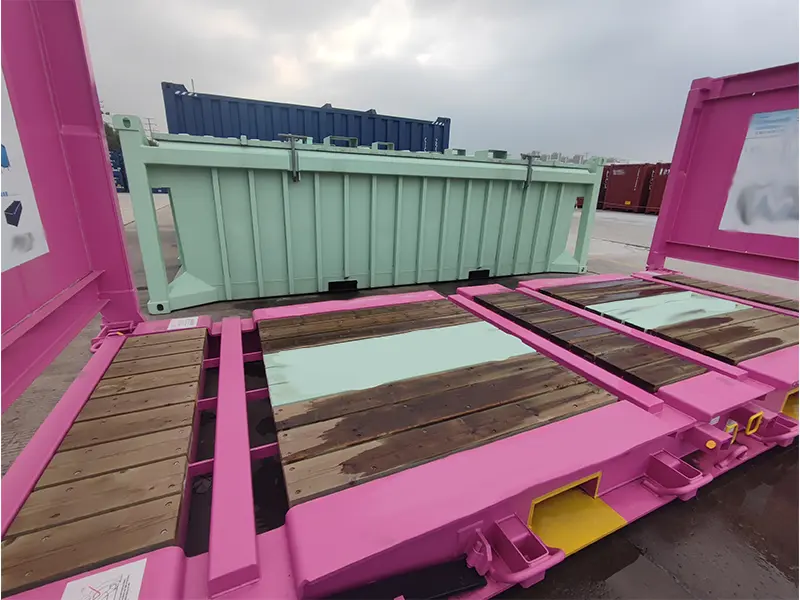
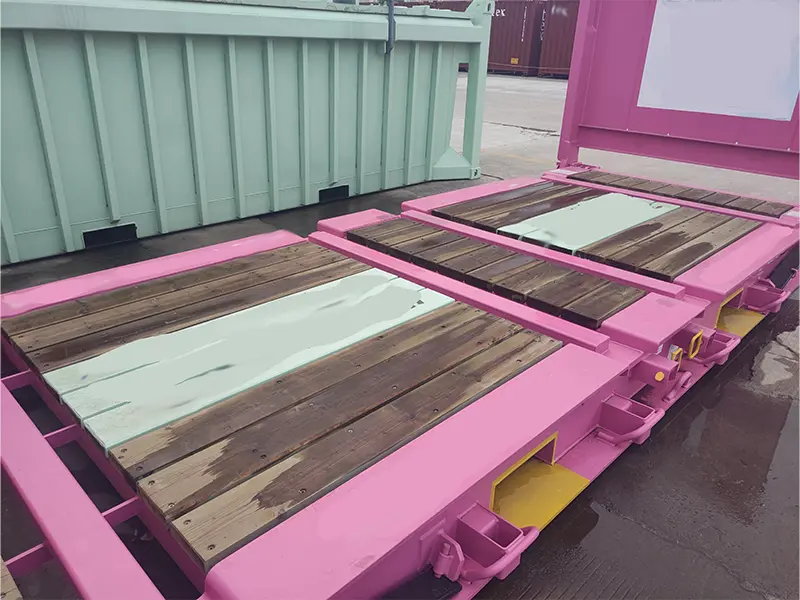
Advantages
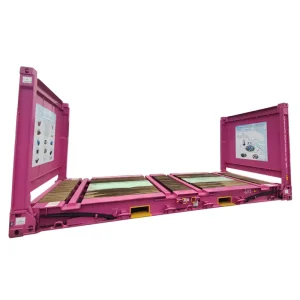
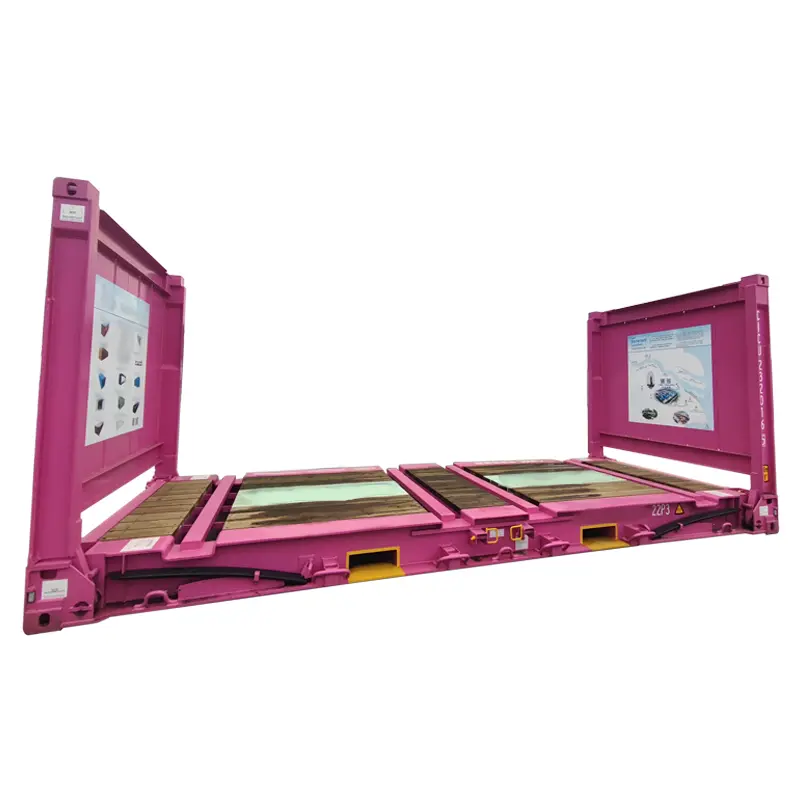
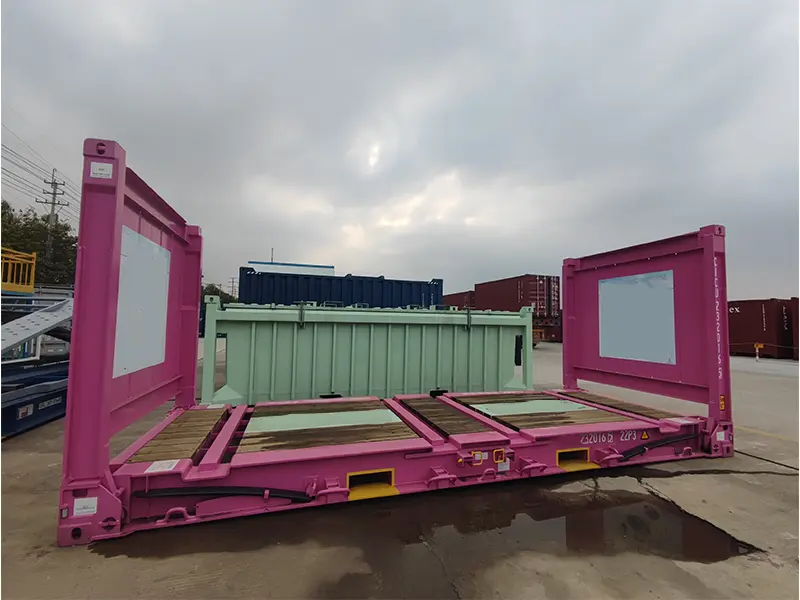
Platform frame containers are not restricted by the walls of the box and can easily carry oversized cargo. For example, large mechanical equipment, such as the blades of wind turbines, may be tens of meters long, which cannot be accommodated by ordinary containers, and the open platform of the platform frame container can provide enough space for such cargo.
Platform frame containers are mainly loaded and unloaded by lifting, which is very flexible. Various cranes can be used for loading and unloading, such as gantry cranes at ports, shore cranes at docks, and truck cranes at construction sites.
When transporting large and irregular cargo, platform frame containers can make full use of space. Because it has no closed box walls, there will be no situation where ordinary containers cannot place large cargo due to the space occupied by the box walls.
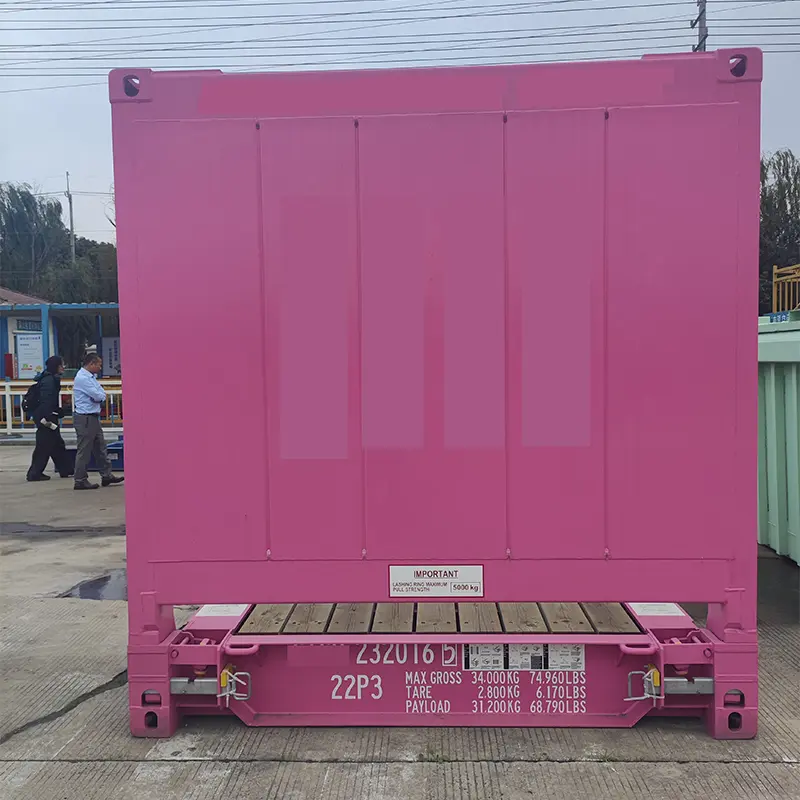
Platform frame containers meet international standard sizes and have advantages in multimodal transport. It can be easily converted between different modes of transportation such as road, rail, and water.
Frequently Asked Questions
It can load a variety of large, overweight and irregularly shaped cargoes. Such as large machinery and equipment, building materials, energy equipment and auto parts. These cargoes are beyond the capacity of ordinary containers due to their size or weight, and the open platform and high load-bearing capacity of the flat frame container can meet their transportation needs.
First, consider the shape, weight and center of gravity of the cargo. For cargo with regular shape and low center of gravity, ropes or steel belts can be used to tie through the fixed points on the frame. For cargo with high center of gravity or irregular shape, in addition to tying, auxiliary fixing equipment such as brackets and struts may be needed to ensure the stability of the cargo. When fixing the cargo, make sure it is firmly fixed to prevent the cargo from shaking, tipping or displacement during transportation.
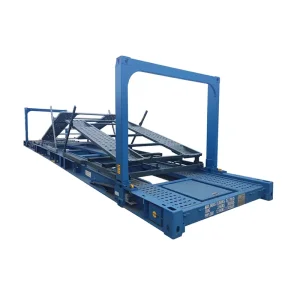
The four corner columns of the frame are made of heavy-gauge square or rectangular steel pipes designed to handle immense vertical pressure. Complemented by upper and lower welded beams and diagonal braces along the sides, the structure prevents deformation and maintains structural integrity throughout travel.
Yes, they are engineered to meet international standard dimensions and specifications, enabling smooth handling via gantry cranes, shore cranes, and mobile construction cranes across intermodal transfer points.
Multiple tie-down rings and welded metal hooks are distributed strategically around the perimeter and across the middle of the platform surface to allow versatile and secure lashing patterns tailored to odd-sized freight.