Technical White Paper & Canadian Procurement Brief

Hard-top Open-top Container Product & Manufacturers for Canada

Engineered structural solutions for Canadian mining, oil sands, sub-zero intermodal rail, and heavy project cargo. Built with removable rigid steel roofs, low-temperature Corten-A steel, and full Transport Canada & CSC compliance.

Featured Fleet Portfolio

Primary Hard-Top & Intermodal Units for Canada

Heavy-duty, crane-loadable containers custom-built for high-density bulk, mining equipment, and extreme climatic tolerances across Canada's East-to-West freight corridors.

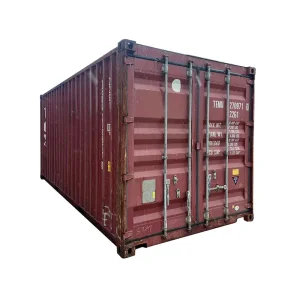
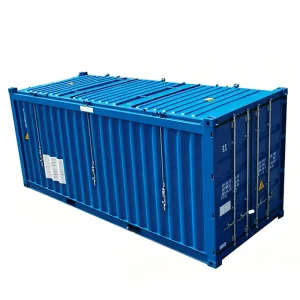
China 20ft New Hard Open Top Shipping Container Manufacturer

Canada 20ft Hard-Top Open-Top Steel Shipping Container

  • Payload: Up to 28,180 kg
  • Roof: Detachable rigid steel panel
  • Standard: ISO 1496-1 / CSC Certified
Explore Specification →
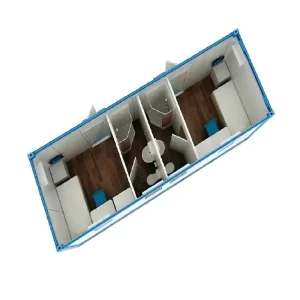
Famous 20ft 40ft Standard Size Accommodation Modular House Container

Modular Accommodation Container (Canadian Northern Camps)

  • Insulation: Arctic Grade PUR / Rockwool
  • Sizes: 20ft & 40ft Standard / High-Cube
  • Deployment: Mining, Forestry & Remote Sites
Explore Specification →
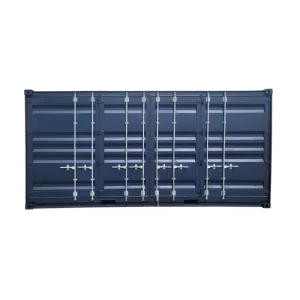
High-Quality New 20ft Customized Side Door Dry Cargo Shipping Container

20ft Full Side-Door Intermodal Cargo Container

  • Access: Dual bi-fold full side opening
  • Structure: SPA-H Corten Weathering Steel
  • Flooring: 28mm Treated Marine Plywood
Explore Specification →
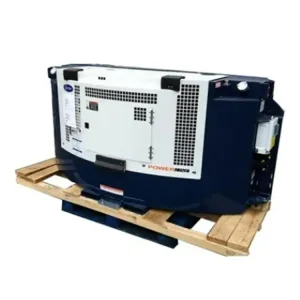
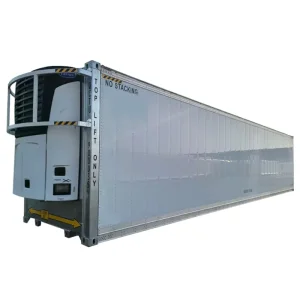
China Refrigerated container diesel generator Exporter

Reefer Clip-On Diesel Genset for Canadian Rail Links

  • Engine: Low-emission dual speed Tier 4
  • Fuel Tank: High-capacity sub-zero rated
  • Mount: Intermodal chassis clip-on frame
Explore Specification →
Industrial Reality & Demand

The Canadian Industrial Logistics Context for Hard-Top Containers

Understanding why Canadian heavy industries are transitioning from soft-top tarpaulins to structural hard-top open-top containers.

Across the vast geography of Canada—stretching from the container terminals of Metro Vancouver and Prince Rupert to the industrial manufacturing corridors along the Saint Lawrence Seaway—logistics operators encounter logistical challenges unique to North America. The Canadian landscape demands specialized intermodal equipment engineered to transport high-density, over-height, and top-loaded industrial assets under severe atmospheric conditions.

Historically, soft-top (tarpaulin) open-top containers were widely utilized for top-loaded cargo. However, major Canadian mining consortiums, structural steel manufacturers, and intermodal freight forwarders have experienced systematic failures with flexible canvas covers. Canada's northern routes—such as the rail arteries operated by Canadian National (CN) and Canadian Pacific Kansas City (CPKC) through the Canadian Rockies, the Laurentian Shield, and Northern Ontario—routinely expose rolling stock to extreme snow overburden, hurricane-force wind tunnels, flying rail ballast, and sustained sub-zero temperatures dropping below -40°C.

-50°C
Arctic Cold Toughness
30.48 T
Max Gross Weight Rating
SPA-H
Corten Weathering Alloy
C5-M
Marine Coating Standard

Under these punishing realities, Hard-Top Open-Top (HTOT) Containers have emerged as the mission-critical standard. Featuring a solid, removable steel roof panel locked down via corner-casting interlocks and heavy-duty mechanical clamping cams, hard-top units convert seamlessly between an open-top configuration for crane loading and an ultra-secure, rigid dry van structure capable of supporting full stacking loads and double-stacked rail operations without fear of tear, water ingress, or structural buckling.

Engineering Insight: Soft-Top vs. Hard-Top Snow Load Failures

Standard PVC tarpaulins routinely pool heavy Canadian slush and packed snow, resulting in localized sag loads exceeding 350 kg/m². This causes fabric punctures, water leakage that destroys sensitive machinery, and hazardous overhead ice sheets during transit. A structural hard-top container redistributes transverse snow loads directly into the top side rails and corner posts, guaranteeing zero cargo degradation and compliance with Canadian rail safety clearance envelopes.

Structural Metallurgy & Design

Engineering Specifications for Extreme Canadian Operations

A breakdown of the material science, mechanical tolerances, and structural design that allow our HTOT containers to thrive in Canadian environments.

Removable Rigid Roof Assembly

Fabricated with cold-rolled corrugated SPA-H Corten steel (1.6mm - 2.0mm) reinforced with transverse box-profile stiffeners. Integrated forklift pockets and crane sling hoisting rings allow standard depot reach-stackers or overhead gantry cranes to lift and stow the roof in under four minutes.

Swing-Out Removable Header

The rear door header bar swings out 180 degrees or can be completely detached. This eliminates vertical restriction during loading, allowing oversized industrial gear, heavy slurry pumps, long mining drills, and timber processing machinery to be rolled or skidded directly inside without catching the top frame.

Sub-Zero Resilient Gasketing

Utilizes multi-lip synthetic EPDM and silicone rubber co-extruded door and roof perimeter seals. Engineered to preserve elastomeric flexibility down to -50°C, preventing the micro-cracking and brittleness that lead to water and sodium de-icing salt ingress during high-speed Canadian winter transit.

Dimensional Metric 20ft Hard-Top Standard (20HT) 40ft Hard-Top Standard (40HT) 40ft High-Cube Hard-Top (40HCHT)
External Length / Width 6,058 mm / 2,438 mm 12,192 mm / 2,438 mm 12,192 mm / 2,438 mm
External Height 2,591 mm (8' 6") 2,591 mm (8' 6") 2,896 mm (9' 6")
Internal Opening (Roof) 5,590 mm × 2,210 mm 11,724 mm × 2,210 mm 11,724 mm × 2,210 mm
Max Gross Weight (Rating) 30,480 kg (67,200 lbs) 32,500 kg (71,650 lbs) 34,000 kg (74,950 lbs)
Tare Weight (with Roof) 2,650 kg (5,842 lbs) 4,350 kg (9,590 lbs) 4,700 kg (10,361 lbs)
Floor Flooring Spec 28mm Birch Hardwood / Steel Plate 28mm Australian Hardwood / Steel Plate 28mm Marine Plywood / Steel Option
Lashing Ring Capacity 16 units × 4,000 kg each 32 units × 4,000 kg each 32 units × 5,000 kg high-strength
Cross-Sector Implementation

Macro Industry Solutions Across Canada

Delivering high-integrity containment solutions tailored to the core pillars of Canada’s export and heavy resource economies.

1. Alberta Oil Sands & Hydrocarbon Refining (Fort McMurray, Edmonton, Calgary)

The transport of specialized bitumen handling systems, heavy slurry pumps, heat exchanger bundles, and replacement gate valves requires overhead crane access due to individual component weights often exceeding 12 to 18 metric tons. Once positioned, the cargo cannot risk moisture exposure during cross-prairie transport. Our hard-top units allow heavy overhead drop-in loading while guaranteeing impenetrable rigid steel encapsulation throughout transit along Alberta Highway 63 and connecting rail spurs.

2. Deep-Rock Mining & Mineral Concentrates (Sudbury, Val-d'Or, Labrador Trough)

Gold, nickel, iron ore, and lithium mining operations across the Canadian Shield require dense, heavy payload capacities. When hauling massive core drill assemblies, subterranean excavation bucket teeth, or bulk mineral concentrate bags, floor loads become concentrated. We engineer reinforced cross-member under-flooring featuring 4.0mm cold-formed steel sections on 250mm centers, accompanied by embedded 4-metric-ton D-ring anchor points that prevent load shifting on severe rail gradients.

3. Heavy Forestry & Pulp Mill Equipment (British Columbia & Quebec)

Transporting timber harvester heads, debarking drums, and pulp rolling cylinders involves cargo that exceeds standard container door dimensions. With the swing-out header open and the rigid roof removed, side and top cranes can maneuver complex machinery geometries without structural interference. Once secured, the roof is mechanically clamped back in place, rendering the container stackable up to 9 units high in marine staging terminals like Vancouver's Centerm or Roberts Bank.

4. Clean Energy, Hydroelectric, & Nuclear Refurbishment (Ontario, Newfoundland)

Canadian nuclear generating stations (e.g., Darlington, Bruce Power) and megaproject hydroelectric dams (e.g., Churchill Falls, Site C) demand certified cleanliness and extreme cargo protection for precision stator coils, turbine runners, and subsea cabling. Hard-top open-top containers prevent particulate contamination while facilitating vertical gantry crane placement directly onto anti-vibration dunnage systems.

Regulatory Assurance

Canadian Regulatory Compliance & Quality Engineering

Strict alignment with Canadian federal standards, classification societies, and international container conventions.

Deploying intermodal equipment onto Canadian roadways and rail networks requires compliance with stringent federal and provincial statutory mandates. Non-compliant container structures present catastrophic derailment risks and result in immediate port-of-entry impoundment by the Canada Border Services Agency (CBSA) or Transport Canada.

Transport Canada & Safe Container Convention (CSC)

Every hard-top container produced for the Canadian corridor is fitted with a consolidated, stamped stainless steel Data Plate (CSC Plate) verified by major IACS classification societies (Bureau Veritas, Lloyd's Register, or DNV). This plate certifies end-wall strength, side-wall strength, transverse racking resistance, and maximum permissible stacking weight (tested to 216,000 kg to ensure safe stacking during ocean carriage).

CWB (Canadian Welding Bureau) Standard Convergence

Our automated submerged-arc and gas metal arc welding (GMAW) processes conform to structural integrity levels benchmarked against CSA Standard W47.1 and W59. Every seam joining the structural corner castings (SCW480 cast steel) to the Corten corner posts is 100% non-destructively tested (NDT) via ultrasonic and magnetic particle methods to ensure structural toughness against thermal shock cracking in northern permafrost regions.

Charpy V-Notch Sub-Zero Fracture Mechanics

Unlike standard temperate-climate containers fabricated from commercial-grade carbon steels that become brittle below -15°C, our Canadian-spec units mandate SPA-H Corten steel certified with Charpy V-notch impact toughness down to 27 Joules at -40°C. This metallurgical standard guarantees that during high-speed rail dynamic vibrations or sudden crane drops in mid-winter Edmonton or Winnipeg, the container framework absorbs kinetic energy plastically without brittle cracking.

Procurement Economics

TCO & Global Supply Chain Optimization for Canadian Buyers

Strategic logistics planning, factory-direct manufacturing, and one-way repositioning programs to maximize ROI.

Purchasing specialized container equipment involves balancing capital expenditure against long-term lifecycle durability. For Canadian procurement officers, leasing brokers, and EPC (Engineering, Procurement, Construction) contractors, relying on intermediaries or regional stockists often incurs a 30% to 45% pricing premium accompanied by compromised legacy specifications.

Direct OEM Engineering

Direct communication with our manufacturing engineering team in Tianjin allows custom dimensional layouts, specialized internal lashing tracks, customized roof lifting lugs, and company corporate livery powder coating without broker inflation.

"One-Way Freight" Repositioning

To eliminate empty dead-freight ocean shipping costs from China to Canadian ports (Vancouver, Montreal, Prince Rupert), we orchestrate "One-Way Cargo Loaded" arrangements. High-value dry goods are packed into your new containers for their maiden voyage, heavily subsidizing or completely covering trans-Pacific ocean freight costs.

25-Year Asset Lifespan

By pairing high-grade SPA-H alloy with a 3-layer zinc-rich epoxy paint system (exceeding 240 microns dry film thickness), our containers resist the heavy calcium chloride and magnesium chloride road de-icers prevalent across Canadian highways, preserving resale value for decades.

Future Innovations

2025–2030 Engineering Roadmap: Intelligent Intermodal Units

Pioneering the next generation of smart, lightweight, and climate-monitored hard-top equipment for northern frontiers.

As the Canadian logistics market adopts automated port processing, AI-driven rail dispatching, and stringent carbon footprint accounting, our engineering division is introducing innovations designed for next-decade operations:

  • 1. IoT Hard-Top Roof Integrity & Seal Telemetry
    Integrated micro-sensors positioned along the roof clamping channels monitor clamping pressure and relative humidity in real time. Satellite communication modules report seal integrity and detect roof dislodgement attempts or catastrophic seal breach during rail journeys across remote Canadian stretches.
  • 2. Ultra-High Tensile Lightweight Steels (Tare Weight Reduction)
    By strategically integrating 700 MPa yield-strength advanced high-strength steels (AHSS) into the top side rails and cross beams, our newest prototypes reduce dead tare weight by up to 12% without sacrificing roof stacking or racking rigidity. This translates directly to increased payload limits under provincial Highway Traffic Act axle weight regulations.
  • 3. Rapid-Release Ergonomic Hydraulic Roof Clamps
    Eliminating manual crowbar and wrench leverage in freezing conditions, the 2026 model hard-top features an internal single-point manual hydraulic or pneumatic latch release. Terminal operators can unlock and lift the 450 kg steel roof panel in seconds without having crews climb onto the container top in freezing rain.
Technical FAQ

Frequently Asked Questions: Canada Sourcing & Operations

In-depth technical answers addressing operational mechanics, customs clearance, and cold-weather deployment.

How does a Hard-Top Open-Top container differ from a standard soft-top (tarpaulin) container?
A standard soft-top open-top relies on removable roof bows and a flexible PVC fabric tarpaulin laced with a TIR wire cord. While lightweight, tarpaulins are vulnerable to vandalism, knife tears, snow sag loads, and moisture leakage. A Hard-Top container features a rigid, fully structural corrugated steel roof secured by internal locking cams. When locked, it possesses the structural integrity, water-tightness, and racking resistance of a heavy-duty dry cargo container, permitting full top-tier stacking in container yards and double-stack rail transport.
Can Canadian National (CN) and CPKC double-stack hard-top containers with the roof attached?
Yes. Provided the cargo inside does not exceed standard internal height limits and the rigid steel roof is properly latched down, our hard-top open-top units conform precisely to ISO 668 dimensions and AAR (Association of American Railroads) clearance plates. They can be placed on the bottom or top tier of well cars across the Canadian transcontinental rail network.
How is the removable roof handled when loading oversized over-height cargo?
If cargo height exceeds the roofline (over-height cargo), the rigid steel roof can be detached and stored. It can either be strapped vertically against the interior side wall alongside the cargo (if width permits) or shipped separately as an empty panel on a flatrack. Alternatively, if over-height cargo is permanently exposed, the container travels under specific open-top out-of-gauge (OOG) shipping tariffs.
What specific measures prevent door and roof seals from freezing shut in -40°C Canadian winters?
We utilize high-grade thermoset EPDM dual-lip gaskets infused with cryogenic plasticizers to maintain elasticity down to -50°C. Furthermore, we apply industrial silicone hydrophobic coatings to prevent condensate contact icing, and the mechanical locking bars feature hot-dip galvanized high-torque cams that easily shear through accumulated ice buildup during operation.
What documentation is provided to clear Canadian customs and port authorities?
Each container shipment is supplied with a comprehensive export documentation package: original Commercial Invoice & Packing List, ocean Bill of Lading, IACS Classification Society Certificate (Bureau Veritas or ISO), CSC Safety Approval Certificate, factory metallurgical test reports (MTR) confirming SPA-H Corten steel compliance, and wood fumigation/phytosanitary certificates conforming to Canadian Food Inspection Agency (CFIA) requirements.
What is the standard production lead time and ocean transit time to Canada?
Standard OEM production runs average 25 to 35 calendar days from technical drawing sign-off. Direct trans-Pacific ocean transit from our Tianjin facility via the Port of Tianjin to Port of Vancouver or Prince Rupert typically requires 16 to 22 days. Transits to East Coast ports like Montreal or Halifax take approximately 30 to 38 days via the Panama or Suez Canal routes.
Complete Equipment Catalog

Engineered Container Fleet Options for Canadian Operations

Specialized units spanning offshore transport, cryogenic tanks, deep-freezers, and high-cube configurations built for Canadian commercial enterprises.

Buy 20ft Used Shipping or Storage Container Manufacturer

20ft Cargo-Worthy Storage & Shipping Container

  • Condition: Cargo-Worthy (CW) / IICL-5
  • Application: On-site storage & rail utility
  • Certification: Valid CSC inspection plate
Explore Specification →
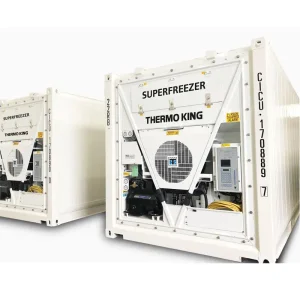
OEM New Deep Freezer Refrigerator Container

OEM Ultra-Deep Freezer Container (-40°C to -60°C)

  • Cooling: High-performance dual compressor
  • Usage: Canadian seafood & biomedical logistics
  • Interior: Marine grade 304 stainless steel
Explore Specification →
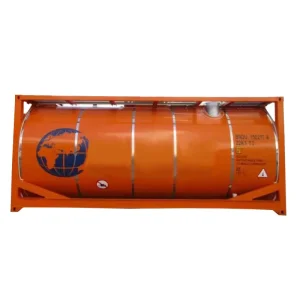
China 20 Foot ISO Liquid Tank Container for Water

20ft ISO Liquid Food & Water Tank Container

  • Vessel: 316L mirror-polished stainless steel
  • Capacity: 21,000 to 26,000 Liters
  • Insulation: Polyurethane with heating steam coils
Explore Specification →
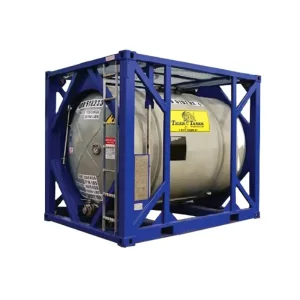
Buy New DNV Certification 10ft Offshore Tank Container

10ft DNV 2.7-1 / EN 12079 Offshore Tank Container

  • Rating: Canadian Atlantic offshore platforms
  • Slings: Integrated 4-leg offshore rated wire bridle
  • Frame: Heavy tubular structural steel
Explore Specification →
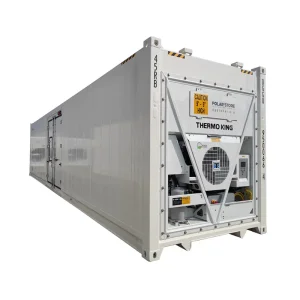
Famous 40ft High-Cube Side Open Door Reefer Container

40ft High-Cube Full Side-Door Reefer Container

  • Access: Complete side bi-fold accordion doors
  • Unit: Thermo King / Daikin / Carrier compatible
  • Function: Rapid forklift pallet loading cold chain
Explore Specification →
Famous DNV Certification Silt Basket Container

DNV Certified Offshore Silt & Drilling Cuttings Basket

  • Standard: DNV 2.7-1 & ISO 10855 verified
  • Drainage: Heavy valve and filter floor drain assembly
  • Environment: Newfoundland & Arctic offshore rigs
Explore Specification →
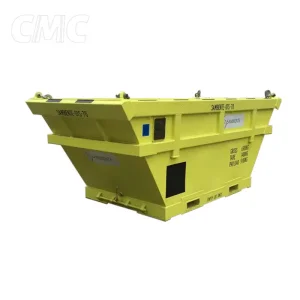
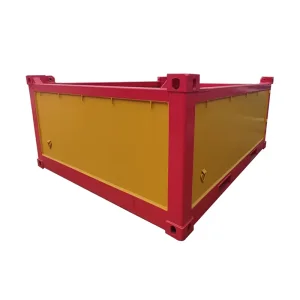
High-Quality New Offshore Basket Container

Heavy Industrial Long-Tool Offshore Cargo Basket

  • Profile: Elongated low-height profile for drill pipes
  • Lifting: Certified padeyes and certified proof load tested
  • Coating: Marine multi-coat epoxy hot-spray system
Explore Specification →
China Carrier X4-7300 Refrigeration Container

Integrated Refrigerated Intermodal Power Unit

  • Engine: Carrier X4-7300 High-Capacity Integrated
  • Thermal: Continuous temperature tracing telemetry
  • Efficiency: Micro-channel condenser for fuel savings
Explore Specification →

Order Your Custom Hard-Top Container Fleet for Canada

Consult directly with our structural engineering team. We deliver custom dimensional CAD drawings, low-temperature Corten certifications, and full "One-Way Cargo Loaded" shipping quotes to Vancouver, Montreal, Prince Rupert, and Calgary.

Send Inquiry Now Call Direct: +86 139 2048 2102