
Brazil Optimized

Engineered for Brazilian agribusiness, regional distribution hubs, and agricultural cooperatives requiring continuous refrigeration under harsh tropical conditions.
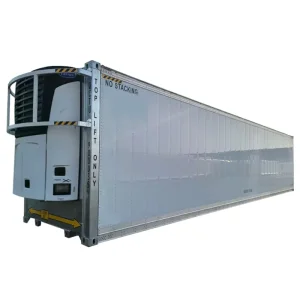
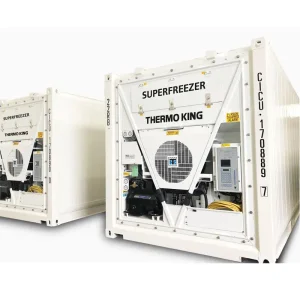
Brazil is an agricultural titan, reigning as one of the world's leading exporters of beef, poultry, soybeans, coffee, orange juice, and tropical fruits like melons, mangoes, and papayas. However, this export vitality runs headlong into a stubborn structural paradox: the country's severe cold chain deficit beyond major coastal deep-water ports like Santos, Paranaguá, and Itajaí. In regions such as the Matopiba agricultural frontier (Maranhão, Tocantins, Piauí, Bahia), the San Francisco River Valley (Petrolina-Juazeiro fruit production), and the interior of Mato Grosso and Goiás, primary post-harvest losses routinely surpass 25% to 32% for perishable goods. The underlying culprit is the absence of reliable, localized, pre-cooling and cold-storage infrastructure at the point of harvest.
Traditional refrigerated containers (ISO reefers) are universally engineered around marine specifications: three-phase 380V, 440V, or 460V alternating current at 50/60Hz. Yet in rural Brazilian municipalities and peri-urban farm gates, the local utility grids managed by concessionaires such as Equatorial Energia, Enel Distribuição, and Neoenergia primarily supply single-phase 220V or split-phase 127V/220V power. Connecting a three-phase 15 kW marine reefer to rural lines requires expensive step-up phase converters or high-capacity diesel generators (gensets). With Brazil's diesel prices subject to volatility and logistics surcharges (ICMS and international crude fluctuations), running gensets 24/7 imposes an unsustainable operating expenditure (OPEX) that can reach upwards of R$ 18,000 to R$ 26,000 per month per container.
Our OEM solar-powered single-phase 220V refrigerated containers solve this exact engineering mismatch. By integrating high-efficiency DC variable frequency drives (VFD), high-efficiency solar photovoltaic arrays, and intelligent Battery Energy Storage Systems (BESS), our manufacturing facility delivers turn-key cold-storage solutions designed natively for Brazil's unique electrical topography.
Traditional reefers pull an inrush current of 60A to 80A on start-up, instantly tripping rural Brazilian circuit breakers. Our units limit starting current to under 15A using smart variable-frequency drive control.
Equipped with high-efficiency N-Type TOPCon bifacial solar panels, mounted directly to high-tensile roof racking or deployable ground mounts, achieving up to 6.2 Peak Sun Hours (PSH) across Northeast Brazil.
Built with heavy-gauge SPA-H Corten atmospheric corrosion-resistant steel. Exterior panels receive marine-grade epoxy zinc-rich primer and polyurethane topcoats tested to withstand 1,000 hours of salt spray.
Our engineering team designs complete turnkey setups, including single-phase 220V inverter reefers, pre-wired rooftop solar arrays, and LiFePO4 battery storage, shipped directly to Brazilian ports with complete export documentation.
Send Inquiry Now for Technical Drawings & PricingA direct engineering comparison highlighting why conventional export containers fail in rural Latin America and how our solar-powered single-phase systems ensure seamless off-grid operation.
| Performance Specification | Standard 3-Phase ISO Reefer | OEM 220V Single-Phase Solar Reefer (Brazil Spec) | Operational Impact in Brazil |
|---|---|---|---|
| Operating Voltage | 3-Phase 380V - 460V AC only | Single-Phase 220V AC (±15%) & Direct DC Solar Bus | Zero phase-conversion loss; compatible with standard domestic rural grids. |
| Compressor Architecture | Direct On-Line (DOL) Scroll/Reciprocating | Hermetic Twin-Rotary DC Inverter (VFD) | Eliminates high-demand current surges; allows dynamic power modulation based on solar yield. |
| Inrush Current (Starting Surge) | 60A – 85A | < 15A Soft-Start Micro-Ramp | Prevents tripping of rural thermal circuit breakers and transformer dropouts. |
| Energy Autonomy & Redundancy | Requires 24/7 grid connection or active genset | Solar Photovoltaic + Optional LiFePO4 BESS | Operates seamlessly during typical 4-8 hour rural load-shedding and power outages. |
| Refrigerant Dynamics | R-134a / R-404A (High GWP) | R-452A / Low-GWP Eco-Formulations (R-290 optional) | Meets strict global ESG requirements and reduces carbon taxation exposure. |
| Wall Insulation Structure | 60mm - 70mm Polyurethane (PU) | 75mm - 85mm High-Density Cyclopentane Injected PU | Thermal conductivity λ ≤ 0.020 W/m·K; retains internal cold for up to 14 hours unpowered. |
The operational adaptability of our single-phase solar-powered containers addresses specific supply chain choke points across Brazil's distinct agricultural belts:
The international transport sector is experiencing a seismic transition toward cold chain electrification. As the International Maritime Organization (IMO) tightens Carbon Intensity Indicator (CII) ratings and European buyers enforce the Corporate Sustainability Due Diligence Directive (CSDDD), exporters in Latin America face mounting commercial pressure to verify scope 1 and scope 2 emissions reductions across their supply chains. The conventional practice of running unmonitored diesel generator sets on trailers and port-adjacent holding yards is nearing its regulatory end.
Our OEM manufacturing facility is leading the implementation of three major technological shifts:
1. Thermal Energy Storage (PCM) Integration: By pairing solar PV with integrated Phase Change Material (PCM) plates built behind the container's interior food-grade stainless steel (SS304) wall linings, the container stores cold energy physically during peak midday solar production. During night hours, the cooling unit can idle for extended periods while the PCM maintains stable set-points, slashing nighttime battery drain by up to 50%.
2. Smart DC Micro-Bus Architecture: Next-generation models feature a native direct-current (DC) bus running between the rooftop solar panels, LiFePO4 battery pack, and inverter compressor. Bypassing alternating current (AC) double-inversion cycles entirely eliminates typical 12-18% DC-to-AC-to-DC conversion losses, raising systemic thermodynamic efficiency to industry-record levels.
3. Satellite-Linked AIoT Telemetry & Predictive Maintenance: In rural Brazil, where cellular signal coverage is intermittent, our integrated dual-mode GSM/Iridium satellite transceivers provide uninterrupted diagnostic feeds. Algorithms constantly evaluate compressor delta-T, vibration harmonics, refrigerant pressure, and door-opening frequency to predict mechanical fatigue before thermal compromise occurs.
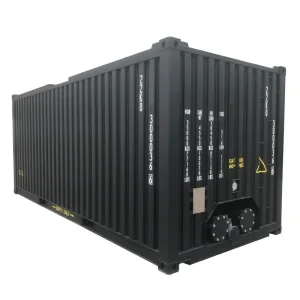
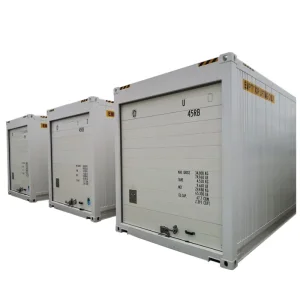
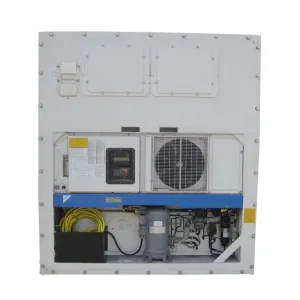
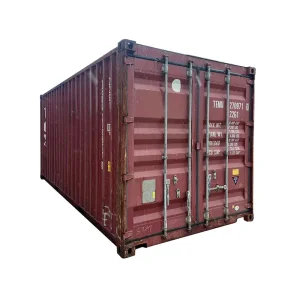
From heavy liquid bulk transport to intermodal dry cargo and rapid modular construction, explore our factory-direct catalog for Brazil's commercial and industrial sectors.
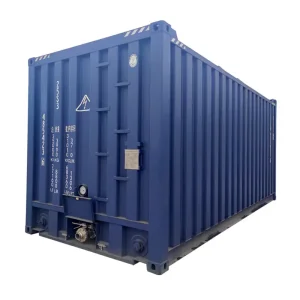
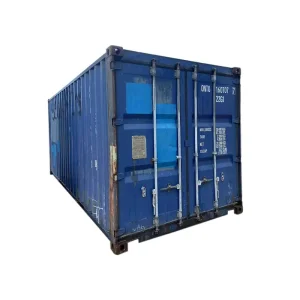
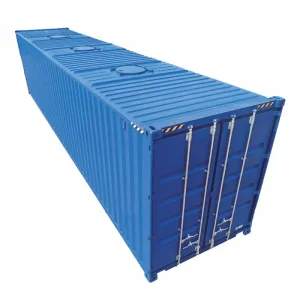
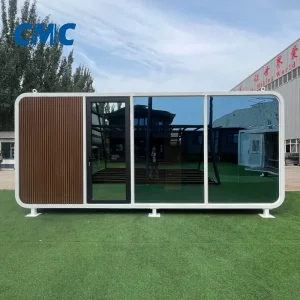
Expert technical and logistical answers addressing voltage compatibility, Brazilian customs clearances, solar performance in tropical conditions, and maintenance.
Standard marine reefer units utilize rigid 3-phase asynchronous induction motors that require three-phase 380V-460V power to generate a rotating magnetic field. Our Brazil-dedicated single-phase refrigerated containers utilize specialized DC brushless inverter compressors driven by an integrated Variable Frequency Drive (VFD). The drive rectifies incoming 220V single-phase alternating current into direct current (DC) internally, then synthesizes a pulse-width modulated frequency to drive the hermetic twin-rotary compressor. This completely circumvents the need for a three-phase power grid while delivering higher energy efficiency across varying thermal loads.
Yes, when paired with an adequately sized battery energy storage bank (LiFePO4 BESS). In regions such as the San Francisco River Valley or northern Mato Grosso, daily solar irradiation reaches 5.5 to 6.2 Peak Sun Hours (PSH). A 40ft container fitted with a 7.2 kWp rooftop/fold-out solar array generates approximately 32 to 40 kWh of direct electricity per day. Because our inverter units consume between 1.8 kW and 3.4 kW under steady-state chilled conditions (+2°C to +4°C), the daytime solar yield fully covers real-time cooling while charging the battery storage for overnight operation. During heavy monsoon cloud cover, the system automatically draws hybrid support from any local single-phase 220V line or back-up auxiliary generator.
Every container leaving our export facility is delivered with a complete international compliance package: Bureau Veritas (BV) or ISO 1496-2 Container Safety Convention (CSC) structural certification, electrical schematic dossiers aligned with NR-10 (Brazilian safety in electrical installations) and NR-12 (machinery and work equipment safety), factory test inspection records (FAT), and thermal leakage coefficient (K-value) reports. We collaborate closely with your Brazilian despachante aduaneiro (customs broker) to ensure clean tariff classification under NCM (Nomenclatura Comum do Mercosul) code 8418.69.99 or 8609.00.00.
For deep-freeze operations (such as frozen poultry, bovine cuts, or deep-frozen fruit pulps), our systems use enhanced vapor injection (EVI) compressor technology with R-452A or R-404A refrigerants. When operating at deep-freeze set points (-20°C to -30°C), the compressor work increases. While maintaining cold is seamless on single-phase 220V, freezing high-moisture warm products from ambient temperature (blast freezing) requires sufficient thermal reserve. We configure our single-phase deep-freeze units with oversized condensers and dual evaporators to guarantee pulldown without overheating electrical components.
Standard OEM manufacturing lead time is typically 20 to 30 days depending on the customization tier (e.g., solar racking integrations, side doors, or internal partition walls). Ocean freight from our primary export docks in Tianjin or Shanghai to major Brazilian ports averages 32 to 42 days via regular liner services. Containers can be shipped as "Shipper Owned Containers" (SOC) carrying initial dry cargo to minimize one-way ocean repositioning freight costs.
In unpaved agricultural corridors, dust and particulate accumulation can reduce solar yield by 12% to 20% over time. Our modules feature anti-soiling, hydrophobic tempered glass coatings that wash clean with ordinary rainfall. We recommend a simple bi-weekly visual inspection and freshwater spray rinse. Mechanically, the brushless DC inverter compressor has zero internal belts or brushes, requiring only periodic cleaning of the air-cooled condenser coils and checking of the door gasket seals to preserve thermal integrity.
Eliminate intermediary trading margins. We provide direct factory engineering, custom technical drawings, bilingual documentation support, and end-to-end container manufacturing certified to international ISO and BV maritime standards.