
High-Performance Insulated Solutions for Luxembourg Hubs
Engineered to satisfy stringent temperature retention profiles across trans-European cold freight passages and multimodal pharmaceutical nodes.
Luxembourg as the Multimodal Nucleus of European Controlled-Atmosphere Logistics
The Grand Duchy of Luxembourg holds an outsized geographical and operational significance in modern European logistics. Positioned directly at the nexus between Germany, France, and Belgium, Luxembourg has systematically transformed its Bettembourg-Dudelange multimodal rail-road hub and the Findel Airport airfreight facility into benchmark locations for temperature-controlled life sciences and high-precision industrial transit.
Within this ecosystem, passive thermal retention systems such as high-performance ODM insulated containers are non-negotiable assets. As energy efficiency regulations tighten under the European Green Deal and GDP (Good Distribution Practice) standards command stringent integrity for biopharmaceuticals, enterprises can no longer rely solely on active compressors that consume massive auxiliary power. Customized insulated containers deliver superior thermal lag times, safeguarding valuable cargo against severe external thermal spikes.
Critical Value Drivers in Luxembourg Supply Chains
1. Direct Rail-Sea Connectivity: Seamless transfer between North Sea ports (Antwerp, Rotterdam) and Luxembourg industrial zones without thermal degradation.
2. High-Precision Chemical Handling: Safe transport of specialty polymers, composites, and electronic components manufactured in Bascharage and Wiltz that mandate steady microclimates.
3. Zero-Emissions Urban Distribution: Insulated containers configured for last-mile and cross-docking operations where auxiliary motor noise and diesel emissions are restricted by municipality laws.
Engineering Thermodynamics for the Global Intermodal Future
Addressing structural heat leakage, structural flexing, and volatile environmental conditions across multimodal transport lanes.
Continuous Cyclopentane Injected Polyurethane Core
Our insulated container structures utilize high-pressure cyclopentane-blown polyurethane foam insulation up to 100mm in thickness. This closed-cell morphology eliminates thermal bridging across Corten steel posts and guarantees an industry-leading overall heat transfer coefficient (K-value ≤ 0.35 W/m²K), preventing payload freezing or spoilage during long rail delays.
SPA-H Corten Anti-Corrosive Envelope
Engineered for relentless exposure to Atlantic humidity and harsh winter de-icing chemicals on European motorways. Built with SPA-H atmospheric corrosion-resistant structural steel, these bodies ensure exceptional mechanical strength under extreme tensile strain, stacking up to 9-high fully loaded according to ISO 1496-1 design parameters.
Double-Gasket EPDM Ingress Sealing
Air-exchange leakage accounts for up to 30% of thermal failures in standard freight. We integrate customized four-lip EPDM continuous perimeter door gaskets engineered to maintain elasticity down to -40°C. Coupled with robust dual-cam locking bars, our units establish near-zero vacuum loss across intermodal transfer cycles.
Strict EU Compliance & Localized Luxembourg Quality Assurance
Every ODM unit leaving our manufacturing plants undergoes exhaustive non-destructive testing and third-party verification to meet European customs and technical regimes.
Average K-Value (W/m²K) for Max Thermal Retention
ATP Agreement on Carriage of Perishables Certified
Dual Classification Society Structural Testing
Continuous Heritage in Global Steel Container Fabrication
ATP Certification & Testing
Units destined for Luxembourg intra-European operations comply directly with UN/ECE ATP standards (IR / IN classification). Validated via calorimetric box tests under controlled ambient temperatures to certify safe transport of perishable foodstuffs and pharmaceutical reagents.
CE Machinery & Pressure Directives
Where auxiliary electric pre-cooling, internal circulation blowers, or telematics sensors are integrated, complete assemblies comply with CE markings, EMC compatibility directives, and low-voltage electrical safety standards enforced within the European Union.
CSC Safety Plate Certification
Every single container receives a Bureau Veritas (BV) or DNV certified CSC (International Convention for Safe Containers) safety plate, allowing instant rail, maritime, and road interchange without customs inspections or structural approvals at European ports of entry.
High-Yield Application Profiles Across the Luxembourg Industrial Fabric
Real-world integration scenarios where insulated shipping enclosures solve complex logistical dilemmas.
Air-to-Road Cold Lane Transition
Cargo arriving at Luxembourg Findel Airport can be rapidly transferred into thick-foam insulated containers without demanding immediate mechanical power coupling, maintaining required 2°C to 8°C or 15°C to 25°C conditions during cross-dock holding.
Advanced Chemical & Polymer Transport
Specialty coatings, industrial resins, and automotive composites manufactured in Luxembourg factories often exhibit volatile curing reactions if subjected to sub-zero temperatures during winter cross-border transport. Our passive thermal containers provide stable insulation buffers.
Decentralized Cold Chain Buffer Storage
Logistics operators across Esch-sur-Alzette and Contern deploy static insulated containers as rapid, high-durability external cold storage buffers without incurring the massive capital expenditure of civil building construction or municipal permit delays.
Technological Roadmap: Smart Sensors, Vacuum Insulation Panels (VIP), and Circularity
As Luxembourg accelerates its transition toward a circular economy, container manufacturing is experiencing a fundamental technological inflection. Future-generation insulated containers incorporate Vacuum Insulation Panels (VIP) encapsulated within structural polyurethane layers, reducing wall thickness by 35% while increasing volumetric payload capacity without degrading the thermal insulation coefficient.
Furthermore, our digital integration roadmap features low-power satellite-linked IoT telemetry. Fleet operators managing intermodal paths out of Luxembourg can track real-time internal container temperatures, relative humidity, door-opening logs, and structural shock impacts from a unified cloud dashboard.
Circular Lifecycle & Low-GWP Blowing Agents
In accordance with evolving EU F-Gas regulations, our manufacturing lines have eliminated ozone-depleting substances, relying strictly on ultra-low GWP (Global Warming Potential) blowing agents. Steel frame structures are fully separable and 98% recyclable upon end-of-life decommission, aligning with the sustainability benchmarks required by Luxembourg ESG procurement guidelines.
Frequently Asked Questions for Sourcing Insulated Enclosures
Key technical, commercial, and operational answers for engineers, supply chain directors, and logistics buyers.
What is the functional difference between an insulated container and a reefer container?
How does the container perform under extreme Benelux winter temperatures?
Can CIMIC customize dimensions, interior linings, and side-door access for Luxembourg buyers?
Are these containers fully certified for intermodal rail transit through Bettembourg?
What is the production and export lead time to the Luxembourg region?
How are units delivered to avoid empty-positioning expenses?
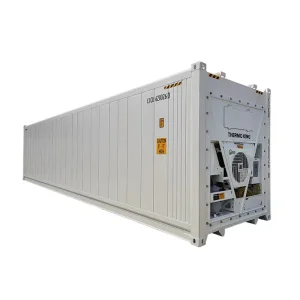
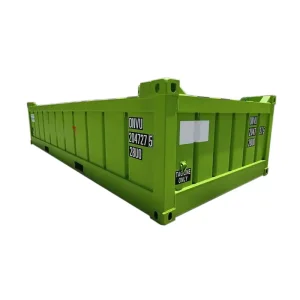
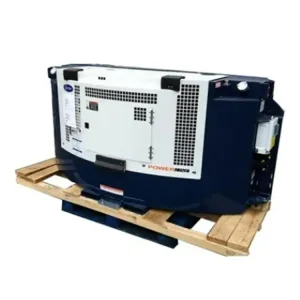
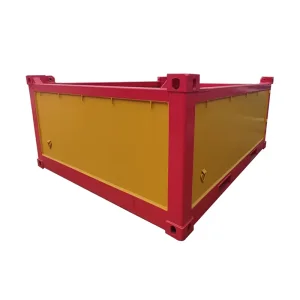
Enterprise Container Solutions Available for European Delivery
Explore our validated product series engineered for severe environments, special operations, and intermodal transport.
Deploy Customized Insulated Fleet Solutions in Luxembourg
Connect with our technical engineering group today. We assess your thermodynamic load profiles, transport routes, and CAD specifications to deliver reliable, fully certified intermodal containers.
Send Inquiry Now