
Primary ODM Offshore Units Tailored for Peruvian Maritime & Industrial Operations
Pre-engineered structural profiles featuring -20°C low-temperature Charpy V-Notch metallurgy, offshore pad-eyes, certified 4-leg wire rope lifting slings, and ISO 10855 conformity ready for export consignments.
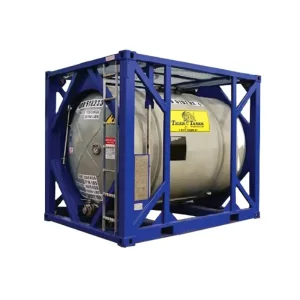
DNV Certified 10ft Offshore Chemical & Acid Tank Container for Peruvian Platforms
Buy New DNV Certification 10ft Offshore Tank Container Factory, Products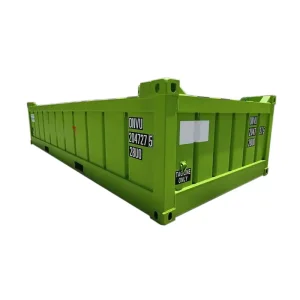
ODM DNV 2.7-1 Offshore Half-Height Open Top Container for Mining Dredging & Rigs
ODM New DNV Certification Offshore Half-Height Open Top Container Products, Exporters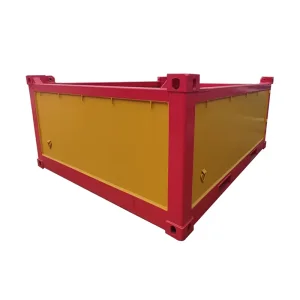
High-Integrity Offshore Tubular & Drill Pipe Basket for Talara Offshore Exploration
High-Quality New Offshore Basket Container for Offshore Operations Exporter, Exporters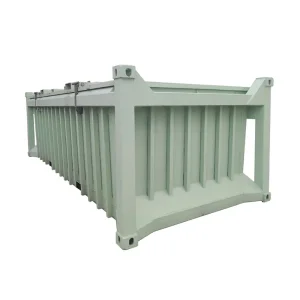
Reinforced Half-Height Mineral Concentrate & Heavy Ore Carrier for Intermodal Transit
Buy New Half Height Ore Carrier Container Offshore Container Manufacturers, QuotesMacro-Industrial Dynamics & Offshore Container Requirements in Peru
The Republic of Peru is undergoing a tectonic infrastructural transformation. As Latin America's primary maritime gateway to Asia-Pacific trade and a tier-one global mining and natural gas supplier, containerized maritime hardware requirements have evolved far beyond standard dry freight boxes.
The Megaport of Chancay Paradigm Shift
The commissioning of the Chancay Multipurpose Port Terminal, situated 80 kilometers north of Lima, reconfigures Pacific South America's trade corridors. Offering 17.8-meter natural deepwater drafts capable of handling ultra-large container vessels (ULCVs) of 18,000 to 24,000 TEU, Chancay establishes a direct trans-Pacific link with China.
This operational paradigm demands rapid turnaround times and exceptionally robust specialized offshore equipment capable of intermodal transfers between deepwater transshipment berths, coastal feeder barges, and rugged Andean transport rail systems.
- Elimination of transshipment stops via Central America, reducing China-Peru transit to 28-35 days.
- Accelerated demand for high-strength Corten steel half-height mineral containers for bulk transfers.
- Direct integration with coastal energy hubs servicing northern offshore blocks and southern LNG ports.
Hydrocarbon & Gas Infrastructure (Camisea & Talara)
Peru's hydrocarbon matrix relies heavily on the Camisea natural gas complex in the Ucayali Basin, connected via trans-Andean pipelines to the Pisco coastal liquefaction facility (Melchorita LNG Terminal). Simultaneously, Petroperú's modernized New Talara Refinery (PMRT) processes up to 95,000 barrels per day along the northern shelf.
Servicing these marine extraction platforms, coastal mooring buoys, and subsea pipelines requires strict compliance with DNV 2.7-1 / EN 12079 dynamic lifting standards to counter open-ocean Pacific swell dynamics.
- Offshore Chemical ISO Tank Containers (DNV certified) for biocides, methanol, and glycols.
- Heavy-duty subsea tubular drill baskets for maintenance operations along the Talara continental shelf.
- Explosion-proof ATEX/IECEx offshore workshops for localized electrical instrumentation maintenance.
Intermodal Andean Mining Logistics
Peru remains the world's second-largest copper producer, alongside massive reserves of zinc, lead, and silver. Mines situated between 3,500 and 4,800 meters above sea level (such as Antamina, Las Bambas, Cerro Verde, and Toromocho) face acute logistics bottlenecks transporting dense ores down to the ports of Callao, Matarani, and San Martín.
Standard ISO freight containers buckle under dynamic rockfall loading and concentrated payloads. Customized ODM half-height ore containers provide the exact solution required by Peruvian logistics concessions.
- Heavy-duty Corten steel bodies engineered for payloads exceeding 32,000 kg within low-volume bins.
- Hardened structural corner posts engineered for automated containerized bulk rotary tippler discharge.
- Weather-tight locking covers preventing particulate dust dispersal and environmental run-off.
Engineering Architecture: DNV 2.7-1 / EN 12079 / ISO 10855 Compliance
Offshore container engineering diverges radically from standard ISO freight container design. Operating in open ocean environments subject to the Humboldt Current, rogue swells, and offshore supply vessel (OSV) dynamic wave slap demands structural designs proven by nonlinear Finite Element Analysis (FEA) and destructive testing.
| Critical Engineering Metric | Standard ISO Shipping Container | DNV 2.7-1 / ISO 10855 Offshore Container | CIMIC ODM Peru Customized Specification |
|---|---|---|---|
| Primary Steel Metallurgy | Commercial Grade Cor-Ten (Grade A) | Fine-grained structural steel (EN 10025 S355J2 / K2) | High-yield SPA-H Corten alloyed with certified micro-alloy steels for severe marine atmospheres |
| Charpy V-Notch Impact Toughness | Not routinely tested for low-temperature dynamic impact | Certified 27 Joules minimum at -20°C (or lower) | Tested to 42 Joules at -20°C; exceeds Peruvian DICAPI maritime safety requirements |
| Dynamic Lifting & Snatch Load Coefficient | Designed primarily for static 4-point spreaders (gantry) | Dynamic amplification factor (DAF) 1.4 to 2.0 applied | Integrated Pad-eyes calculated with 3.0x dynamic safety factor for open-Pacific OSV handling |
| Lifting Rigging Systems | Corner castings only; no top single-point rigging | Dedicated 4-leg wire rope sling set with master link & safety shackles | DNV approved high-tensile wire rope slings, proof-load tested at 2.5x gross container mass |
| Protective Coating Matrix | Standard marine polyurethane (90–120 microns DFT) | Industrial multi-coat marine system (200+ microns DFT) | C5-M Ultra High Durability: Zinc silicate primer + Epoxy micaceous iron oxide + Polyurethane top (320μm DFT) |
| Third-Party Certification Body | Classification society prototype verification | Mandatory batch unit-level inspection and witness testing | Bureau Veritas (BV), DNV, or Lloyd's Register individual inspection certificates with data plate |
Pad-Eye Design & FEA Stress Analysis
Unlike standard ISO corner blocks designed solely for vertical twistlock engagement, offshore pad-eyes absorb multi-directional dynamic tension during rough-sea boat-to-rig transfers. Our pad-eyes are fully integrated into primary longitudinal and transverse perimeter beams using full-penetration butt welds inspected via 100% Non-Destructive Testing (Ultrasonic Testing & Magnetic Particle Inspection).
Metallurgical Formulations for Coastal Salinity
The South Pacific ocean waters off Callao and Chimbote exhibit extreme airborne sodium chloride concentration coupled with persistent cold morning mists (garúa). Our containers utilize high-grade copper-phosphorus alloyed Corten steel that triggers an impermeable oxidized sacrificial layer, preventing subsurface structural pitting and catastrophic fatigue cracking.
Dynamic Impact Drop & Racking Resilience
Standard CSC freight boxes undergo static weight stack testing. In stark contrast, our ODM DNV 2.7-1 units undergo horizontal impact testing, tilted drop tests onto structural steel anvils, and 2.5x Max Gross Mass (RGM) dynamic vertical lift tests to guarantee zero rupture during open-sea snag situations in choppy offshore Peruvian anchorages.
Peruvian Industrial Use Cases & Engineering Customizations
Offshore container designs cannot adhere to a generic template. Peruvian commercial operations span divergent microclimates—from hyper-arid coastal ports to sub-zero Andean mine heads and warm offshore equatorial shelf waters.
1. Offshore Fuel, Chemicals & Glycol Transport (North Peruvian Coast)
Petroleum exploration rigs in the Tumbes and Talara offshore basins require continuous delivery of hazardous production fluids, corrosion inhibitors, and bunkering fuels. Our 10ft and 20ft DNV 2.7-1 offshore tank containers feature ASME VIII T11/T14 stainless steel 316L pressure vessels enclosed within ultra-rigid structural external frames. Equipped with top/bottom steam heating jackets and pneumatic emergency discharge valves, they provide leak-proof fluid logistics amidst heavy ocean heave.
2. High-Density Mineral Transshipment (Central & Southern Mining Corridors)
Transporting dense copper, gold, and polymetallic concentrates from the Andes down to Callao or the Matarani Marine Terminal demands low-profile, reinforced containers. Our ODM Half-Height Ore Carriers feature 6mm floor plating, reinforced ribbed sidewalls, and automatic hydraulic or mechanical container lifter-tippler lock pockets. Designed for direct dumping into bulk vessel holds, they eliminate double-handling, eliminate loss of fine ores, and minimize airborne silica pollution.
3. Offshore Maintenance Baskets & Drill Casing Slings (Pisco & Talara)
Transporting oversized downhole equipment, subsea valves, drill collars, and heavy casing pipes requires elongated, low-center-of-gravity basket structures. Our 34ft to 60ft offshore baskets feature internal multiple tie-down lashings (5-tonne certified D-rings), removable side cargo gates, drainage channels for sea wash, and external certified slings designed to endure turbulent crane lifts from utility vessels onto production jackets.
Regulatory Compliance & Maritime Certification Architecture in Peru
Importing and operating offshore containers in Peruvian territorial waters requires adherence to both international maritime compacts and specialized domestic regulatory bodies. Failure to verify certification can lead to immediate port customs detention and rejection by offshore rig operators.
DICAPI (Dirección General de Capitanías y Guardacostas)
As Peru's supreme maritime authority, DICAPI oversees safety at sea and port operations under the Ministry of Defense. Offshore containers transferred between supply vessels and marine structures must carry verified class certification (DNV, BV, or Lloyd's Register) adhering to IMO MSC/Circ.860 guidelines. CIMIC exports arrive with comprehensive manufacturer data records (MDR) that guarantee expedited port clearance across Callao, Paita, and Talara.
OSINERGMIN Energy & Mining Safety Regulations
The Supervisory Agency for Investment in Energy and Mining (OSINERGMIN) enforces strict safety audits across oil and gas facilities, including marine bunkering and platform fuel storage. Our offshore tank containers comply with IMDG Code Chapter 6.7 and ADR regulations, featuring secondary containment options, spark-proof ground connections, and emergency shut-off valves meeting OSINERGMIN fire safety mandates.
SUNAT Customs & Direct Exporter Traceability
Peruvian Customs (SUNAT) requires clear HS classification and verifiable valuation paperwork to avoid demurrage at Callao and Chancay. As an established direct manufacturer and exporter, CIMIC generates authenticated Certificates of Origin (under the China-Peru Free Trade Agreement, drastically lowering tariff duties), mill test certificates (MTC 3.1), and CSC safety inspection plates riveted directly to each container body.
Technical Roadmap: Smart Telemetry, Decarbonized Metallurgy & Chancay Synergy
The next decade of maritime infrastructure in Peru will merge physical structural endurance with digital sensor intelligence and sustainable supply chain imperatives.
IoT Satellite Telemetry & Stress Monitoring
For high-value cargo navigating remote Peruvian offshore blocks or navigating high-altitude Andean routes where cellular networks drop out, our smart ODM containers can be equipped with ATEX Zone 1 certified satellite transceivers. These sensors transmit real-time acceleration data, tracking dynamic G-forces during crane lifts, internal temperature, hydrostatic pressure, and unauthorized door breaches directly to client ERP systems.
Low-Carbon Recycled Corten Metallurgy
In alignment with corporate ESG requirements of international mining consortia operating in Peru (such as Anglo American, Freeport-McMoRan, and MMG), our fabrication yards incorporate electric-arc furnace (EAF) structural steel with up to 65% recycled scrap content. This reduces Scope 3 embodied carbon per container without compromising Charpy V-notch yield strength at extreme negative temperatures.
Chancay Smart Automation Compatibility
The automated stacking yards and unmanned electric container trucks at the newly built Chancay port require ultra-precise dimensional consistency and laser-reflective sensor target points. Our ODM designs incorporate standardized sensor surfaces and high-durability optical QR plates to facilitate seamless handling by Chancay's automated rail-mounted gantry (ARMG) cranes.
The 5-Stage Engineering-to-Delivery Framework for Peruvian Importers
From initial design load calculations to customs documentation delivery at Peruvian seaports, our structured workflow eliminates technical ambiguity and ensures uncompromised seaworthiness.
Phase 1: Operational Assessment & Design Approval
Clients submit specific cargo dimensions, density, target payload, and operating environments (offshore sea state rating or high-altitude mining transfer). Our engineering team generates comprehensive 3D CAD models and finite element structural calculations. We cross-verify lifting points, pad-eye geometry, and floor beam spacing against DNV 2.7-1 and EN 12079 criteria.
Phase 2: Certified Material Procurement & Welding
Structural steels undergo Charpy V-notch toughness verification at -20°C prior to plasma cutting. All welders are certified to AWS D1.1 / ASME IX standards. Critical structural junctions, pad-eye anchor welds, and perimeter frames undergo mandatory ultrasonic and magnetic particle non-destructive examination (NDE) documented within the quality dossier.
Phase 3: Prototype Load Testing & Third-Party Sign-Off
Units undergo 2-point and 4-point dynamic lift proof-load testing at 2.5 times maximum design gross payload witnessed by third-party surveyors (Bureau Veritas, DNV, or Lloyd's Register). Upon verification, official certification plates and slings matching certificates are stamped and permanently affixed to the container shell.
Frequently Asked Questions on Offshore Container Procurement for Peru
Direct answers for logistics directors, procurement managers, and offshore asset contractors sourcing certified containers from China for the Peruvian market.
Why must offshore containers in Peru comply with DNV 2.7-1 instead of standard ISO CSC certificates?
Standard ISO shipping containers are designed strictly for calm port operations, stacked vertically with twistlocks, and lifted using spreaders with uniform vertical acceleration. In contrast, offshore operations off Callao, Pisco, or Talara involve transferring containers from dynamic offshore supply vessels (OSVs) to fixed platforms or floating production units (FPSOs) under severe open-Pacific wave swells. Dynamic wave motion creates unpredictable lateral snatch forces, wave impacts, and angular swing. DNV 2.7-1 and ISO 10855 ensure the container possesses certified low-temperature impact toughness (-20°C), heavy pad-eyes, reinforced corner uprights, and certified dynamic lifting slings that prevent sudden catastrophic structural failures at sea.
What is the ocean transit time and freight protocol from your Chinese manufacturing facilities to Callao or Chancay?
Our primary manufacturing facilities are located in Tianjin and Suzhou, strategically situated less than 100 km from major export deepwater ports. With the inauguration of the Chancay Multipurpose Port, direct trans-Pacific liner services connect Chinese ports directly to Chancay/Callao without intermediary feeder stops in Mexico or Panama, reducing direct transit duration to approximately 30 to 35 days. For offshore containers, units can be shipped empty or as shipper-owned containers (SOC) loaded with complementary procurement cargo to minimize deadweight freight expenditure.
Can CIMIC manufacture custom internal dimensions and specialized fittings for Peruvian mining and energy operations?
Yes. As an experienced ODM (Original Design Manufacturer) since 1983, our engineering department customizes every parameter. This includes low-profile half-height ore bins equipped with rotary tippler pockets, stainless steel internal cargo tie-downs for subsea tools, specialized thermal insulation for high-altitude Andean cold climates, roll-up shutter access, or ATEX Zone 1 explosion-proof internal electrical installations for offshore platform battery rooms.
Which third-party inspection certifications accompany each container delivery?
Every offshore container is accompanied by a full Manufacturer's Data Record (MDR). This includes a third-party certificate issued by Bureau Veritas (BV), DNV, or Lloyd's Register verifying compliance with DNV 2.7-1 / EN 12079 / ISO 10855. The documentation dossier incorporates Material Test Certificates (EN 10204 3.1) for all structural steel plates and pad-eyes, Non-Destructive Examination (NDE) weld reports, proof load test verification certificates, and lifting sling proof certificates.
How does the China-Peru Free Trade Agreement (FTA) affect import tariffs on offshore containers?
Under the bilateral China-Peru Free Trade Agreement (TLC Perú-China), standard and offshore steel shipping containers qualify for preferential tariff treatment with a 0% ad-valorem customs import duty, provided they are accompanied by a formally authenticated Form F Certificate of Origin issued by the authorized Chinese authority (CCPIT). This provides Peruvian buyers with an immediate cost saving compared to sourcing from non-FTA nations.
What anti-corrosion coating system is applied to withstand Peru's coastal Humboldt Current atmosphere?
We apply an ISO 12944 certified C5-M (Very High Marine) coating matrix. The steel substrate is blast-cleaned to SA 2.5 cleanliness. It receives a zinc-rich silicate primer (75 microns DFT) providing active cathodic protection, followed by a high-build epoxy micaceous iron oxide intermediate coat (150 microns DFT) to seal against moisture penetration, and a resilient polyurethane topcoat (75–95 microns DFT) resistant to intense coastal UV radiation, salt spray, and abrasive marine fog.
Comprehensive Container Solutions Engineered for Peru's Logistics Corridors
Explore our complete export line: DNV certified offshore reefer units, specialized solar cold chain storage, heated liquid asphalt carriers, and heavy-duty dry cargo units engineered for the Peruvian market.
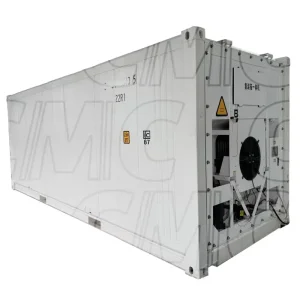
Solar Powered Smart Cold Storage 20ft/40ft Reefer with DC Inverter for Peruvian Farms & Ports
ODM The Smart Chain Cold Storage 20ft/40ft Solar Refrigerated Container 220V With DC Inverter Unit Pricelist, Exporters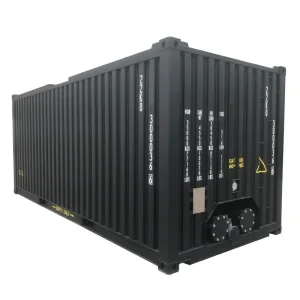
Thermal Insulated 20ft Heated Liquid Bitumen & Asphalt Tank Container for Peru Infrastructure
China 20 Feet Heated Shipping Asphalt Container Exporter, Manufacturers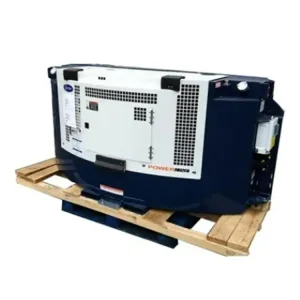
Heavy-Duty Reefer Clip-On Diesel Generator Genset for Trans-Andean Cold Chain Routes
China Refrigerated container diesel generator Exporter, Quotes
ODM 40ft High-Cube Heavy Dry Cargo Intermodal Container for Callao & Chancay Port Storage
ODM 40ft Used Dry Cargo Shipping Container Manufacturers, Quotes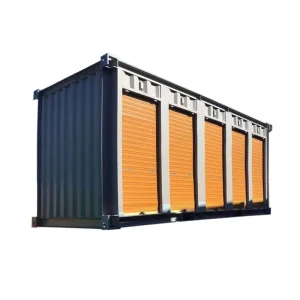
OEM 20ft Storage Unit with Rapid Roll-Up Door System for Mining Camp Utility Warehousing
OEM New 20ft Storage Roll-Up Door Dry Cargo Container Pricelist, Product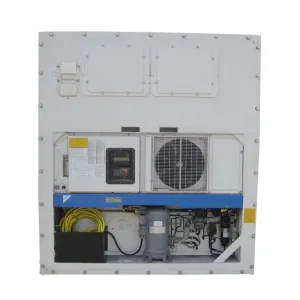
Industrial Grade Marine Refrigeration Machinery & Deep-Freeze Cooling Units for Export Reefers
Buy Refrigeration Equipment /Cooling Unit For Refrigerated Containers Products, Exporters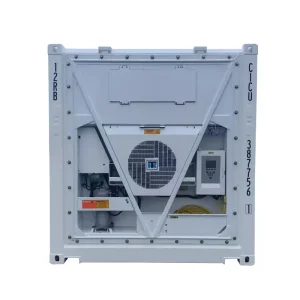
DNV 2.7-1 Certified 20ft Offshore High-Cube Refrigerated Container for Marine Rig Catering
OEM 20ft Offshore Refrigerated Container DNV Certification Is More Durable Exporter, Exporters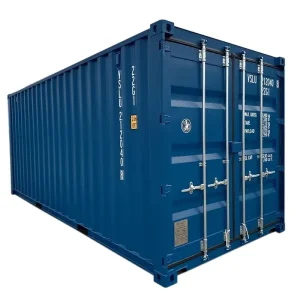
New 20ft Double-End Door Dry Cargo Container for Accelerated Intermodal Transshipment
Buy New 20ft Double Door Dry Cargo Shipping Container Products, ManufacturersAccelerate Your Container Procurement for Peru
Connect directly with our chief offshore structural engineering team in Tianjin. Get formal technical drawings, Finite Element Analysis models, and competitive direct-factory export quotes for Callao, Chancay, or Pisco delivery.