Specialized ODM & High-Cube Intermodal Container Inventory
Direct from our Tianjin and Suzhou manufacturing bases. Verified ISO 1496/1, DNV-GL 2.7-1, and BV certified standard and custom high-cube platforms for extreme load parameters.
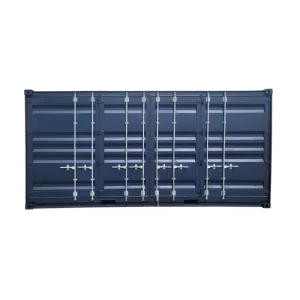
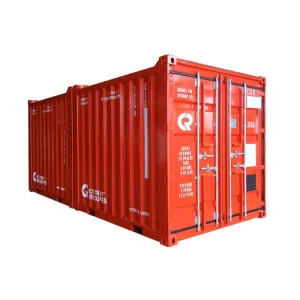

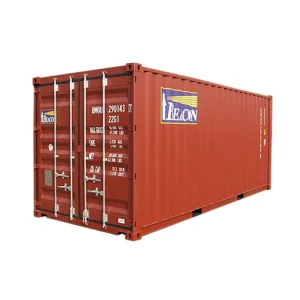
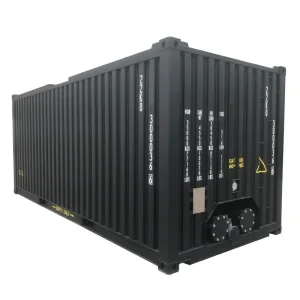
The Global Industrial Landscape for High Top & High Cube Shipping Enclosures
How post-pandemic geopolitical route diversification, Cape of Good Hope rerouting, and volumetric cargo optimization are shifting procurement demand permanently toward ODM High Top configurations.
Structural Volumetric Superiority
The standard ISO general purpose container carries an external height of 8 feet 6 inches (2,591 mm). Conversely, high top (commonly designated as High Cube or HC) enclosures stand at 9 feet 6 inches (2,896 mm). This additional foot of vertical envelope delivers approximately 300 mm of incremental clearance. In 40ft dry configurations, this expands the usable internal capacity from 67.7 m³ to 76.3 m³—an immediate 12.7% volume increase without altering ship bay cell-guide footprints or highway axle weigh-station compliance.
Multimodal Freight Economics
With shipping lane disruptions around the Red Sea and prolonged sailing times transiting southern Africa, global ocean freight slots remain constrained. Shippers of lightweight, high-cube goods—such as automotive EV sub-assemblies, lithium battery energy storage systems (BESS), solar inverters, and retail consumer goods—face escalating costs per cubic meter. Utilizing ODM customized high-top containers drives down the landed freight cost per unit volume by up to 11.4% on Asia-Europe and trans-Pacific voyages.
The ODM Transition: Beyond Off-The-Shelf
Traditional build-to-stock models fail when industrial equipment, mining apparatus, and high-tier cold chain payloads demand specific load distribution, recessed crane eye pockets, lateral rollup shutters, or heavy-duty floor channel reinforcement. An Original Design Manufacturer (ODM) like CIMIC provides turnkey CAD/FEA simulation, metallurgy matching, and factory certification prior to plate bending, guaranteeing absolute structural integrity in marine, rail, and heavy highway duty.
Localized Application Scenarios: Where High Top Containers Excel
Engineering adaptations designed to conquer specific mechanical stress, climate extremes, and logistics handling challenges across target continents.
1. African Mining & Remote Exploration
In sub-Saharan Africa, logistics corridors are battered by corrugated unpaved roads and brutal vibration profiles. Our 20ft and 40ft High Top chassis are modified with 4.5mm thick SPA-H Corten side walls and fortified cross-members. Accommodating oversized crushing machinery, spare track shoes, drill rods, and heavy silt baskets, these containers prevent sidewall buckling during hydraulic rough-terrain crane lifts.
2. Modular Construction & Capsule Living
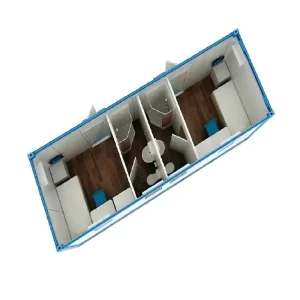
Standard containers impose a claustrophobic ceiling clearance once high-performance acoustic and thermal insulation panels are installed. Our 40ft High Top units allow for 2,450 mm finished internal ceiling clearance even with thick floor screeds and HVAC ducting. Exported to Scandinavian and North American markets, they serve as high-end modular workforce accommodation, data centers, and luxury capsule hotels.
3. Offshore Rig Supply & Subsea Tools
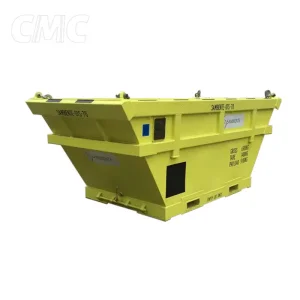
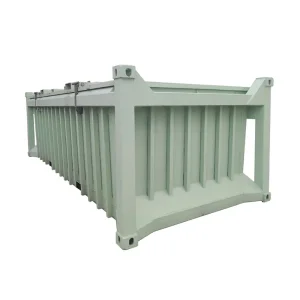
Certified to DNV 2.7-1 / EN 12079 dynamic impact standards, specialized offshore high-top containers withstand aggressive marine salinity, -20°C charpy impact toughness criteria, and extreme dynamic deck-handling forces. Outfitted with high-tensile lifting pad eyes and certified sling sets, they safeguard high-value blowout preventer (BOP) parts, telemetry umbilical reels, and silt containment baskets.
4. Cold Chain & Controlled Atmosphere
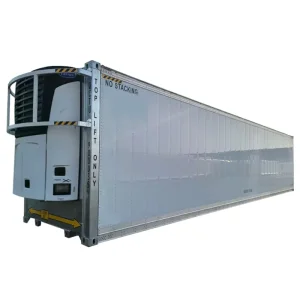
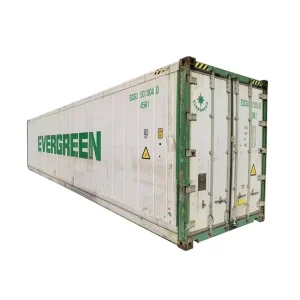
For high-value perishables such as berries, fresh cut flowers, and pharmaceuticals moving across Latin America and Europe, airflow dynamics are critical. In a high-top reefer (40RH), the extra height accommodates deep T-bar aluminum flooring and optimized ceiling ducted ventilation, eliminating hot pockets even when fully palletized with Thermo King Magnum Plus or Carrier PrimeLINE machinery.
Engineering Architecture: Standard vs. ODM High Top Specifications
Rigorous mechanical, volumetric, and material properties verified by Bureau Veritas (BV) and ISO 9001 quality management protocols.
| Dimensional / Mechanical Metric | 20ft High Top (20HC) ODM | 40ft High Top (40HC) ISO | 40ft High Cube Reefer (40RH) | Offshore High Cube DNV 2.7-1 |
|---|---|---|---|---|
| External Dimensions (L × W × H) | 6,058 × 2,438 × 2,896 mm | 12,192 × 2,438 × 2,896 mm | 12,192 × 2,438 × 2,896 mm | Customized up to 2,896 mm H |
| Internal Dimensions (L × W × H) | 5,898 × 2,352 × 2,698 mm | 12,032 × 2,352 × 2,698 mm | 11,583 × 2,290 × 2,557 mm | Project-engineered to payload |
| Door Opening Clear Width × Height | 2,340 × 2,585 mm | 2,340 × 2,585 mm | 2,290 × 2,535 mm | Heavy-duty single / double sealed |
| Internal Volumetric Capacity | 37.4 m³ (1,322 cu.ft) | 76.4 m³ (2,698 cu.ft) | 67.6 m³ (2,387 cu.ft) | Variable / Heavy Cargo Profile |
| Tare Weight (Approx.) | 2,350 kg (5,180 lbs) | 3,900 kg (8,598 lbs) | 4,520 kg (9,965 lbs) | 3,800 - 5,400 kg reinforced |
| Max Gross Weight (Rating) | 30,480 kg (67,200 lbs) | 32,500 kg (71,650 lbs) | 34,000 kg (74,950 lbs) | Up to 25,000 kg dynamic hoist |
| Structural Metallurgy | SPA-H Weathering Corten Steel | SPA-H Weathering Corten Steel | MGSS / Al / SUS 304 Interior | Normalized EN 10025 S355ML |
| Floor Specification | 28mm Marine Hardwood Plywood | 28mm Keruing / Bamboo Eco-Board | Heavy extruded Al inverted T-bar | 6.0mm Checkered Carbon Steel |
| Certifications Included | CSC / BV / ISO | CSC / BV / ISO | ATP / BV / CSC | DNV-GL 2.7-1 / EN 12079 |
Supply Chain Resilience: The Chinese Factory Ecosystem Advantage
How CIMIC leverages integrated metallurgical clusters, port-adjacent logistics, and four decades of manufacturing heritage to deliver superior price-performance ratios.
Upstream Steel & Coating Integration
China accounts for over 85% of global shipping container manufacturing. Our production hubs in Tianjin and Suzhou are linked directly to major domestic steel mills supplying high-tensile SPA-H Corten alloy coils. By securing raw materials through consolidated regional supply chains, CIMIC eliminates inter-province freight surcharges and raw material volatility, passing tangible price stability to volume ODM container buyers.
The 100-Kilometer Port Radius
Inland drayage in container export often generates hidden logistics penalties and berth-miss risks. Both our Tianjin manufacturing facility (serving northern corridors and the Tianjin Xingang deepwater port) and our Suzhou facility (feeding Shanghai and Ningbo maritime hubs) are positioned strictly within a 100-kilometer radius of international berths. This provides swift gate-in turnaround, flexible blank sailing adjustments, and minimal inland transit costs.
40+ Years of Manufacturing Integrity
Founded in 1983, CIMIC has endured every macro economic cycle. We implement multi-stage non-destructive testing (NDT), radiographic weld evaluations, 100% zinc-rich primer salt-spray corrosion tests (up to 1,500 hours ASTM B117), and full hydraulic water-tightness tests under 2-bar nozzle pressures on every custom high-top line item before issuing release certificates.
Technical Roadmap: The Next Era of High Top Container Design
How automation, Internet of Things (IoT) edge telemetry, and circular lifecycle design are revolutionizing ODM manufacturing between 2025 and 2030.
Phase 1: Telematics & Active IoT Telemetry
Every newly designed ODM high-top enclosure now supports factory-integrated flush-mount satellite/cellular transceivers. Monitoring shock sensors (>2.5G acceleration events), internal atmospheric temperature, VOC emissions, door opening cycles, and hydraulic pressure in liquid gas tanks, data streams automatically to corporate ERP systems in real time via secure API endpoints.
Phase 2: Ultra-Low Carbon Steel & Eco Coatings
In accordance with IMO 2030 and 2050 decarbonization mandates, CIMIC is piloting hydrogen-reduced electric arc furnace (EAF) steel plates across our custom high cube lines, reducing embedded Scope 3 carbon by 38%. Furthermore, 100% waterborne solvent-free epoxy paint systems have permanently replaced legacy solvent-based paints across our automated painting lines.
Phase 3: Hybrid & Solar-Assisted Cold Chain
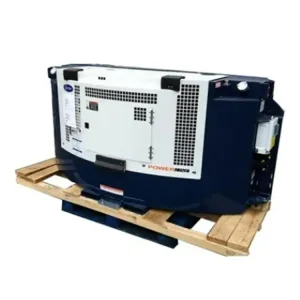
High top reefer configurations present expansive roof real-estate. CIMIC's advanced R&D division is embedding walk-resistant, thin-film monocrystalline photovoltaic arrays into roof corrugations. These solar arrays generate auxiliary trickle-charge power for diesel gensets and Carrier/Thermo King/Daikin microprocessors, conserving fuel during railyard dwell times.
ODM High Top Container Quotes: Transparent Cost Matrix & Value Drivers
A strategic breakdown of cost factors influencing new build pricing, used container valuations, and specialized modifications for corporate procurement teams.
Primary Price Determinants
1. Steel Index Fluctuations: Corten hot-rolled coil prices represent approximately 55-62% of raw box cost.
2. Flooring Substrates: Certified apitong/keruing hardwood vs. environmentally friendly bamboo composites create a $180 - $350 differential per 40ft unit.
3. Door Configuration: Standard dual-cam rear doors vs. full lateral bi-fold side-opening doors add engineering complexity and structural reinforcement costs.
OEM/ODM Customization Milestones
Every customized high-top project follows a disciplined production gate model: (a) CAD layout validation & cargo load FEA simulation within 48 hours; (b) Physical prototype assembly and witness testing by classification societies; (c) Batch production with strict quality milestones; (d) Port delivery and sea-trial clearance documentation.
Second-Hand vs. New Factory Builds
For budget-sensitive projects or stationary buffer storage, CIMIC maintains ready inventory of ~90% new and cargo-worthy (CW/IICL-5) used high cube containers directly at major Chinese port depots. Inspected for floor soundness, watertight door gaskets, and straight corner posts, these units provide quick dispatch at significant capital savings.
Compliance Assurance: Global Accreditations & Certifications
Ensuring zero customs rejections and friction-free multimodal interchange across every sovereign trade zone worldwide.
CSC Safety Approval Plate
Every container leaving our Tianjin or Suzhou lines carries a valid International Convention for Safe Containers (CSC) data plate. Approved by Bureau Veritas (BV) or Lloyd's Register, this specifies the maximum operating gross weight, stacking capability (minimum 86,400 kg test load, enabling 9-high laden stacking on ocean vessels), and transverse racking test loads.
Customs & TIR Carnet Approvals
Our dry and high top variants are certified under the Customs Convention on Containers (1972) and TIR specifications. Hinge pins, locking bars, and cam retainers are engineered with anti-theft and tamper-evident seal housings, guaranteeing that high-value bonded shipments transit borders without border control disputes.
Offshore & Pressure Standards
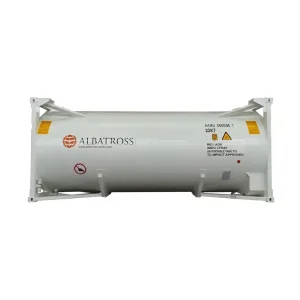
For offshore units and ISO tank derivatives, CIMIC builds to DNV-GL 2.7-1, EN 12079, ASME Section VIII Division 1, and IMDG code requirements. Complete inspection test plans (ITP), material test certificates (MTC 3.1), and third-party surveyor witness reports are systematically archived and handed over with export documents.
Technical & Procurement FAQ: ODM High Top Containers
Clear, definitive answers addressing lead times, dimensional limits, classification societies, and custom engineering options.
Specialized Modular, Offshore, Liquid & Refrigerated Units
Explore additional factory-direct container configurations designed for heavy mineral transport, modular housing, offshore operations, and intermodal tank transit.