
Cargo Worthy
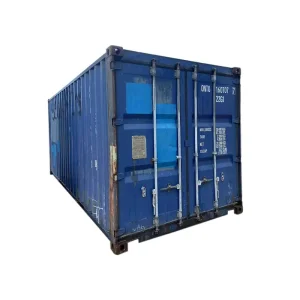
Immediate dispatch available for Fremantle, Port Botany (Sydney), Port of Melbourne, and Port of Brisbane. Fully inspected according to Cargo Worthy (CW) and IICL-5 industrial criteria.
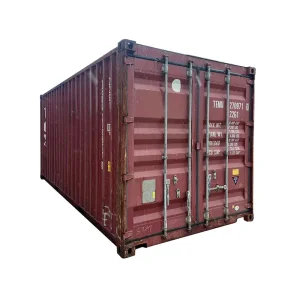
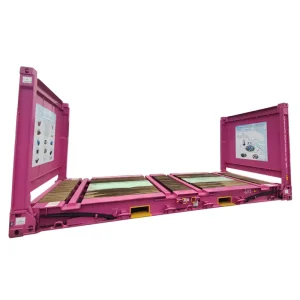
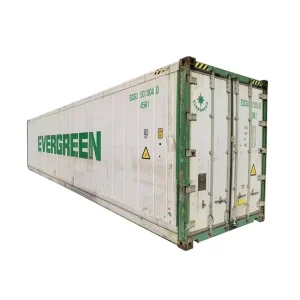
Navigating trade route supply imbalances, localized landside storage premiums, and factory-refurbished procurement savings across Australian capital and regional commercial sectors.
Australia operates as an island economy fundamentally sustained by containerized maritime logistics. Over 95% of manufactured consumer goods, machinery components, electrical infrastructure, and structural equipment enter via ports such as Port Botany (Sydney), the Port of Melbourne, the Port of Brisbane, and Fremantle. However, because Australia’s massive export volumes primarily comprise bulk dry commodities—such as iron ore from the Pilbara, thermal and coking coal from Queensland, metallurgical grains, and liquefied natural gas (LNG)—there exists an ongoing structural imbalance in container equipment turnaround.
This dynamic historically creates severe regional inventory shortages of certified Cargo Worthy (CW) and IICL-5 standard used dry shipping containers in regional Western Australia, rural New South Wales, and the Northern Territory. Local container dealers and hire yards in metropolitan capitals impose substantial handling, staging, and depot surcharges. When mining companies, agricultural collectives, rail operators, and modular builders procure used dry containers domestically within Australia, they often absorb inflated secondary markups ranging from 35% to 55% above actual structural asset values.
Consequently, procurement directors across Australia are increasingly adopting a strategic direct-from-source model: procuring surveyed, high-grade used dry containers direct from certified manufacturing and refurbishment factories in China, repositioning them laden with project cargo, or moving them on competitive one-way coastal cabotage and direct international sea routes.
Container prices are indexed against the international price of raw Corten steel (SPA-H), global shipping line fleet de-fleeting programs, and inspection grading metrics. Below is the procurement benchmark for industrial buyers sourcing for Australian deployment:
| Container Specification | Condition Grade | Target Tare / Max Gross | Factory Refurb FOB (USD) | Est. Landed AUD (Major AU Ports)* | Core Structural Attributes |
|---|---|---|---|---|---|
| 20ft Standard Dry (20GP) | Cargo Worthy (CW) / Valid CSC | 2,230 kg / 30,480 kg | $1,150 - $1,450 | $2,450 - $2,950 AUDDepot collect Sydney/Mel/Bne | Wind/watertight, <8mm floor gouges, operational cam locks, no light leaks. |
| 20ft Standard Dry (20GP) | IICL-5 Refurbished (Factory Re-spray) | 2,250 kg / 30,480 kg | $1,450 - $1,750 | $2,900 - $3,450 AUDPaints matched to client color | Shot-blasted, 120µm epoxy zinc primer + topcoat, new seals, zero structural rust. |
| 40ft Standard Dry (40GP) | Cargo Worthy (CW) / Seaworthy | 3,700 kg / 30,480 kg | $1,600 - $1,950 | $3,400 - $3,980 AUDDirect off-vessel option | Complete structural frame integrity, undercarriage sound, 67.7 m³ cubic volume. |
| 40ft High Cube Dry (40HC) | Cargo Worthy (CW) / Valid CSC | 3,900 kg / 30,480 kg | $1,850 - $2,250 | $3,850 - $4,550 AUDIdeal for modular conversion | 2.896m (9'6") external height, 76.3 m³ volume, tested corner posts & castings. |
| 40ft High Cube Dry (40HC) | Premium Grade A Refurbished | 3,920 kg / 32,500 kg | $2,300 - $2,700 | $4,600 - $5,300 AUDFull overhaul & new CSC plate | Plywood floors sanded & sealed, zero roof indentations, heavy-duty Corten patches. |
| 20ft / 40ft As-Is Storage | Wind & Watertight (WWT) Only | Standard ISO | $950 - $1,500 | $2,100 - $3,100 AUDStationary site storage | Retired from marine trade. Watertight guarantee, cosmetic dents and surface patina. |
*Notice: Landed AUD prices are calculated based on prevailing ocean container slot rates, bunker adjustment factors (BAF), and port terminal handling charges (THC). Bulk fleet procurement contracts (10+ TEU) qualify for discounted tier pricing and customized depot gate-out schedules.
Importing used shipping containers into Australia involves strict scrutiny by the Department of Agriculture, Fisheries and Forestry (DAFF). Any used container showing timber-boring pests, soil contamination, plant organic residues, or Brown Marmorated Stink Bug (BMSB) infestations is subject to costly biosecurity hold orders and mandatory thermal or sulfuryl fluoride fumigation at Australian port biosecurity holding yards. Our export facilities execute dedicated pre-export internal steam-scouring, timber floor insecticide treatment, and visual inspections certified compliant before departure, preventing unnecessary Australian customs clearance delays.
Over 90% of global intermodal equipment is manufactured in China. Leveraging factory refurbishment directly at port clusters delivers unmatched economies of scale.
Access to world-class SPA-H high-strength atmospheric corrosion-resistant Corten steel mills. Refurbished and newly converted structures utilize exact metallurgical equivalents, preserving tensile rigidity and preventing premature electrolytic breakdown.
Our Tianjin and regional facilities house multi-nozzle automated shot-blasting halls removing oxidation to SA 2.5 standards, accompanied by automated welding jigs that restore deformed side-wall corrugations back to ISO envelope tolerances.
Every batch of used dry containers earmarked for export to Australia is surveyed by certified Institute of International Container Lessors (IICL) inspectors, issuing genuine 30-month CSC re-certification updates on stamped stainless steel data plates.
Whether sourcing 5 units for an agricultural silo upgrade or a continuous supply of 200 units for a tier-1 Pilbara iron ore construction village, Chinese factory inventories can fulfill and ship complete orders within 7 to 14 business days.
Our staging yards sit directly inside major deepwater logistics free-trade zones, eliminating multi-stage inland drayage expenses and providing seamless transshipment aboard direct liner services to all Australian oceanic terminals.
OEM engineering support allows factory fitting of specialized lockboxes, side-opening roller doors, interior electrical insulation, and heavy ventilation louvers tailored precisely to withstand the extreme 45°C+ summer heatwaves of outback Australia.
How Australian engineering, mining, energy, and rural operations repurpose and deploy high-strength used dry shipping containers for long-term operational performance.
In the iron ore, lithium, and gold exploration sectors across the Pilbara, Kimberley, and Kalgoorlie regions, infrastructure must endure cyclonic wind ratings (Region D standards) and abrasive red-dust storms. Used 20ft and 40ft dry containers serve as the structural backbone for:
Across the wheat belts of Western Australia, the Riverina agricultural basin in New South Wales, and regional Victoria, vermin control and moisture damage present constant threats to capital. Conventional corrugated iron farm sheds deteriorate under salt-air and moisture exposure. Used dry containers solve critical rural storage issues:
Australia’s National Land Freight Network relies heavily on standard ISO containers moving across the interstate railway lines connecting Melbourne, Sydney, Adelaide, and Perth. Used dry containers that maintain valid CSC plates (under the International Convention for Safe Containers) are continually deployed for:
Addressing urban housing density pressures and remote workforce accommodation crunches in Queensland and coastal NSW, builders turn to 40ft High Cube Corten shells. Their standardized structural load paths—capable of supporting up to 9 fully loaded containers stacked vertically—offer ideal structural envelopes compliant with the National Construction Code (NCC) and Australian Building Codes Board (ABCB) modular standards when properly insulated.
Never purchase a used dry container based solely on stock photographs. Our procurement teams enforce a rigorous physical inspection methodology before any unit is loaded for export.
| Inspection Checkpoint | Critical Engineering Parameter | Tolerance / Rejection Limit | Refurbishment Protocol |
|---|---|---|---|
| 1. Corner Castings & Posts | ISO 1161 geometry, zero structural cracking, twist lock pocket wear check. | Max deflection < 5mm; any weld crack or pocket distortion is an immediate fail. | Full replacement with certified cast steel corners & high-frequency ultrasonic crack testing. |
| 2. Roof Panel Integrity | Absence of deep pooling depressions (>15mm), pinholes, hairline fractures. | Zero light penetration during enclosed lamp inspection inside dark chamber. | Corten patch plates seam-welded continuously with silicone mastic sealing over seams. |
| 3. Door Locking Hardware | Cam and keeper engagement, handle latch operability, hinge pin wear. | Torque force < 25 Nm to actuate; cams must seat fully into top/bottom keepers. | Replacement of bent galvanized lock rods, synthetic grease lubrication of all hinge collars. |
| 4. Perimeter Rubber Gaskets | Dual-lip EPDM rubber elasticity, compression set, ultraviolet vulcanization. | Gaskets must be continuous, pliable, free from tears greater than 10mm. | Full gasket replacement fitted with stainless steel retainer strips and blind rivets. |
| 5. Flooring & Crossmembers | 28mm apitong/keruing hardwood marine-grade plywood; under-chassis floor beams. | No delamination; max hollow gouge depth < 6mm; crossmembers must not be twisted. | Damaged floor sections routered out and replaced with kiln-treated certified panels. |
| 6. Odor & Chemical Clearance | Zero pungent volatile organic compounds (VOCs), pesticide traces, hazardous residues. | Must meet non-hazardous cargo criteria for immediate enclosed entry. | Eco-friendly industrial alkaline power wash, ozone scrub, and biological neutralizer application. |
| 7. CSC Safety Approval Plate | Original stainless steel plate readable; tare weight, payload, allowable stack test. | Must display valid CSC safety approval stamp recognized by marine classification societies. | Re-surveyed by certified classification agent; updated inspection stamp affixed. |
Clear, technically accurate answers to commercial, regulatory, and logistics queries encountered by Australian operations.
A Cargo Worthy (CW) container has been physically inspected by a qualified surveyor and certified to meet the structural tolerances demanded by the International Convention for Safe Containers (CSC). It is legally permitted to be loaded onto container vessels, international trains, and intermodal trucks. A Wind & Watertight (WWT) container guarantees that no wind or rainwater will breach the interior, but its CSC plate has lapsed, meaning shipping lines will not accept it for loaded commercial sea transit without a re-inspection. WWT is ideal for cost-effective static land storage.
Under the China-Australia Free Trade Agreement (ChAFTA), qualifying containers manufactured or formally re-exported from China enter Australia under preferential tariff classifications (typically 0% customs duty under HS Code 8609.00), provided an authorized Certificate of Origin (COO) is submitted. The standard Australian Goods and Services Tax (10% GST) applies on the Customs Value (CIF value), which registered Australian businesses can generally claim back as an Input Tax Credit (ITC) via their Business Activity Statement (BAS).
The Australian Department of Agriculture, Fisheries and Forestry (DAFF) mandates that all timber flooring in cargo containers be treated to prevent foreign pest introductions. Containers built under ISO standards typically feature hardwood plywood impregnated with authorized preservative chemicals recorded on the container’s CSC timber treatment plate (e.g., Radaleum, Basileum, or Tanalith E). Our export cleaning protocols ensure that containers are scoured, biologically sterile, and free from soil or organic debris before port departure.
Yes. Our Chinese factory yards feature dedicated commercial spray-finishing halls. We offer full external and internal surface preparation (high-pressure washing or SA 2.0/2.5 abrasive grit-blasting), application of zinc-rich epoxy anti-corrosion primer, and a hard-wearing two-pack polyurethane marine topcoat matched precisely to your company’s corporate RAL or Pantone color codes.
Direct ocean container services from Tianjin, Qingdao, and Shanghai generally feature waterborne transit times of 14 to 18 days into Sydney (Port Botany) and Brisbane, 16 to 21 days into Melbourne, and 18 to 24 days into Fremantle (Western Australia). We provide comprehensive ocean booking coordination, bills of lading, and export customs clearance documentation.
Because ISO shipping containers are manufactured using SPA-H Corten weathering steel—which generates an impervious oxide patina that halts internal corrosion penetration—a refurbished Cargo Worthy or IICL-5 container deployed in typical Australian inland environments (e.g., regional New South Wales or rural Victoria) will routinely last between 20 to 30 years with minimal ongoing maintenance.
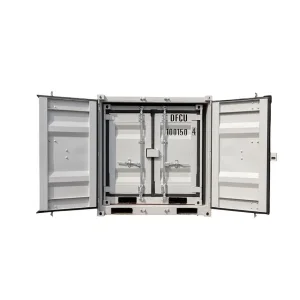
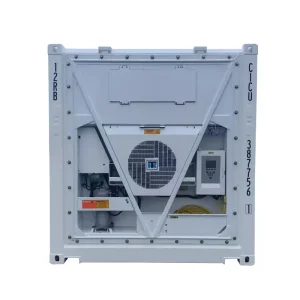
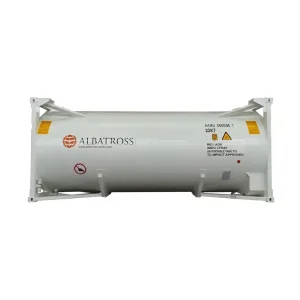
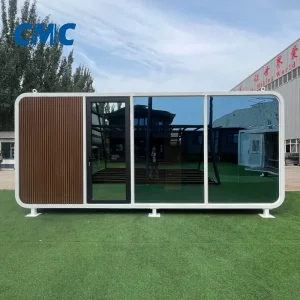
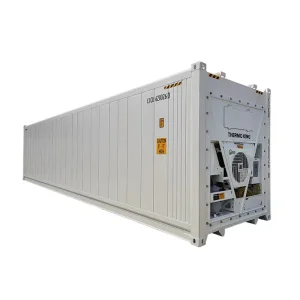
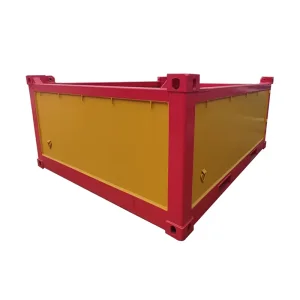
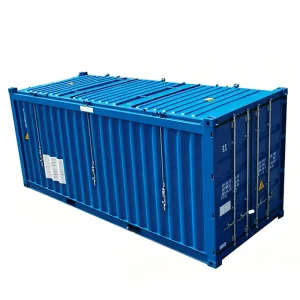
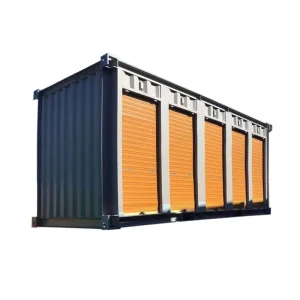
Explore our full line of specialized intermodal, DNV-certified offshore, cryogenic tank, and modular dwelling units engineered to exact ISO and Australian regulatory frameworks.
Whether requiring a single 40ft High Cube container in Brisbane or an allocated fleet contract of 150 units delivered to Fremantle for a Western Australian mining project, our factory export group coordinates survey documentation, sea freight allocation, and biosecurity customs preparation.