
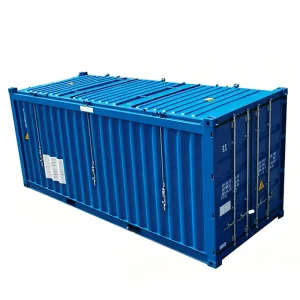
Featured Fleet Systems
High-Payload Intermodal Containers Ready for Hungarian Transit
Engineered for high-density components, machinery transport, and intermodal compliance across EU rail corridors.
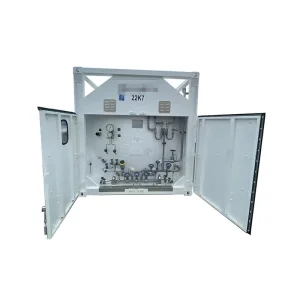
Famous T75 20ft Cryogenic Liquid Tank Container Products, Exporters to Hungary
View Product & Specs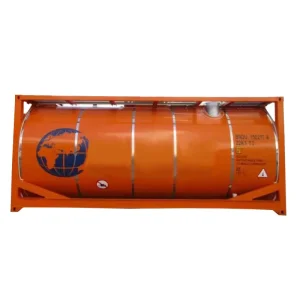
China 20 Foot ISO Liquid Tank Container for Water Manufacturer, Product
View Product & Specs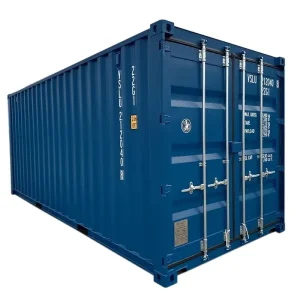
Buy New 20ft Double Door Dry Cargo Shipping Container Products, Manufacturers for Hungary
View Product & Specs
Macro-Industrial Landscape
Hungary’s Strategic Resurgence as Central Europe’s Heavy Logistics Epicenter
Analyzing how industrial clustering in Debrecen, Győr, Kecskemét, and Budapest creates an unprecedented demand for Hard-Top Open-Top (HTOT) containers.
€15B+
EV & Battery Pipeline
1.2M TEU
EWG Intermodal Terminal Capacity
3 Rail Corridors
RFC 6 (Med), RFC 7 (Orient), Silk Road
100% Watertight
Rigid Steel HTOT Security Rating
Automotive & EV Megaclusters
Hungary has positioned itself as the European epicenter for modern electromobility, anchored by BMW’s iFactory in Debrecen, Audi’s electric powertrain hub in Győr, Mercedes-Benz’s expansion in Kecskemét, and BYD’s first European passenger car manufacturing plant in Szeged. These massive production complexes rely on high-precision stamping dies, multi-ton injection mold tooling, and automated robotic assembly frames that cannot be loaded through standard container end-doors, necessitating heavy-crane top-loading via removable hard-top open containers.
Lithium-Ion Gigafactory Deployment
With massive investments from CATL, Eve Power, and Sunwoda, Hungary is scaling into the world's second-largest battery manufacturer per capita. Transporting automated cleanroom machinery, continuous slurry mixers, cathode-coating rollers, and high-density battery cell sub-assemblies requires rigid, climate-tight enclosures. Unlike soft-top canvas tarpaulins vulnerable to wind flap, tears, and environmental moisture, rigid hard-top open containers provide impenetrable IP-rated weatherproofing for expensive automated battery fabrication lines.
The Eurasian Intermodal Rail Gateway
Hungary's landlocked position is transformed into an asset through East-West Gate (EWG) in Fényeslitke—Europe’s largest 5G-controlled green rail intermodal terminal. Linking direct freight corridors from China, Piraeus Port, and Koper, HTOT containers enable true multimodal flexibility: top-loading heavy steel and equipment at the origin factory, securing the rigid steel roof, and seamlessly transferring between broad-gauge (1520 mm) and standard-gauge (1435 mm) rail without reloading delicate cargo.
Engineering Deep-Dive
Hard-Top Open-Top vs. Soft-Top & Flat Rack: The Intermodal Equation
Why Tier-1 Hungarian industrial exporters and freight forwarders are transitioning from soft-top tarpaulins to certified rigid hard-top units.
| Performance Dimension | Hard-Top Open-Top (HTOT) | Soft-Top Open-Top (Tarpaulin) | Flat Rack Container | Standard Dry Van (GP/HC) |
|---|---|---|---|---|
| Overhead Crane Loading | Full 360° top clearance via removable rigid steel lid & swing-out header | Top crane loading with removable TIR canvas & roof bows | Complete lateral & top access (no side walls) | Impossible; limited strictly to end-door horizontal forklifting |
| Weather & Humidity Protection | 100% Watertight EPDM gasket perimeter; equal to standard dry container | Moderate; subject to tarpaulin flapping, tearing, condensation, and UV decay | Zero weather protection; requires costly manual plastic shrink-wrapping | Optimal standard watertight structural barrier |
| Theft & Tamper Resistance | High-security internal cam locking pins; TIR tamper-proof certified | Low; vulnerable to knife slitting and opportunistic cargo pilferage | Minimal security; completely open to cargo access and tampering | High-security dual-leaf rear cargo doors |
| Return-Trip Profitability (Triangulation) | Can carry regular palletized general cargo on return journeys (roof locked) | Limited dry cargo options; high risk of contamination or moisture damage | Zero general cargo capability; must return empty (dead-haul cost) | Ideal for standard general freight return loads |
| Structural Stacking Capacity | Full 9-high ISO stacking capacity (30,480 kg to 34,000 kg gross rating) | Full stacking allowed only when structural roof bows are properly seated | Stackable only when end-walls are erected, high tare weight penalty | Full 9-high ISO intermodal stacking standard |
SPA-H Corten Anti-Corrosive Steel
Manufactured using premium Corten-A weathering steel alloyed with copper, chromium, and nickel. When operating along European rail networks exposed to winter de-icing salts or river-barge humidity across the Danube corridor (from Csepel Port to Constanța), the material forms a self-passivating protective patina that stops structural rusting and extends container service life beyond 20 years.
Overhead Removable Roof Lifting Options
Our hard-top covers are engineered with dual handling capabilities. The lid features integrated corner pockets for overhead crane spreaders, plus heavy-duty central forklift pockets. This ensures that whether a Hungarian logistics depot uses an overhead gantry crane or an 8-ton terminal forklift, the rigid roof can be effortlessly detached and reinstalled in under 4 minutes.
Swing-Out Removable Rear Header Bar
To eliminate loading friction for extra-tall or crane-swung machinery, our rear door header swings out 180 degrees to either side or can be detached completely. This allows industrial equipment that exceeds door clearance to be lowered into position directly from above, after which the header bar is swung shut, locked, and sealed with tamper-evident TIR hardware.
European Compliance & Standards
Hungarian Regulatory Compliance, Customs, & Rail Standards
Ensuring complete legal certification for transit across MÁV (Hungarian State Railways) and the trans-European transport network (TEN-T).
CSC & Bureau Veritas Certification
Every Hard-Top Open-Top container exported to Hungary is delivered with an internationally verified International Convention for Safe Containers (CSC) safety approval plate. Certified by Bureau Veritas (BV) or China Classification Society (CCS), these plates certify that the unit complies with ISO 1496-1 structural standards, permitting stacking up to 216,000 kg on containerships and railway flatcars without localized de-rating.
EN 12663 & UIC 592 Rail Compatibility
Rail freight through Hungarian terminals like Budapest Intermodal Logistics Center (BILK) and Mahart Container Center (MCC) must conform to strict dynamic buffing and transverse acceleration limits. Our containers are tested against UIC 592 and EN 12663 criteria, guaranteeing that internal tie-down lashing rings (rated to 2,000 kg each) can withstand sudden shunting forces without steel deformation.
TIR Carnet & NAV Hungarian Customs
For cross-border shipments originating outside the EU and transiting via the National Tax and Customs Administration of Hungary (NAV), our hard-top open-top containers feature continuous customs sealing lines. The rigid roof is sealed through tamper-proof interior locking pins and exterior wire seal brackets, ensuring rapid clearance under the Customs Convention on Containers without intrusive unpacking.
Regional Case Applications
High-Impact Industrial Applications Across Hungary
Examining field-tested freight scenarios where Hard-Top Open-Top containers solve critical bottlenecks.
Stamping Dies for Győr & Kecskemét
Tier-1 automotive presses rely on hardened alloy stamping dies weighing between 12 and 22 metric tons. These concentrated point loads damage standard wooden floors and cannot be loaded with standard side-entry forklifts. Our 20ft Hard-Top Open-Top containers are equipped with reinforced crossmembers and 28mm marine-grade hardwood plywood floors treated with anti-slip finishes, enabling pinpoint gantry crane positioning directly over the chassis center-of-gravity.
Dunaújváros Metallurgy & Steel Coil Export
Hungary's long-established iron and steel processing hub at Dunaújváros requires secure rail transport for heavy rolled steel coils and forged bar stock. Soft tarpaulins risk catastrophic failure if strapping shifts during rail marshalling. In contrast, rigid steel hard-top lids ensure zero shifting beyond the container envelope, and multiple floor-level D-rings allow heavy-duty steel wire anchoring directly to the structural bottom rails.
Turnkey Wind & Solar Power Substations
As Hungary expands its solar farms across the Great Hungarian Plain (Alföld), power developers import step-up transformers, switchgear stations, and inverter modules. These tall electrical enclosures exceed standard container door openings by 5 to 15 centimeters. The 40ft High Cube Hard-Top Open-Top container provides an extra 30cm of vertical clearance, accommodating over-height electrical skids beneath a fully enclosed, waterproof steel lid.
Engineering Roadmap
The Next-Generation Intermodal Roadmap (2025–2030)
Anticipating the technological shift in intelligent, lightweight, and decarbonized container design for European supply chains.
IoT Shock & Integrity Telematics
For high-value precision equipment transit across Eastern Europe, our emerging smart HTOT fleet integrates solar-powered satellite telematics. Multi-axis accelerometers measure rail shunting G-forces in real time, alerting shippers in Budapest to improper impacts. Concurrently, micro-switch perimeter sensors verify whether the hard-top roof locking bolts have been tampered with or opened before scheduled delivery.
Ultra-High-Strength Lightweight Alloys
By integrating micro-alloyed 700 MPa high-strength automotive steel into structural top rails and longitudinal beams, our next-gen engineering reduces container tare weight by up to 14%. For European intermodal operators bound by the EU 44-tonne gross road transport limit, this allows an extra 1,200 kg of industrial cargo per container, dramatically cutting freight emissions per ton-kilometer.
Zero-VOC Waterborne Coating Systems
In accordance with tightening European REACH chemical regulations and corporate Scope 3 sustainability targets, all container production lines utilize zinc-rich waterborne epoxy primers and polyurethane topcoats. These low-VOC finishes offer superior resistance against chemical industrial environments while reducing manufacturing emissions by over 60% compared to traditional solvent systems.
Procurement & Technical FAQ
Frequently Asked Questions for Hungarian Importers & Contractors
Essential guidance on quotes, delivery logistics, intermodal handling, and customs procedures for Hungary.
Q: How is a Hard-Top Open-Top container quote structured for delivery to Hungary?
Quotes can be quoted under EXW/FOB China ports (Tianjin/Qingdao/Shanghai) or on DDU/DAP terms to major Hungarian logistics nodes including Budapest, Debrecen, and Győr. Pricing depends on unit size (20ft, 40ft, 40HC), payload rating (standard 30.48T vs heavy 34T), certified roof lifting configurations, and current Eurasian rail/sea-freight rates.
Q: What is the primary operational advantage of HTOT over standard soft-top tarpaulin containers?
Hard-top containers replace flexible canvas tarpaulins with a heavy-duty, fully removable Corten steel roof. This provides absolute water-tightness (EPDM rubber gaskets), complete security against cargo slash-theft, 9-high ISO stacking capacity, and the unique ability to carry regular dry palletized cargo on return freight journeys without de-rating.
Q: What freight routes are utilized to import containers from China to Hungary?
Three main corridors are utilized: 1) The New Silk Road Eurasian rail link entering Hungary directly via the East-West Gate (Fényeslitke) terminal (approx. 18-22 days transit); 2) Ocean maritime shipping to the Adriatic Port of Koper (Slovenia) followed by daily block trains to Budapest terminals (BILK/MCC); and 3) Ocean shipping to Hamburg/Rotterdam with subsequent European rail shuttle connections.
Q: How heavy is the removable steel hard-top, and how is it lifted?
A standard 20ft steel hard-top lid weighs approximately 450 kg, while a 40ft roof weighs roughly 900 kg. Our units are engineered with both standard ISO corner lifting pockets (for container gantry spreaders or crane spreader bars) and integrated forklift pockets, allowing standard 5T+ yard forklifts to remove the roof in minutes without specialized crane tackle.
Q: Can tall oversized cargo be transported with the hard-top roof left open?
Yes. If your machinery exceeds the standard container internal height, the container can be shipped as an in-gauge or out-of-gauge (OOG) open unit. The rigid steel roof can either be lashed vertically against an interior sidewall or transported separately, provided the cargo is properly secured according to IMO/ILO/UNECE Code of Practice for Packing of Cargo Transport Units (CTU Code).
Q: Are your containers certified for direct transfer onto Hungarian State Railways (MÁV)?
Yes. All units comply strictly with ISO 668, ISO 1496-1, and International Union of Railways (UIC) leaflet 592 specifications. Each unit undergoes comprehensive transverse bending, longitudinal buffing, and dynamic stress testing, backed by valid Bureau Veritas (BV) CSC documentation for seamless intermodal rail interchange across the EU.
Comprehensive Intermodal Portfolio
Full Fleet Catalog: Reefer, Offshore, Platform & Special Equipment
Explore our precision-engineered container solutions engineered for heavy industry, mining, and cold chain distribution.
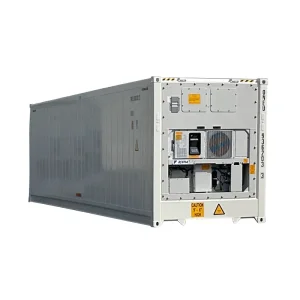
OEM New 40ft High-Cube Daikin Freezer Container Cold Storage Room Manufacturer, Products
View Product & Specs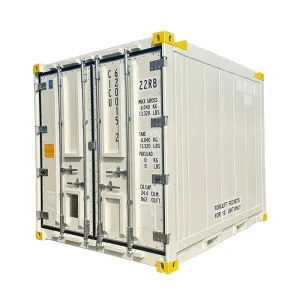
High-Quality New 10ft Certified Thermo King Freezer Container Exporter, Manufacturers
View Product & Specs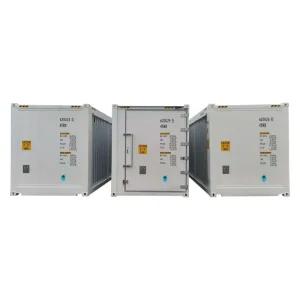
China OEM 40ft High-Cube Customized Three-in-One Combination Reefer Storage Container Manufacturer, Quotes
View Product & Specs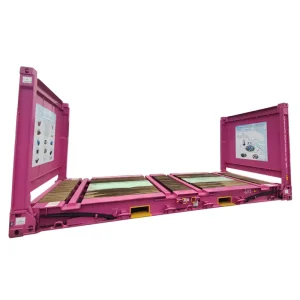
ODM New 20ft Platform Frame Container Pricelist, Exporters for Hungary Freight
View Product & Specs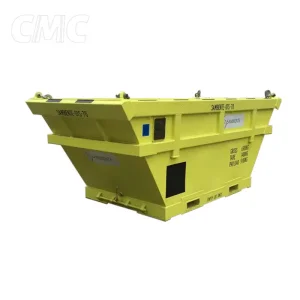
Famous DNV Certification Silt Basket Container Used in Offshore Operations Factories, Exporters
View Product & Specs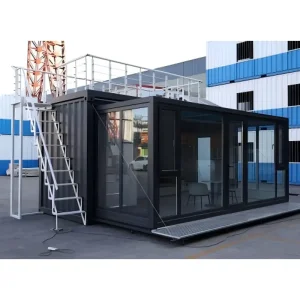
Famous 20ft Foldable Prefab Modular Homes Mobile Expandable Container House Prefabricated House with Bathroom Manufacturer, Exporters
View Product & Specs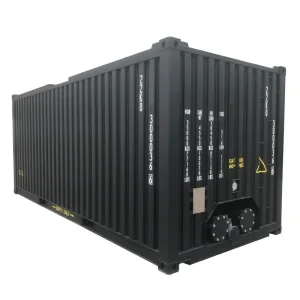
China 20 Feet Heated Shipping Asphalt Container Exporter, Manufacturers for European Projects
View Product & Specs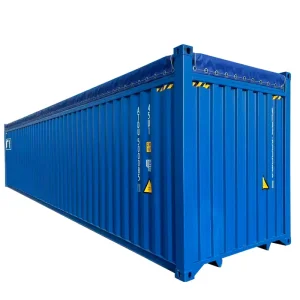
Buy 40ft High-Cube New Soft Open Top Shipping Container with Tarpaulin Cover Manufacturer, Product
View Product & SpecsRequest Custom Hard-Top Container Engineering & Quotes
Connect with our senior logistics structural engineers. Receive certified technical CAD drawings, BV test reports, and door-to-door multimodal freight rates directly to your terminal in Hungary within 24 hours.