
Engineered Solutions Ready for Danish Deployment
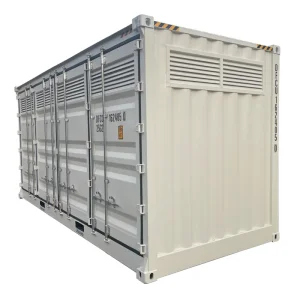
Famous 20FT High-Cube Dangerous Goods Container (Side Open Door & Dual Ventilation for Danish Chemical Hubs)
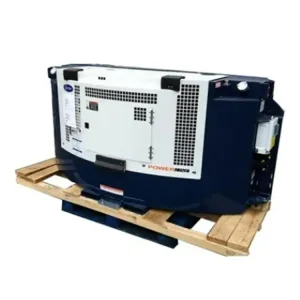
Refrigerated Container Undermount Diesel Clip-On Generator (Jutland-Baltic Long Haul Spec)
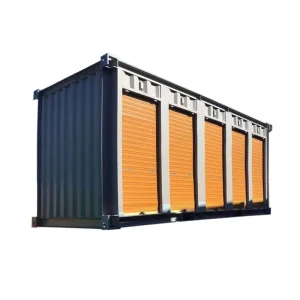
OEM New 20ft Architectural Storage Roll-Up Door Container (Danish Construction & Yard Logistics)
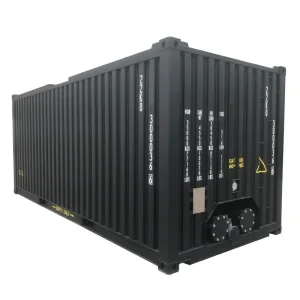
China 20 Feet Electrically Heated Shipping Asphalt & Bitumen Container (Nordic Roadway Infrastructure)
Denmark's Industrial Matrix: Intermodal Modularity in the North Sea Hub
As northern Europe's strategic maritime gateway, the Kingdom of Denmark maintains an ultra-efficient logistical backbone driven by three distinct economic engines: the North Sea offshore wind power industry centered around the Port of Esbjerg, high-value life sciences corridors in the Copenhagen-Kalundborg axis, and highly automated food processing facilities stretching across Jutland. Combined containers—modular configurations merging dual-temperature refrigeration, dry intermodal capabilities, hazardous chemical containment, and mobile power-generation assets—have become critical enablers for Danish supply chain continuity.
Offshore Wind & Port of Esbjerg Integration
Biotech & Pharmaceutical Cold Chains
Jutland Agro-Food Freight Optimization
Global Macro Trends: The Evolution toward Hybrid Intermodal Enclosures
Standard dry boxes are increasingly inadequate for modern agile supply ecosystems. Today’s industrial leaders require multifunctional modular assets capable of adapting to shifting international trade lanes, fluctuating energy costs, and stringent global security covenants.
Modular Coupling & Multi-Chamber Architecture
Modern combined containers employ modular internal bulkheads (fixed or longitudinal adjustable dividers) enabling distinct environmental micro-climates inside a single ISO footprint. Through advanced ODM fabrication, dual-unit refrigeration configurations integrate partition bulkheads capable of maintaining sub-zero freezing on one flank while keeping ambient non-perishable hardware dry and condensation-free on the other. This capability fundamentally resolves LCL (Less than Container Load) inefficiencies in specialized Nordic freight lanes.
- Thermal Isolation R-Values: Polyurethane vacuum-insulated paneling offering thermal conductivity as low as 0.019 W/m·K.
- Longitudinal Dynamic Loading: Reinforcement ribs certified to counter rail shunting impacts under EN 283 standards.
- Acoustic Decoupling: Integrated genset partitions engineered with micro-perforated damping baffles for low-noise urban distribution.
IoT Telematics & Predictive Microgrid Connectivity
Global container fleets are rapidly transitioning from passive steel shells to active intelligent nodes. Combined reefer-generator containers exported to Denmark are equipped with embedded IoT controllers that transmit real-time telemetry over multi-carrier GSM and Iridium satellite networks directly into enterprise ERP and fleet dispatch matrices.
- Automated Cold-Chain Auditing: EN 12830-compliant datalogging providing tamper-proof digital temperature ledgers for Danish health authorities.
- Smart Power Auto-Switching: Zero-second seamless transition between vessel 460V 3-phase shore connections and onboard diesel gen-packs.
- Predictive Maintenance Analytics: Real-time vibration, compressor head-pressure, and refrigerant leak detection alerts.
Localized Support & Compliance Guarantees for the Danish Market
Deploying intermodal or combined containers within Denmark and the wider European Single Market involves navigation of stringent safety, environmental, and maritime legal codes. Our factory-level quality engineering ensures complete conformity across all relevant Nordic frameworks.
| Standard / Regulatory Body | Technical Scope & Target Applications | Compliance Guarantee Implemented |
|---|---|---|
| CSC (Safe Containers) | International Convention for Safe Containers certification; mandatory for sea freight via Maersk and feeder lines calling Copenhagen or Aarhus. | Bureau Veritas (BV) third-party approval; certified stacking strength up to 216,000 kg and transverse racking proof load tests. |
| DNV 2.7-1 / EN 12079 | Offshore freight containers, lifting baskets, and power modules utilized on offshore platforms in the Danish sector of the North Sea. | Corten SPA-H steel structural framing with impact-tested lifting pad eyes certified to -20°C Charpy V-notch toughness specifications. |
| Arbejdstilsynet (WEA) | Danish Working Environment Authority health, ergonomic, and safety rules for on-site containerized workshops and storage units. | Internal emergency exit push-bars, low-effort industrial roll-up doors, non-slip certified floor coatings, and explosion-proof lighting fixtures. |
| ADR / RID Class 3, 4, 8 | Hazardous chemical transport over Danish roads (Storebælt Bridge corridors) and railway connections via DSB freight networks. | Fully integrated internal secondary containment bunds, explosion-proof forced ventilation louvers, and certified earthing terminals. |
| F-Gas Regulation (EU) 517/2014 | Refrigeration system refrigerant compliance targeting low Global Warming Potential (GWP) gases across European ports. | Integration of next-generation low-GWP refrigerants (R-452A, R-513A, or natural CO2 R-744) across Carrier, Thermo King, and Daikin units. |
Engineered Application Scenarios Across Danish Industry
How Danish engineers, operations managers, and logistics coordinators leverage our custom ODM combined containers to streamline workflows and reduce overhead.
Esbjerg Offshore Subsea Mobilization
Offshore support vessels mobilized out of Esbjerg require containerized systems that combine heavy umbilical winch assemblies alongside climate-controlled instrumentation pods. Our combined containers feature heavy-duty floor load ratings up to 6,000 kg/m² and internal acoustic damping for operator consoles, fully certified for crane crane-hoist transfers in sea state 5 conditions.
Kalundborg Bio-Manufacturing Waste Interception
In Denmark's circular industrial symbiosis capital, Kalundborg, chemical by-products require specialized ISO tank and dangerous goods combined units. These containers integrate stainless steel 316L liquid storage tanks side-by-side with dry containment lockers for absorbent media and hazardous pump filtration machinery, streamlining chemical transfer while honoring strict environmental protocols.
Nordic Cold Chain Intermodal Feeder Lines
Agricultural logistics firms transporting organic food assets between Aalborg, Aarhus, and continental European ports use our integrated reefer and underslung generator units. These setups avoid costly reefer plug-in fees at intermediate terminals, delivering seamless power autonomy across maritime roll-on/roll-off ferries and multimodal rail legs.
Technology Roadmap: Power-to-X & Circular Container Lifecycles
As Denmark accelerates its transition toward green hydrogen, e-methanol bunkering, and sustainable marine transportation, container hardware must advance accordingly. Our ODM engineering roadmap directly addresses the next decade of decarbonization challenges.
Ultra-Low Thermal Loss & Stage V Power
Implementation of non-depleting cyclopentane insulating foam systems yielding a 35% improvement in thermal retention over conventional polyurethane. Deployment of EU Stage V certified clip-on generators featuring particulate filtration to achieve compliance within low-emission ports such as Aarhus and Copenhagen.
Power-to-X & Battery Storage Integration
Modular ISO container enclosures designed for modular megawatt-scale battery energy storage systems (BESS) and water electrolysis equipment. Built with automated gas detection, aerosol fire suppression, and explosion relief roofs tailored for Danish hydrogen infrastructure sites.
100% Circular Low-Emission Steel (SSAB Zero)
Transitioning container corner castings, cross-members, and corrugations to fossil-free, electric arc furnace recycled steel profiles. Incorporating self-powered kinetic solar roof skins that offset auxiliary power requirements for active telemetry and reefer circulation fans during transit.
Frequently Asked Technical & Procurement Questions
Direct responses to engineering, certification, logistical, and custom ODM manufacturing questions asked by Danish procurement teams.
How does an ODM Combined Container differ from a conventional ISO dry box?
An ODM Combined Container is custom-engineered to consolidate multi-functional capabilities into a single intermodal shell. This includes multi-temperature dividing bulkheads, integrated diesel generator bays, ATEX-rated hazardous cargo partitions, side-opening access doors, or integrated liquid/gas tanks. This enables shippers to handle diverse cargo within one footprint, avoiding the operational expense of two separate containers.
What is the standard lead time for bespoke ODM delivery into Danish ports?
CAD structural design and technical drawing approval require approximately 7 to 10 days. Factory fabrication, robotic welding, dual-pass zinc-rich priming, and CSC/BV certification testing take 20 to 30 days depending on order volume. Ocean freight transit from our port-proximate facilities in Tianjin/Suzhou directly into Port of Aarhus or Copenhagen averages 32 to 38 days, often routed as "one-way empty cargo load" to minimize shipping rates.
Are these units certified for North Sea offshore operations (Esbjerg)?
Yes. For clients supporting offshore wind installations, oil & gas rigs, or subsea engineering, we manufacture offshore containers specifically in compliance with DNV 2.7-1 / EN 12079. These feature impact-resistant steel, Charpy tested corner castings at -20°C, and certified heavy-duty wire rope lifting slings accompanied by formal third-party survey dossiers.
Can you provide custom interior cabinetry, bunds, and power outlets for Danish tools?
Yes. Our ODM program supports turn-key interior fit-outs. We install 230V/400V 50Hz electrical distribution panels matching Danish CEE industrial plugs, explosive-environment extraction fans, heavy-duty unistrut mounting channels, internal LED luminaire sets, and spill containment sumps fully compliant with Danish Environmental Protection Agency standards.
Expanded Combined & Specialized Container Catalog
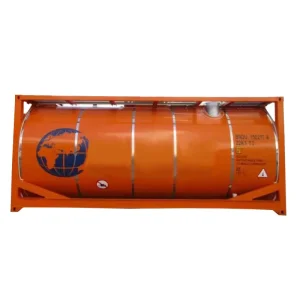
20 Foot ISO Liquid Tank Container for Potable Water & Process Fluids (Danish Municipal / Site Support)
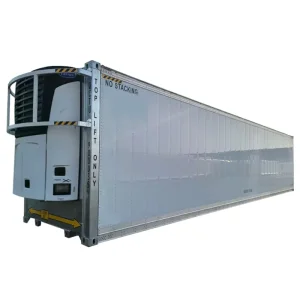
Carrier X4-7300 Refrigeration & Electricity Integrated Combined Container (Independent Cold Chain)
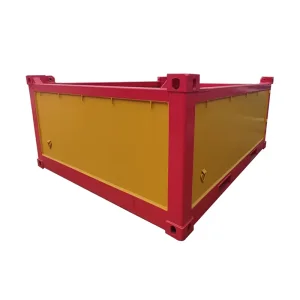
High-Quality Offshore Basket Container for North Sea Operations (Esbjerg Marine Wind Sector)
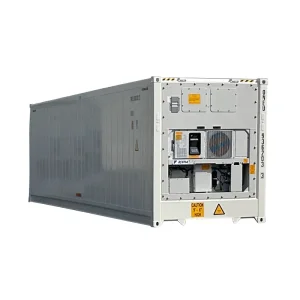
OEM New 40ft High-Cube Daikin Freezer Container & Cold Storage Room (Nordic Pharma Grade)

Used 40ft High-Cube Certified Reefer Container (Pre-Trip Inspected for Baltic & Nordic Shipping)
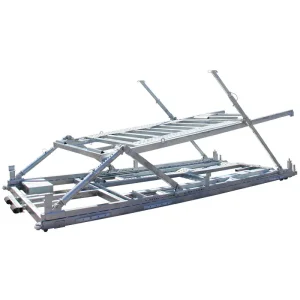
Heavy-Duty Vehicle Transport Internal Steel Racking System (Intermodal Automotive Logistics)
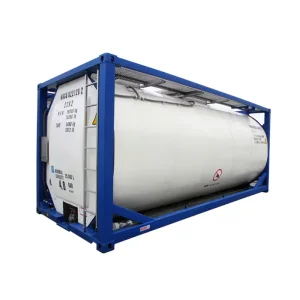
ISO Standard 20ft Versatile Tank Container for Chemical Transport (Danish Bio-Refinery Spec)
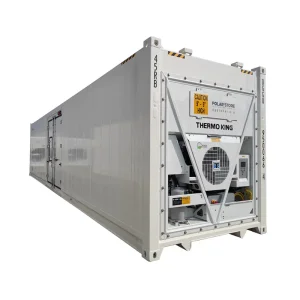
Famous 40ft High-Cube Full Side-Open Door Reefer Container (Rapid Forklift Cold-Storage Staging)
Request Engineering Specifications & Nordic Direct Factory Quotes
Connect directly with our senior intermodal container design team. We supply verified 3D CAD models, third-party BV/DNV certification dossiers, and fixed DDP/CIF port delivery quotations for Copenhagen, Aarhus, Esbjerg, and Aalborg.