
Priority Cold Chain Deployments for Riyadh Central Province
Engineered for extreme ambient conditions and rapid deep freezing. Showing primary industrial configurations certified by international classification societies.
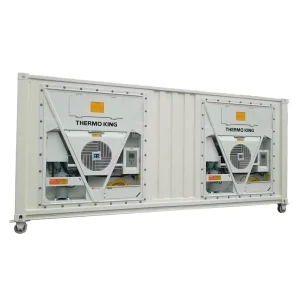
High-Quality Blast Reefer Containers Certified by Classification Societies for Riyadh Industrial Projects
View Details & Spec Sheet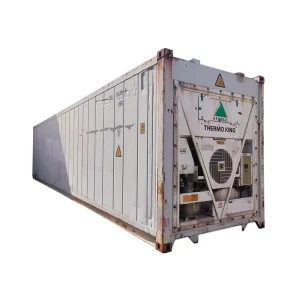
ODM Heavy-Duty 40ft Refrigerated Freezer Container Tailored for Riyadh Central Cold Hubs
View Details & Spec Sheet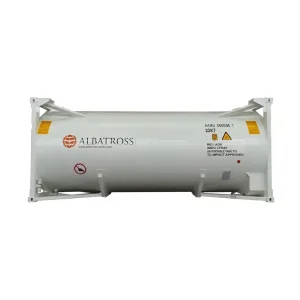
Heavy-Duty 25,000 Liters ISO 20ft Cryogenic & Gas Tank Container for Riyadh Chemical Corridors
View Details & Spec Sheet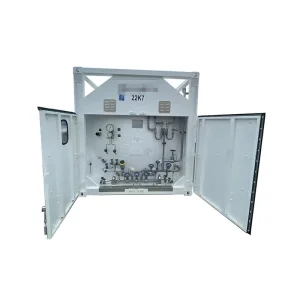
High-Performance T75 20ft Cryogenic Liquid Tank Container for Medical & Energy Assets in Riyadh
View Details & Spec SheetIndustrial Status: Riyadh Cold Chain & Logistics Infrastructure
A comprehensive engineering and commercial perspective on Saudi Arabia's rapidly evolving capital city ecosystem under Saudi Vision 2030.
The Urban Hub Transformation
Riyadh has emerged as the epicentre of the Arabian Peninsula's logistical transformation. With an urban population projected to surpass 10 million and large-scale giga-projects driving massive population influxes, centralized food security and pharmaceutical storage require rapid thermodynamic upgrades. Traditional brick-and-mortar blast freezers suffer from prohibitive lead times and complex civil engineering hurdles, pushing municipal food boards and enterprise logistics providers toward modular, portable blast reefer containers.
Vision 2030 Food Security Directives
The Saudi Food and Drug Authority (SFDA) has tightened temperature monitoring compliance protocols along the food distribution supply line. Blast freezers are non-negotiable assets for abattoirs, poultry handling units, and dairy processors operating out of Al Kharj and Riyadh Industrial Cities (MODON I, II, & III). Blast chilling to -35°C to -40°C in controlled cycle spans prevents micro-bacterial proliferation and cellular breakdown, maintaining export-grade protein standards across cross-dock operations.
Extreme Najd Desert Climate Resistance
Riyadh experiences seasonal ambient fluctuations ranging from sub-zero winter temperatures to scorching summer heatwaves in excess of +50°C with heavy particulate dust loads. Standard refrigerated maritime boxes struggle with compressor burnout and thermal bridging. Our OEM blast reefers integrate heavy-density cyclopentane-blown polyurethane foam insulation, advanced thermal break gaskets, and oversized high-static pressure condensers designed for harsh arid regions.
Global Perspectives: The Shift to Dynamic Mobile Blast Freezing
Understanding how decentralized processing and strict cold-chain mandates reshape cold logistics across global supply chains.
Modular Scalability vs. CapEx Risk
Historically, commercial blast freezing required high capital investments in fixed facilities with massive civil works. Global logistics operators are prioritizing flexible capital expenditure (CapEx). Blast reefer containers allow companies to scale up deep-freezing capabilities instantaneously, relocating equipment seamlessly along seasonal agricultural harvest vectors or sudden humanitarian supply lines.
Thermodynamic Optimization & Green Refrigerants
Under international environmental pacts like the Kigali Amendment, refrigeration manufacturers are pivoting from legacy freon gases to low-GWP (Global Warming Potential) options such as R-452A, CO2 (R-744), and advanced scroll/semi-hermetic reciprocating systems. OEM builds feature precision airflow ducting capable of driving uniform air speeds over 5 m/s across deep layers of loaded meat and produce.
IoT-Driven Predictive Telematics
Modern supply chain logistics rely on actionable real-time data visibility. Blast units bound for international transit are equipped with dual-satellite and 4G/5G multi-carrier modems. Operating parameters—including evaporator defrost intervals, return air temperatures, internal core meat-probe readouts, and power supply harmonics—are logged on tamper-proof platforms accessible by compliance officers.
Local Applications & Deployment Blueprints in Riyadh
Specific engineering implementations addressing the actual use-cases across the Riyadh economic cluster.
Poultry & Halal Meat Abattoirs
At regional slaughterhouse complexes outside Riyadh, poultry and livestock must transition from body temperature (+38°C) to below -18°C deep core in minimal cycle periods. Our OEM blast reefers provide intense mechanical air circulation through stainless steel T-flooring, preventing ice crystallization that compromises meat texture and nutritional value.
Biopharmaceutical Cold Chains
With Riyadh establishing itself as a regional biotech hub via King Abdullah International Medical Research Center and international pharmaceutical partnerships, cold storage of active biological ingredients, vaccines, and plasma relies on uninterrupted sub-zero stability. Blast reefers provide validated failsafe systems with dual-redundant refrigeration cycles.
MODON Industrial Central Storage
Industrial parks in Riyadh require fast supplementary cold holding without waiting 18 months for civil development permits. Our blast reefer containers function as standalone external cold rooms. Equipped with heavy-duty internal LED lighting, emergency escape releases, and anti-slip floors, they slot directly onto standard concrete pads.
Engineering White Paper: Technical Roadmaps & Compliance
Rigorous manufacturing parameters and regulatory alignment for middle eastern logistics tenders.
Classification & SASO Alignment
Our containers are fabricated under rigorous Bureau Veritas (BV) classification benchmarks and designed to clear Saudi Standards, Metrology and Quality Organization (SASO) and SABER customs protocols effortlessly. Structural framing leverages SPA-H atmospheric corrosion-resistant Corten steel, sandblasted to SA 2.5 standards and treated with epoxy primer systems tested for heavy salt and dust wear.
Electrical Grid Adaptation (380V/440V)
Standard European or North American refrigeration units often trip on localized voltage sags during Riyadh's peak summer cooling loads. Our units incorporate multi-tap transformers and surge protection modules designed to handle 380V-460V 3-phase 50Hz/60Hz fluctuations cleanly, preventing inverter shutdown during continuous blast cycles.
Next-Gen Hybrid Power Interlocking
Looking toward future industrial corridors along the Riyadh-Dammam corridor, our engineering department has introduced dual-mode smart tie-ins capable of switching automatically between standard shore grid electrical feeds and dedicated diesel gensets or emerging site solar arrays, eliminating cold-chain drops.
Frequently Asked Questions (FAQ) for Sourcing Teams in Riyadh
Practical technical and procurement answers addressing Saudi import logistics, customization, and thermal capacities.
What is the difference between a standard reefer container and an OEM blast reefer container?
Can these blast freezers operate efficiently in Riyadh's extreme summer climate?
What power supplies are required to run these containers in Saudi industrial areas?
What documentation and certifications are provided for Saudi import clearance?
What are the lead times and shipping routes to Riyadh?
Complete Equipment Catalog & Intermodal Fleet Solutions
Explore our complete inventory of ISO standard containers, dry boxes, platform racks, and specialized energy modules available for shipment to the Kingdom.
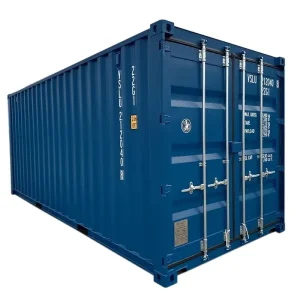
Rugged 20ft Double Door Dry Cargo Shipping Container for Riyadh Inland Distribution
View Details & Spec Sheet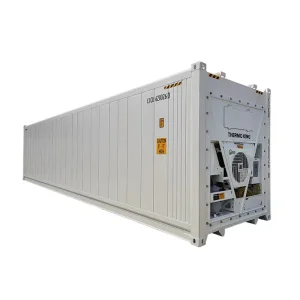
OEM 40ft High-Cube Certified Reefer Shipping Cargo Container for Riyadh Logistics Fleets
View Details & Spec Sheet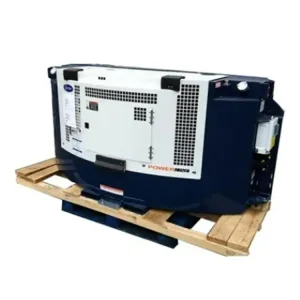
Heavy-Duty Reefer Container Diesel Generator Set for Desert Transit Across Riyadh
View Details & Spec Sheet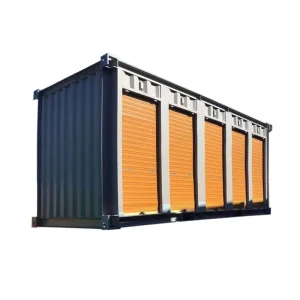
OEM 20ft Storage Roll-Up Door Dry Cargo Container for Riyadh Commercial Hubs
View Details & Spec Sheet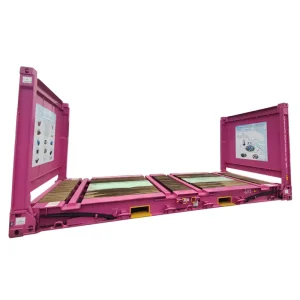
ODM Heavy-Payload 20ft Platform Frame Container for Riyadh Industrial Plant Equipment
View Details & Spec Sheet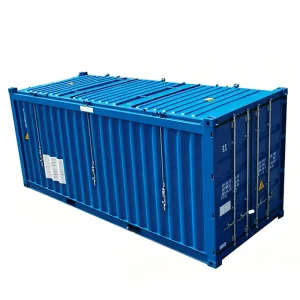
Industrial 20ft Hard Open Top Shipping Container for Riyadh Mining & Machinery Assets
View Details & Spec Sheet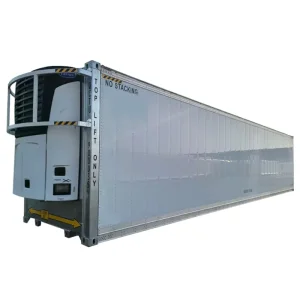
Carrier X4-7300 Integrated Refrigeration & Electricity Reefer Container for Riyadh
View Details & Spec Sheet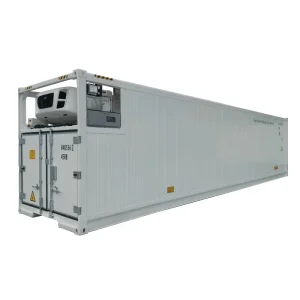
High-Volume 40ft HC & 45ft Intermodal Railway Reefer Container for GCC Rail Connectivity
View Details & Spec SheetPartner with a World-Class OEM Container Engineering Leader
Whether commissioning a singular custom blast freezer prototype or procuring a comprehensive refrigerated fleet for Riyadh's booming cold chain infrastructure, our engineering desk is on standby with full structural, electrical, and thermodynamic documentation.
Send Inquiry Now - Immediate Project Estimate