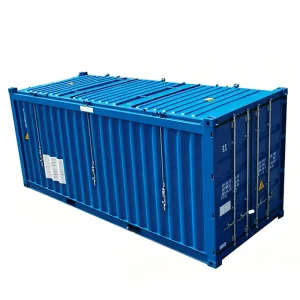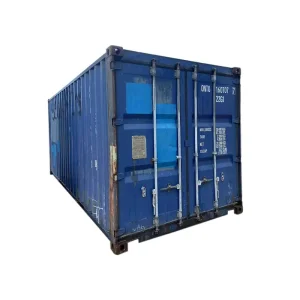
Immediate Fleet Availability
Pre-Owned Intermodal & Special Container Stock
Surveyed intermodal equipment staged for rapid redeployment across Durban, Cape Town, and Gauteng freight logistics nodes.
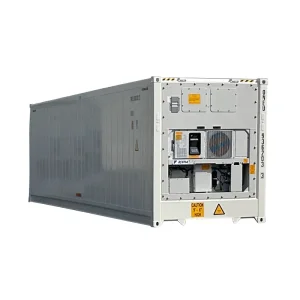
OEM 40ft High-Cube Reefer Cold Room Container (Cape Perishables Export)
View Specifications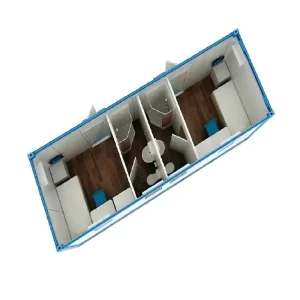
Modular 20ft/40ft Mining Camp Accommodation Unit (Bushveld Complex)
View Specifications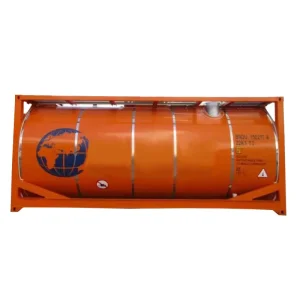
20ft ISO Stainless Steel Liquid Tank Container (Chemical & Fuel Grade)
View Specifications
Commercial & Regional Landscape
South Africa's Bulk Liquid Supply Chain & Used ISO Tank Dynamics
How structural supply shifts, mining expansion, and port throughput constraints are reshaping secondary asset procurement.
Durban Port & Gauteng Corridor
The Natal Corridor (NatCor) connecting the Port of Durban to Johannesburg (City Deep) handles over 60% of South Africa's containerized chemicals. Persistent rail backlogs on Transnet Freight Rail have forced massive modal shifts to road tankers and intermodal ISO tank swaps, driving a 34% surge in demand for durable, road-ready used T11 tank containers equipped with heavy-duty Corten steel frames.
Petrochemical & Synthetic Refining
Clusters surrounding Sasolburg and Secunda (Sasol synthetic fuel operations) alongside AECI processing plants require continuous intermediate bulk staging. Rather than investing in permanent high-capex stationary storage tanks, industrial operators increasingly acquire second-hand T11 and T14 stainless steel tank units as flexible, mobile on-site decanting and intermediate storage buffers.
Cross-Border Mining Corridors
South Africa serves as the primary transshipment gateway for heavy mining reagents—including sulfuric acid, frothers, and sodium cyanide solutions—bound for the Zambian and DRC Copperbelt. Used ISO tanks with high-tensile 316L vessels and approved periodic pressure certifications represent the most cost-efficient mechanism to service these harsh, multi-thousand-kilometer road corridors.
26,000L
Standard T11 Capacity for High-Gravity Chemical Haulage
316L / 1.4404
Predominant Austenitic Stainless Vessel Metallurgy
45%–60%
Capex Reduction of Used vs. Brand-New ISO Tanks
5-Year
Periodic Hydrostatic Testing Cycle Under SANS / IMDG
Benchmarking & Cost Modeling
South Africa Used Tank Container Pricelist Matrix (2025 Market Range)
Transparent valuation index reflecting landed, surveyed, and depot-inspected second-hand units across Durban and Johannesburg yards.
| Tank Specification | UN Portable Classification | Capacity Range | Typical Shell / Lining | Ex-Depot Durban Price (USD) | ZAR Equivalent (Approx.) | Key SA Applications |
|---|---|---|---|---|---|---|
| Standard Chemical Intermodal | T11 UN Portable | 21,000L – 26,000L | AISI 316L Stainless (3.8–4.4mm) | $8,200 – $12,500 | R150,000 – R230,000 | Solvents, fuels, base oils, general industrial liquid chemicals |
| Acid & Highly Corrosive Spec | T14 / T20 UN Portable | 14,500L – 20,000L | Rubber Lined / PTFE / PFA Lined | $13,500 – $18,900 | R250,000 – R350,000 | Hydrochloric acid, ferric chloride, mining leaching reagents |
| Food-Grade / Sanitary Spec | T11 Sanitary / IMO 1 | 24,000L – 26,000L | 316L Mirror Electropolished (0.4μm) | $9,500 – $14,200 | R175,000 – R262,000 | Western Cape wines, edible oils, high-fructose corn syrup, ethanol |
| LPG / Anhydrous Ammonia Tank | T50 Gas Container | 24,000L – 24,500L | Fine-Grain High Tensile Carbon Steel | $19,000 – $28,500 | R350,000 – R525,000 | Industrial propane, butane, agricultural anhydrous ammonia fertilizers |
| Bitumen & Heavy Pitch Tank | T3 Direct Heated | 20,000L – 27,000L | Corten Carbon Steel + Flame Tubes | $9,800 – $15,000 | R180,000 – R277,000 | Road construction binders, asphalt emulsions, coal tar distillates |
Pricing Insight Note: Valuations are dictated by remaining periodic certification validity (2.5-year pneumatic test vs. 5-year hydrostatic survey), shell minimum wall thickness (measured via ultrasonic NDT), frame structural integrity (ISO 1496-3 compliance), and valve brand condition (e.g., genuine Fort Vale or Perolo valves). Units sold "Cleaned, Gas-Free, With Current Periodic Test Certificate" trade at a 15%–20% premium compared to "As-Is, Where-Is" depot stock.
Engineering Whitepaper
Macro Solutions: Solving South Africa's Bulk Liquid Challenges
Engineered retrofitting, thermal insulation management, and modal flexibility for heavy industrial fleets.
Overcoming Road Infrastructure Degredation
Heavy axle loads along South Africa's N3 highway (Durban to Gauteng) demand rugged container framework. High-spec used ISO tanks with heavy collar rings, robust diagonal bracing, and reinforced corner castings distribute dynamic shock loads generated by compromised secondary roads. CIMIC refurbishes and inspects all corner structures to guarantee full compliance with ISO 1496 stacking loads up to 192,000 kg.
Thermal Management in the Highveld Climate
Viscous commodities—such as heavy fuel oil, palm stearin, and paraffin waxes—crystallize quickly in high-altitude winters across Gauteng and the Free State. Used tank containers supplied by reputable manufacturers feature 6-to-8-run longitudinal steam heating channels capable of operating at 4 to 6 bar steam pressure, paired with 50mm compressed rockwool or polyurethane insulation protected by seamless GRP or stainless cladding.
Corrosion Mitigation for Coastal Staging
Tanks stationed long-term in maritime microclimates like Durban South or Port Elizabeth face severe atmospheric salt attack. Secondary tanks selected for South African coastal depots undergo complete outer frame grit-blasting (Sa 2.5 standard) followed by high-build epoxy zinc primers and polyurethane topcoats engineered to endure 1,500+ hours of ASTM B117 salt spray testing without frame oxidation.
Static Staging & Modular Battery Integration
Mining operations in remote Limpopo or Mpumalanga utilize clusters of used T11 tank containers connected via bottom-outlet manifolds as decanting farms. This bypasses municipal environmental permitting roadblocks associated with subterranean stationary fuel tanks while offering immediate capital asset mobility if extraction operations relocate.
Regulatory & Legal Framework
South African Compliance Standards: SANS, CSC & Dangerous Goods
Rigorous regulatory adherence ensuring zero cross-border clearance delays and strict operational safety.
SANS 10228 & 1518 Standards
All hazardous liquid logistics on South African roadways must conform to SANS 10228 (Identification & Classification of Dangerous Goods) and SANS 1518 (Design Requirements for Road Tankers & Multimodal Units). Every pre-owned tank exported to or refurbished in SA must carry an unambiguous UN portable tank data plate confirming operating pressure, shell thickness, and relief valve test benchmarks.
Mandatory 2.5 & 5-Year Inspections
Under international IMDG and local Department of Transport mandates, tank containers require an intermediate 2.5-year pneumatic test (vent valves, gaskets, bottom discharge assembly) and a rigorous 5-year hydrostatic test (vessel pressurization to 1.5× MAWP, normally 6.0 bar for standard 4.0 bar T11 units). CIMIC certifies every used tank via authorized Bureau Veritas or SGS survey officers before dispatch.
CSC Safety Approval & Cleanliness
Before any container moves across Durban or Cape Town docks, its International Convention for Safe Containers (CSC) safety approval plate must be revalidated. Furthermore, chemical-to-food cross-contamination is strictly prevented: our units are accompanied by clean chemical/gas-free certificates and ATP food-grade verification where designated.
Future Innovations
Technological Roadmap: Upgrading Secondary Fleets with Smart Telematics
Bridging legacy hardware with industrial IoT for high-visibility cargo custody along African transit routes.
ATEX / IECEx Zone 1 Telematics
Cross-border tracking of flammable petrochemicals across remote corridors requires intrinsically safe telematics. Pre-owned containers can be retrofitted with solar-assisted GPS devices certified to ATEX Zone 1 standards, continuously relaying ambient temperature, internal pressure, and real-time geofenced location directly to supply chain command centers.
Ultrasonic Liquid Level & Ullage Sensors
Preventing cargo theft and ensuring accurate filling ratios: non-intrusive ultrasonic transducers mounted to the external lower vessel perimeter deliver millimeter-precise liquid level monitoring without breaching the stainless steel integrity or voiding pressure vessel certifications.
Advanced Corrosion Resistant Linings
For high-acid African mining corridors, legacy rubber linings are increasingly upgraded during mid-life overhauls to fluoropolymer spray coatings (ECTFE / PFA) and high-density polyethylene modifications, extending the asset life of secondary vessels by an additional 10 to 15 years.
Decision Architecture
Procurement Guide: China Direct Sourcing vs. Local South Africa Depot Acquisition
Evaluating the total cost economics, quality assurance, and operational tradeoffs for industrial buyers.
Direct Import from China (Tianjin / Suzhou Base)
Economic Advantages: Sourcing direct from Tier-1 manufacturing hubs like CIMIC provides access to substantial ex-lease fleets and newly built tanks at baseline market rates without intermediate local broker markups (saving $2,000–$4,500 per unit).
Quality & Traceability: Every container undergoes systematic factory-level grit blasting, complete recalibration of valves (Fort Vale / Perolo), new PTFE seal installations, and formal Bureau Veritas certification prior to ocean transport.
Best For: Fleet expansions of 5+ units, scheduled replenishment programs, and chemical producers with planned 30–60 day procurement cycles.
Locally Stored Used Units (Durban / JHB Depots)
Operational Advantages: Immediate physical dispatch within 48 to 72 hours; accessible on-site physical inspection for local fleet mechanics; zero customs clearing lead time.
Tradeoffs: Highly constrained local stock availability; potential history of harsh domestic road haulage; domestic yard pricing includes local transit, extended storage fees, and dealer retail margins.
Best For: Emergency replacements, critical breakdown buffering, or single-unit immediate requirements.
Technical FAQ
Frequently Asked Questions: Used Tank Containers in South Africa
In-depth guidance addressing critical commercial, technical, and regulatory procurement concerns.
What is the price difference between a new and a used ISO tank container landed in Durban?
A brand-new 26,000-liter T11 stainless steel ISO tank container typically commands between $24,000 and $30,000 depending on component specifications and raw nickel/molybdenum indexes. In contrast, a fully refurbished, surveyed, and Bureau Veritas-certified used T11 tank container lands in Durban at approximately $8,200 to $12,500. This provides a 50% to 65% capital expenditure saving while preserving an operational design lifespan of 15+ years under standard maintenance cycles.
How can South African buyers verify the structural and vessel integrity of second-hand tanks?
Verification relies on three primary documents: (1) The official CSC and periodic test certificate confirming current 2.5-year pneumatic and 5-year hydrostatic testing; (2) An Ultrasonic Thickness Measurement (UTM) survey report validating that shell and dish heads remain well above the statutory minimum threshold (usually ≥3.8mm for 316L chemical vessels); and (3) A certified clean and gas-free certificate ensuring no corrosive or incompatible residues compromise upcoming cargo consignments.
What are the primary differences between UN T11, T14, and T50 tank containers in local use?
T11: The standard bottom-discharge multimodal tank used for general non-corrosive and low-hazard chemicals, solvents, lubricants, and potable liquids (tested to 6.0 bar, operating up to 4.0 bar).
T14: A top-discharge-only unit designed for dangerous, toxic, and highly corrosive acids (e.g., concentrated sulfuric or hydrochloric acid) without lower shell penetrations, minimizing spill risks during transit.
T50: A heavy-walled, high-tensile carbon steel vessel engineered specifically for liquefied compressed gases under high pressure, such as LPG, propane, and refrigerant gases.
What import duties and SARS customs considerations apply to used tank containers entering South Africa?
Under the South African Revenue Service (SARS) harmonized tariff schedule (HS Code 8609.00), containers specially designed and equipped for carriage by one or more transport modes generally qualify for duty-free entry, subject to 15% standard Value Added Tax (VAT) applied to the Automated Customs Value (ACV). For temporary cross-border staging or cabotage under transshipment bonds into neighboring SADC nations (e.g., Zimbabwe, Zambia), specific customs bond guarantees and carnet facilities can be arranged.
Can used food-grade tank containers be repurposed for chemical carriage, and vice versa?
While a tank previously dedicated to food products (such as wine or vegetable oils) can be converted to chemical transport after thorough inspection and re-certification, the reverse is strictly prohibited by global sanitary safety codes and South African health standards. A tank that has hauled hazardous industrial chemicals, pesticides, or toxic hydrocarbons can never be re-certified for food or beverage transport under any circumstances due to the risk of chemical migration into the steel's microscopic crystalline matrix.
How does the South African climate impact insulation and heating choices on used tanks?
During winter, the Highveld (Gauteng, Mpumalanga) experiences low temperatures that cause high-pour-point products like base oils and fatty acids to solidify. Ensuring your second-hand tank features intact rockwool/polyurethane cladding and operational steam heating channels (tested to 6 bar) is essential. For inland operations without access to external steam boilers, retrofitted electrical heating elements or glycol heat-exchange circuits are recommended.
Comprehensive Fleet Catalog
Industrial & Multimodal Fleet Solutions
Explore our full line of specialized intermodal assets, dry freight containers, and refrigeration hardware.
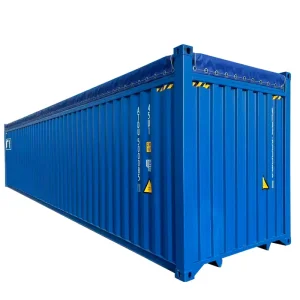
40ft High-Cube Soft Open-Top Tarpaulin Container (Heavy Machinery)
View Specifications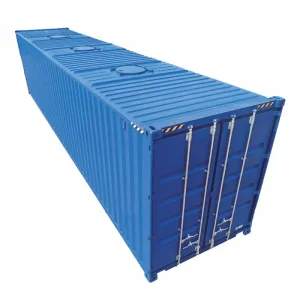
20ft Specialized Dry Bulk Shipping Container (Grain & Minerals)
View Specifications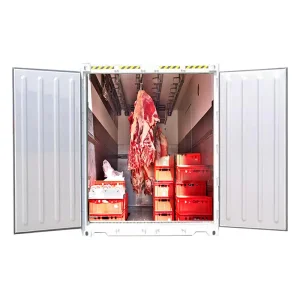
High-Quality Hanging Meat Reefer Container (Cold Chain Logistics)
View Specifications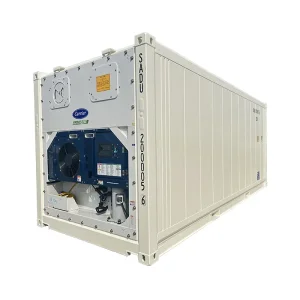
40ft High-Cube Carrier Refrigerator Freezer Container Unit
View Specifications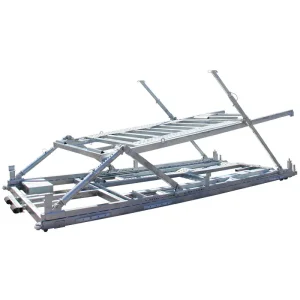
Automotive Multi-Vehicle Racking Cassette System for Containers
View Specifications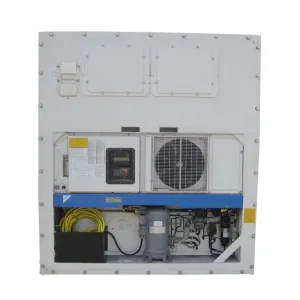
Industrial Cooling Machinery & Reefer Container Refrigeration Unit
View Specifications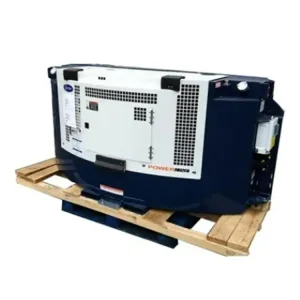
Clip-On Diesel Genset for Intermodal Refrigerated Containers
View Specifications