
Specialized & Standard 20ft Intermodal Units
Direct manufacturer supply for multimodal shipping, cold chain logistics, hazardous storage, and modular site deployments.
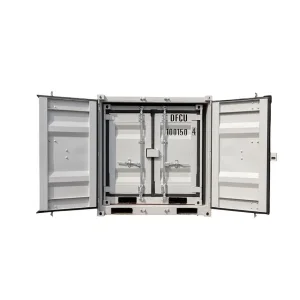
Cargo Shipping Mini Storage & Nested Containers
Product Specs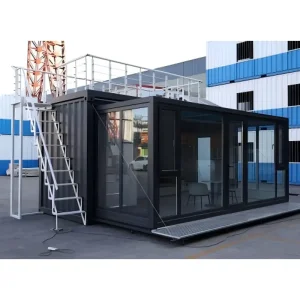
20ft Foldable Prefab Expandable Modular Homes
Product Specs
Certified High-Cube Cold Chain Reefer Container
Product Specs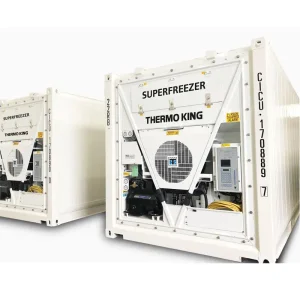
OEM Deep Freezer Ultra-Low Refrigerator Unit
Product Specs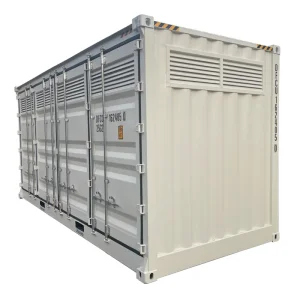
20ft HC Dangerous Goods Side-Open Container
Product Specs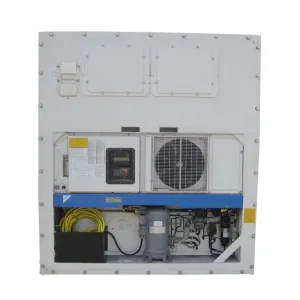
Reefer Cooling Units & Machinery Assemblies
Product Specs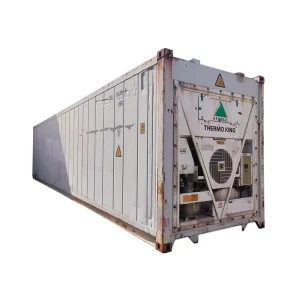
Industrial Multimodal Refrigerated Containers
Product Specs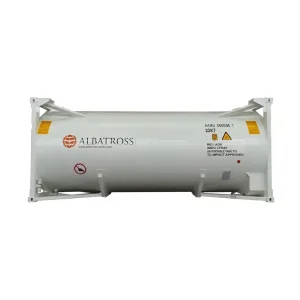
25,000 Liters ISO 20ft Gas & Liquid Tank Container
Product SpecsThe Strategic Evolution of 20ft Containers in Global Trade
Analyzing structural shifts in intermodal transport, weight-to-volume freight ratios, and the industrial dominance of China's container manufacturing hubs.
In modern intermodal freight logistics, the standard 20ft container (20 Cntr / 1 TEU) represents the fundamental unit of global commerce. While 40ft and 40ft High Cube (HC) units dominate high-cube, low-density retail commodities, the 20 Cntr remains the indisputable backbone for dense, heavyweight, high-tare, and specialized industrial cargo. From heavy machinery, mined minerals, refined metallurgical ingots, and liquid chemicals to granular agricultural freight, the structural payload capacity of a 20ft unit—often certified to maximum gross weights of 30,480 kg or even 32,500 kg—provides an unmatched structural strength-to-volume ratio.
As the international supply chain navigates decarbonization mandates, nearshoring strategies, and multimodal rail corridors such as the China-Europe Railway Express (Yiwu-Madrid, Chongqing-Duisburg), the demand for high-spec 20ft containers manufactured in China has expanded significantly. Contemporary procurement teams no longer view the 20 Cntr merely as a standardized corrugated steel box; rather, it is specified as a high-precision logistical asset engineered with anti-corrosion Corten steel (SPA-H), laser-guided robotic welding, low-VOC waterborne coatings, and automated telematics tracking devices.
Payload Density Optimization
Global ocean freight rate structures reward maximum vessel stowage factor efficiency. Heavy bulk products like concentrates, grain, and metals reach axle load or maritime weight limits long before cubic volume is exhausted, making the 20 Cntr substantially more cost-effective per metric ton than larger containers.
High-Yield Corten-A Steel (SPA-H)
To resist harsh marine atmospheres containing sodium chloride aerosol, modern Chinese manufacturing employs cold-rolled atmospheric corrosion resistant SPA-H Corten steel. Its protective patina slows oxidation, extending working operational life beyond 15–20 years in heavy transoceanic loops.
Automated Eco-Friendly Finishing
Strict environmental regulations have accelerated the adoption of automated shot-blasting to SA 2.5 surface cleanliness, followed immediately by multi-stage zinc-rich primer and waterborne polyurethane paint systems that minimize VOC emissions while guaranteeing salt-spray endurance exceeding 1,000 hours.
Integrated Telematics & Smart IoT
The latest generation of 20ft dry and reefer units feature recessed sensory enclosures supporting solar-powered IoT gateways. Fleet managers monitor GPS coordinates, door seal integrity, internal shock G-forces, ambient humidity, and temperature variations in real time via cloud platforms.
Decoding Global Sourcing Intent: Quality vs. Lifetime Cost
A rigorous engineering and financial breakdown for container leasing companies, global freight forwarders, mining conglomerates, and defense contractors.
Enterprise procurement specialists evaluating a China 20 Cntr factory operate under multifaceted commercial constraints. Sourcing decisions are no longer determined solely by the initial FOB (Free On Board) ex-factory unit quotation. Instead, procurement directors conduct comprehensive Total Cost of Ownership (TCO) assessments encompassing corner casting dimensional tolerances, floor load deflection under 7,260 kg axle loads, paint adhesion under ASTM cross-hatch protocols, and the availability of immediate CSC (Convention for Safe Containers) classification approval from recognized bodies like Bureau Veritas (BV), Lloyd's Register (LR), or DNV.
Structural Integrity & Racking Resistance
ISO 1496-1 dictates rigorous transverse and longitudinal racking tests. During heavy sea swells, a 20ft container stacked 9 to 10 tiers high in a container vessel hold must withstand static compression forces up to 86,400 kg per corner post without buckling. Premium Chinese export facilities utilize robotically welded structural steel tube corners and high-tensile hot-rolled corner castings certified to ISO 1161.
Floorboard Durability & Treatment Standards
Flooring selections directly impact maintenance lifecycle. Standard marine plywood floors must comply with Australian Department of Agriculture, Fisheries and Forestry (DAFF/AQIS) timber treatment standards against biological pests. For aggressive heavy industrial duty, our factories fabricate treated bamboo composites or corrugated galvanized checker-plate steel floors designed for heavy forklift wheel loads.
EPDM Perimeter Weatherproof Sealing
Moisture ingress and sea spray remain the primary cause of cargo insurance claims during oceanic transit. Modern 20ft doors are fitted with double-lip automotive-grade ethylene propylene diene monomer (EPDM) gaskets secured with stainless steel retainers, passing strict high-pressure water jet hose tests (1 bar nozzle pressure) before factory gate release.
Turnkey Containerized Solutions Across Vital Verticals
Engineered adaptations transforming standard 20ft structural frames into mission-critical assets for complex industrial sectors.
1. Pharmaceuticals & Perishable Cold Chain
For cross-continental fruit, meat, and biological medicine transport, 20ft and 40ft High Cube reefers integrate Carrier Transicold, Daikin, or Thermo King machinery. Thickened closed-cell polyurethane foam insulation achieves low thermal conductivity (K-factor ≤ 0.38 W/m²K), maintaining precise atmospheric control down to -35°C.
2. Hazardous Liquid & Compressed Gas ISO Tanks
20ft ISO tank containers (T11, T14, T50, and T75 cryogenic specifications) transport industrial solvents, liquefied natural gas (LNG), liquid oxygen, and food-grade consumables. Tanks are fabricated from 316L stainless steel or carbon steel with specialized PTFE/PFA linings, insulated with rock wool, and encased within an ISO structural cage.
3. Offshore Oil & Gas (DNV 2.7-1 / EN 12079)
Offshore marine environments impose extreme dynamic shock loads during open-sea crane hoisting. Our offshore container lines feature heavy structural tubular framing, certified pad-eyes, low-temperature impact-tested steel (-20°C charpy V-notch testing), and certified four-leg wire rope lifting slings.
4. Modular Infrastructure, BESS & Site Camps
20ft container footprints serve as modular building blocks for Battery Energy Storage Systems (BESS), mobile water purification units, field clinics, and expandable housing. Factory integration includes fire-rated mineral wool panels, pre-installed cable trays, explosion-proof HVAC cutouts, and certified lifting lugs.
ISO 20ft & 40ft Container Dimensional & Load Parameters
Baseline reference dimensions for naval architects, freight forwarders, and site planning engineers. Custom designs fabricated upon request.
| ISO Container Designation | External Dims (L × W × H) | Internal Dims (L × W × H) | Door Opening (W × H) | Cubic Capacity | Tare Weight | Max Gross Mass |
|---|---|---|---|---|---|---|
| 20ft Dry Cargo (20GP) ISO 1CC | 6,058 × 2,438 × 2,591 mm | 5,898 × 2,352 × 2,393 mm | 2,343 × 2,280 mm | 33.2 m³ | 2,180 kg | 30,480 kg |
| 20ft High Cube (20HC) ISO 1CCD | 6,058 × 2,438 × 2,896 mm | 5,898 × 2,352 × 2,698 mm | 2,343 × 2,585 mm | 37.4 m³ | 2,340 kg | 30,480 kg |
| 20ft Side Door Open (20SD) Special | 6,058 × 2,438 × 2,591 mm | 5,898 × 2,290 × 2,390 mm | Side: 5,700 × 2,150 mm | 31.8 m³ | 3,150 kg | 30,480 kg |
| 20ft Marine Reefer (20RF) ISO 1CC Reefer | 6,058 × 2,438 × 2,591 mm | 5,444 × 2,290 × 2,275 mm | 2,290 × 2,264 mm | 28.3 m³ | 3,080 kg | 30,480 kg |
| 40ft High Cube (40HC) ISO 1AAA | 12,192 × 2,438 × 2,896 mm | 12,032 × 2,352 × 2,698 mm | 2,340 × 2,585 mm | 76.4 m³ | 3,900 kg | 32,500 kg |
| 20ft Offshore DNV Basket DNV 2.7-1 | 6,058 × 2,438 × 1,300 mm | 5,850 × 2,230 × 1,020 mm | Top loading / Tailgate | 13.3 m³ | 2,850 kg | 15,000 kg |
Global Maritime Standards & Factory Inspection Protocols
Ensuring complete regulatory clearance from dry docks to international customs checkpoints.
Tianjin Cimic Imp&Exp Co., Ltd. enforces exhaustive quality assurance pipelines across our core production facilities in Tianjin and Suzhou. Both production complexes operate within 100 kilometers of northern and eastern China's most advanced deepwater shipping ports, facilitating streamlined factory-to-berth movement and container chassis positioning. Quality control begins with spectroscopic metallurgical verification of incoming raw Corten steel plates and continues across six standardized inspection stations:
1. CSC Safety Certification
Every newly manufactured container undergoes structural proof load testing in accordance with the International Convention for Safe Containers (CSC). Safety approval plates stamped with BV, CCS, LR, or ABS inspection marks are affixed to the door assembly, detailing allowable stacking weight (typically 192,000 kg or 216,000 kg) and transverse racking values.
2. Nondestructive Weld Testing (NDT)
Critical structural connections—specifically corner casting welds, top and bottom side rails, and header seams—are subjected to Ultrasonic Testing (UT) and Magnetic Particle Testing (MT). This guarantees complete root penetration without porosity, undercut, or slag inclusions.
3. TIR & Customs Security Compliance
Units are fully compliant with the Customs Convention on the International Transport of Goods under Cover of TIR Carnets. Hinges, locking bars, and cam retainers are engineered to prevent clandestine access without breaking customs security seals, ensuring seamless passage through European, Eurasian, and North American border points.
Technology Roadmap: Smart, Green & Autonomous Intermodal Units
Anticipating next-generation maritime regulations, circular lifecycle design, and AI-enabled freight monitoring.
Waterborne Bio-Resins & Recycled Composites
Transitioning from solvent-heavy paints to zero-VOC waterborne epoxy primers and bio-resin based topcoats, coupled with flooring manufactured from recycled ocean-bound plastics and rapid-growth bamboo matrixes.
Satellite-Connected IoT Mesh Networks
Standard integration of low-profile solar satellite transceivers enabling autonomous inter-container communication across container ship stacks, reporting micro-fractures, temperature swings, and cargo shift alerts in real time.
Hydrogen & Hybrid Dual-Power Reefers
Development of zero-emission refrigerated machinery integrating hydrogen fuel cells and variable-frequency inverters to eliminate diesel gen-set dependency during long intermodal rail and road drayage legs.
Ultra-Lightweight Graphene-Alloy Structures
Deployment of advanced nanostructured steels and carbon-fiber composite corrugated side panels, reducing tare weight by up to 28% while increasing permissible payload capacity and reducing vessel bunker fuel consumption.
Frequently Asked Questions for Container Importers & Procurement
In-depth technical answers addressing commercial lead times, customs clearance, customization capabilities, and port operations.
What are the exact differences between a standard 20ft Dry Cargo (20GP) and a 20ft High Cube (20HC)?
Can your factory manufacture custom OEM/ODM containers based on proprietary engineering drawings?
How do you handle shipping logistics for empty brand-new containers to overseas destinations?
What marine classification certifications accompany each exported container?
What is the minimum order quantity (MOQ) and standard manufacturing lead time?
Specialized Freight, Cryogenic & Modular Equipment
Engineered containerized solutions for rail corridors, power generation, cryogenic gas transport, and vehicle distribution.
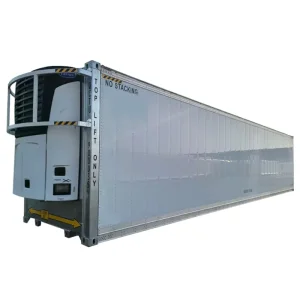
Carrier X4-7300 Refrigeration Electricity System
Product Specs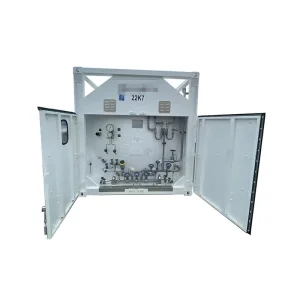
T75 20ft Cryogenic Liquid ISO Tank Container
Product Specs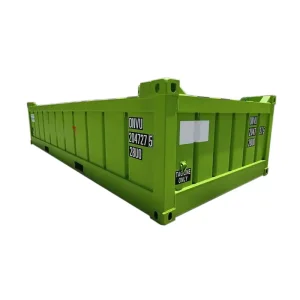
DNV Certified Offshore Half-Height Open Top Container
Product Specs
Half-Height Heavy Ore & Mineral Carrier
Product Specs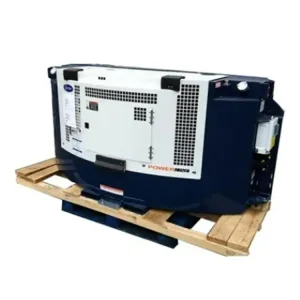
Clip-On / Undermount Diesel Reefer Generator
Product Specs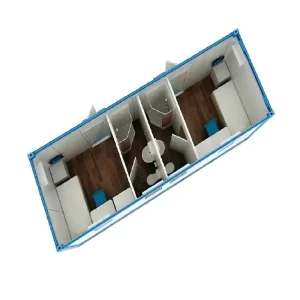
20ft / 40ft Modular Accommodation Containers
Product Specs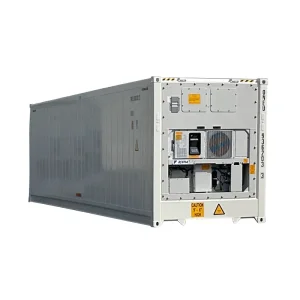
Daikin Reefer Container Cold Storage Room
Product Specs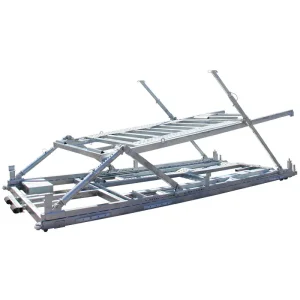
Automotive Cassette Vehicle Transport Racks
Product SpecsConsult With Our Container Engineering Department
Whether you require standard 20 Cntr ISO dry freight units, custom-built side-open machinery housings, or DNV-certified offshore fleets, our technical export team provides certified drawings, structural calculations, and firm FOB/CIF quotations within 24 business hours.