
Precision Specialized Containers Portfolio: Part I
Explore heavy-duty intermodal liquid tanks, certified blast reefers, energy-efficient cold vaults, and harsh-environment offshore baskets fabricated to international classification society standards.
Global Enterprise Demand Drivers for Specialized Containers
Strategic shifting in supply chains, green transition, and modularization have evolved specialized containers from mere transport vessels into critical engineering assets.
Grid & Renewables (BESS)
Global utility providers and energy developers demand customized 20ft and 40ft containerized Battery Energy Storage Systems (BESS). These require reinforced base structural integrity, multi-point fire suppression ducting (NFPA 68/69/855), thermal runaway barrier bulkheads, and integrated liquid cooling plates capable of withstanding dynamic seismic loads.
Bio-Pharma & Ultra-Cold
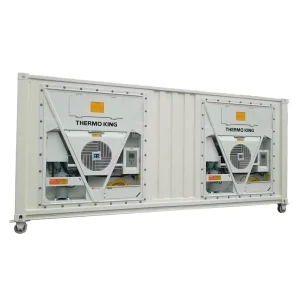
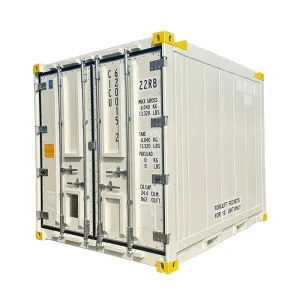
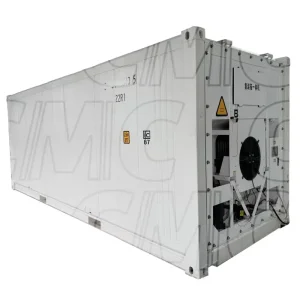
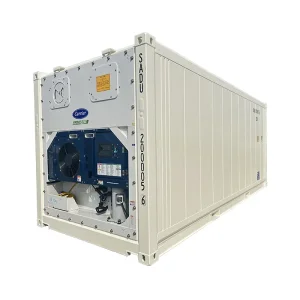
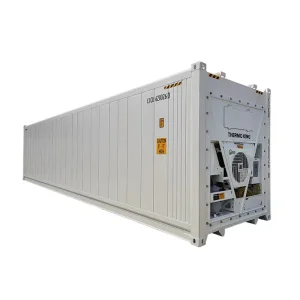
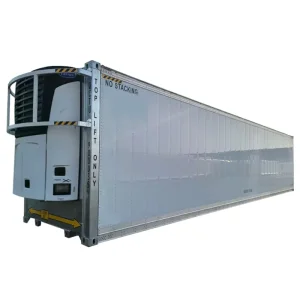
Post-pandemic cold chain logistics requires tight thermal tolerances down to -70°C for mRNA therapies and high-value biologic precursors. Procurement executives demand dual-redundant refrigeration machinery (Carrier, Thermo King, Daikin), real-time IoT temperature/humidity telematics, vacuum insulated panels (VIP), and deep-frozen blast capability.
Offshore Energy Logistics
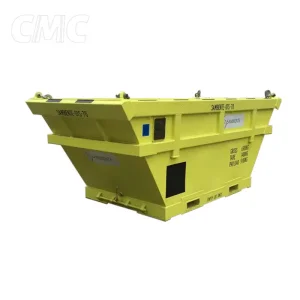
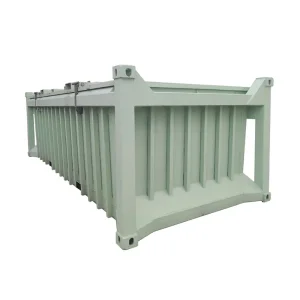
Offshore oil, gas, and floating wind platforms operate in brutal marine environments governed by DNV 2.7-1 / EN 12079 / ISO 10855. Specialized silt baskets, half-height ore boxes, cutting boxes, and tool containers require high-toughness steel for sub-zero impact testing (-20°C to -40°C), certified pad eyes, and multi-leg wire rope sling assemblies.
Macro-Industry Solutions for Complex Logistics
From chemical fluid containment to out-of-gauge heavy industrial transport, our specialized custom fabrication solves critical operational bottlenecks across continents.
Liquid & Gas ISO Tanks
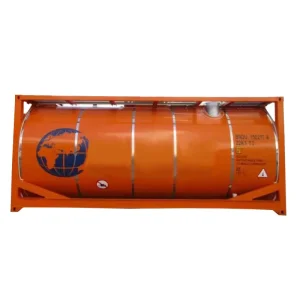
Engineered to IMDG, ASME VIII, and ADR standards. Built using 316L stainless steel vessels inside Corten framework with steam heating, electrical tracing, and polyurethane insulation for pure water, food-grade commodities, and corrosive chemicals.
Automotive Racks & Flatracks
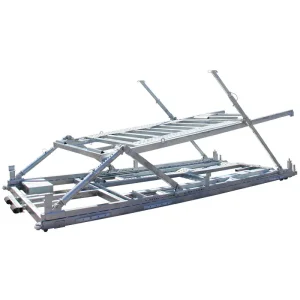
Multi-tier modular vehicle transport racks and collapsible flatracks engineered for high axle loads. Maximizes 40ft container capacity for EV sedans, SUVs, and heavy machinery with automated tie-down geometries and fast turnarounds.
Side-Door & Roll-Up Access
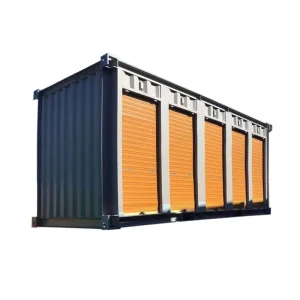
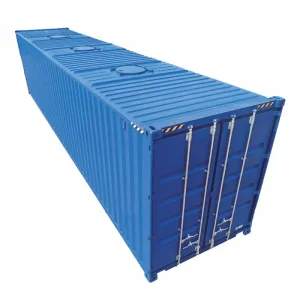
Facilitates express pallet handling, warehouse hub storage, and rapid mobile logistics. Full-aperture bi-fold side doors and weather-sealed automated roll-up doors offer forklift clearance without compromising container structural rigidity.
Bulk Mineral & Half-Height
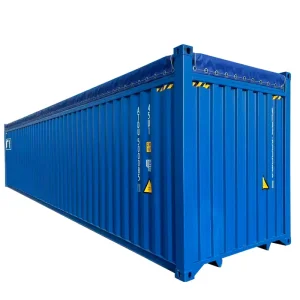
Fabricated for dense minerals, metal concentrates, and bulk ores. Features Hardox or Corten wear plates, low center of gravity, tippler discharge capabilities, and removable or hinged tarpaulin soft-open roof covers.
Material Science & Structural Architecture
Every specialized container exported from our Tianjin facility is subjected to Finite Element Analysis (FEA) and stringent destructive and non-destructive testing.
| Classification Standard | Structural Metallurgy | Surface Treatment & C5M Protection | Thermal & Sealing Thresholds | Primary Industrial Application |
|---|---|---|---|---|
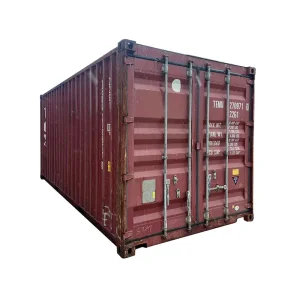
| ISO 1496-1 Dry / Side-Open | SPA-H Corten atmospheric corrosion-resistant steel (Yield ≥ 355 MPa) | Zinc-rich primer (30μm) + Epoxy barrier (40μm) + Polyurethane topcoat (40μm) | EPDM dual-lip continuous compression weather gaskets | Intermodal rail, road, and international container shipping lines |
| ISO 1496-2 Reefer Vaults | SUS304 food-grade stainless interior liner; MGSS / Corten outer cladding | Electrostatically applied ceramic barrier; chlorinated rubber underseal | Cyclopentane-blown high-density polyurethane (K-value ≤ 0.038 W/m²·K) | Pharmaceutical vaccines, frozen tuna (-60°C blast), fresh produce |
| DNV 2.7-1 / EN 12079 Offshore | EN 10025-S355ML structural micro-alloyed steel with -20°C Charpy V-notch impact test | Hot-dip galvanizing to ISO 1461 (≥ 85μm) or offshore multi-coat marine epoxy | Heavy-duty cam locks; silicone low-temp elastomeric seals | Deep-sea oil platforms, offshore wind farm subsea tooling, mud baskets |
| UN Portable Tank (T-Grade) | ASME SA240-316L / 316Ti pickled & passivated inner vessel; Q345D outer frame | Corrosion barrier polyurea coating; chemical-resistant fluoropolymer linings | 50mm rockwool / VIP insulation jacket; PTFE burst discs & seals | Hazardous industrial chemicals, potable water, LNG, and food syrups |
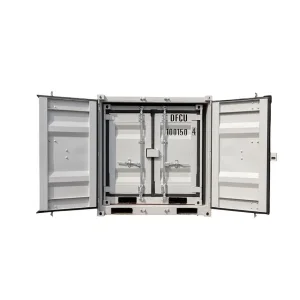
| Modular Industrial Shelters | Welded structural hollow sections (SHS) with integrated lifting twistlocks | Intumescent fire-retardant paint rating 60-120 mins (BS 476 / EN 1364) | A60 marine rockwool insulation; acoustic dampening labyrinth seals | Substation switchgear, mobile edge computing, field command centers |
Technology Roadmap: Next-Gen Containerization
Aligning with global ESG directives, predictive logistics analytics, and autonomous transport systems through 2030 and beyond.
Autonomous Satellite Telematics
Integration of self-powered photovoltaic IoT sensors transmitting real-time interior CO2, ethylene levels, ambient humidity, door opening events, and G-force impact logging across satellite mesh networks.
Natural Refrigerant Units
Transition from synthetic HFC fluorinated gases to natural R-744 (Carbon Dioxide CO2) and R-290 (Propane) transcritical refrigeration cycles, slashing direct carbon footprint while exceeding strict EU F-Gas mandates.
High-Strength Composite Alloys
Application of carbon-fiber sandwich panels and next-generation ultra-light aluminum alloy corner posts, reducing tare weight by 22% to maximize payload limits in highway weight-restricted corridors.
Plug-and-Play Microgrid Shelters
Factory-integrated sodium-ion energy storage, automated fire extinguishing, DC bus architecture, and smart HVAC enclosures designed for zero on-site hot work and immediate field deployment.
Global Certification, Testing & Localized Support
Minimizing customs delays and operational liabilities through unyielding compliance with international maritime, rail, and energy safety standards.
Classification Society Verification
Every specialized container production line undergoes Type Approval and individual unit witnessing by surveyors from Bureau Veritas (BV), Det Norske Veritas (DNV), American Bureau of Shipping (ABS), Lloyd's Register (LR), or China Classification Society (CCS).
Factory Acceptance Tests (FAT)
Our standard pre-delivery regime incorporates ISO 1496 transverse and longitudinal racking, weather-tightness water jet testing (100 kPa nozzle pressure), floor load test with forklift simulation (7,260 kg front axle), and thermal leakage analysis.
Global Field Engineering Support
We supply complete documentation packs: structural drawings in CAD/BIM, 3D STEP models, calculation books, raw material mill certs (MTC EN 10204 3.1), coating thickness logs, CSC safety plates, and overseas spare parts replenishment channels.
Frequently Asked Questions by Industrial Buyers
In-depth responses covering engineering modifications, customs validation, manufacturing lead times, and thermal configurations.
What is the structural distinction between an ISO standard container and a DNV 2.7-1 certified offshore container?
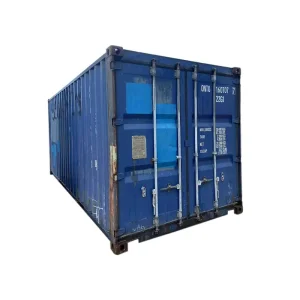
ISO shipping containers (governed by ISO 668/1496) rely predominantly on their corner castings and 4 corner posts for vertical stacking on container ships. DNV 2.7-1 (and EN 12079 / ISO 10855) offshore containers are engineered for dynamic dynamic marine lifting via multi-leg wire rope slings in open sea states. They feature micro-alloyed fine-grain steels with verified Charpy V-notch low-temperature impact values (typically ≥ 27 Joules at -20°C or -40°C), heavy integrated pad eyes welded directly into primary framing members, elimination of non-structural corners, and rigorous Non-Destructive Examination (NDE/MPI) across 100% of primary structural welds.
How are blast reefer containers engineered to reach and sustain ultra-low temperatures?
Our blast freezers incorporate upgraded refrigeration condensing and compressor units (such as Carrier ThinLINE / PrimeLINE, Thermo King Magnum Plus, or Daikin scroll assemblies) coupled with high-velocity internal circulating evaporators. Insulation panels utilize high-density polyurethane foam blown with advanced non-ozone depleting blowing agents, achieving an overall thermal conductivity (K-value) below 0.33 W/m²·K. Deep extruded aluminum T-floor sections ensure uniform bottom-up cold air distribution throughout the cargo block, allowing core pull-down speeds from ambient (+20°C) to -35°C or -60°C within calibrated cycle windows.
Can custom Battery Energy Storage System (BESS) containers be pre-certified for international shipping?
Yes. When we engineer a custom BESS shelter with internal cutouts, HVAC penetrations, explosion-relief hatches, and reinforced floor plinths, we perform FEA structural calculations to ensure ISO CSC (International Convention for Safe Containers) stacking and transverse racking stiffness are maintained. The shelter is certified by BV or CCS prior to factory dispatch, allowing it to be shipped across international marine lines as a standard container rather than as cost-prohibitive breakbulk cargo.
What is the typical production lead time and minimum order quantity (MOQ) for custom builds?
For custom ISO-dimensioned containers (such as side-door, open-top, roll-up shutter, or modified high-cubes), our prototype drawing review takes 3 to 7 business days. Once engineering drawings are stamped and approved by the buyer, production cycles range from 20 to 35 days depending on raw material sourcing (e.g., special stainless grades or machinery lead times). The MOQ is flexible: we accommodate single prototype demonstration units (1 unit) for specialized industrial projects, as well as multi-thousand TEU fleet runs.
Precision Specialized Containers Portfolio: Part II
Review our specialized dry bulk equipment, heavy ore offshore carriers, integrated cold room assemblies, multi-tier car racks, and nested modular storage configurations.
Initiate Your Specialized Fleet Consultation
Connect directly with our Tianjin engineering department to confirm structural drawings, classification society scope, thermal load calculations, and global port delivery schedules.