
Engineered High-Cube & Intermodal Freight Series
Explore heavy-duty, ISO-certified, and custom reefer shipping equipment produced to precision tolerance standards for tier-one maritime and multimodal operators.
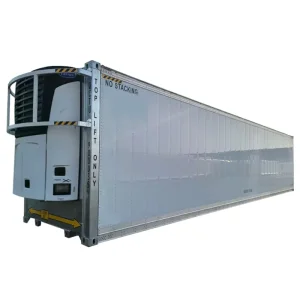
China Carrier X4-7300 Refrigeration and Electricity Integrated Container Exporter, Products
View Specifications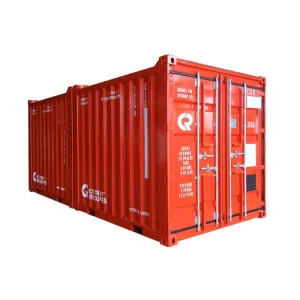
Buy New DNV Certification Offshore Dry Cargo Container Factory, Product
View Specifications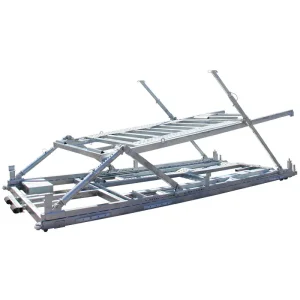
China vehicle transport rack Product, Exporters
View Specifications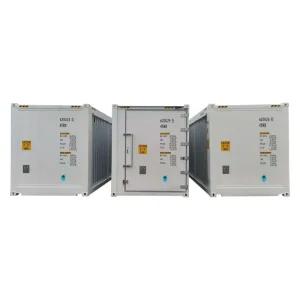
China OEM 40ft High-Cube Customized Three-in-One Combination Reefer Storage Container Manufacturer, Quotes
View Specifications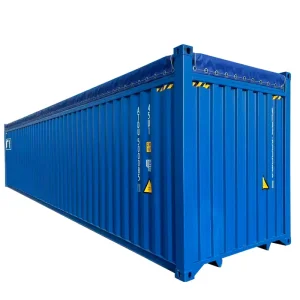
Buy 40ft High-Cube New Soft Open Top Shipping Container with Tarpaulin Cover Manufacturer, Product
View Specifications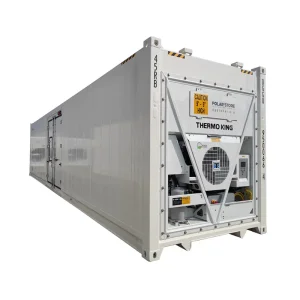
Famous 40ft High-Cube Side Open Door Reefer Container Manufacturer, Factories
View Specifications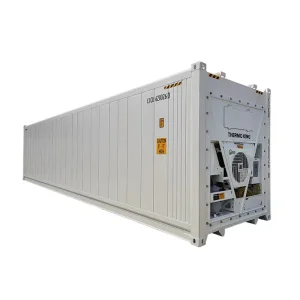
OEM New 40ft High-Cube Certified Reefer Shipping Cargo Container Pricelist, Product
View Specifications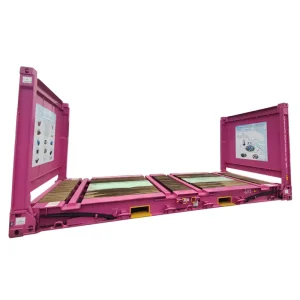
ODM New 20ft Platform Frame Container Pricelist, Exporters
View SpecificationsComprehensive Dimensions Of A High Cube Shipping Container
A rigorous volumetric and structural analysis evaluating standardized tolerances under ISO 668 (Series 1 freight containers — Classification, external dimensions and ratings) and ISO 1496.
In intermodal freight, the High Cube (HC or HQ) container has fundamentally shifted maritime economics. While standard ISO general purpose (GP) containers maintain an external nominal height of 8 feet 6 inches (2,591 mm), High Cube variants extend vertically to 9 feet 6 inches (2,896 mm). This precise 1-foot (305 mm / 12 inches) vertical expansion delivers an average internal volume increase of roughly 12.5% to 15% with no expansion of the shipboard footprint or berth slipway requirements. This single mechanical metric unlocks substantial logistics optimization across volumetric, light-density consumer freights, automotive knock-down components, cold chain refrigeration apparatus, and modular conversion infrastructure.
Procurement directors and maritime engineering architects calculate total logistics cost based on usable stowage geometry rather than pure tare-to-payload ratios alone. Below is the audited dimensional matrix outlining both dry cargo and cold-chain refrigerated variations produced across certified Chinese manufacturing factories.
| Container Classification | External Dims (L × W × H) | Internal Dims (L × W × H) | Door Aperture (W × H) | Internal Volume | Max Gross / Tare | ISO Group |
|---|---|---|---|---|---|---|
| 40ft High Cube Dry (40HC / 40HQ) | 12,192 × 2,438 × 2,896 mm 40'0" × 8'0" × 9'6" |
12,032 × 2,352 × 2,698 mm 39'5.6" × 7'8.6" × 8'10.2" |
2,340 × 2,585 mm 7'8.1" × 8'5.7" |
76.4 m³ 2,698 cu.ft |
30,480 / 3,900 kg Payload: 26,580 kg |
1EEE / 45G1 |
| 20ft High Cube Dry (20HC) | 6,058 × 2,438 × 2,896 mm 19'10.5" × 8'0" × 9'6" |
5,898 × 2,352 × 2,698 mm 19'4.2" × 7'8.6" × 8'10.2" |
2,340 × 2,585 mm 7'8.1" × 8'5.7" |
37.4 m³ 1,320 cu.ft |
30,480 / 2,420 kg Payload: 28,060 kg |
1CCE / 25G1 |
| 40ft High Cube Reefer (40HCR) | 12,192 × 2,438 × 2,896 mm 40'0" × 8'0" × 9'6" |
11,583 × 2,290 × 2,557 mm 38'0.0" × 7'6.1" × 8'4.7" |
2,290 × 2,535 mm 7'6.1" × 8'3.8" |
67.8 m³ 2,394 cu.ft |
34,000 / 4,480 kg Payload: 29,520 kg |
1EEE / 45R1 |
| 45ft High Cube Pallet Wide (45PW) | 13,716 × 2,500 × 2,896 mm 45'0" × 8'2.4" × 9'6" |
13,556 × 2,444 × 2,698 mm 44'5.7" × 8'0.2" × 8'10.2" |
2,420 × 2,585 mm 7'11.2" × 8'5.7" |
89.3 m³ 3,153 cu.ft |
34,000 / 4,820 kg Payload: 29,180 kg |
1LFE / L5G1 |
| 40ft High Cube Side Door (40HCSD) | 12,192 × 2,438 × 2,896 mm 40'0" × 8'0" × 9'6" |
12,032 × 2,310 × 2,670 mm 39'5.6" × 7'6.9" × 8'9.1" |
Side: 11,800 × 2,480 mm Rear: 2,340 × 2,585 mm |
74.1 m³ 2,616 cu.ft |
30,480 / 5,150 kg Payload: 25,330 kg |
Special / 45S1 |
Gooseneck Tunnel Geometries
Under ISO 1496-1, all 40ft and 45ft high-cube containers incorporate a standardized front underside recess known as the gooseneck tunnel (typically measuring 1,029 mm wide, 120 mm deep, and spanning ~3,150 mm in length). This structural feature allows chassis trailers to cradle the container lower to the roadway, adhering strictly to global highway clearance limits without reducing internal cargo headroom.
Reefer Insulation Encroachment
High cube refrigerated units (such as Carrier Transicold, Daikin, or Thermo King equipped reefers) require 70 mm to 100 mm of rigid, CFC-free polyurethane vacuum foam sandwich panels across all bulkheads. While external height remains standard at 2,896 mm, internal vertical clearance is lowered to approximately 2,557 mm to preserve the bottom aluminum T-floor cold-air distribution plenum.
Corner Casting & Stacking Loads
Fabricated using investment-cast structural steel (grade SCW480), ISO 1161 corner castings on our High Cube containers endure compressive dynamic stacking tests exceeding 86,400 kg per post. This certifies full compatibility with 9-high to 11-high laden container vessel deck and cell guide stacking under severe sea-state acceleration regimes.
Global Industrial Landscape & The High-Cube Market Transition
Analyzing the macro structural pivot from standard 8'6" boxes to 9'6" high-cube assets in modern commercial supply networks.
Over the past decade, maritime container leasing firms (such as Triton, Textainer, and Florens) alongside major shipping alliances (2M, Ocean Alliance, THE Alliance) have migrated fleet renewal investments overwhelmingly toward 40ft High Cube assets. Currently, 40HC containers represent greater than 55% of the total global containerized dry freight fleet, and an extraordinary 92% of the active refrigerated fleet. The root cause is economic: as global commerce transitions from raw mineral and high-density industrial goods toward e-commerce packaged items, electronics, apparel, and temperature-controlled agriculture, cargo densities have consistently declined while cubic volume requirements have increased.
A standard 40ft General Purpose (GP) container provides roughly 67.7 cubic meters of space, whereas a 40ft High Cube provides 76.4 cubic meters. For a multinational importer moving 1,000 FEU (Forty-Foot Equivalent Units) annually of palletized home appliances or footwear, shifting entirely to 40HC equipment reduces the total required container count by approximately 115 voyages, cutting port handling tariffs, intermodal truck chassis drayage charges, and carbon taxation exposure dramatically.
Simultaneously, the supply market has witnessed a surge in specialized high-cube variations. Where standard doors once posed bottlenecks for cross-dock operations, factories now engineer full side-opening access doors, roll-up shutter combinations, and multi-compartment insulated dividers that allow tri-temp cold storage within a singular 40ft footprint. CIMIC Group (Tianjin Cimic Imp&Exp Co., Ltd.), drawing on production experience established in 1983, has continuously spearheaded engineering solutions configured around these exact evolving demands.
Localized Engineering Application Scenarios
Examining field-deployed High Cube enclosures across disparate industrial sectors and extreme operating environments.
Modular BESS & Power Generation
The extra 305 mm vertical dimension in a 20ft or 40ft High Cube container is essential for utility-scale Battery Energy Storage Systems (BESS). The added ceiling space houses overhead HVAC liquid cooling channels, gaseous fire suppression plumbing (FM-200 / Novec 1230), and high-voltage cable trays above rack-mounted lithium iron phosphate (LFP) modules, all while preserving required maintenance clearances under NFPA 855.
Intermodal Agricultural Cold Chains
In the transport of perishable perishables like bananas, berries, and pharmaceutical serums, 40ft HC Reefers with Thermo King or Carrier machinery prevent thermal bridging. Deep T-bar flooring combined with vertical air circulation vents relies on the 2,557 mm internal clearance to circulate pressurized, conditioned air through the full length of 24 Euro-pallets (1,200 × 800 mm) or 20 ISO pallets (1,200 × 1,000 mm) without air starvation hotspots.
Architectural Modular Buildings
Commercial modular builders utilize 40ft High Cube steel bodies as pre-fabricated residential units, hospital pods, and emergency disaster relief shelters. Standard 8'6" GP units yield a finished interior ceiling below 7'8" once acoustic subfloors and drywall framing are inserted. The 9'6" HC shell ensures an expansive 8'2" (2.49 m) finished interior ceiling height, satisfying residential municipal building codes globally.
DNV Certified Offshore Support
For North Sea and Gulf of Mexico drilling platforms, high-cube offshore dry freight units built to DNV 2.7-1 / EN 12079 are deployed. Designed for extreme dynamic swing-loading during ship-to-platform heavy crane transfers, our reinforced structural corner posts, pad-eyes, and specialized slings withstand continuous -20°C brittle-fracture marine operating regimes.
Heavy Mining Machinery & Spares
Open-top and soft-tarpaulin high-cube shipping containers allow overhead gantry cranes to drop heavy industrial gearboxes, drill heads, and crawler parts into the container. The structural header swing-out bar on the door end ensures components taller than standard doorways can be loaded seamlessly without incurring custom heavy-lift breakbulk premiums.
Automotive KD Trans-Shipment
By pairing high cube containers with adjustable vehicle racking systems, automotive manufacturers transport up to three large SUVs or four compact sedans in a single 40HC container. The 2,698 mm internal vertical aperture provides the indispensable clearance required for tiered hydraulic automobile decks, maximizing cargo space and minimizing vessel hold movement.
China Factory Supply Chain Resilience & Production Efficiency
Why Northern and Eastern Chinese container manufacturing clusters define global procurement benchmarks for structural reliability and speed-to-quay.
China manufactures upwards of 90% of the world’s ISO intermodal containers, driven by an integrated industrial cluster ecosystem unmatched in throughput, metallurgical supply, and logistic positioning. Facilities operated by CIMIC Group across Tianjin and Suzhou illustrate the operational advantages that global logistics conglomerates leverage daily.
1. Direct Corten Steel Upstream Supply: High cube container shells depend almost exclusively on SPA-H atmospheric corrosion-resisting steel (conforming to JIS G3125 / GB/T 4171). Corten steel forms a dense, passivated copper-phosphorus oxide layer upon weathering that halts further corrosion. Being situated adjacent to premier steel smelting hubs ensures steady raw strip availability without volatile ocean freight premiums or rail bottlenecks.
2. Port Proximity (<100 km Radius): Inland haulage of empty containers poses severe dead-mileage costs. Operating facilities within 100 kilometers of the massive deep-water container terminal at the Port of Tianjin and Port of Shanghai/Taicang allows thousands of finished TEU to be staged, inspected, certified by classification societies (Bureau Veritas, ABS, Lloyd's Register), and delivered straight to terminal berths within hours of roll-off.
3. Advanced Robotic Robotic Welding & Automated Coating Lines: The production of high-cube frames utilizes automated continuous submerged arc welding (SAW) and robotic gas metal arc welding (GMAW) for bottom side rails, corner posts, and corrugation panels. Following shot-blasting to Sa 2.5 standard, steel surfaces undergo automated zinc-rich epoxy priming and top-tier waterborne polyurethane coating lines, achieving paint thickness tolerances of 120μm minimum to resist 5,000 hours of accelerated salt spray tests under ASTM B117.
Steel Decoiling & Shot Blasting (Phase 1)
Raw Corten SPA-H hot-rolled coils are precision-leveled, shot-blasted to surface cleanliness Sa 2.5, and coated with a shop-weldable zinc primer to prevent micro-oxidation during assembly.
Corrugation Pressing & Sub-Assembly Jigging (Phase 2)
Hydraulic stamping machines press standardized 1.6 mm side corrugations and 2.0 mm roof wave profiles. Front and rear door frames are clamped in pneumatic jigs to ensure diagonal tolerances within ±2.0 mm.
Robotic Mainline Unification (Phase 3)
Sub-assemblies converge on the main assembly line. Robotic arms perform full-penetration welding of ISO 1161 cast steel corner fittings to 6.0 mm thick hot-formed corner posts.
Eco-Friendly Waterborne Coating & Floor Laying (Phase 4)
Multi-stage automated spray tunnels apply low-VOC, waterborne polyurethane finishes. 28 mm marine-grade Apitong or bamboo composite flooring is counter-sunk, fastened with zinc-plated self-tapping screws, and sealed with polyurethane elastomer.
Technological Roadmap & Next-Generation Container Design
Engineering evolutions set to govern high cube shipping container manufacturing over the next five to ten years.
Integrated IoT Telematics & Digital Twins
Factory-integrated sensor arrays embedded within the top header cavity operate via solar-harvesting door bezels. Real-time cellular and satellite transmitters track GPS positioning, door-seal integrity, internal volumetric payload status, shock events exceeding 2G, and temperature/humidity gradients, synchronizing continuous telemetry to cloud-based supply chain digital twins.
Aerogel & Vacuum Insulation Panels (VIP)
Next-generation High Cube reefer enclosures are migrating toward composite structural wall designs incorporating silica aerogel and ultra-thin vacuum insulation panels. These materials achieve thermal conductivity ratings of k < 0.005 W/m·K, allowing walls to decrease from 80 mm to 40 mm while improving heat-leakage indices, unlocking an extra 3.2 m³ of cargo capacity.
Sustainable Floor Systems & Low-Carbon Steel
Traditional tropical hardwood plywood (Keruing/Apitong) is rapidly being superseded by 100% renewable strand-woven laminated bamboo and recycled thermoplastic composite boards. Furthermore, CIMIC’s ongoing transition to electric arc furnace (EAF) low-carbon steel reduces the embodied carbon footprint per 40ft High Cube container shell by roughly 38%, assisting buyers in scope 3 emissions reductions.
Regulatory Compliance & Localized Technical Support
Ensuring frictionless global transit via thorough adherence to international classification society standards.
Every commercial container manufactured across our production facilities is issued an audited CSC (International Convention for Safe Containers) safety approval plate, certifying that the unit has successfully completed rigorous mechanical strength type testing witnessed by premier classification bodies such as Bureau Veritas (BV), DNV, ABS, or China Classification Society (CCS).
To eliminate customs delays and guarantee physical interoperability across international freight networks, our manufacturing process complies stringently with the following frameworks:
- ISO 668 & ISO 1496-1: Series 1 freight containers structural integrity, transverse racking resistance, top lifting, bottom lifting, and end-wall deflection standards.
- ISO 6346: Coding, identification, and marking management systems (including BIC registration codes and operational dimensional markings).
- TIR Convention (Customs Convention on the International Transport of Goods): Complete customs sealing security, tamper-evident hinge construction, and unalterable locking rod retainers.
- UIC Leaflet 592: European rail transit compliance certifying compatibility with standard pocket wagons and rail corridor height envelopes throughout the EU and Eurasian rail links.
- DNV 2.7-1 / EN 12079: Applied specifically to our offshore container series, guaranteeing structural resilience against rough offshore sea hoisting, side impacts, and low-temperature impact toughness.
Specialized, Modular & Certified Used Containers
Browse our extensive selection of new production, factory-converted modular units, and certified second-hand port stock ready for global deployment.

China Used 40ft High-Cube Certified Reefer Container Pricelist, Exporter
View Specifications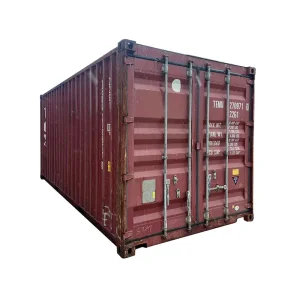
Buy 20ft Used Shipping or Storage Container Manufacturer, Products
View Specifications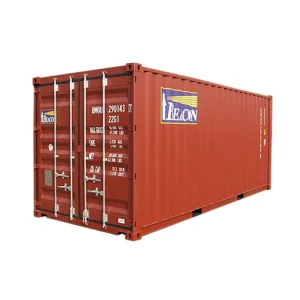
ODM 40ft New Certified Dry Shipping Container Pricelist, Exporters
View Specifications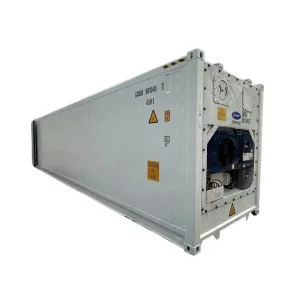
Buy Ninety Percent New Used 40ft HC Carrier Refrigerated Container Product, Quotes
View Specifications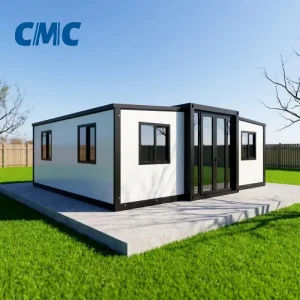
OEM 20ft Modular Container Houses Expandable Steel Container House Excellent Thermal Insulation and Sealing Performance Manufacturer, Manufacturers
View Specifications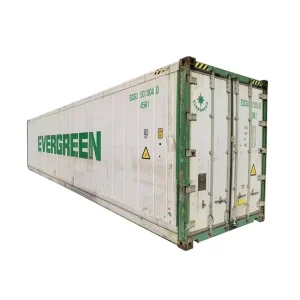
Buy Used 40ft HC Shipping Reefer Container Manufacturers, Exporters
View Specifications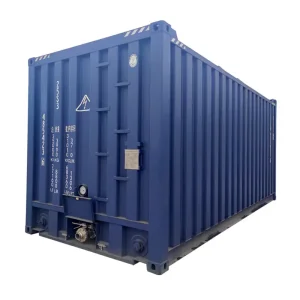
Buy New 20ft Square Liquid Container Factory, Product
View Specifications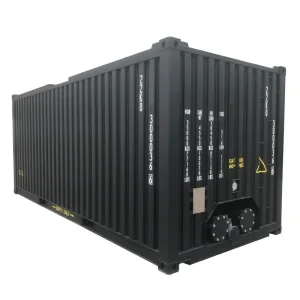
China 20 Feet Heated Shipping Asphalt Container Exporter, Manufacturers
View SpecificationsFrequently Asked Questions Regarding High-Cube Containers
Authoritative technical, regulatory, and logistics answers compiled by senior marine survey engineers.
What is the exact dimensional difference between a standard 40ft GP and a 40ft High Cube container?
A standard 40ft General Purpose (40GP) container measures exactly 8 feet 6 inches (2,591 mm) in external height, yielding an internal height of 2,393 mm and an internal volume of approximately 67.7 m³ (2,390 cu.ft). In contrast, a 40ft High Cube (40HC) container measures 9 feet 6 inches (2,896 mm) externally, providing an internal height of 2,698 mm and a total volume of 76.4 m³ (2,698 cu.ft). Length (12,192 mm / 40'0") and width (2,438 mm / 8'0") remain strictly identical across both variants to guarantee uniform intermodal handling compatibility.
Why do High Cube containers feature a gooseneck tunnel recess on the front underside?
Because High Cube units are 305 mm taller than standard containers, mounting them on conventional flatbed road chassis can cause the overall vehicle height to exceed statutory highway overpass clearance thresholds (such as the standard 4.0-meter or 13-foot-6-inch bridge limits in Europe and the United States). The gooseneck tunnel (standardized under ISO 1496-1) allows the container to slide over the raised front neck of a specialized gooseneck chassis trailer, lowering the overall transit center of gravity and total vehicle height to clear highway bridges safely.
How much smaller is the interior of a 40ft High Cube Reefer container compared to a Dry HC?
While an external 40ft HC Reefer shares identical outer dimensions (12,192 × 2,438 × 2,896 mm) with a Dry HC, its internal cargo volume is reduced from 76.4 m³ to approximately 67.8 m³. This reduction occurs because the front end houses a refrigeration machinery unit (such as a Carrier PrimELINE, Thermo King Magnum Plus, or Daikin LXE) which consumes ~450 mm of front interior depth, while the bulkheads, roof, and doors incorporate 70–100 mm of dense, foamed-in-place polyurethane insulation. Additionally, the extruded aluminum T-section floor rises ~50 mm above standard wood flooring to channel bottom-air cooling currents.
What is the maximum concentrated floor payload and fork-truck axle load for high-cube containers?
Under ISO 1496-1 testing criteria, the 28 mm solid hardwood (or 19-ply bamboo composite) floor of an ISO high-cube dry cargo container is certified to withstand a maximum front-axle wheel load of 5,460 kg (12,000 lbs) or an axle load of 7,260 kg (16,000 lbs) depending on custom crossmember pitch options. Structural steel crossmembers (typically 4.0 mm C-channels welded at 300 mm centers) absorb dynamic forklift maneuvering stresses during dockside stuffing and destuffing operations.
Can 40ft High Cube containers be stacked together with standard 8'6" GP containers aboard container vessels?
Yes. Because the corner casting footprint (longitudinal and transverse center-to-center distances of 11,985 mm and 2,259 mm) is identical between 40GP and 40HC models, they can be stacked together. However, container vessel stowage planners prefer grouping High Cube containers within designated deck blocks or deep cell guides. If mixed within a cell guide, the additional height must be accounted for to prevent the top container from projecting above the ship’s hatch coaming or obstructing bridge lines of sight under IMO SOLAS regulations.
What certifications are legally mandatory when buying new-build containers from Chinese factories?
Every container deployed in international revenue-earning logistics must possess a valid CSC Safety Approval Plate issued under the authority of an IACS member classification society (such as Bureau Veritas, DNV, Lloyd's Register, ABS, or CCS). The plate must stamp the container's operational weight rating, stacking capability (minimum 86,400 kg for 9-high stacking), transverse racking test load (150 kN), timber treatment certification (such as Australian Department of Agriculture quarantine treatment), and customs approval plate for TIR seal security.