
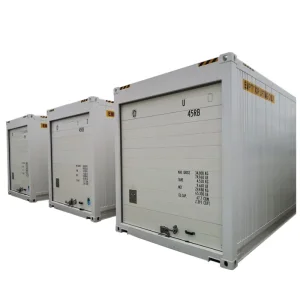
Reefer Unit
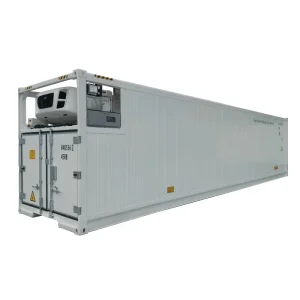
Rigidly inspected in accordance with BV, ISO, and CSC certifications. Discover our premier high-performance shipping and intermodal solutions direct from our Tianjin manufacturing facility.
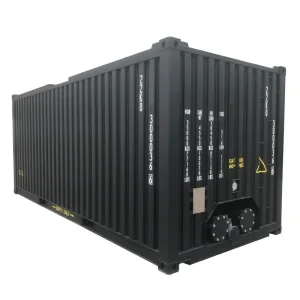
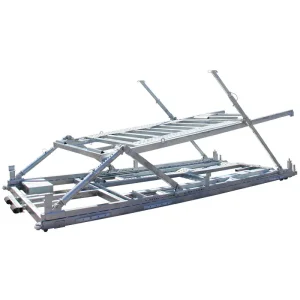
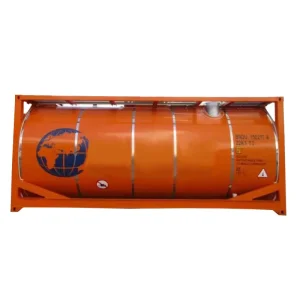
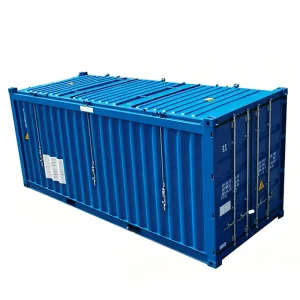
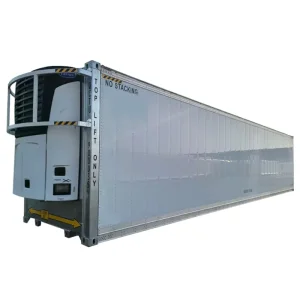
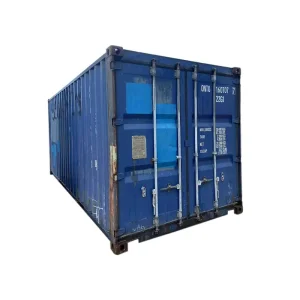
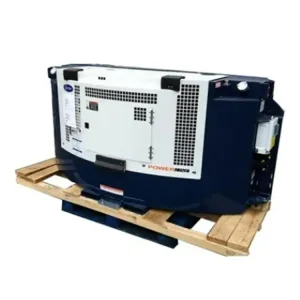
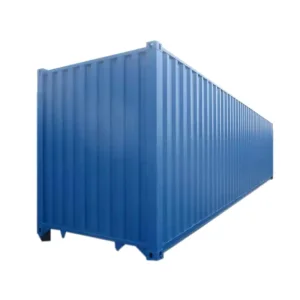
The standard 20-foot intermodal freight container (ISO 668 1CC designation) represents the ultimate structural compromise between concentrated payload capability, structural rigidity, and multimodal handling flexibility. While larger 40-foot units capture volumetric market share for low-density consumer goods, the 20-foot platform remains the undisputed global workhorse for high-density, heavy-duty cargo ranging from minerals, industrial hardware, and specialized liquid chemicals to cutting-edge energy storage systems (BESS).
At our premier manufacturing plant in Tianjin, precision container construction starts with metallurgical integrity. Every structural rail, corner post, cross member, and corrugation is cold-formed from high-yield SPA-H weathering Corten steel (ASTM A588 equivalent). This atmospheric corrosion-resistant alloy forms a protective passive oxide layer upon atmospheric exposure, preventing progressive rust penetration even in hostile, salt-laden marine environments (C5-M marine exposure zones).
Yield Strength: SPA-H Corten steel exhibits minimum yield strength of 345 MPa and ultimate tensile strength exceeding 480 MPa, ensuring structural survival under 9-high fully loaded stacking tests (192,000 kg static load on corner posts).
Beyond pure scale, China’s industrial ecosystem blends raw metallurgical abundance, automated multi-station jig assembly, and immediate maritime deep-water connectivity.
Located adjacent to China’s highest-grade Corten steel rolling mills in the Bohai Bay industrial belt, our factory minimizes intra-provincial raw material transit. This tight geographic integration ensures zero supply interruption, batch-to-batch chemical homogeneity, and immediate Mill Test Certificate (MTC) traceability under EN 10204 3.1 verification.
Manual welding introduces thermal variation and inconsistent throat thickness. Our continuous assembly line deploys multi-axis robotic metal inert gas (MIG) and submerged arc welding (SAW) cells. This guarantees deep-penetration, gas-tight continuous seams on structural tubular headers, sills, and corrugated sidewall junctions, verified by magnetic particle non-destructive testing (NDT).
Operating from modern production bases in Tianjin and Suzhou, our manufacturing hubs stand merely 100 kilometers from prime container transshipment ports. This eliminates thousands of inland logistics dollars per unit, drastically reduces transit-induced carbon footprints, and allows direct 'one-way cabotage' leasing dispatch directly into international sailing rotations.
The standard ISO freight container is no longer merely a static steel box. Over the past five years, the global container industry has witnessed rapid technological disruption driven by stringent ESG decarbonization metrics, advanced cold chain logistics demands, and the rapid expansion of renewable energy infrastructure.
1. Eco-Friendly Waterborne Coating Transitions: Meeting global volatile organic compound (VOC) reduction mandates, our production line employs high-durability aqueous epoxy and acrylic coating formulations. These systems dramatically reduce factory solvent emissions without compromising C5-M marine anti-corrosion lifespans.
2. Smart Telematics & IoT Sensitization: Enterprise fleet operators now require autonomous monitoring. Our 20-foot dry and refrigerated units can be configured with ATEX/IECEx-certified satellite IoT tracking nodes. These harvest continuous data points including real-time interior humidity, ambient temperature profiles, G-force impact shocks during rail shunting, and magnetic door opening alerts.
3. Specialized Battery Energy Storage System (BESS) Integration: The 20-foot footprint has become the de facto international standard for utility-scale lithium-ion battery enclosures. Our dedicated OEM engineering division custom-fabricates reinforced structural firewalls, internal thermal barrier rockwool insulation, explosion-relief roof panels, and custom HVAC cutouts designed for megawatt-hour energy deployments.
Industry procurement statistics indicate a pivotal shift toward specialized configurations. Multi-door side-access units, dual-compartment controlled atmosphere reefers, and heated liquid ISO tanks represent the highest compound annual growth rate (CAGR > 6.4%) across transpacific and Eurasian Belt-and-Road overland routes.
From remote mineral extraction pits to ultra-demanding offshore drilling decks, one standardized structural shell adapts across extreme real-world operations.
Heavy mineral ores require high-density floor reinforcement. Our customized 20ft half-height open tops and reinforced hard-top boxes incorporate 4.5mm diamond-tread steel floors or high-tensile wear plates capable of handling bulk mineral concentrates, abrasive gravel, and dynamic excavator drop-loading without structural oil-canning.
Moving heated asphalt or chemical liquids necessitates specialized thermodynamics. Our 20-foot heated shipping asphalt units integrate thermal oil flue conduits or direct diesel-fired flame heating systems, ensuring high-viscosity bitumens remain pumped and decanted efficiently at job sites across Africa and Central Asia.
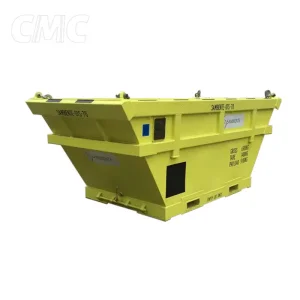
For rough North Sea or Gulf of Guinea installations, standard ISO units are insufficient. We engineer DNV 2.7-1 / EN 12079 certified offshore baskets and containers designed with low-temperature impact steel (-20°C charpy V-notch toughness), dedicated lifting pad eyes, and approved 4-leg wire rope slings for snatch-load marine crane operations.
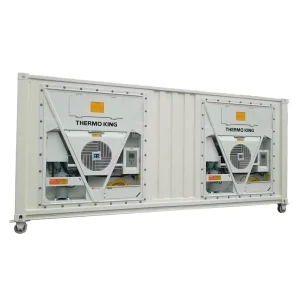
Whether transporting pharmaceuticals requiring narrow +2°C to +8°C bands or seafood blast-freezing down to -40°C, our 20ft reefer solutions pair high-efficiency Carrier Transicold, Thermo King, or Daikin condensing systems with high-density vacuum-injected polyurethane insulation (k-value ≤ 0.35 W/m²·K).
Compare structural payload parameters, internal clearances, and volumetric capacities across major 20-foot standard and specialized configurations.
| Model Classification | External Dimensions (L × W × H) | Internal Dimensions (L × W × H) | Door Opening (W × H) | Tare Weight | Max Payload | Cubic Capacity |
|---|---|---|---|---|---|---|
| 20ft Standard Dry (20GP) | 6,058 × 2,438 × 2,591 mm | 5,898 × 2,352 × 2,393 mm | 2,340 × 2,280 mm | 2,200 kg | 28,280 kg | 33.2 m³ |
| 20ft High Cube (20HC) | 6,058 × 2,438 × 2,896 mm | 5,898 × 2,352 × 2,698 mm | 2,340 × 2,585 mm | 2,380 kg | 28,100 kg | 37.4 m³ |
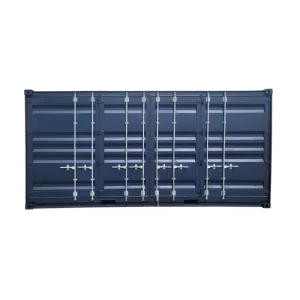
| 20ft Side Door (Full Access) | 6,058 × 2,438 × 2,591 mm | 5,898 × 2,288 × 2,302 mm | 5,702 × 2,180 mm (Side) | 3,180 kg | 27,300 kg | 31.0 m³ |
| 20ft ISO Reefer (20RF) | 6,058 × 2,438 × 2,591 mm | 5,444 × 2,290 × 2,275 mm | 2,290 × 2,260 mm | 3,080 kg | 27,400 kg | 28.3 m³ |
| 20ft Hard Open Top (20OT) | 6,058 × 2,438 × 2,591 mm | 5,898 × 2,350 × 2,377 mm | 2,338 × 2,244 mm | 2,450 kg | 28,030 kg | 32.8 m³ |
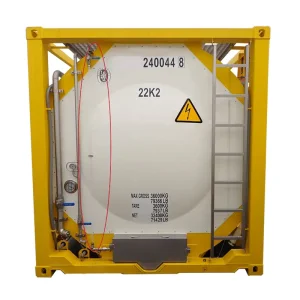
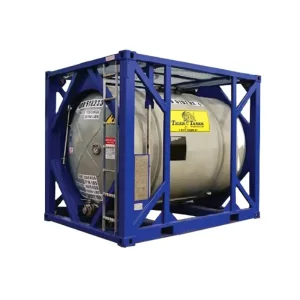
| 20ft ISO Tank (T11 UN Portable) | 6,058 × 2,438 × 2,591 mm | Cylindrical 316L SS Tank | 500mm Manlid Access | 3,650 kg | 32,350 kg | 24,000–26,000 L |
*Data subject to specific custom engineering drawing approvals. All units carry valid CSC safety approval plates and classification certificates (BV, ABS, CCS, or LR).
For international leasing syndicates, freight forwarding conglomerates, and EPC contractors, capital expenditure (CapEx) represents only 35% of a container’s 15-to-20-year operational lifecycle cost. Substandard welds, degraded paint systems, or non-certified flooring dramatically spike operational expenditure (OpEx) through continuous depot repairs, cargo contamination claims, and early fleet retirement.
Our OEM/ODM engineering protocol eliminates sourcing vulnerabilities via a 5-Phase Quality Assurance Gate:
Ensure these vital deliverables are stipulated in your commercial letters of credit and purchase agreements:
Essential answers addressing metallurgy, customized dimensions, international certifications, and cross-border transit logistics.
Standard structural carbon steel (like Q235B) oxidizes continuously when exposed to marine humidity, leading to sheet flaking and structural thinning. SPA-H Corten steel incorporates low concentrations of copper (Cu), chromium (Cr), and nickel (Ni). Upon weathering, it generates an impermeable patina barrier that seals the underlying iron matrix from further atmospheric decay. This ensures that 20ft containers maintain their structural cross-section integrity and yield strength throughout their 15+ year design lifespan under severe ocean spray.
Yes. Our specialized ODM engineering department works directly with clean-tech and electrical integration firms. We customize internal reinforcement columns, non-combustible A60 fire-rated thermal insulation panels, high-velocity HVAC duct ports, roof-integrated pressure relief dampers, and IP65 cable gland penetration gland plates. Structural revisions undergo FEA simulation to ensure the modified frame preserves its ISO 1496 lifting and stacking certifications.
Every offshore container engineered in our facility complies strictly with DNV 2.7-1 (Standard for Certification No. 2.7-1 Offshore Containers) and EN 12079. The delivery documentation dossier includes: Classification Society Type Approval Certificate (DNV, BV, or Lloyd’s), raw material mill test certificates (EN 10204 3.1), welder qualification records (WPQR/WPS), comprehensive NDT non-destructive testing reports on structural pad eyes, and 4-point dynamic drop test certification alongside matched wire rope sling proof load certificates.
To eliminate expensive empty repositioning freight costs, newly built 20ft containers can be registered with international ocean carriers for "one-way repositioning cargo". The containers are loaded with export freight originating in Northern China and discharged at your designated port of destination (e.g., Rotterdam, Houston, Durban, Melbourne). Once unloaded at the receiving terminal, the certified container is handed over to your fleet as a brand-new unit, effectively zeroing out your international ocean positioning freight expenses.
Our 20ft reefer configurations are factory-engineered to integrate all leading international marine refrigeration powerplants, including Carrier Transicold (ThinLINE, PrimeLINE), Thermo King (Magnum Plus), and Daikin (LXE series). Units are fully wired with 380V/460V 3-phase dual voltage inputs, digital microprocessors for continuous data logging, and optional clip-on diesel generator sets (gensets) for autonomous rail and road inland transit.
For standard ISO 20GP/20HC dry cargo boxes, production run efficiencies generally establish an optimal batch of 20 to 50 units. However, for specialized industrial units (side-opening doors, mobile generator enclosures, liquid ISO tanks, or custom laboratory shelters), our flexible robotic cell accommodates pilot prototype batches as low as 1 to 5 units, facilitating full engineering field trials prior to volume rollout.
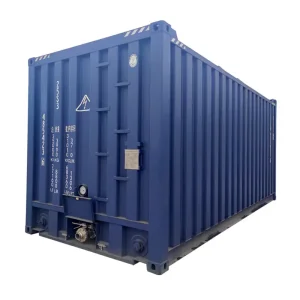
Heavy-payload side doors, cryogenic blast reefers, DNV offshore baskets, and ISO certified liquid tank systems built for rugged international operating lifecycles.
Direct from CIMIC Group’s engineering center in Tianjin. Connect with our technical export directors to evaluate GA blueprints, Finite Element Analysis data sheets, and custom production schedules.