

40+ Yrs
Estd. 1983 Heritage
100 km
Port Proximity Hubs
BV & DNV
Marine Class Assurance
100% CAD
OEM/ODM Verification
Engineered Equipment Catalog
Featured Marine Reefer & Intermodal Freight Systems
Explore precision-engineered reefer boxes, high-cube railway combinations, and specialized cryogenic tank containers manufactured under verified marine class standards.
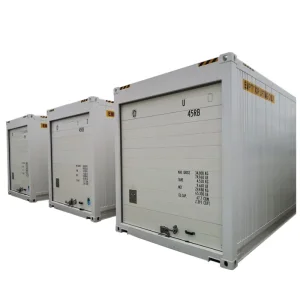
China 40ft High-Cube Roll Up Reefer Container Customized Shipping Containers Factory, Manufacturers
View Specifications →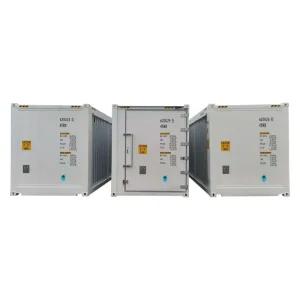
China OEM 40ft High-Cube Customized Three-in-One Combination Reefer Storage Container Manufacturer, Quotes
View Specifications →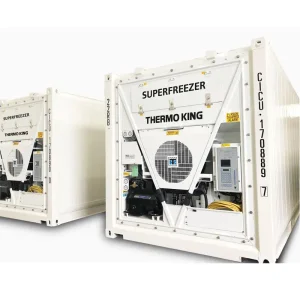
OEM New Deep Freezer Refrigerator Container For Sale Factory, Quotes
View Specifications →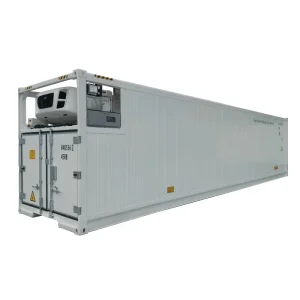
Famous New 40-foot high cube & 45-foot "Belt and Road" railway refrigerated container. Product, Products
View Specifications →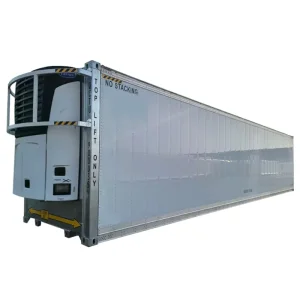
China Carrier X4-7300 Refrigeration and Electricity Integrated Container Exporter, Products
View Specifications →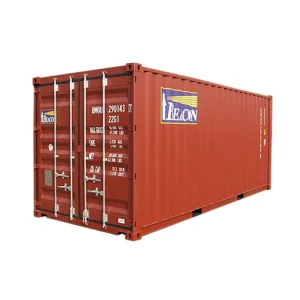
ODM 40ft New Certified Dry Shipping Container Pricelist, Exporters
View Specifications →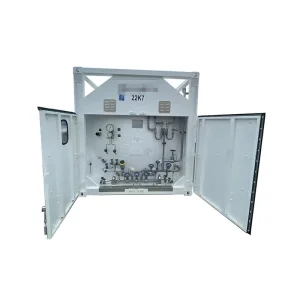
Famous T75 20ft Cryogenic Liquid Tank Container Products, Exporters
View Specifications →
Strategic Market Architecture
Macro-Industrial Landscape & Global Maritime Reality
The international container shipping ecosystem serves as the backbone of over 85% of non-bulk global commerce. Facing fluctuating market dynamics, shifting geopolitical freight corridors, and stringent environmental decarbonization standards, procurement teams are actively migrating from transactional spot buying toward engineering-driven asset procurement.
Supply Chain Rebalancing
Global container availability is experiencing localized supply disequilibria. While standard dry-box inventory has consolidated at primary transshipment terminals, demand for specialized maritime hardware—such as deep-freeze reefers (-40°C), DNV 2.7-1 certified offshore lifting equipment, and T75 cryogenic multi-modal tanks—remains structurally constrained. Manufacturing clusters in Tianjin and Suzhou ensure vital manufacturing capacity and rapid port integration.
Decarbonization & IMO Mandates
The International Maritime Organization's Carbon Intensity Indicator (CII) and EEXI metrics mandate reduced parasitic electrical loads across maritime fleets. Modern reefer designs incorporate microchannel heat exchangers, high-performance cyclically blown polyurethane foam insulation, and variable-speed hermetic scroll compressors from Thermo King, Carrier, and Daikin to curtail daily kilowatt-hour consumption by up to 32%.
Intermodal Eurasian Corridors
The rapid evolution of Belt and Road railway freight corridors requires specialized 45ft high-cube and dual-circuit reefer designs. Operating continuously across 10,000+ km inland routes traversing extreme Siberian permafrost (-50°C) through continental deserts (+45°C), integrated diesel-electric refrigeration platforms safeguard cargo integrity where shipboard reefer socket power is unavailable.
Manufacturing Excellence
Metallurgical Engineering, Thermal Insulation & Structural QA
Industrial container manufacturing demands disciplined adherence to mechanical metallurgy, robotic automation, and stringent corrosion protection. Operating with over four decades of production knowledge, Tianjin Cimic implements documented quality protocols at every stage.
Corten-A (SPA-H) Structural Steel
Every structural member—including top/bottom side rails, corner castings, and corrugated load-bearing side panels—is fabricated from genuine atmospheric corrosion-resistant Corten steel (JIS G3125 SPA-H). This formulation produces a self-passivating oxidized barrier layer under marine atmospheric exposure, guaranteeing structural resistance against salt spray pitting and cyclic flexing fatigue.
Multi-Stage Marine Paint Chemistry
Container longevity is governed by coating integrity. Steel profiles undergo automated high-pressure centrifugal shot blasting achieving Swedish Standard Sa 2.5 cleanliness. Surfaces receive a three-tier marine paint schedule: a zinc-rich epoxy primer (30–40µm), a high-build epoxy intermediate sealer (40–50µm), and a durable polyurethane/acrylic topcoat (40–50µm) achieving a minimum Total Dry Film Thickness (DFT) of 120µm.
High-Density Polyurethane Injection
Refrigerated and insulated modules utilize computerized high-pressure cyclically blown polyurethane foam injection (density 42–45 kg/m³). With inner linings fabricated from food-grade SUS 304 or stainless steel and high-tensile anti-friction aluminum T-floor decking, the overall heat transmission coefficient (K-value) remains tightly bounded below 0.36 W/(m²·K), minimizing thermal bridge leakage.
Global Standardization
Localization Support, Classification & Compliance Assurance
Deploying intermodal hardware across international maritime networks requires total compliance with flag state, port authority, and offshore energy regulations. Products built by CIMIC Group strictly align with third-party testing protocols and cross-border statutory standards.
CSC & ISO Certification
Standard freight and high-cube units are certified under the International Convention for Safe Containers (CSC 1972) and ISO 668 / ISO 1496 series. Corner posts undergo rigorous stacking tests exceeding 86,400 kg (equivalent to stacking nine laden 30,480 kg containers), longitudinal racking verification, and watertight seal vacuum tests under third-party supervision from Bureau Veritas (BV) and China Classification Society (CCS).
DNV 2.7-1 / EN 12079 Offshore Standards
For exploration rigs and platform resupply operations, containers cannot rely solely on standard ISO corners. Our offshore silt baskets, half-height cargo units, and workshop modules conform to DNV 2.7-1 (ST-E271) and EN 12079 criteria. They feature Charpy V-notch impact-tested structural steel, dedicated pad eyes tested for dynamic offshore snatch loads, and certified wire rope sling sets.
Customs TIR & Dangerous Goods Approvals
For international bonded cross-border carriage, units feature customs seal protection boxes compliant with TIR (Transports Internationaux Routiers) regulations. Specialized hazardous material units meet IMDG Code requirements, complete with explosion-proof axial intake louvers, secondary spill retention sub-floor sumps, and automatic fire-suppression interface ports.
Technical Data Sheets
Intermodal Container Dimensional & Payload Engineering Matrix
Technical baseline reference across standard, refrigerated, and specialized offshore transport assets. Final fabrication parameters are verified via order-specific CAD engineering submittals.
| Equipment Model | External Dims (L × W × H) | Internal Dims (L × W × H) | Internal Vol. | Tare Weight | Max Gross Mass (MGM) | Core Industrial Application |
|---|---|---|---|---|---|---|
| 20ft ISO General Dry | 6,058 × 2,438 × 2,591 mm | 5,898 × 2,352 × 2,393 mm | 33.2 m³ | 2,200 kg | 30,480 kg | Dense minerals, machinery, industrial raw inputs |
| 40ft ISO High Cube Dry | 12,192 × 2,438 × 2,896 mm | 12,032 × 2,352 × 2,698 mm | 76.4 m³ | 3,800 kg | 30,480 / 32,500 kg | Consumer goods, high-volume palletized freight |
| 40ft High Cube Reefer | 12,192 × 2,438 × 2,896 mm | 11,583 × 2,290 × 2,557 mm | 67.9 m³ | 4,480 kg | 34,000 kg | Deep-frozen seafood, fresh produce, vaccines |
| 45ft HC Rail / Sea Reefer | 13,716 × 2,438 × 2,896 mm | 13,100 × 2,290 × 2,557 mm | 76.6 m³ | 5,150 kg | 34,000 kg | Belt & Road trans-continental freight corridors |
| 20ft Cryogenic Tank (T75) | 6,058 × 2,438 × 2,591 mm | Inner Vessel: ASME VIII-1 | 20,000 L | 8,600 kg | 36,000 kg | LNG, Liquid Nitrogen, Liquid Oxygen transshipment |
| DNV 2.7-1 Offshore Basket | 6,058 × 1,200 × 1,250 mm | 5,860 × 1,020 × 980 mm | 5.8 m³ | 1,950 kg | 12,000 kg | Offshore drilling pipes, riser tools, subsea components |
Field Deployment Cases
Industrial Deployment: Real-World Operating Environments
CIMIC marine containers serve critical operational roles across demanding industrial, scientific, and geopolitical fronts, operating continuously under extreme climatic stress.
Ultra-Deep Cold Chain (-60°C)
Conventional reefers bottom out around -25°C to -30°C. For pelagic bluefin tuna transshipment, high-value biologic blood plasma, and active pharmaceutical ingredients (APIs), our ultra-deep freezer units deploy dual-stage cascade refrigeration circuits or sub-cooling heat exchangers, consistently maintaining -60°C core temperatures despite ambient tropical deck conditions exceeding +40°C.
Offshore Oil & Gas Rig Platforms
Operating in harsh waters from the North Sea to the South China Sea, offshore platforms cannot afford equipment failure. DNV 2.7-1 certified half-height containers and open-top mud baskets withstand aggressive heavy-sea wave wash, dynamic hoisting acceleration spikes (up to 3.0g dynamic impact loading), and corrosive salt spray, backed by 100% Non-Destructive Testing (NDT) of structural welds.
Grid-Scale Battery Energy Storage (BESS)
Standard marine containers are rapidly becoming the global form factor for lithium iron phosphate (LFP) energy storage. CIMIC manufactures reinforced structural ISO enclosures integrated with non-combustible rockwool thermal insulation, seismic structural bracing, pressure relief explosion hatches, and localized HVAC ducted cooling layouts to accommodate multi-megawatt-hour utility batteries.
R&D Trajectory
Technology Roadmap: 2025–2035 Horizons
The intermodal container is transforming from a passive steel envelope into an intelligent, connected, and low-carbon logistics terminal. Our R&D program focuses on four primary engineering vectors.
IoT Edge Telematics & Satellite Mesh
Integrating low-power wide-area network (LPWAN) and bidirectional satellite modems directly into corner posts. Shippers gain continuous real-time visibility into internal cargo temperatures, O₂/CO₂ concentration levels, door breach security alerts, and predictive vibration shock data over open oceans.
Low-GWP Natural Refrigerants
In anticipation of progressive F-gas phasedowns and Montreal Protocol amendments, CIMIC collaborates with leading machinery OEM partners to advance natural CO₂ (R-744, GWP=1) and low-flammability A2L refrigerants (R-454C, R-452A), eliminating high global warming potential hydrofluorocarbons from reefer fleets.
High-Strength Composite Hybrids
Investigating lightweight carbon-fiber and basalt-composite sandwich wall panels for intermodal freight units. Reducing tare weight by up to 600 kg per 40ft container allows commercial operators to maximize legal payload weight allowances while decreasing lifecycle fuel consumption per ton-kilometer.
Specialized & Modular Lineup
Modular Structures, Hazardous Cargo & Specialized Units
Explore prefabricated deployable homes, DNV offshore cargo baskets, open-top heavy-duty bulk containers, and IMDG-certified dangerous goods storage containers.
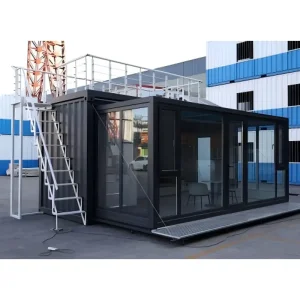
Famous 20ft Foldable Prefab Modular Homes Mobile Expandable Container House Prefabricated House with Bathroom Manufacturer, Exporters
View Specifications →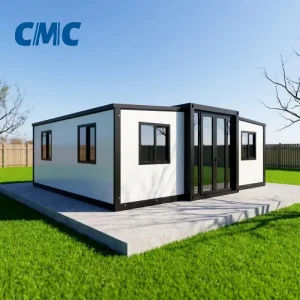
OEM 20ft Modular Container Houses Expandable Steel Container House Excellent Thermal Insulation and Sealing Performance Manufacturer, Manufacturers
View Specifications →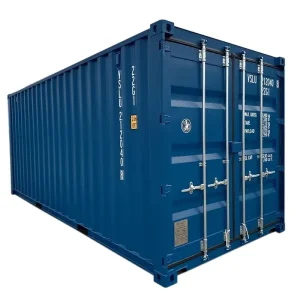
Buy New 20ft Double Door Dry Cargo Shipping Container Products, Manufacturers
View Specifications →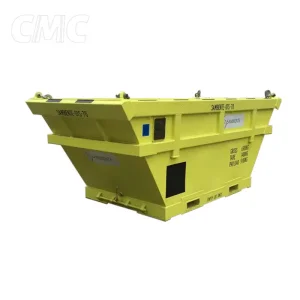
Famous DNV Certification Silt Basket Container Used in Offshore Operations Factories, Exporters
View Specifications →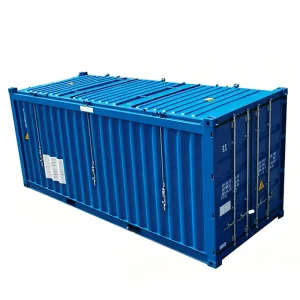
China 20ft New Hard Open Top Shipping Container Manufacturer, Factories
View Specifications →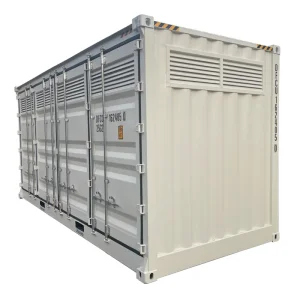
Famous 20FT High-cube Dangerous Goods Container Side Open Door with Ventilation Opening Manufacturer, Exporter
View Specifications →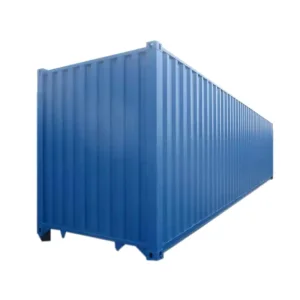
China 40ft High Cube Certified Dry Cargo Shipping Container contaoner Factory, Product
View Specifications →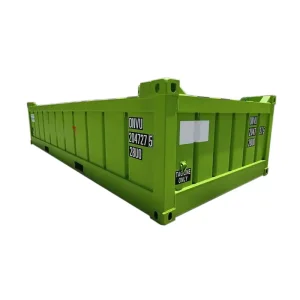
ODM New DNV Certification Offshore Half-Height Open Top Container Products, Exporters
View Specifications →
Procurement Intelligence
Technical & Commercial FAQ for Container Buyers
Essential technical, structural, and regulatory answers for logistics fleet managers, port terminal operators, and international equipment leasing buyers.
How do Corten-A steel containers prevent structural marine corrosion?
Corten-A (JIS SPA-H) contains deliberate alloying additions of copper, chromium, and nickel. Unlike ordinary carbon structural steels that produce porous, peeling rust flakes, Corten steel reacts with moisture and oxygen to form a dense, adherent, microscopic patina of basic iron sulfates. This patina forms a barrier against further atmospheric oxygen and chloride penetration, substantially prolonging operational lifespan across open ocean routes.
What is the difference between standard ISO containers and DNV 2.7-1 certified units?
Standard ISO containers (ISO 1496) are designed for vertical multi-tier stacking on vessels using twistlocks and spreader beams with horizontal corner forces. However, offshore installations encounter heavy sea heave and dynamic swinging loads during crane transfers. DNV 2.7-1 (and EN 12079) mandates high-grade normalized structural steel with verified low-temperature impact toughness (-20°C Charpy test), reinforced pad eyes, full-penetration welding, and 100% NDT inspection of primary load-carrying joints.
Which refrigeration brands are integrated into CIMIC reefer containers?
We work directly with leading refrigeration machinery manufacturers including Carrier Transicold (e.g., ThinLINE, PrimeLINE, X4 series), Thermo King (Magnum Plus), and Daikin (Zestia). The selection is customized based on specific cargo requirements: ultra-low temperature maintenance, rapid temperature pull-down speed, parts availability in regional discharge ports, or microchannel heat exchanger efficiency.
How are pre-shipment inspections (PSI) and classifications managed?
Every newly built container unit receives a classification survey plate issued by Bureau Veritas (BV), China Classification Society (CCS), or DNV before dispatch. Inspections include dimensional checks, tare weight verification, six-direction structural racking tests, weather-tightness light tests, and smoke pressure seal testing. Importers receive comprehensive Inspection Certificates and approved CAD drawings prior to port release.
What documentation is required to clear customs for modified container units?
For custom units—such as side-open doors, workshop modifications, or modular housing units—customs authorities require the original Commercial Invoice, Packing List, Certificate of Origin, Bill of Lading, and a valid CSC Safety Approval Plate reflecting modified gross weight ratings. CIMIC prepares full customs documentation sets to ensure smooth import clearance across Africa, Europe, North America, and Australia.
What holding time and thermal performance can be expected from T75 Cryogenic Tanks?
T75 cryogenic containers feature a double-walled vessel design: an inner vessel constructed from austenitic stainless steel (e.g., SA-240 304/316) housed inside a carbon steel outer vacuum jacket. The annular space is filled with high-grade multi-layer insulation (super-insulation) under high vacuum. Depending on the product stored (LNG, LOX, LIN, LAr), normal evaporation rates are kept under 0.25% per day, delivering autonomous holding times ranging between 30 to 45 days during ocean transit.