
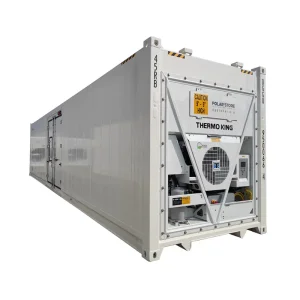
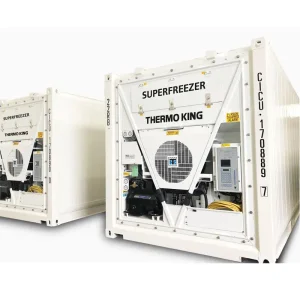
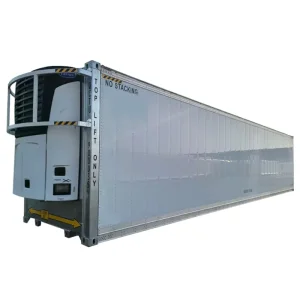
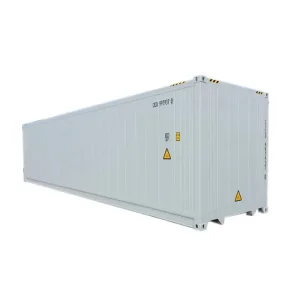
Famous 40ft High-Cube Side Open Door Reefer Container
Explore Technical Specs
Pre-engineered, multi-tier ISO certified units fabricated to withstand dynamic sea turbulence, rapid intermodal rail shunting, and offshore payload requirements.

Navigating geopolitical shifts, multimodal freight corridors, and decarbonization mandates across intercontinental supply networks.
In the contemporary global logistics matrix, the standardized shipping container has evolved far beyond a passive steel box. As global supply networks adapt to nearshoring, extended rail-sea transit across the Eurasian Land Bridge, and heightened cold-chain pharmaceutical requirements, procurement executives demand verifiable structural integrity, certified metallurgical longevity, and tight design versatility. Standardized containers conforming to ISO 668 and ISO 1496 must now withstand dynamic racking forces exceeding 150 kN, cyclic thermal variances spanning -40°C to +70°C, and prolonged exposure to high-salinity oceanic atmospheres.
Furthermore, energy transition initiatives across North America, Europe, and the Indo-Pacific have catalyzed unprecedented demand for specialized, custom-engineered intermodal units. From battery energy storage system (BESS) modular shells to cryogenic LNG distribution tanks (such as T75 configurations), the modern shipping container serves as a turnkey infrastructure enclosure. Ensuring compliance with strict regulatory regimes—encompassing Bureau Veritas (BV), Det Norske Veritas (DNV 2.7-1 / EN 12079), the International Convention for Safe Containers (CSC), and the International Union of Railways (UIC)—is no longer optional; it is the fundamental baseline for global asset bankability.
How concentrated industrial clusters in Tianjin and Suzhou eliminate upstream dependencies and protect global procurement schedules.
Direct integration with domestic tier-1 steel mills guarantees priority allocations of SPA-H / Corten-A weathering steel. Chemical composition controls ensure maximum resistance against atmospheric corrosion, yielding a service lifespan exceeding 20 years in harsh oceanic environments.
From computer-controlled submerged arc seam welding to semi-automatic electrostatic powder coating and high-density polyurethane injection lines, automated production maintains dimensional tolerances within ±1.5 mm across all standard and high-cube units.
Situated within roughly 100 kilometers of the primary maritime deep-water berths in Tianjin and access to Shanghai container terminals via Suzhou, our manufacturing plants minimize inland transit times, drayage surcharges, and vessel cut-off risks.
Engineered structural modifications engineered to perform under specialized commercial and extreme environmental stresses.
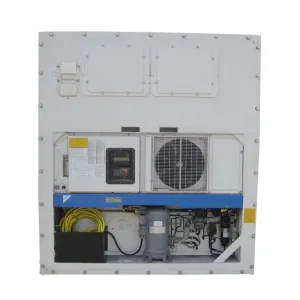
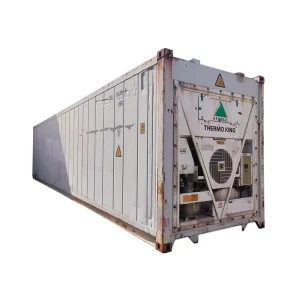
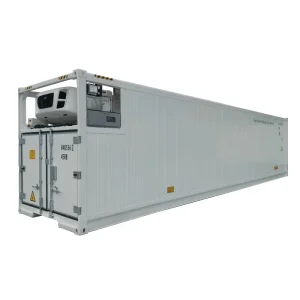
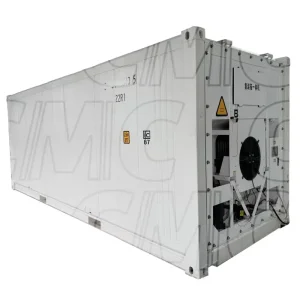
Equipped with industry-leading Carrier, Daikin, or Thermo King refrigeration machinery, our reefer containers deliver micron-precise thermal accuracy (-30°C to +30°C) with controlled atmosphere (CA) technology to delay spoilage in trans-oceanic agricultural distribution.
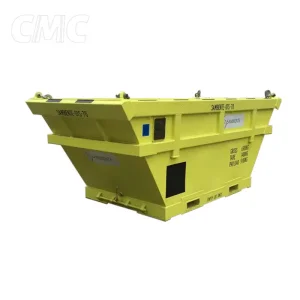
Built specifically for dynamic sea lifts in upstream oil, gas, and offshore wind installations. Heavy-duty lifting pad eyes, high-impact silt baskets, and reinforced base corners prevent structural fatigue under open-ocean sea swell acceleration forces.
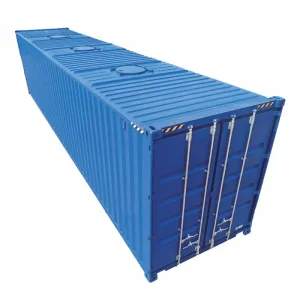
Reinforced 40ft HC and 45ft specialized containers engineered to meet strict UIC loading gauges for transcontinental rail freight, featuring enhanced roll-up doors, full-length side-open access systems, and heavy-payload floor cross-members.
Custom structural housings modified for lithium-ion Battery Energy Storage Systems (BESS), equipped with factory-fitted fire suppression conduits, structural thermal barriers, reinforced load points, and climate-controlled HVAC plenums.
Half-height ore carrier containers engineered with high-yield Hardox/abrasion-resistant flooring. Engineered with low centers of gravity, removable drop ends, and tippler-compatible corner castings for continuous mine-to-port bulk rail transport.
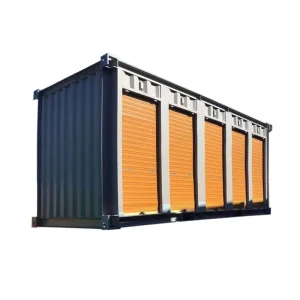
Turnkey architectural shells fabricated with factory-punched aperture reinforcements, acoustic insulation, double-end roll-up security access, and electrical conduit provisions for commercial storage or off-grid modular workspaces.
Integrating telemetry, low-carbon materials, and high-performance composites into traditional intermodal hardware.
Integrating low-power wide-area network (LPWAN) sensors, autonomous reefer diagnostics, remote temperature calibration, GPS tracking, and door-intrusion alarms directly into the container corner-post structure during factory assembly.
Developing ultra-low carbon steel formulations utilizing electric arc furnace (EAF) processing alongside bio-based waterborne paint systems, reducing VOC emissions by 85% without sacrificing maritime salt-spray corrosion resistance.
Transitioning reefer insulation systems to non-depleting microcellular polyurethane foams combined with vacuum insulation panels (VIP), achieving a 22% improvement in thermal resistance (U-factor) while expanding internal cubic capacity.
| Container Designation | External Dimensions (L × W × H) | Internal Volume | Max Gross Weight | Primary Engineering Target |
|---|---|---|---|---|
| 20ft ISO Standard Dry | 6,058 × 2,438 × 2,591 mm | 33.2 m³ | 30,480 kg | Dense industrial freight, heavy machinery, mineral ores |
| 40ft High Cube Dry | 12,192 × 2,438 × 2,896 mm | 76.3 m³ | 32,500 kg | Volumetric manufactured products, automotive parts, e-commerce |
| 40ft High Cube Reefer | 12,192 × 2,438 × 2,896 mm | 67.6 m³ | 34,000 kg | Pharmaceuticals, fresh perishables, ultra-frozen proteins |
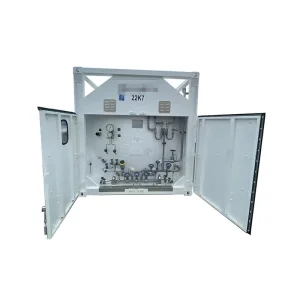
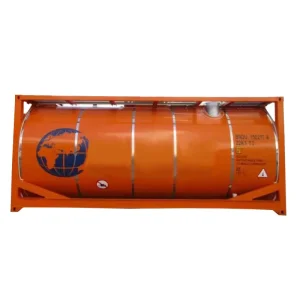
| 20ft Cryogenic Tank (T75) | 6,058 × 2,438 × 2,591 mm | 19.5 - 22.0 m³ | 36,000 kg | Liquid nitrogen, argon, oxygen, LNG bulk transportation |
| DNV 2.7-1 Offshore Silt/Basket | Variable (Tailored ODM) | Custom | Up to 25,000 kg | Offshore drilling support, rough-sea dynamic lifting rigs |
Guaranteed clearance across European, Pan-American, Middle Eastern, and African ports through internationally stamped certifications.
Every standard production run undergoes third-party qualification covering raw material metallurgy, weld penetration radiography, structural stacking tests, and weather-tightness verification under high-pressure water jets.
Containers are stamped with valid International Convention for Safe Containers (CSC) safety plates, ensuring frictionless entry, rail loading, and stack clearance across any terminal worldwide.
Offshore containers feature certified lifting slings, specialized padeye metallurgy, non-destructive testing (NDT), and documented impact testing at -20°C for demanding North Sea and Gulf of Mexico operations.
We maintain comprehensive spare component inventories (door hardware, EPDM gasket profiles, corner castings, floor planks) and coordinate with global reefer warranty service networks for rapid regional turnaround.
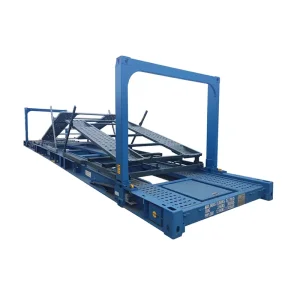
Engineered cold storage, bulk liquid ISO tanks, vehicle transport enclosures, and certified thermal solutions.

Direct engineering insights regarding dimensional standards, customization procedures, shipping certifications, and port dispatches.
We manufacture and export an exhaustive portfolio of intermodal equipment including standard dry cargo containers (20GP, 40GP, 40HC), intelligent reefer (refrigerated) containers, DNV-certified offshore cargo baskets and skids, thickened thermal insulated units, ISO cryogenic and liquid tanks (such as T75), modular housing frames, and bespoke configurations featuring side-opening doors, roll-up shutter access, and bulk hatch openings. Pre-inspected used dry and reefer stocks are also available at Chinese ports for rapid release.
Yes. OEM and ODM contracts represent a central pillar of our engineering operations. Our technical department reviews your target cargo density, thermal profiles, transit routes, and dynamic load environments. We supply full GA (General Arrangement) technical drawings, FEA (Finite Element Analysis) stress simulations, and detailed bills of materials (BOM) for client sign-off before manufacturing and laser cutting begin.
Our operations are ISO 9001:2015 quality-management certified, and our containers hold full type-approval classification from Bureau Veritas (BV). Standard intermodal units conform strictly to ISO 668, ISO 1496-1, and CSC regulations. Offshore cargo units comply with DNV 2.7-1 and EN 12079 design, material traceability, and dynamic load test criteria.
We partner directly with leading industrial refrigeration manufacturers. Customers can configure their reefers with Thermo King (Magnum Plus), Carrier Transicold (PrimeLINE / X4 series), or Daikin units. All systems feature digital diagnostic telemetry, wide operating temperature capabilities down to -30°C or ultra-low -60°C deep-freezer modes, and multi-voltage compatibility (380V/460V 3-phase, with optional solar-backed DC inverter adaptations).
For standardized ISO dry containers and standard reefers, our MOQ starts at 1 to 2 units for special runs, though full-batch factory runs (10+ TEU) yield substantial economies of scale. Production lead times typically range from 15 to 25 business days following technical drawing sign-off. Used container releases from inventory can be completed within 3 to 5 business days upon payment clearance.
Our key facilities operate in Tianjin and Suzhou, strategically situated approximately 100 km from major sea terminals (Tianjin Xingang Port and Shanghai Port). This proximity reduces domestic drayage expenses and mitigates vessel departure delays. We support versatile Incoterms including FOB, CIF, CFR, and DAP, and can coordinate "One-Way" cargo loading to reduce international repositioning freight costs.