OEM 20 Tank Container s Pricelist & Manufacturers
Comprehensive Whitepaper: Global Intermodal Liquid Transport Economics, UN Portable T11/T14/T50 Technical Frameworks, and Strategic OEM Procurement Cost Modeling.
Primary Engineered OEM Portfolio
Engineered standard and offshore multi-modal transport configurations certified under BV, DNV, and ISO quality assurances.
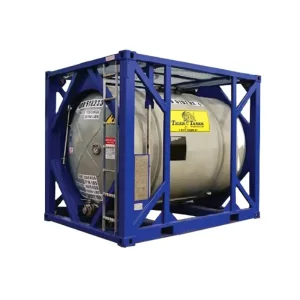
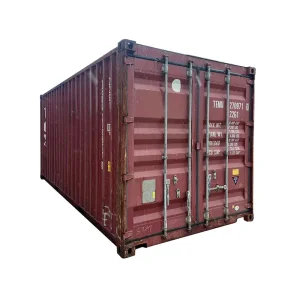
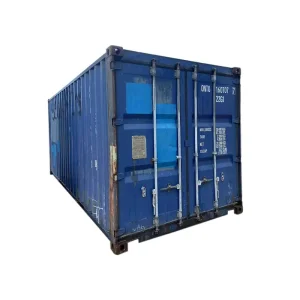
Macro-Industrial Solutions & 20 Tank Container Dynamics
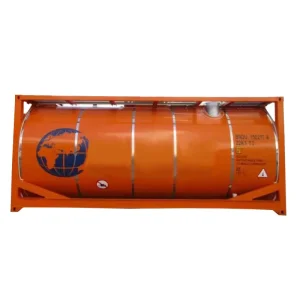
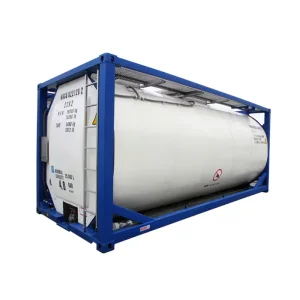
Strategic shifting from intermediate flexibags and standard steel drums toward standardized ISO 20 tank containers (UN Portable Tanks) is transforming global chemical, petrochemical, and foodstuff bulk logistics.
Direct Intermodal Cost Optimization
By switching from standard 200L drums to a 20ft ISO tank container, liquid bulk shippers instantly unlock a 40% to 45% volumetric payload increase per 20ft container footprint. Eliminating single-use IBC totes dramatically lowers disposal liabilities, decreases drum loading labor by up to 80%, and streamlines customs intermodal throughput without cargo transloading delays.
Supply Chain Resiliency & Static Storage
The dual classification of a 20 tank container as both an international transport vessel and a stationary on-site temporary storage unit allows industrial plants to mitigate supply disruptions. Engineered with 316L/304 austenitic stainless steel, external thermal cladding, and steam or electric heating circuits, these units safeguard cargo viscosity across long-haul marine, rail, and road passages.
Decarbonization & Circular LCA Impact
Environmental, Social, and Governance (ESG) mandates have exposed flexibags as significant plastics waste liabilities. An OEM 20 tank container boasts an engineered design life surpassing 25 to 30 years when maintained under ITCO (International Tank Container Organisation) periodic inspection schemes. Its cradle-to-grave Life Cycle Assessment (LCA) demonstrates an estimated 65% reduction in carbon footprint over recurring shipments.
OEM 20 Tank Container Pricing Breakdown & Matrix
A realistic OEM benchmark for industrial buyers and fleet directors. Tank container price variance depends heavily on shell metallurgy, interior baffles, lining materials, and heating configurations.
| ISO Tank Type | UN Portable Spec | Capacity Range (L) | Standard Metallurgy | Design Pressure | Indicative Price Range (USD) |
|---|---|---|---|---|---|
| Standard Chemical Tank | UN T11 | 21,000L – 26,000L | SS316L (4.2mm–4.5mm) | 4.0 Bar (Working) / 6.0 Bar (Test) | $17,500 – $24,500 |
| Food Grade Liquid Tank | UN T11 (Foodstuff Dedicated) | 24,000L – 26,000L | SS316L (Mirror Polish Ra < 0.4μm) | 2.65 to 4.0 Bar | $19,000 – $26,000 |
| Hazardous Acid / Corrosive | UN T14 | 14,000L – 20,000L | Carbon Steel / PTFE / Chem-FEP Lined | 4.0 to 6.0 Bar | $28,000 – $42,000 |
| Liquefied Gas Container | UN T50 | 24,000L – 24,500L | Fine Grain Low-Alloy Steel | 15.0 to 22.0 Bar | $48,000 – $75,000 |
| Offshore Chemical Injection | DNV 2.7-1 / EN12079 | 3,000L – 10,000L | SS316L / Pad Eyes / Heavy Crash Frame | 4.0 to 10.0 Bar | $22,000 – $38,000 |
| Cryogenic Liquid (LNG/Ethylene) | UN T75 | 20,000L – 22,500L | Austenitic SS Inner / CS Outer (Vacuum) | 7.0 to 24.0 Bar | $65,000 – $110,000 |
*Note: Final OEM manufacturing contract pricing fluctuates based on global nickel surcharges, moly alloy indexes, molybdenum market spot rates, Bureau Veritas/LR certification witness fees, and delivery terms (FOB Tianjin/Qingdao vs CIF destination port).
Global Landscape & Industrial Production Footprint
The global operational fleet of ISO tank containers exceeds 800,000 units globally, with over 85% of global new-build capacity concentrated in Chinese coastal manufacturing clusters with deep metallurgic integration.
Localized Support & International Compliance Assurance
Deploying tank containers across multi-jurisdictional borders requires uncompromising compliance with global maritime, rail, and highway safety authorities.
Global Certification Frameworks
Every vessel produced under OEM programs undergoes third-party classification authority witnessing (Bureau Veritas, Lloyd’s Register, China Classification Society, or DNV). Units conform fully with IMDG Code Chapter 6.7, ADR/RID guidelines for European continental road/railways, US DOT 51 rules, and ASME Boiler and Pressure Vessel Code Section VIII Division 1 design calculations.
Cleanability & Surface Integrity
For specialized food and ultra-pure chemical service, inner shell pickling, passivation, and mechanical or electropolishing processes ensure surface roughness profiles down to Ra < 0.2μm. Bottom discharge assemblies incorporate 3-tier safety containment: an internal high-lift foot valve, an external secondary ball valve, and a blank flange cap to ensure zero environmental discharge during intermodal transit.
Depot Integration & Periodic Inspection
Global operations require seamless 2.5-year and 5-year periodic recertification. Our engineering blueprints utilize standardized, internationally exchangeable valve gear (Perolo, Fort Vale) and seal materials (PTFE, Chemraz, Viton). This allows depot networks across Rotterdam, Houston, Singapore, and Antwerp to execute swift turnaround seal replacements and pressure testing without extended off-hire delays.
Localized Application Scenarios & Case Blueprints
Targeted adaptations engineered for specific regional logistics challenges and severe climatic handling envelopes.
Specialty Petrochemicals & Solvents
T11 pressure-rated units handling hazardous flammable liquids (Classes 3, 6.1, 8). Equipped with top spillbox vapor recovery lines, inert gas blanketing systems, and calibrated burst discs to prevent volatile compound atmospheric release during warm climate shipping lanes.
High-Purity Foodstuffs & Edible Oils
Designed for multi-modal bulk distribution of juices, wine, refined edible oils, and high-fructose corn syrups. Integrated low-pressure steam heating panels prevent caramelization, paired with high-efficiency rockwool thermal insulation wrapped in an airtight GRP/aluminum casing.
Offshore Exploration & Chemical Injection
Compact 10ft/20ft DNV 2.7-1 certified offshore skid containers built to endure dynamic sea-state shock factors up to 3G. Deployed to transport acids, scale inhibitors, and drilling mud additives onto deepwater platforms in the North Sea, Gulf of Mexico, and West Africa.
High-Viscosity Cargo & Bitumen Pitch
Engineered with high-capacity flame tube heating systems, heavy electrical trace-heating coils, or specialized thermal oil circulatory lines. Prevents crystallization of bitumen, coal tar, and heavy residual fuels during trans-Eurasian cold-weather rail transport.
Engineering Roadmap: Next-Gen Smart Tank Containers
The transformation of industrial bulk transport centers on digitized observability, structural mass minimization, and composite material adoption.
IoT Telemetry & Dynamic Fleet Tracking
Modern OEM tank manufacturing programs now integrate ATEX/IECEx Zone 1 certified sensor arrays. Real-time parameters—including shell interior hydrostatic pressure, multi-point cargo core temperatures, vapor space fill levels, and geofence tracking—are communicated via low-power satellite and cellular transceivers directly into ERP and terminal management systems.
Advanced Composite & High-Tensile Metallurgies
Through Finite Element Analysis (FEA) optimization of corner-casting anchor structures and the introduction of advanced lean-duplex stainless steels (such as 2101 or 2205), tare weights have fallen by up to 400 kg per unit. This reduction increases maximum payload per trip while maintaining mechanical yield strength, collision resistance, and cyclic pressure longevity.
Zero-Emission Closed-Loop Cleaning Systems
Advanced inner tank geometries and anti-stick hydrophobic ceramic nanofinishes enable wash stations to reduce clean-in-place (CIP) water consumption by up to 50%. This accelerates tank rotation, mitigates cross-contamination risks across batch turnarounds, and lowers chemical effluent loads on municipal wastewater processors.
Technical & Procurement FAQ
Authoritative insights addressing custom manufacturing, certification, metallurgy, lead times, and life-cycle asset management.
For standard UN Portable T11 20ft tank containers (24,000L–26,000L in SS316L), typical OEM factory lead times range between 45 to 65 calendar days post drawing confirmation and third-party weld plan approval. Complex configurations (e.g., PTFE lining, fluoropolymer coatings, integrated refrigeration, or DNV 2.7-1 certified offshore units) require approximately 75 to 90 days to accommodate precision hydrostatic testing, vacuum decay verifications, and non-destructive examination (NDE/radiographic testing) of longitudinal and circumferential seams.
The difference centers on bottom discharge authorization and the severity of cargo hazard classes. UN T11 tanks allow bottom discharge through a three-stage closing mechanism (internal foot valve, secondary butterfly/ball valve, and blanking cap) and operate at test pressures of 6.0 Bar for standard hazardous liquids. UN T14 tanks are restricted to top-discharge only, eliminating any openings below liquid level to prevent accidental spillage of highly toxic, corrosive, or oxidizing Class 6.1/Class 8 chemicals (such as hydrofluoric or fuming sulfuric acids), and often require internal rubber or plastic linings.
Every unit undergoes comprehensive quality audits documented in an official Manufacturer’s Data Report (MDR). This includes 100% radiographic or ultrasonic examination of critical weld intersections, hydrostatic pressure testing at 1.5 times the maximum allowable working pressure (MAWP) for at least 30 minutes, pneumatic testing of steam jackets, helium leak testing for ultra-high purity units, and complete electrical continuity/grounding bonding tests witnessed by classification surveyors (such as BV, LR, or CCS).
Yes. Under international transport safety regulations, ISO tank containers filled between 20% and 80% capacity require structural transverse surge baffles to damp sloshing forces during braking and acceleration maneuvers. We engineer removable or permanently welded dished baffles with quick-release stainless steel clamp bolts. This design ensures both longitudinal fluid deceleration stability and ease of manual entry for cleaning, inspection, and passivation.
Complementary Intermodal Specialized Equipment
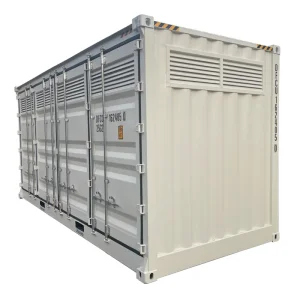
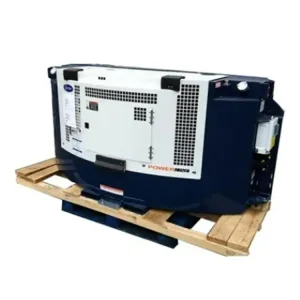
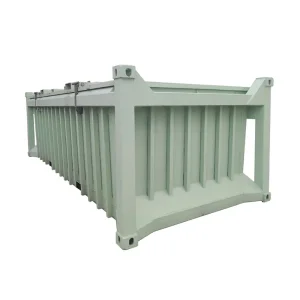
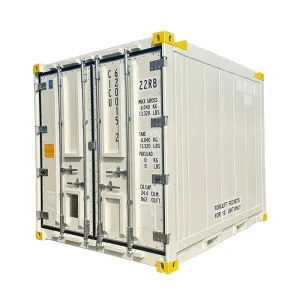
Engineered multi-temperature reefers, liquid tanks, and modular structures designed for multimodal rail, sea, and site logistics.