Primary Fleet & Special Equipment Line
High-Performance Intermodal Shipping Containers & Modular Solutions
Direct from our manufacturing hubs in Tianjin and Suzhou: rigorously tested special containers, reefers, ISO tanks, and expandable modular structures ready for international deployment.
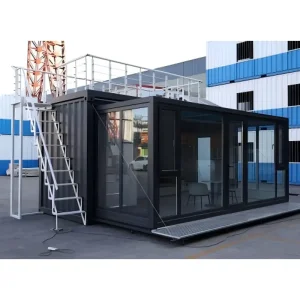
Famous 20ft Foldable Prefab Modular Homes Mobile Expandable Container House Prefabricated House with Bathroom Manufacturer, Exporters
Explore Specifications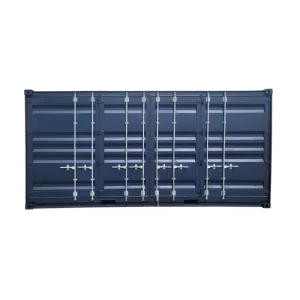
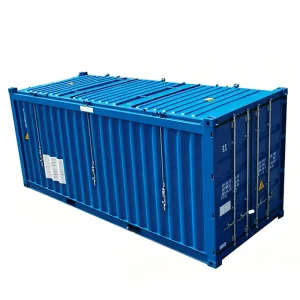
High-Quality New 20ft Customized Side Door Dry Cargo Shipping Container Factory, Product
Explore Specifications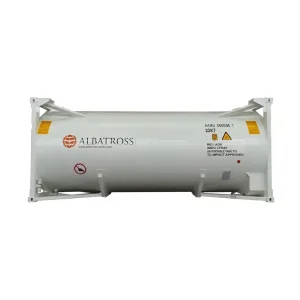
China 25000 Liters ISO 20ft Gas Tank Container for Sale Product, Factories
Explore Specifications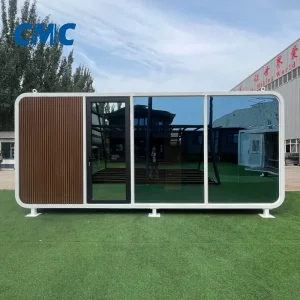
Famous 20ft Prefab Container House Flat Pack Modular House Office Tiny House Outdoor apple Cabin Office Pod Garden Office Pod Manufacturer, Product
Explore Specifications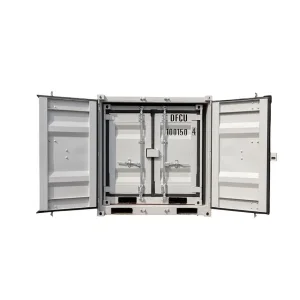
High-Quality Durable Cargo Shipping Container 4Ft/5Ft/6Ft/7Ft/8Ft/9Ft/10Ft/11Ft/12Ft Mini Storage Container Nested Shipping Container Manufacturers, Factories
Explore Specifications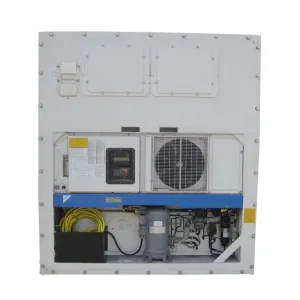
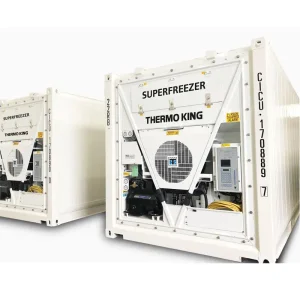
Buy Refrigeration Equipment /Cooling Unit For Refrigerated Containers Products, Exporters
Explore Specifications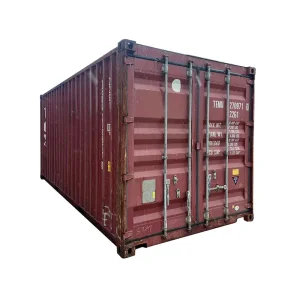
Buy 20ft Used Shipping or Storage Container Manufacturer, Products
Explore SpecificationsThe Global Commercial & Industrial Landscape of Hard-Top Open-Top Containers
How the shift from conventional soft tarpaulin designs to rigid steel removable roof systems is transforming multimodal heavy-lift logistics, breakbulk mitigation, and asset security.
LOG-01
Mitigating Breakbulk Overhead
Global ocean freight rates for conventional breakbulk and flat-rack out-of-gauge (OOG) consignments carry substantial premiums—often exceeding standard dry container TEU rates by 180% to 340%. Hard-top open-top (HTOT) containers bridge this critical divide. By combining a completely detachable rigid steel roof with a swing-out, removable rear header, HTOT units allow overhead gantry and crane hoists to lower dense, heavy industrial machinery directly into the internal cell. Once the roof is re-anchored and locked from within, the container converts into a certified fully enclosed ISO box capable of standard multi-tier cellular vessel under-deck stowage, drastically reducing surcharges.
ENG-02
Structural Rigidity vs. Soft Tarpaulins
Traditional soft open-top containers rely on PVC tarpaulins supported by removable transverse roof bows. While functional for light cargo, soft covers suffer severe limitations: fabric degradation under intense maritime UV radiation, susceptibility to slash-and-grab pilferage during rail dwell times, and catastrophic water ponding that leads to roof deflection and moisture intrusion. Our hard-top architecture features corrugated 1.6mm–2.0mm SPA-H Corten atmospheric corrosion-resistant steel roofs sealed with continuous dual-lip EPDM compression gaskets, eliminating structural sag and offering true hermetic protection against extreme offshore spray and tropical monsoon downpours.
INT-03
Multimodal Seamless Interoperability
Modern cross-continental corridors—such as the Eurasian Rail Link, North American double-stack rail corridors, and trans-Andean heavy haulage—impose severe mechanical acceleration and buffeting forces. Hard-top containers engineered under strict CSC safety approvals absorb dynamic racking loads without requiring specialized lashing frames on top. When carrying over-height cargo, the detached steel lid can be safely strapped internally along the sidewall or stowed independently, providing shipping lines and project freight forwarders with unmatched operational agility for backhaul dry general cargo trips.
Chinese Engineering Prowess: Scalable Precision & Port-Proximate Hubs
Combining automated robotic welding, premium metallurgical vertical integration, and deep-water maritime berth connectivity within 100 kilometers of our Tianjin and Suzhou production centers.
MET-01
Vertical Steel Integration
Our strategic alignment with premier domestic Corten steel mills guarantees strict batch-certified chemical compositions with precise copper, chromium, and nickel ratios. This self-passivating oxide barrier retards atmospheric corrosion rates four-fold compared to standard structural carbon steel.
ROB-02
Automated Robotic Assembly
Utilizing 6-axis robotic GMAW (gas metal arc welding) cells for side corrugated panels, corner fittings, and heavy-duty floor crossmembers ensures weld penetration uniformity, zero hydrogen embrittlement, and flawless alignment tolerances within ±1.0mm across all 40ft/20ft frame structures.
CT-03
Blast & Marine Coating Cycle
Every subassembly undergoes automated SA 2.5 centrifugal steel shot blasting to eliminate mill scale. Surfaces are layered with zinc-rich epoxy primers, high-build epoxy intermediate barriers, and marine polyurethane topcoats (total dry film thickness ≥ 120μm) resistant to salt fog (ASTM B117 > 1500h).
LOG-04
Port-Adjacent Scalability
Positioned ~100 km from Tianjin Xingang port and deep-water Shanghai/Ningbo channels through our Suzhou facility, inland drayage lead times are reduced to under 4 hours. Buyers eliminate heavy inland freight surcharges, dispatching batch production runs directly onto line-haul mother vessels.
Localized Engineering Applications: Heavy Industry, Energy & Mineral Logistics
Engineered for complex cargo profiles where standard end-door loading is physically impossible or operationally cost-prohibitive.
APP-01
Heavy Mining & Drilling Rigs
Underground mining gear, continuous miners, track-driven drilling jibs, and heavy diesel gearboxes possess irregular center-of-gravity profiles and extreme unit masses. Using hard-top open-top containers, overhead shop cranes lower these components straight down onto 28mm tropical hardwood or steel-reinforced floors equipped with heavy-duty 4,000 kg and 5,000 kg recessed lashing rings. The removable swing-out rear header gives forklifts extra mast clearance when fine-positioning heavy skids.
APP-02
Wind Power & Hydro Transformers
Electrical substation transformers, wind turbine nacelle components, generator stators, and hydro-turbine runners require dry, contamination-free transit yet cannot be pushed through container end doors without damaging sensitive high-voltage bushings or precision bearings. Hard-top containers provide the structural weather sealing of an enclosed ISO box while allowing precision overhead gantry placement, keeping delicate insulation materials bone-dry across high-salinity oceanic crossings.
APP-03
Oversized Sheet Glass & Polished Marble
Architectural glass sheets, quartz slabs, and finished marble monuments are carried on heavy A-frames. Loading these vertically through traditional end doors risks glass shatter, catastrophic balance tipping, and extreme handler hazard. Cranes equipped with vacuum-lifters or spreader beams effortlessly drop pre-assembled A-frame racks through the container's open roof directly onto customized wood floor chocks, locked down before the rigid steel top is lowered and latched.
Comprehensive Structural & Dimensional Specifications
Certified in compliance with ISO 668, ISO 1496-1, CSC, and TIR requirements for global intermodal and deep-sea transit.
| Engineering Parameter | 20ft Hard-Top Open-Top (Standard) | 20ft High-Cube Hard-Top (HC) | 40ft Hard-Top Open-Top (Standard) | 40ft High-Cube Hard-Top (HC) |
|---|---|---|---|---|
| External Dimensions (L × W × H) | 6,058 × 2,438 × 2,591 mm | 6,058 × 2,438 × 2,896 mm | 12,192 × 2,438 × 2,591 mm | 12,192 × 2,438 × 2,896 mm |
| Internal Clear Dimensions | 5,898 × 2,352 × 2,348 mm | 5,898 × 2,352 × 2,653 mm | 12,032 × 2,352 × 2,348 mm | 12,032 × 2,352 × 2,653 mm |
| Roof Opening Clearance (L × W) | 5,590 × 2,210 mm | 5,590 × 2,210 mm | 11,720 × 2,210 mm | 11,720 × 2,210 mm |
| Rear Door Header Clearance | Swings open 180° / Detachable | Swings open 180° / Detachable | Swings open 180° / Detachable | Swings open 180° / Detachable |
| Max Gross Weight (Rating) | 30,480 kg / 32,500 kg | 30,480 kg / 32,500 kg | 32,500 kg / 34,000 kg | 32,500 kg / 34,000 kg |
| Average Tare Weight (Incl. Roof) | 2,750 kg | 2,920 kg | 4,650 kg | 4,980 kg |
| Rigid Roof Assembly Weight | Approx. 450 kg (equipped w/ crane rings) | Approx. 450 kg | Approx. 880 kg (segmented or single) | Approx. 920 kg |
| Flooring Construction | 28mm Hardwood Marine Plywood / Steel | 28mm Hardwood Marine Plywood / Steel | 28mm Hardwood Marine Plywood / Steel | 28mm Hardwood Marine Plywood / Steel |
| Structural Class Certification | BV, ABS, LR, CCS, DNV-GL | BV, ABS, LR, CCS, DNV-GL | BV, ABS, LR, CCS, DNV-GL | BV, ABS, LR, CCS, DNV-GL |
Emerging Industry Trends: Decarbonization, Telematics & Quick-Lift Mechanics
Continuous innovation in material sciences and digital tracing systems reshaping the operational utility of hard-top open-top containers globally.
IOT-01
IoT Telematics & Tamper Sensors
High-value industrial machinery demands real-time custody visibility. Modern hard-top containers are integrating flush-mounted internal satellite telematics modems that monitor micro-vibrations, internal ambient relative humidity, and 3-axis G-shock events during shunting. Optical seal-break sensors detect any unauthorized roof lifting attempts or perimeter tampering in real-time across deep-sea and dry-port nodes.
MEC-02
Hydraulic & Counterbalanced Lifting
Traditionally, removing an 880 kg 40ft rigid steel lid required yard cranes or forklift sling attachments. Newer design iterations introduce lightweight high-yield structural alloys and assisted manual-hydraulic roof levers. This enables two technicians at a remote construction staging laydown yard to lift, swing, and unlock the roof assembly without needing dedicated heavy crane mobilization.
ECO-03
Green Metallurgy & Recycled Corten
In accordance with Scope 3 maritime decarbonization mandates, our factory incorporates electric arc furnace (EAF) processed Corten steel with high scrap content and low embedded carbon. In tandem with solvent-free, water-borne epoxy priming systems and sustainably harvested FSC-certified bamboo-composite or sustainably grown tropical hardwood flooring, we substantially lower the cradle-to-gate carbon footprint per TEU.
Global Enterprise Sourcing, Engineering Compliance & Factory Auditing
Crucial inspection parameters, international certifications, and structural testing checklists required by multinational buyers and project engineering firms.
CSC-01
CSC & ISO 1496-1 Proof Testing
Every batch undergoes type-approval testing witnessed by classification societies (BV, LR, ABS, CCS). This includes stacking tests (up to 216,000 kg simulating 9-high laden stack), transverse/longitudinal racking tests, end-wall/side-wall strength tests, and roof load capacity testing (300 kg distributed load).
TIR-02
TIR Customs Approval Design
For cross-border rail and road transit under customs seal, hard-top containers must possess tamper-proof locking pins. The internal mechanical roof locking levers can only be accessed once the main rear cargo doors are unlocked and opened, ensuring complete compliance with international TIR customs seals.
WTR-03
High-Pressure Weather Sealing
Before dispatch, 100% of finished HTOT units undergo continuous water jet testing along the roof perimeter gasket channels, corner junction castings, and swing-out rear header junctions under 100 kPa (1 bar) spray pressure without a single droplet penetrating the interior envelope.
FEA-04
FEA Structural Stress Verification
Finite Element Analysis (FEA) computer simulations model static and dynamic racking torsion when the rigid roof is fully removed. Reinforced top side rails and heavy boxed corner gussets guarantee that structural deflection remains within safe elastic tolerances during open-top terminal handling.
Frequently Asked Questions: Hard-Top Open-Top Containers
In-depth technical answers addressing operational mechanics, custom modifications, and fleet logistics.
How does a hard-top open-top container differ fundamentally from a soft open-top container?
A soft open-top container utilizes transverse steel roof bows covered by a flexible PVC or canvas tarpaulin fastened with a TIR cord. In contrast, a hard-top open-top (HTOT) container features a rigid, self-supporting corrugated steel roof lid constructed from high-tensile Corten steel. The hard-top lid is clamped and sealed to the container body using internal heavy-duty mechanical locking mechanisms and continuous marine-grade EPDM compression gaskets.
This rigid construction grants several distinct advantages: enhanced structural resistance against dynamic twisting, superior protection against slashing and theft, complete elimination of water pooling during tropical transit, and the ability to be classified and stacked as a standard closed dry container under shipboard cellular stowage guides.
Can the container be transported on container vessels without its rigid steel roof attached?
Yes. If carrying out-of-gauge (OOG) cargo that exceeds the internal height envelope of the container, the unit can be dispatched with the roof detached. In such operations, the removable rigid lid can be secured vertically along the interior sidewall (if space permits) or freighted separately.
Our units are designed and FEA-verified so that the top side rails and heavy corner posts withstand all regulatory transverse and longitudinal forces even without the roof acting as a structural diaphragm. However, when shipped roofless with over-height cargo, the container must be booked as out-of-gauge (OOG) cargo and typically stowed on the vessel’s weather deck or top stack tier.
How does the swing-out rear header operate during loading?
The rear top transverse header beam is connected to the corner posts via heavy-duty forged pivot hinges and high-tensile locking pins. When loading cargo with high-mast forklifts or overhead cranes, the locking pin is released, allowing the rear header to either swing open 180 degrees horizontally or be lifted off entirely.
This completely eliminates the top door beam obstruction, enabling tall machinery or fragile crated assemblies to enter the container horizontally or from above without the risk of clipping the upper frame.
What floor configurations are available for ultra-dense, concentrated loads?
Standard builds are outfitted with 28mm multi-ply marine birch or tropical hardwood floorboards treated to meet international Australian Quarantine and Inspection Service (AQIS) timber treatment standards. For concentrated industrial loads (such as steel coils, granite blocks, or track vehicles), we engineer custom floor designs:
Options include 4.5mm or 6.0mm anti-slip chequered steel plate over high-density crossmembers spaced at 150mm intervals (halving standard pitch), integrated recessed coil wells with lashing d-rings rated up to 5,000 kg each, and reinforced longitudinal steel skid paths capable of supporting extreme axle loadings exceeding 7,260 kg per forklift front axle.
What certifications and documentation accompany export containers from your factory?
Every hard-top container leaves our factory with a comprehensive classification dossier. This includes a valid CSC (International Convention for Safe Containers) safety approval plate stamped onto the container door, a TIR customs approval certificate, an ISO 1496-1 type approval certificate issued by Bureau Veritas (BV), ABS, Lloyd's Register (LR), or CCS, an AQIS fumigation/treatment certificate for timber components, and complete mill test certificates (MTC) for all steel batches confirming Corten-A / SPA-H chemistry.
What are the factory lead times, MOQ, and customization parameters for global delivery?
For standard 20ft and 40ft hard-top open-top containers, our typical production cycle ranges from 15 to 25 days following engineering drawing sign-off. The standard Minimum Order Quantity (MOQ) is 1 unit for evaluation or spot projects, and full-volume line runs can output up to 150 units per week.
Customization options include custom external corporate livery (RAL colors), heightened high-cube clearance (9ft 6in), customized roof lifting eye locations for specific harbor cranes, dual side-access doors, and specialized internal tie-down track systems.
Specialized Intermodal & Energy Equipment
Comprehensive Product Portfolio: Offshore, Reefer & Liquid Systems
Complementing our hard-top open-top solutions: high-cube soft open-tops, cryogenic & ISO liquid tanks, cold-chain units, and modular buildings manufactured to exacting global standards.
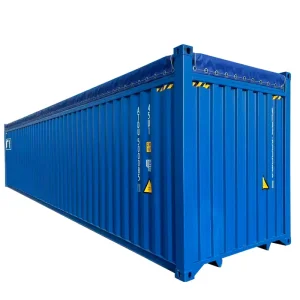
Buy 40ft High-Cube New Soft Open Top Shipping Container with Tarpaulin Cover Manufacturer, Product
Explore Specifications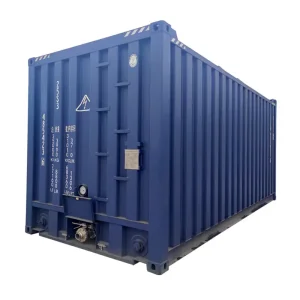
Buy New 20ft Square Liquid Container Factory, Product
Explore Specifications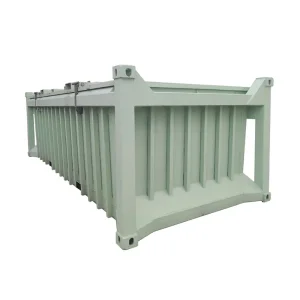
Buy New Half Height Ore Carrier Container Offshore Container Manufacturers, Quotes
Explore Specifications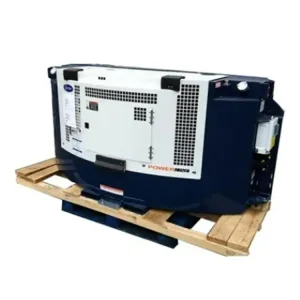
China Refrigerated container diesel generator Exporter, Quotes
Explore Specifications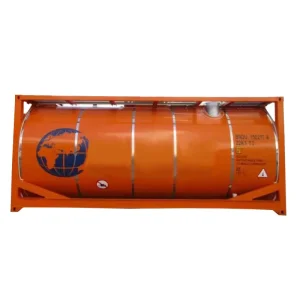
China 20 Foot ISO Liquid Tank Container for Water Manufacturer, Product
Explore Specifications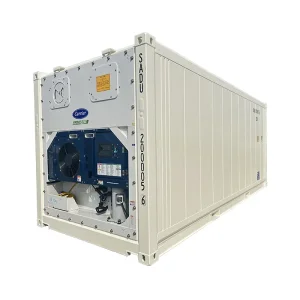
High-Quality New 40ft High Cube Carrier Refrigerator Freezer Cold Room Product, Exporters
Explore Specifications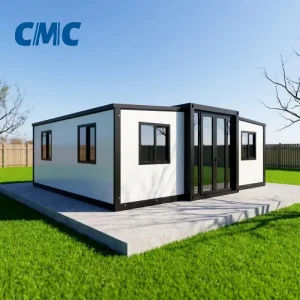
OEM 20ft Modular Container Houses Expandable Steel Container House Excellent Thermal Insulation and Sealing Performance Manufacturer, Manufacturers
Explore Specifications