New England Cold Chain Solutions · Direct Factory Supply
Buy Roll-up Door Refrigerated Container Quotes & Exporters Serving Boston
Heavy-duty insulated reefer containers engineered with rapid-access roll-up doors, multi-temp zone partitioning, and Carrier/Thermo King integration tailored for Greater Boston's seafood, life science, and urban logistics corridors.
High-Efficiency Roll-Up & Modular Reefers for Boston Terminals
Pre-engineered, DNV/ISO verified roll-up refrigerated containers designed for urban tight docks, cold storage overflow, and intermodal transport across Massachusetts Bay.
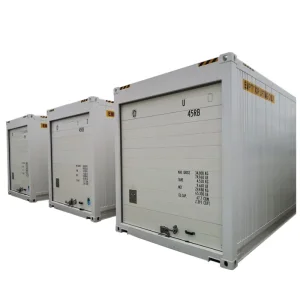
40ft High-Cube
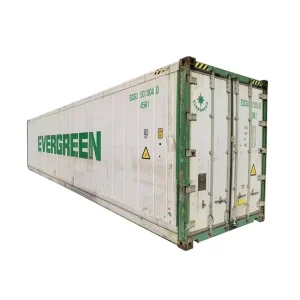
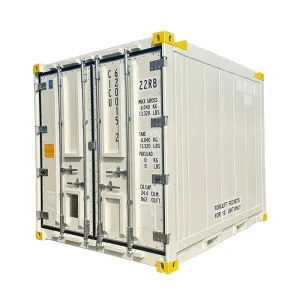
Boston Harbor 40ft HC Roll-Up Door Reefer Container
Designed for rapid cross-docking at Conley Terminal and New England produce depots with automated overhead roll-up access and insulated micro-cell polyurethane panels.
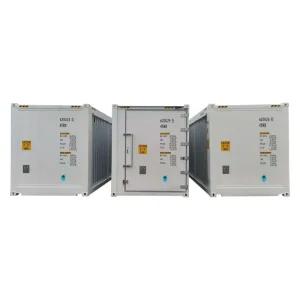
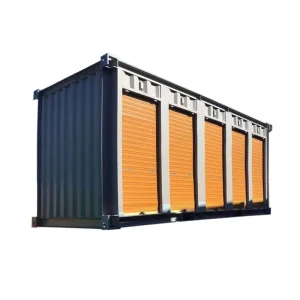
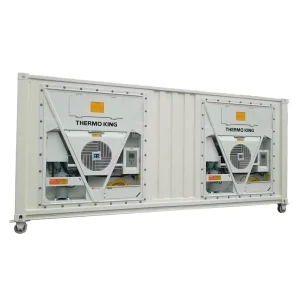
Custom Three-in-One Combination Reefer for Greater Boston
Partitioned multi-temperature zones featuring deep-freeze, chilled, and ambient sections equipped with high-cycle roll-up doors for biotech & institutional food catering.
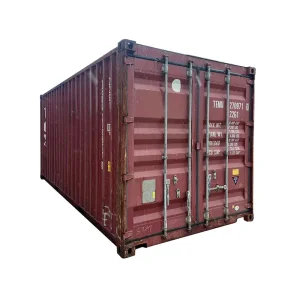
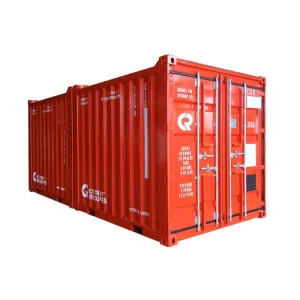
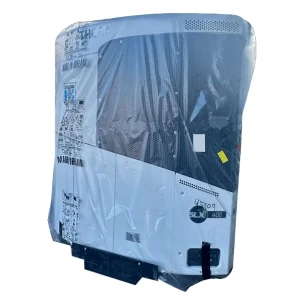
Pre-Inspected 40ft HC Shipping Reefer for Massport Logistics
Cargo-worthy reconditioned refrigeration containers equipped with low-power scroll compressors, upgraded door gaskets, and full PTI pre-trip inspection records.
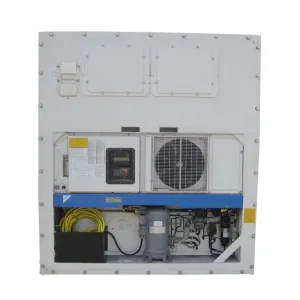
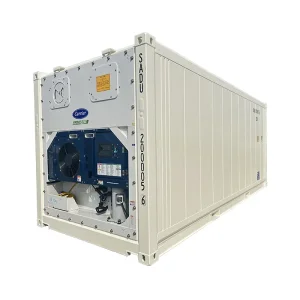
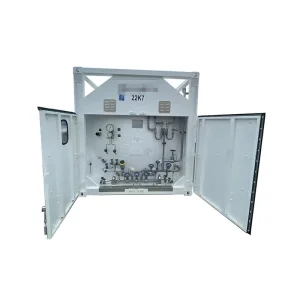
20ft Compact Modular Cold Storage Container for Cambridge Labs
Engineered for tight footprint industrial spaces, university research centers, and craft food distributors requiring reliable, weather-sealed refrigerated containment.
Greater Boston & New England Cold Chain Infrastructure Demand
From the seafood terminals of South Boston to the biotech incubators of Kendall Square and Route 128, cryogenic and refrigerated roll-up containers solve critical urban density and rapid-cycle fulfillment challenges.
Urban Dock Space Constraints
Traditional dual swing doors require at least 8 to 10 feet of rear clearance to unlatch and fold against the side walls. In historical logistics corridors such as the Boston Marine Industrial Park (BMIP), Chelsea produce markets, and narrow industrial alleys in South Boston, swing doors frequently cause traffic bottlenecks and forklift hazard zones.
Roll-up shutter configurations eliminate door-swing clearance entirely, empowering trucks and distribution teams to dock flush against urban warehouse ramps or offload on narrow commercial curbs without occupying adjoining travel lanes.
Seafood Processing & Pier Operations
Boston remains the premier seafood landing and distribution hub of the Northeast, processing millions of pounds of North Atlantic cod, haddock, scallops, and Maine lobster daily. Salt-laden coastal air accelerates standard hardware rust within months.
Our export roll-up reefer units feature marine-grade 304/316 stainless steel side tracks, anodized heavy-gauge extruded aluminum slats, and zinc-nickel coated high-torque torsion springs to resist severe Atlantic marine corrosion and harsh winter salt sprays.
Bio-Pharma & cGMP Clinical Cold Chains
The Cambridge-Boston biotech corridor represents the world's highest concentration of life science enterprise. Biologics, active pharmaceutical ingredients (APIs), viral vectors, and mRNA formulations demand uncompromising thermal stability from -30°C to +4°C.
Equipped with fast-operating roll-up doors and air-curtain baffles, interior temperature recovery times upon door openings are reduced by up to 68% compared to swing doors, ensuring strict FDA 21 CFR Part 11 and cGMP regulatory compliance.
Conley Container Terminal Intermodal Integration
The Port of Boston's Paul W. Conley Container Terminal handles deep-draft container vessels carrying global dry and refrigerated cargo. Cold chain logistics operators servicing Massachusetts, New Hampshire, and Rhode Island require container fleets capable of immediate transition from container ship cellular guides to rail well-cars and flatbed chassis.
CIMIC containers adhere strictly to ISO 668, ISO 1496-2, and CSC (International Convention for Safe Containers) certifications. Our roll-up mechanisms are structural modifications calculated and FEA-tested to ensure stacking capabilities up to 9-high laden weights (192,000 kg gross weight resistance) without compromising structural monocoque rigidity or racking limits under sea motion.
Severe Winterization & Thermal Seals
Boston winters present sub-zero temperatures, freezing blizzards, and iced thresholds. Standard seals crack, leading to thermal leakage, icing along the evaporator fan, and excessive compressor cycling.
Our Boston-ready containers incorporate dual EPDM rubber compression bulb seals with optional integrated PTC electrical trace heating cords within bottom door channels, guaranteeing frost-free operation down to -40°C.
0.28
Heat Infiltration U-Value (W/m²·K)
15s
Rapid Roll-Up Access Cycle
-40°C
Ultra-Low Temp Deep Freeze Rating
40+
Years CIMIC Engineering Pedigree
Structural Blueprint & Thermodynamics
Thermodynamic Insulation Engineering: The Zero-Loss Roll-Up Architecture
A significant hesitation among cold chain fleet managers when procuring roll-up door reefer containers is thermal leakage at the shutter junctions. Traditional uninsulated cargo roll-up shutters allow catastrophic convection losses, overloading refrigeration condensing units.
CIMIC eliminates this vulnerability through proprietary multi-layer insulated slat technology. Each interlocking shutter panel is manufactured with an architectural thermal barrier:
Structural Core: High-density polyisocyanurate (PIR) foam core injected at 45 kg/m³ under high pressure, completely free of CFC/HCFC compounds.
Aero-Dynamic Side Guides: Deep extruded aluminum side tracks fitted with dual Santoprene elastomeric fin gaskets and high-density nylon weather brushes.
The resulting assembly achieves an effective thermal insulation resistance of R-18 to R-22, closely approximating solid insulated container end-walls while delivering instant pallet jack and forklift accessibility.
Component Specification
Standard Swing Door Reefer
CIMIC Roll-Up Reefer Solution
Rear Door Clearance
2.4 - 2.8 Meters (8 - 9.2 ft)
Zero Clearance (0 ft)
Opening / Closing Duration
60 - 90 Seconds (Manual Cams)
8 - 15 Seconds (Rapid Lift)
Forklift Access Angle
Strict 90° Direct In-Line
Wide Angle / Flush Ramps
Thermal Recovery Time
24 - 38 Minutes to Setpoint
7 - 12 Minutes to Setpoint
Urban Street Unloading
High Hazard / Blocks Sidewalks
Full Safety / Zero Obstruction
Driver Ergonomics
High Shoulder Strain / Heavy Bars
Spring-Balanced / Push-Button
Manufacturing Capabilities & Global Logistics
China Smart Factory 4.0: Supply Chain Resilience & Cost Economics
Engineered at CIMIC’s cutting-edge industrial hubs in Tianjin and Suzhou, our manufacturing processes marry four decades of metallurgical mastery with automated precision assembly.
Automated Continuous PU In-Place Injection
Consistent thermal isolation requires continuous void-free foam bonding. Our computerized presses hold 40ft High Cube container shell assemblies under 180 tonnes of hydraulic clamping force during automated 14-head high-pressure cyclopentane polyurethane injection.
This achieves homogeneous cell density across every ceiling, sidewall, and floor square inch, preventing condensation cold-spots, panel delamination, and skin wrinkling over decades of marine service.
Robotic Fiber Laser Seam Welding
Marine structures face relentless racking torsion and sea vibratory fatigue. CIMIC employs multi-axis German KUKA robotic laser welding cells for end-frame and corner casting joins.
Corten steel structural rails (SPA-H) are fused with 100% penetration weld consistency, certified by Bureau Veritas (BV) and conforming to AWS D1.1 structural welding codes for offshore marine durability.
Port-Proximate Export Logistics (~100km)
Our manufacturing centers sit less than 100 kilometers from the automated deep-water container terminals of Tianjin Port and Shanghai/Taicang.
This proximity translates to negligible inland drayage expenses, protected zero-mile repositioning, and immediate access to direct trans-Pacific and Suez Canal maritime services arriving directly at the Port of Boston or Newark/New York consolidation depots.
Production Phase
Manufacturing Standards & Methodology
Quality Verification & Certification
Client Benefit for Boston Deployments
Phase 1: Shell Fabrication
Heavy Corten-A steel corrugated side panels; CNC cold-roll formed roof arches; shot-blasting to SA 2.5 profile.
ISO 1496-1 structural load and dimensional tolerance audits.
Corrosion resistance against Massachusetts road deicing salts and ocean fog.
Infrared thermographic scanning for void detection.
Stable 40°C temperature deltas in freezing New England winters.
Phase 3: Roll-Up Integration
Reinforced portal frame header; custom side jambs with integrated electrical tracing; precision spring balance.
10,000 continuous cycle stress test before final coating.
Smooth one-handed manual or effortless electric motorized opening.
Phase 4: Refrigeration Plant Fitment
Factory mounting of Carrier ThinLINE / PrimeLINE, Thermo King Magnum Plus, or Daikin units.
Pre-Trip Inspection (PTI) and 24-hour temperature pull-down trial.
Plug-and-play field commission upon arrival at Boston premises.
Phase 5: Coating & Surface Finish
Zinc-rich primer (30µm) + epoxy intermediate (40µm) + acrylic topcoat (40µm). Total DFT > 110µm.
Cross-hatch adhesion test and 1,000-hour salt spray certification.
15+ years paint life without bubbling, chalking, or oxidative peel.
Regulatory Adherence & Standards
Boston & U.S. Federal Cold Chain Compliance Architecture
Procuring industrial refrigeration equipment across international borders requires absolute alignment with United States federal and Massachusetts municipal safety, electrical, and public health codes.
FDA FSMA Rule 204 & Sanitary Transport
The Food Safety Modernization Act (FSMA) imposes strict temperature-recording and cross-contamination rules during transit and holding. Our food-grade containers feature food-safe food-grade SUS 304 interior stainless steel liners or food-contact certified white powder-coated aluminum, allowing high-pressure hot water sanitization without chemical retention.
Flat interior flooring or T-bar airflow extrusion systems comply with sanitary drainage standards, preventing standing water and bacterial harboring (e.g., Listeria monocytogenes).
UL 508A & NFPA 70 Electrical Standards
All power systems, quick-connect plugs, step-down transformers, and auxiliary motorized roll-up systems adhere to National Electrical Code (NEC) guidelines. Dual voltage capabilities (460V 3-Phase 60Hz primary with optional 208V/230V step-up or step-down configurations) match standard Massachusetts industrial warehouse drops.
Internal LED illumination is vapor-tight, IP66 rated, and low-temperature rated to -40°C, operating on low-voltage 24V circuits for total operator safety.
OSHA & MassDEP Sound Bylaw Compliance
Many Boston cold storage facilities sit adjacent to dense residential or mixed-use commercial zones (e.g., Somerville, Allston, South Boston). Massachusetts Department of Environmental Protection (MassDEP) strictly limits industrial ambient sound level increases to no more than 10 dBA over background noise.
We supply acoustic dampening compressor jackets and low-noise variable-speed condenser fans, restricting sound output to under 58 dBA at 10 meters, ensuring friction-free municipal operation.
Innovation Roadmap · 2025–2030
Next-Generation Technology Roadmap for Cold Chain Fleets
CIMIC is pioneering intelligent, sustainable thermal shipping architectures to meet aggressive global net-zero goals and autonomous logistics demands.
5G IoT Telematics & Predictive Refrigeration
Real-time edge computing modules equipped with multi-carrier eSIMs transmit container status directly to your logistics dispatch dashboard. Operators monitor supply air, return air, relative humidity, compressor head pressure, and door-open events with GPS pinpoint precision.
Machine learning predictive models detect micro-refrigerant leaks or compressor valve fatigue up to 72 hours before catastrophic thermal loss occurs.
Natural Refrigerants: Transcritical CO2 (R-744)
As F-gas regulations phase out R-404A and tighten limits on R-452A, our engineering labs are testing natural CO2 transcritical refrigeration systems with a Global Warming Potential (GWP) of exactly 1.
These systems demonstrate up to 22% higher thermodynamic efficiency in New England cold climates while completely future-proofing enterprises against escalating environmental carbon taxes.
Hybrid Vacuum Insulation Panels (VIP)
By embedding ultra-thin, nano-porous silica vacuum insulation panels within the composite foam envelope, wall thickness is reduced by 30% while improving thermal barrier performance.
This expands internal cubic capacity by over 2.4 cubic meters in 40ft High Cube reefers, allowing Boston distributors to carry additional pallet tiers on every cross-country route.
Procurement & Financial Analysis
Total Cost of Ownership (TCO): Brick-and-Mortar Cold Storage vs. Modular Reefer Fleets
Comparing 10-year capital expenditures, operational flexibility, and energy efficiency for New England logistics enterprises.
Evaluation Parameter
Permanent Cold Storage Facility (Boston Metro)
Modular Roll-Up Reefer Container Fleet
Enterprise Financial Advantage
Initial Capital Outlay (Capex)
$280 - $420 per square foot construction cost
$45 - $65 per square foot equivalent
75% - 82% Capex Savings
Deployment Timeframe
14 - 24 Months (Zoning, Permits, Construction)
35 - 55 Days (Factory Build & Sea Transit)
Instant Time-to-Market
Real Estate Tax & Zoning
High recurring Massachusetts commercial property tax
Classified as movable equipment / depreciable asset
Comprehensive engineering and commercial responses for fleet directors, port drayage operators, and cold storage procurement managers.
How does an insulated roll-up door prevent cold air leakage compared to standard swing doors?
Our roll-up doors utilize double-tongue-and-groove jointed polyurethane insulated aluminum slats paired with continuous Santoprene thermal compression gaskets. Heavy-duty vertical guides feature dual internal brush seals and continuous EPDM side weatherstripping. Because the door rolls up vertically into a compact overhead hood inside or outside the container, open-and-close cycles take less than 15 seconds, cutting thermal exchange during loading by over 60% compared to heavy swing doors.
What electrical service is required for operating these reefer containers in Massachusetts?
Standard marine reefer units (Carrier, Thermo King, Daikin) operate on 460V / 3-Phase / 60Hz with a standard 32A CEE-form plug. For domestic facilities in Greater Boston operating with 208V or 230V 3-Phase or 240V single-phase systems, we integrate custom-engineered step-up autotransformers directly into the container chassis. Optional diesel generator sets (clip-on or underslung GenSets) are available for continuous off-grid cold chain transport along New England highways.
What are the ocean transit times and delivery protocols to the Port of Boston (Conley Terminal)?
Ocean freight transit from our Tianjin or Shanghai maritime loading gates to Boston's Conley Container Terminal typically spans 28 to 36 days depending on the selected steamship line. We offer comprehensive Incoterms including FOB China Port, CIF Boston, or complete DDP (Delivered Duty Paid) to your facility address in Massachusetts, covering U.S. Customs clearance, ISF filing, and local drayage chassis delivery.
Can the container be ordered with custom internal partitions or dual temperature compartments?
Yes. Our OEM/ODM engineering division designs multi-temperature configurations incorporating movable or fixed insulated transverse bulkheads. This allows a single 40ft High Cube container to operate a deep-freeze section (-25°C) alongside a fresh produce section (+4°C) and an ambient staging room, each accessible via independent side or rear roll-up doors, making it ideal for regional institutional foodservice suppliers.
Are roll-up door reefer containers certified for ISO ocean vessel stacking?
Yes. When specified for ISO intermodal service, our containers are fabricated with heavy-gauge corner posts and cast steel corner castings certified by Bureau Veritas (BV) or DNV. The portal frame around the roll-up door is reinforced with structural box section steel to withstand standard 9-high stacking loads (192,000 kg) and standard transverse racking forces, keeping CSC safety approval valid for intermodal shipping.
What maintenance and spare parts support is available in New England?
Because we install industry-standard refrigeration machinery from Carrier Transicold, Thermo King, and Daikin, factory-certified technicians and authentic replacement parts are readily accessible across Massachusetts and New England 24/7/365. Furthermore, CIMIC supplies complete spare parts consignment kits including replacement torsion springs, curtain slats, roller wheels, and gasket seals with every container order.
Complete Equipment Catalog
Comprehensive Logistics Equipment Portfolio Serving Boston Exporters
Explore our complete manufacturing series, spanning certified reefer units, offshore cargo platforms, cryogenic tanks, and auxiliary mobile generators.
Cooling Plants
Industrial Cooling Units for Boston Reefer Retrofits
High-capacity scroll and reciprocating compressor refrigeration machinery optimized for low-GWP refrigerants and severe ambient temperatures.
Direct factory engineering, competitive CIF Boston / DDP terms, and guaranteed classification society compliance. Share your volume, door layout, and temperature targets with our chief export engineers.

 40ft High-Cube