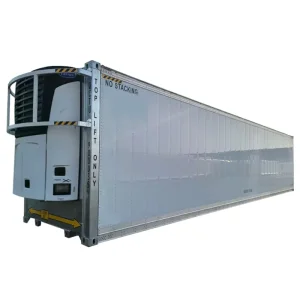
Direct Factory Shipments
High-Spec Reefer & Offshore Enclosures for Southern California
Engineered to withstand rigorous deep-sea dynamics, dockside handling, and stringent North American environmental mandates.
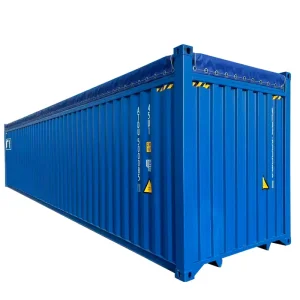
Heavy-Duty 40ft High-Cube Soft Open Top Container with Weatherproof Tarpaulin Cover
View 40ft High-Cube Open Top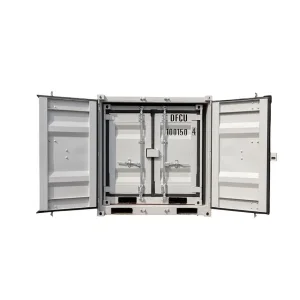
High-Integrity Modular Mini & Nested Shipping Containers (4ft to 12ft Sizes)
Review Nested Container Range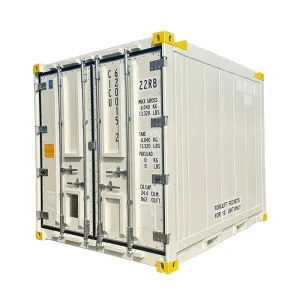
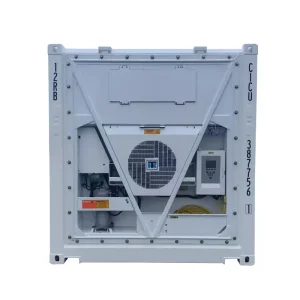
High-Quality New 10ft Certified Thermo King Deep-Freeze Intermodal Enclosure
Access Thermo King Enclosure
Industry White Paper
The Trans-Pacific Cold-Chain Corridors: Redefining Reefer Resilience
The Southern California logistics complex—dominated by the Port of Los Angeles (POLA) and the Port of Long Beach (POLB)—processes over 35% of all containerized maritime imports into the United States. Within this hyper-dense intermodal gateway, temperature-controlled cargo faces unprecedented operational pressure. Offshore energy projects, subsea operations off the Santa Barbara Channel, aquaculture logistics, and pharmaceutical transit from Asia directly into West Coast distribution hubs demand cold-chain containment that surpasses basic ISO standard bounds.
Offshore refrigerated containers (Offshore Reefers) built under Chinese manufacturing prowess solve this challenge by integrating DNV 2.7-1 / BS EN 12079 dynamic crash frames with hermetic thermal barrier technology. Unlike terrestrial reefers, these specialized units must endure massive side-impact vectors, extreme g-forces during offshore crane dynamic lifting, salt-mist vapor saturation, and prolonged dwell times under inland Southern California temperature spikes.
Operational Benchmark: Our container frames utilize high-yield normalized Corten steel (SPA-H) with Charpy V-Notch impact testing down to -20°C, ensuring compliance for harsh offshore deployments and extreme intermodal handling across LA's multi-tier distribution logistics.
-35°C
Deep Freeze Capability
DNV
2.7-1 / EN 12079 Standard
100%
Port-of-LA Traceability
0.28
Low K-Factor Insulation
Southern California Harbor Logistics Alignment
All units are engineered with low-GWP refrigerants (R-452A, R-513A, and CO2 natural refrigerant circuits) directly satisfying California Air Resources Board (CARB) emission mandates and Clean Air Action Plan (CAAP) frameworks active across San Pedro Bay terminals.
Engineering Architecture
Macro-Industry Evolution: Smart Reefers & Modular Resilience
The global shipping and offshore containment sector is witnessing an aggressive pivot toward telemetric autonomy, energy efficiency, and structural life-cycle maximization.
DNV Dynamic Impact Metallurgy
Offshore reefers intended for supply vessels running to Pacific offshore platforms are equipped with integrated pad-eyes, heavy-duty 4-leg wire rope lifting slings, and internal reinforcement ribs capable of absorbing dynamic wave-slamming loads.
Thermally Decoupled Insulation
Utilizing high-pressure injected microcellular cyclopentane polyurethane insulation (100mm wall, 120mm roof), eliminating thermal bridging and significantly cutting refrigeration cycle run-time under ambient California desert and harbor heat.
CARB & EPA Low-GWP Unit Integrations
Factory-integrated with Carrier Transicold PrimeLINE, Thermo King Magnum PLUS, or Daikin LXE machinery configurations compliant with Title 13 California Code of Regulations for stationary and intermodal transport units.
Need Tailored DNV-Certified Reefer Specs for Los Angeles Deployment?
Our direct Chinese factories design, certify, and deliver specialized containers tailored to your custom payload, lift dynamics, and local dock requirements.
Send Inquiry Now
Operational Scenarios
Precision Applications Serving the Greater Los Angeles Basin
How specialized reefer and cargo equipment fulfills critical supply-chain functions across local offshore, harbor, and inland infrastructure.
Pacific Deep-Water Supply Runs
Serving offshore platform hubs in the Santa Barbara Channel and San Pedro Bay with fresh provisions, volatile chemical samples, and temperature-sensitive core samples requiring uninterrupted -25°C to +4°C holding stability.
Inland Empire Cold Hub Redistribution
Acting as buffer cold stores across logistics yards in Ontario, Fontana, and San Bernardino, mitigating severe cold-storage warehouse vacancy crunches with rapid plug-and-play ISO multi-temperature storage capacity.
Biomedical & Perishables Gateway
Supporting rapid-turnaround pharmaceutical air-sea corridors bridging LAX cargo facilities and POLA docks with strict, real-time NIST-traceable remote monitoring and secondary redundant refrigeration circuits.
Technical Roadmap
Quality Assurance Architecture: From China Foundries to San Pedro Bay
Procurement teams operating in California require rock-solid manufacturing provenance. Every stage of container production follows rigorous Bureau Veritas (BV) and ISO 9001 certified protocols, starting with steel grade chemical composition analysis through to automated MIG welding and high-pressure zinc-rich epoxy paint application.
Prior to dispatch, reefer units undergo a continuous 48-hour PTI (Pre-Trip Inspection) cycle under varying thermal loads. Structural frames are submitted to dynamic drop tests, racking tests, and slingshot load certifications exceeding 2.5 times the maximum gross design weight.
Core Verification Milestones:
- Metallurgy: SPA-H Weathering Steel with anti-corrosive primer and 3-coat marine polyurethane system (250μm dry film thickness).
- Certifications: DNV 2.7-1, EN 12079, ISO 1496-2, CSC, and TIR customs seals.
- Thermal Performance: K-Value verified below 0.28 W/m²K; air leakage rate below 3.0 m³/h at 250 Pa differential.
- Electrical Safety: Dual voltage systems (380-460V 3Ph 50/60Hz) with UL/CSA listed waterproof components ready for California shore-power configurations.
Procurement Guidance
Frequently Asked Questions: Offshore Reefer Procurement
Essential considerations for West Coast freight forwarders, fleet managers, and industrial equipment buyers.
What makes an Offshore Reefer different from a standard ISO Reefer container?
Standard ISO reefer containers are intended for conventional cellular container vessels and dockside crane gantries. Offshore reefers are built under DNV 2.7-1 and EN 12079 design codes to survive dynamic offshore transfers from supply vessels to drill rigs. They feature heavy primary structural framing, normalized steel corners, integral pad-eyes, certified 4-leg wire rope lifting slings, and enhanced structural rigidity to endure harsh wave-action side impacts.
Are your reefer units compliant with California CARB and clean port regulations?
Yes. We provide modern refrigeration units (Thermo King, Carrier Transicold, and Daikin) utilizing EPA-approved, low-Global Warming Potential (GWP) refrigerants including R-452A and R-513A. Electric-drive scroll and reciprocating compressors match all shore-power standards at the Port of Los Angeles and Port of Long Beach without triggering auxiliary diesel particulate filter issues.
What is the average transit lead time from your factory to the Port of Los Angeles?
Our primary manufacturing plants in Tianjin and Jiangsu are located within 100 km of deep-water seaports. Regular direct vessel rotations from Chinese base ports to the Port of Los Angeles typically run 14 to 18 ocean transit days. Standard custom fabrication lead time is 4 to 6 weeks depending on volume and sling/machinery customization.
Can containers be customized with specialized access and partition features?
Absolutely. We provide complete OEM/ODM engineering covering multi-compartment dual-temperature zones, meat-rail hanging structures, roll-up shutter access, full side-opening doors for forklift access, and integrated explosion-proof interior lighting tailored for hazardous industrial offshore environments.
Comprehensive Catalog
Engineered Intermodal & Offshore Logistics Portfolio
Explore our complete manufacturing spectrum serving the Pacific basin, West Coast infrastructure, and offshore marine operations.
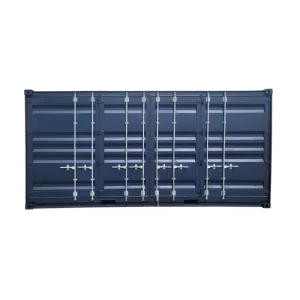
High-Quality 20ft Customized Side-Door Dry Cargo Shipping Container
View Side-Door Container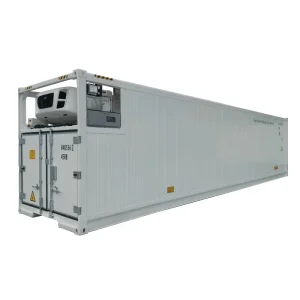
40ft High-Cube & 45ft Intermodal Heavy-Haul Railway Refrigerated Unit
Access Railway Reefer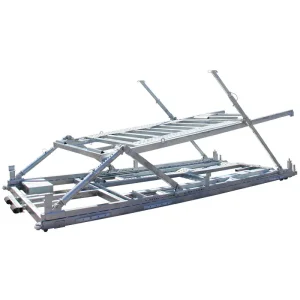
Heavy-Payload Automotive Transport Rack for West Coast Vehicle Shippers
Explore Transport Racks
Heavy-Duty Half-Height Bulk Ore & Mineral Carrier Offshore Container
View Half-Height Carrier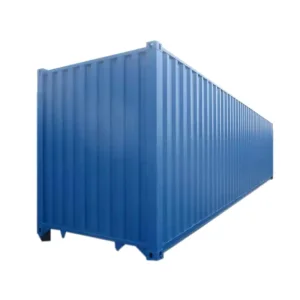
Certified 40ft High-Cube Dry Cargo Shipping Container for Harbor Freight
Check 40ft Dry Specs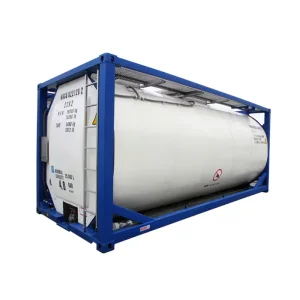
ISO Standard 20ft Chemical Liquid Tank Container for Marine & Rail
Review ISO Tank Specs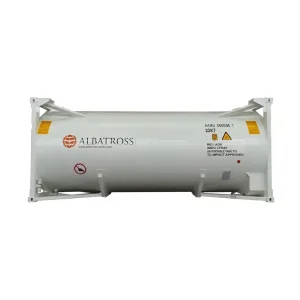
High-Capacity 25,000 Liters ISO 20ft Compressed Gas Tank Container
Access Gas Tank Data