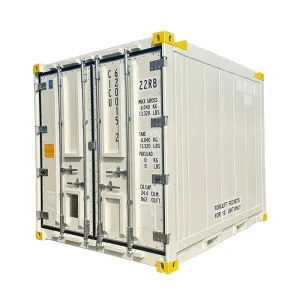
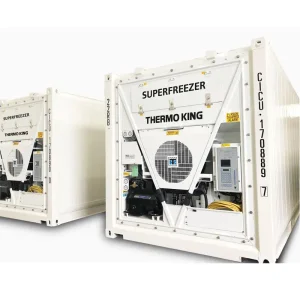
Famous Reefer Container Manufacturers & Quotes serving Istanbul
Strategic Procurement, Thermodynamic Architectural Integrity, and Factory 4.0 Supply Frameworks for the Marmara Maritime Gateway, Connecting Black Sea Transit with Euro-Mediterranean Cold Corridors.
Priority Deployment Models
High-Performance Intermodal & Reefer Solutions for Istanbul Hubs
Engineered for extreme thermodynamic stability across the Bosphorus strait, Kumport, Marport, and inland Anatolian rail-freight corridors.
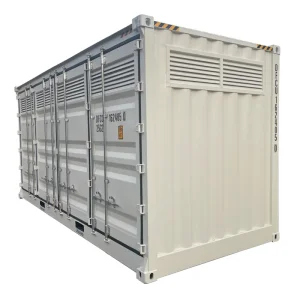
HazMat / ADR Certified
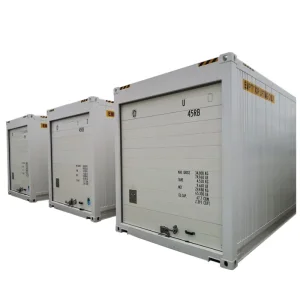
Famous 20FT High-Cube Dangerous Goods Container (Side-Door / Ventilated) for Istanbul Chemical Terminals
The Geostrategic Cold Chain Reality of Istanbul: Gateway Across Three Continents
Istanbul occupies a unique, hyper-critical position in international cold chain economics. Operating at the boundary of Southeastern Europe, the Black Sea basin, and the Middle East, the metropolitan trade zone handled via the Ambarlı Port Complex (including Marport, Kumport, and Mardaş) and the deep-water transshipment hub at Asyaport (Tekirdağ) processes over 65% of Turkey’s containerized perishable goods. The thermal logistics ecosystem of the Marmara region must accommodate intricate multimodal transits: short-sea feeder lines traversing the Bosphorus Strait, Trans-European Transport Network (TEN-T) highway crossings via the Fatih Sultan Mehmet and Yavuz Sultan Selim bridges, and the high-density railway intermodal links extending toward Central and Western Europe.
Procurement directors and cold chain logistics managers operating within Istanbul encounter distinct environmental and logistical bottlenecks. Ambient temperatures across the Anatolian plateau swing violently from blistering summer peaks exceeding +42°C along Mediterranean feeder corridors to sub-zero lows of -20°C during trans-Balkan winter rail journeys. Reefer containers deployed in this territory cannot rely on light-duty commercial specifications; they require military-grade thermal boundary preservation, heavy corrosion resistance against saline marine mists in the Sea of Marmara, and advanced low-GWP refrigeration machinery engineered for continuous variable-frequency power efficiency.
Ambarlı & Kumport Logistics Nucleus
Direct terminal interfacing for 20ft and 40ft High Cube refrigerated container offloading, fast-track customs clearance, and refrigerated depot buffering adjacent to the E-5 and TEM arterial motorways.
Balkan & EU Transit via TIR Corridors
Strict compliance with the ATP Treaty (Class FRC/FNA) for road transport into Bulgaria, Greece, and Romania, preventing temperature deviations on high-value pharmaceutical and agricultural hauls.
Black Sea Short-Sea Feeder Resilience
Handling rugged open-sea pitching, extreme salt atmospheric exposure, and voltage instability aboard auxiliary vessel power grids operating to Georgia, Ukraine, and Novorossiysk.
A superior reefer container is fundamentally a high-precision, transportable thermodynamic balance chamber. Our manufacturing matrix implements an outer framework forged from heavy-gauge Corten SPA-H weathering steel, treated through an automated 7-stage phosphating and zinc-rich epoxy multi-coat primer process engineered to exceed a 1,500-hour salt spray ASTM B117 degradation resistance threshold. The internal walls are clad with continuous-seam food-grade SUS304 or MG3 grade stainless steel sheets, mechanically bonded with zero exposed rivets to prevent biological contaminant entrapment and allow aggressive high-pressure steam sanitation cycles.
Thermal isolation relies on a computer-metered high-pressure injection of high-density Cyclopentane-blown polyurethane (PU) foam, yielding a closed-cell structural envelope boasting a thermal conductivity K-factor of ≤ 0.020 W/(m·K). Integrated thermal break barriers decouple internal liner skins from exterior chassis members, successfully eliminating condensation tracks, moisture infiltration, and cold-sink thermal bridging during the transition through ambient humidity variations across the Bosporus shipping corridor.
Engineering Attribute
Standard Export Specification
CIMC / Factory 4.0 Heavy Duty Grade
Strategic Benefit for Istanbul Procurement
External Shell Structure
Commercial Grade Carbon Steel (SS400)
Heavy Cor-Ten (SPA-H) Anti-Corrosion Alloy
Extreme salt mist & marine corrosion resistance in Ambarlı
Insulation Core Barrier
Standard R-13 Polyurethane Slab
Cyclopentane-Blown Rigid Foam (K-factor ≤0.020)
Zero degradation thermal envelope; lowers power draw by 18%
Interior Wall Lining
Food Grade Aluminum or SS430
Continuous Seamless SUS304 / MG3 Stainless
GDP pharmaceutical & HACCP perishable sanitation compliant
Immediate local OEM service parts availability in Istanbul
Atmospheric Control
Passive Vent Portals Only
Full Dynamic Controlled Atmosphere (CA / MA)
Extends shelf life for Aegean and Mediterranean citrus/figs
Systemic Industry Architectures
Tailored Industrial Applications Across the Marmara Economic Belt
Fresh Agricultural & Citrus Cold Corridors
From Bursa’s fruit orchards and Antalya’s greenhouse belts to Istanbul wholesale hubs: utilizing Controlled Atmosphere (CA) to dynamically balance O2 (2-5%) and CO2 (3-6%) respiration ratios, delaying chlorophyll degradation and fruit senescence for export to European supermarkets.
Gebze & Çerkezköy Biopharma / GDP Cold Chain
Ultra-critical thermal precision (±0.25°C) across -20°C to -70°C for active pharmaceutical ingredients (APIs), biologic serums, and clinical vaccines. Redundant temperature logging, multi-sensor PT100 monitoring, and automated cloud reporting compliant with EU GDP directives.
Black Sea & Aegean Seafood Blast Freezing
Rapid core freezing at -35°C to -60°C for sea bass, sea bream, and Black Sea anchovy consignments. Super-low temperature systems eliminate cellular wall fracture and drip-loss, maintaining export-grade tissue turgor for high-end European culinary markets.
Technological Roadmap: The Transition to Net-Zero & Autonomous Telematics
The global shipping equipment landscape is undergoing an aggressive technical disruption driven by international decarbonization treaties and EU F-Gas regulations. As a major logistics feeder to Europe, Turkish operators must prepare for stringent environmental standards. Our research and design centers are spearheading this evolution with clear, industrialized technology roadmaps:
Eco-Optimized Refrigerants (Low-GWP & Natural CO2 Cycles): Replacing legacy R-134a systems with next-generation R-513A (GWP 631) and advanced natural CO2 (R-744, GWP 1) refrigeration units. This completely insulates Turkish fleet owners from future EU F-Gas import taxes and refrigerant quota penalties.
Autonomous IoT & Satellite Telematics Integration: Every unit can be paired with integrated dual 4G/5G and Iridium satellite telematics modules. Fleet managers in Istanbul monitor internal core temperatures, ambient humidity, supply/return air metrics, compressor amperage, and GPS breadcrumbs in real-time, receiving automated alerts for anomalous variations.
Intelligent Automated Pre-Trip Inspection (e-PTI): Software algorithms execute dynamic thermodynamic self-diagnostics within 120 minutes prior to gate-out at Turkish terminals, verifying cooling capacity, defrost cycle heaters, sensor calibrations, and vacuum integrity without requiring manual technician intervention.
DC Inverter Variable-Speed Compressors & Solar Integration: Implementing DC inverter scroll compressors that dynamically match motor RPM to actual thermal load. Combined with auxiliary roof-mounted monocrystalline solar panels, this reduces auxiliary generator (genset) diesel consumption by up to 34% on overland truck hauls between Istanbul, Ankara, and Izmir.
Optimize Your Istanbul Fleet Logistics Today
Consult with our engineering directors to calculate your exact payload requirements, thermodynamic insulation values, and get delivered CIF Ambarlı/Kumport factory direct pricelists.
China Factory 4.0: Supply Chain Resilience, Scalability, and Total Cost Advantage
The manufacturing infrastructure behind our production hubs in Tianjin and Suzhou represents decades of targeted heavy-industrial optimization. Equipped with fully automated structural frame welding lines, automated robotic gantry positioning, and automated high-pressure polyurethane foaming presses, our production facilities eliminate the manual variability that frequently compromises custom small-batch fabrications. Operating directly adjacent to primary deep-water container ports in China allows immediate loading onto premier global carrier lines (COSCO, MSC, Maersk, CMA CGM) offering direct 24–32 day transit times to Istanbul’s maritime terminals.
Crucially for Turkish logistics enterprises, direct procurement from our Factory 4.0 infrastructure enables our highly advantageous "One-Trip" (First-Trip) Export Delivery Model. By coordinating certified benign general dry freight loading inside newly fabricated dry and reefer containers destined for Turkish logistics hubs, container repositioning costs and ocean freight overhead are largely absorbed. This strategic logistics integration translates directly into a 22% to 38% total capital expenditure reduction compared to European domestic container builders, without compromising material grade, structural steel thickness, or international classification authority certification.
Full Compliance, Quality Assurance & Local Turkish Support
All refrigerated and specialized intermodal containers intended for deployment in Turkey comply strictly with international maritime treaties and Turkish administrative codes:
International Certification Societies: Comprehensive third-party inspection, witness testing, and design appraisal certificates issued by Bureau Veritas (BV), Lloyd’s Register (LR), or DNV.
CSC Safety Convention Plate: Every unit is affixed with a stainless steel International Convention for Safe Containers (CSC) data plate, certifying maximum gross weight, stacking capability (up to 216,000 kg for 9-high ocean vessel deck stacking), and racking resistance.
ATP Treaty Certification: Compliant with the Agreement on the International Carriage of Perishable Foodstuffs (ATP) under class FRC (Heavy Insulated Refrigerated Container) and FNA, ensuring legal transit authorization through Turkish Customs (T.C. Ticaret Bakanlığı Gümrükler Genel Müdürlüğü) and European road authorities.
TSE Harmonization & On-Site Support: Full structural alignment with Turkish Standards Institution (TSE) guidelines, backed by on-site depot warranty networks, complete spare parts catalogs, and refrigeration engineering technical support throughout the Marmara industrial zone.
Complete Commercial Portfolio
Extended Industrial Container Range Serving Istanbul & Global Trade
Custom OEM/ODM engineering, multi-temperature storage systems, dangerous goods enclosures, and heavy offshore equipment.
General Cargo Class
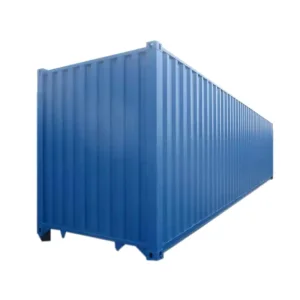
40ft High-Cube Heavy-Duty Dry Cargo Intermodal Container for Ambarlı General Freight
Frequently Asked Questions: Reefer Sourcing for Istanbul Terminals
Expert technical insights addressing customs, compliance, power systems, and delivery logistics into the Republic of Turkey.
What are the typical sea-transit times and port-of-entry procedures for Istanbul?
Direct maritime shipments dispatched from our manufacturing berths in Tianjin or Shanghai to Istanbul’s primary commercial ports—specifically Kumport, Marport, or Mardaş in the Ambarlı Port Complex, or Asyaport in Tekirdağ—typically achieve transit times of 24 to 32 days depending on feeder transshipment routing. We issue comprehensive export documentation including the Bill of Lading (B/L), Original Commercial Invoice, Detailed Packing List, Certificate of Origin, and international Classification Society Test Certificates (Bureau Veritas or DNV). Turkish customs clearance is conducted under the supervision of your registered customs broker (Gümrük Müşaviri) via the T.C. Ticaret Bakanlığı BİLGE electronic declaration system.
How are reefer electrical parameters configured for Turkish and European grid standards?
Our standard export reefer containers are outfitted with universal international marine-spec 380V/440V 3-Phase dual-frequency (50Hz / 60Hz) electrical systems equipped with a standard 4-pin 32A CEE-form maritime power plug. This configuration interfaces directly with shore power receptacles at Turkish container terminals, auxiliary vessel generator networks, and depot intermodal plug racks. For rural packing stations or cold storage applications across Anatolia where only 220V single-phase or fluctuating municipal power is accessible, we engineer dual-voltage transformers and secondary DC inverter power supply packages.
What proof of certification is provided to verify the container’s thermal and structural performance?
Every newly manufactured reefer container undergoes an exhaustive factory quality control audit. We provide: (1) A formal Bureau Veritas (BV) or Lloyd’s Register (LR) Type Approval and Individual Unit Certification; (2) A physical stainless steel CSC Safety Approval Plate verifying gross stacking capacity (exceeding standard 9-high fully laden ocean vessel requirements); (3) An electronic Pre-Trip Inspection (PTI) diagnostic report verifying zero refrigerant leaks, correct compressor vacuum pressure, and calibrated supply/return airflow sensors; and (4) ATP Treaty Certification (Class FRC) guaranteeing compliance for cross-border perishable haulage under European international transport treaties.
What is the 'One-Trip' delivery model and how does it save logistics costs for Istanbul buyers?
Under our proprietary One-Trip (First-Trip) Delivery Framework, newly manufactured containers destined for Istanbul buyers are paired with verified commercial shippers transporting clean, non-hazardous, palletized dry cargo from Chinese ports directly to Ambarlı or Haydarpaşa. The freight revenue generated by this maiden voyage covers or substantially offsets ocean shipping costs. Upon container destuffing at the Istanbul terminal, the container is surveyed, cleaned, and transferred to your account in virtually mint condition—saving procurement teams between $1,200 and $2,800 per unit in repositioning expenses.
Can containers be custom-engineered for extreme temperatures (e.g., Eastern Anatolian winter or Aegean summer)?
Yes. We regularly supply tailored OEM/ODM units equipped with heavy arctic heating packages or high-ambient tropical cooling condensors. Arctic modifications integrate supplemental electric silicone resistance heaters around drain pans and door perimeters, paired with high-torque, low-temperature synthetic lubricant oils in compressor sumps, ensuring flawless continuous operation down to -40°C. For intense Mediterranean or Aegean ambient zones reaching +50°C, high-efficiency condenser fans, oversized subcoolers, and continuous airflow T-bar flooring are installed to prevent thermal drift.
How does your company manage spare parts, maintenance, and warranty support inside Turkey?
Our reefer containers utilize tier-one global refrigeration machinery platforms—principally Carrier Transicold (PrimeLINE), Thermo King (Magnum Plus), and Daikin (LXE / Zephyr series). As a result, warranty repairs, routine servicing, and certified spare parts (compressors, controllers, thermistors, evaporator fans) are available locally through authorized OEM service centers and certified container maintenance depots operating within the Ambarlı, Tuzla, and Izmir logistics belts. We back structural Corten frames with a comprehensive 5-year factory structural warranty and maintain a direct engineering support channel for all custom equipment orders.
Ready to Finalize Your Equipment Procurement Plan?
Submit your container fleet requirements today to receive a fully itemized technical proposal, CAD drawing confirmation, and delivered CIF Istanbul pricing.

 HazMat / ADR Certified