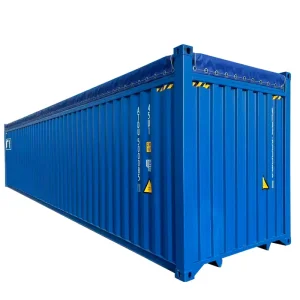
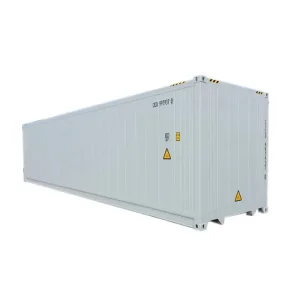
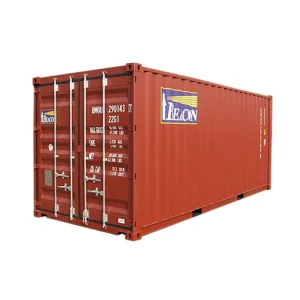
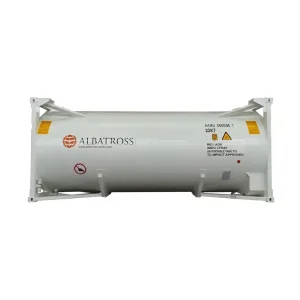
DNV Offshore Reefer
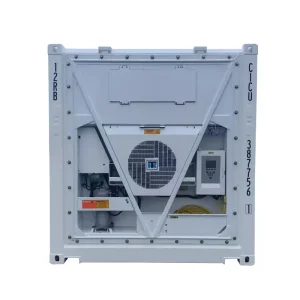
Paris Project DNV Certified 20ft Offshore Refrigerated Container
View Specifications
Selected certified units engineered for rapid deployment across Northern European ports, Seine-corridor barge transport, and extreme offshore marine installations.
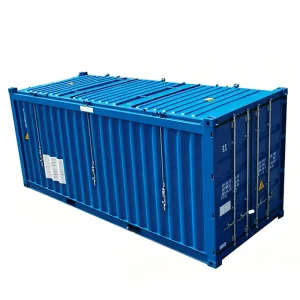
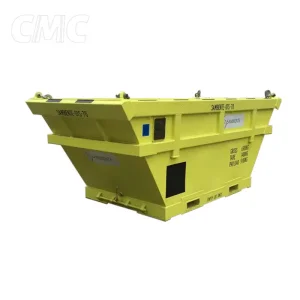
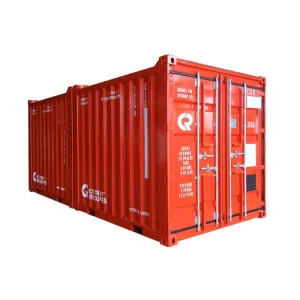
Analyzing the pivotal role of the Île-de-France economic powerhouse in managing global maritime extraction projects and localized multimodal cold logistics.
While geographically inland, Paris serves as one of Europe's primary decision-making clusters for global offshore energy, maritime engineering, and specialized cold chain infrastructure. The Greater Paris region (Île-de-France) houses headquarters and international procurement offices for corporate titans including TotalEnergies, Technip Energies, Doris Group, and Bourbon Offshore, driving multi-million-euro equipment acquisitions destined for North Sea platforms, West African deepwater oil fields, and emerging Mediterranean floating offshore wind arrays.
The industrial relationship between Paris and the offshore container supply sector is deeply tied to the HAROPA multimodal port alliance (Le Havre, Rouen, and Paris). Through the Seine waterway network, heavy industrial cargo, hazardous chemicals, and specialized reefers move seamlessly between industrial consolidation ports such as Gennevilliers and Bonneuil-sur-Marne directly to the deepwater container terminals of Le Havre. This logistical artery eliminates highway bottlenecks, curbs carbon emissions, and ensures strict adherence to French and European green transportation directives.
Simultaneously, the Paris region represents the largest perishables consumption and biopharmaceutical hub in continental Europe. The Rungis International Market (Marché International de Rungis)—the world's largest wholesale fresh food hub—demands uncompromising temperature-controlled logistics, while the healthcare clusters across Evry (Genopole) and the southern Paris biotech valley require ultra-low temperature, highly resilient cold containment. When offshore platforms, research vessels, and remote maritime installations order provisioning and biospecimen supply lines out of Paris, standard ISO refrigerated containers fall short of safety compliance. The extreme dynamic impacts of high-sea crane hoists dictate containers compliant with DNV 2.7-1 / EN 12079 / ISO 10855, engineered specifically to withstand saltwater deluges, cyclic fatigue, and explosive Zone 1/2 atmospheres.
Direct supply contracts engineered to satisfy the rigorous technical design specs of engineering procurement hubs seated in Paris's prime financial and industrial core.
Custom container tare weights and reinforced twist locks optimized for stacked inland barge transshipment linking Gennevilliers to deepsea berths in Normandy.
Integrated Carrier, Thermo King, and Daikin cooling architectures operating within +/- 0.25°C precision margins for high-value offshore food and pharmaceutical batches.
Why offshore operations cannot rely on conventional ISO containers: an exhaustive metallurgical and thermodynamic comparison.
The fundamental divide between conventional ISO shipping containers and offshore refrigerated units centers around dynamic load resilience and survival at sea. Standard ISO 1496 containers are strictly engineered for static stack loading aboard cellular containerships or gentle crane lifts using automated spreader beams. Conversely, offshore containers operating in the North Sea, Gulf of Guinea, or Celtic Sea must endure violent hoist accelerations from floating supply vessels (PSVs) rolling heavily in Sea State 6 conditions.
Under these hostile conditions, snagging, pendulum swinging, and shock impacts create multi-axis structural loads that would warp or catastrophically rupture standard Corten box framing. Therefore, offshore reefers built for Paris engineering standards are designed and third-party certified to DNV 2.7-1 (Standard for Certification No. 2.7-1 Offshore Containers) and EN 12079. Every structural member utilizes certified high-tensile micro-alloyed structural steel (e.g., S355J2 or S355ML) tested for Charpy V-Notch impact resistance down to -20°C or -40°C to eliminate brittle fractures in freezing sub-arctic winds.
| Engineering Parameter | Standard ISO Refrigerated Box | DNV 2.7-1 / ISO 10855 Offshore Reefer |
|---|---|---|
| Primary Structural Steel | Standard SPA-H / Corten-A Cold Rolled | Structural High-Tensile S355 with Charpy V-Notch (-20°C / -40°C) |
| Lifting Configuration | Corner Castings (Automated Spreader Beam Only) | Integrated Pad Eyes Welded Directly to Primary Structure + DNV Slings |
| Dynamic Impact Testing | Not Required (ISO 1496 Static Proof Only) | 2.5g Dynamic Drop Test & 30° Tilt Proof Test Under Maximum Payload |
| Corrosion Barrier Coating | Standard Marine Polyurethane (120-180µm) | ISO 12944 C5-M Extreme Offshore Zinc-Rich Epoxy System (≥280µm) |
| Electrical Protection | Standard Commercial Safe-Area Industrial | ATEX Zone 1 / Zone 2 Certified (Ex-d / Ex-e Explosion Proofing) |
| Refrigeration Redundancy | Single Circuit / Single Compressor | Dual Independent Refrigeration Powerpacks (100% Thermal Back-up) |
Furthermore, maritime safety regulations in offshore energy extraction require units operating near drilling rigs or processing facilities to possess comprehensive ATEX / IECEx Zone 1 or Zone 2 certification. Our bespoke offshore reefers incorporate spark-free copper condenser fans, hermetically sealed explosion-proof control boxes, and intrinsically safe sensor relays. This guarantees that even in the unlikely event of an offshore hydrocarbon gas release, our refrigeration units will not spark a catastrophe.
Emerging innovations reshaping performance parameters for international container manufacturing and local European operations.
Aligning with aggressive European Union F-Gas regulations by phasing out R134a and R404A in favor of ultra-low Global Warming Potential (GWP) blends like R452A, R513A, and transcritical CO2 (R744) systems.
Real-time continuous data streaming providing Paris supply chain teams full visibility of internal temperatures, compressor amps, door openings, and GPS coordinates across high-seas transit corridors.
Advanced polyurethane insulation blown with ultra-low thermal conductivity agents coupled with aerogel and VIP layers, lowering operational power draw by 34% while maintaining thermal stability during blackouts.
Streamlining the container procurement lifecycle from automated manufacturing docks in China straight to Parisian logistical platforms.
Procuring specialized offshore and customized intermodal containers has historically involved complex, multi-tiered markups from European regional brokers, adding 20% to 35% in speculative capital costs without structural quality gains. CIMIC provides a streamlined factory-direct engineering and production pipeline based out of our massive manufacturing facilities in Tianjin and Suzhou, situated just 100 km from major seaports.
By establishing a direct communication link between our design drafting team and French engineering directors in Paris, we offer genuine turnkey agility. Whether configuring non-standard height dimensions, roll-up shutter modifications, high-payload floor stringer reinforcements, or integrated explosion-proof diesel gensets, our engineering drawings are formally stamped and pre-approved by leading international classification bodies including Bureau Veritas (BV), DNV, and Lloyd's Register prior to raw plate laser cutting.
Logistical clearance into the Paris basin is managed under unified shipping manifests. Containers are dispatched directly via scheduled container liner vessels to HAROPA Port Le Havre, where they are loaded onto dedicated inland river barges running up the Seine or transferred onto rail freight shuttles for rapid delivery to Gennevilliers or direct customer yards in the Île-de-France region, fully certified, duty-cleared, and operational on arrival.
Addressing the specific regulatory, logistical, and technical inquiries raised by European fleet managers and French EPC contractors.
Explore our complete manufacturing series: precision liquid tank units, high-cube insulated boxes, heavy dry freight models, and dedicated marine diesel generator modules.