
Specialized NZ Intermodal & Cold Chain Solutions
Precision-engineered units configured for KiwiRail clearance envelopes and high-payload highway configurations.

Procuring Heavy-Duty Intermodal Fleet for New Zealand Routes?
Get direct OEM engineering consulting, custom Corten-A specifications, and BV/DNV class certificates for KiwiRail compliance.
New Zealand Freight Dynamics: Multi-Modal Topography & Challenges
Navigating the rugged North & South Island transport corridors requires equipment engineered for extreme tare-to-payload ratios and maritime microclimates.
HPMV & 50MAX Vehicle Regulations
Under New Zealand Transport Agency (Waka Kotahi) HPMV (High Productivity Motor Vehicles) rules, maximizing payload without exceeding road axle limits demands ultra-high-tensile Corten steel frames with low tare weights, maximizing gross cargo capacity across the state highway network.
KiwiRail Gauge & Tunnel Tolerances
New Zealand's 1,067mm (3ft 6in) narrow gauge railway network features restricted tunnel profiles and tight curving radii throughout the Rimutaka and Kaimai ranges. Intermodal containers require reinforced twistlock pockets and corner casting alignments to endure sustained dynamic vibration.
Sub-Antarctic Marine Salinity & UV
Trans-Cook Strait inter-island ferry services expose road and rail boxes to acute saline atmospheric corrosion and intense southern hemisphere UV radiation. Multi-stage zinc-rich primer treatments and specialized C5-M marine-grade epoxy topcoats are essential for fleet longevity.
Chinese Factory Supply Chain Resilience vs Global Volatility
How vertically integrated manufacturing hubs in Tianjin and Suzhou ensure seamless scalability, precision quality, and rapid delivery cycles for Oceanic buyers.
Integrated Upstream Metallurgy & Automation
Our manufacturing cluster features uninterrupted access to high-grade SPA-H atmospheric corrosion-resistant Corten steel coils, automated multi-axis robot seam welding, and robotic electrostatic powder coating facilities. This vertical consolidation eliminates intermediate markups and guarantees structural fatigue resistance that exceeds ISO 1496/1 standards.
Certified Direct Port Dispatches (Tianjin & Suzhou)
Situated within 100 km of leading international container terminals, our facilities offer rapid roll-on/roll-off and cellular vessel loadings bound directly for Port of Tauranga, Ports of Auckland, and Lyttelton Port. Complete BV, ABS, and DNV witness inspections ensure immediate port gate entry without customs re-verification.
Technical Comparison: Standard vs Specialized NZ Intermodal Units
Benchmarking structural tolerances, insulation values, and weight profiles designed for the New Zealand intermodal ecosystem.
| Container Model Class | Structural Metallurgy | Tare Weight (kg) | Max Gross Mass (kg) | Thermal/Mechanical Specialization | Target NZ Freight Sector |
|---|---|---|---|---|---|
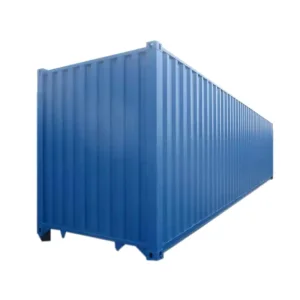
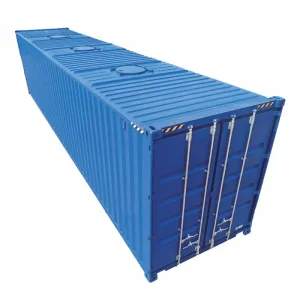
| 20ft Bulk Intermodal | SPA-H Corten Steel (3.0mm) | 2,320 kg | 32,500 kg | Reinforced top discharge hatches & front gravity flap | South Island Grains, Aggregates, Dairy Pellets |
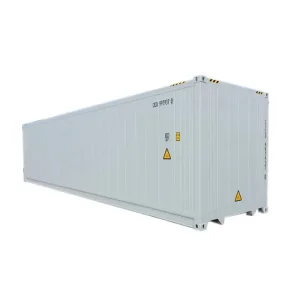
| 40ft High Cube Dry ISO | SPA-H High Yield Profile | 3,850 kg | 32,500 kg | 28mm apitong hardwood floor, hot-dip galv lock hardware | General Mixed Cargo, North Island Rail Logistics |
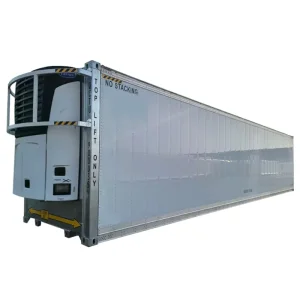
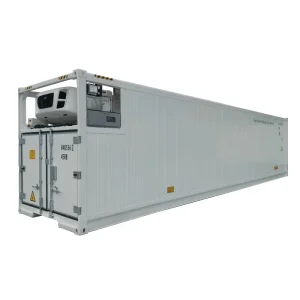
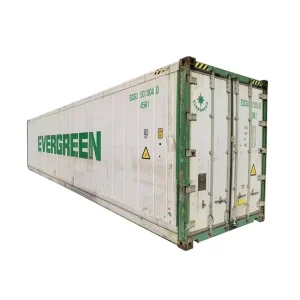
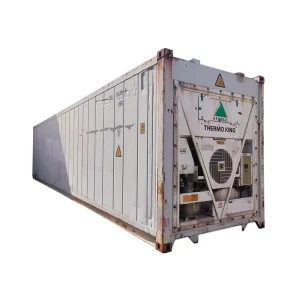
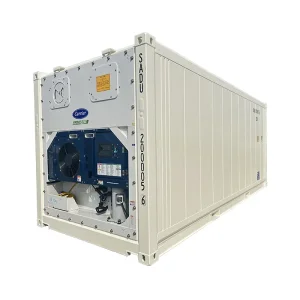
| 40ft High Cube Reefer | Stainless 304 Outer / Food Liner | 4,420 kg | 34,000 kg | Polyurethane 75-80mm (K-value: 0.38 W/m²K), Daikin/Carrier | Waikato/Canterbury Dairy, Hawke's Bay Horticultural Produce |
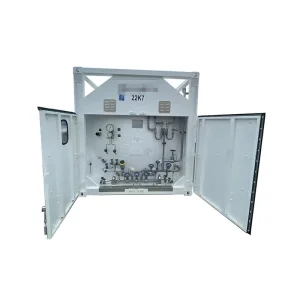
| T75 Cryogenic ISO Tank | Outer 304 / Inner 16MnDR | 8,600 kg | 36,000 kg | Multi-layer vacuum insulation + liquid nitrogen cooling circuit | Industrial Gas Transport, Methanol, Energy Infrastructure |
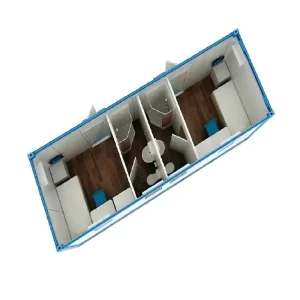
Engineered Heavy-Haul, Cryogenic & Modular Inventory
Field-tested ISO-certified shipping containers, modular pods, and specialized tank platforms serving industrial operators across New Zealand.
Technology Roadmap: Intelligent & Low-Carbon Intermodal Fleets
Pioneering green telemetry, lightweight composite architectures, and dual-fuel electric generator integrations for sustainable logistics.
IoT Edge Telematics & Live Temp Logs
Next-generation intermodal reefers come equipped with satellite and 5G cellular dual-mode tracking modules. Fleet managers monitor real-time compressor RPMs, core pulp temperatures, atmospheric gas concentrations, and door tamper events along every mile of New Zealand's South Island Main Trunk Line.
Solar Hybrid Battery Buffer Systems
To support New Zealand's Zero Carbon Act 2050 targets, our factory delivers rooftop integrated thin-film photovoltaic arrays that power reefer ventilation fans and control electronics during rail shunting periods, significantly reducing diesel genset run hours.
Ultra-Light Composite Floor Structures
Replacing standard timber flooring with recyclable multi-layer fiber-reinforced polymers (FRP) strips 320 kg of dead weight off a 40ft container without sacrificing 7,260 kg forklift axle test capabilities, unlocking direct payload profit for bulk road freighters.
Frequently Asked Questions: NZ Container Procurement
Detailed clarity covering manufacturing standards, MPI biosecurity treatments, and transport certifications.
Do your containers comply with New Zealand Ministry for Primary Industries (MPI) biosecurity standards?
Yes. All timber flooring utilized in our factory-assembled containers undergoes rigorous Australian and New Zealand Treatment Standard (TPA) preservation treatments (such as Micronized Copper Azole or synthetic pyrethroid treatments) and is formally certified with recognized biosecurity stamps. Every shipping container order leaves our Tianjin factory accompanied by compliant timber treatment certificates to clear MPI borders at Tauranga, Napier, and Lyttelton without costly quarantine delays.
How do you ensure intermodal boxes fit KiwiRail gauge restrictions?
We work directly from certified New Zealand Rail structural clearance diagrams. While standard ISO containers fit flat wagons, our custom 45ft and high-cube rail boxes feature beveled top rail corners, custom-engineered twistlock corner castings, and specific bottom rail tapers that clear restricted tunnel roofs along the North Island Main Trunk (NIMT) line and central plateau spirals.
What corrosion protection is applied to protect against Cook Strait maritime conditions?
To resist coastal salt fog, sea spray during roll-on roll-off ferry crossings, and extreme geothermal sulphur exposures around the Rotorua-Taupo regions, we apply a multi-tier coating system: shot-blasting to Sa 2.5 standard, followed by a 30-micron zinc-rich primer, 40-micron epoxy intermediate coat, and an external 40-micron high-solids polyurethane topcoat, reaching ISO 12944 C5-M marine anti-corrosion classifications.
Can you configure containers specifically for New Zealand's HPMV 50MAX road transport rules?
Absolutely. We utilize ultra-high-strength thin-gauge DOMEX and SPA-H steels in non-critical wall corrugations alongside reinforced lightweight floor crossmembers. This design lowers container tare weight by up to 12% without sacrificing CSC stack test ratings (up to 216,000 kg), allowing transport operators utilizing 8-axle and 9-axle truck-and-trailer units to load more cargo per trip under 50MAX permits.
What is the ordering process and typical transit lead time to New Zealand ports?
Once CAD drawings, refrigeration unit types (Carrier, Daikin, or Thermo King), and certification requirements are approved, production takes approximately 18 to 28 days depending on order volume. Ocean freight transit from our Tianjin or Shanghai loading hubs to Ports of Auckland or Tauranga generally ranges between 14 to 20 days with major direct shipping carriers.