Direct OEM/ODM Precision Manufacturing

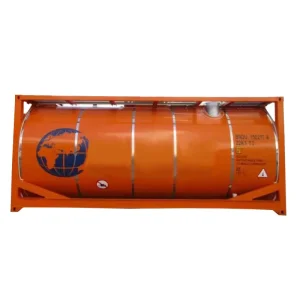
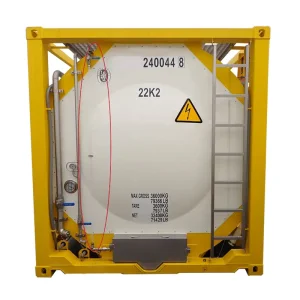
Tank Container Factory & Factories for the Korea Market

Engineering ISO bulk liquid containers, cryogenic vessels, and high-purity tank equipment tailored to South Korea's petrochemical complexes, semiconductor supply chains, and green energy corridors.

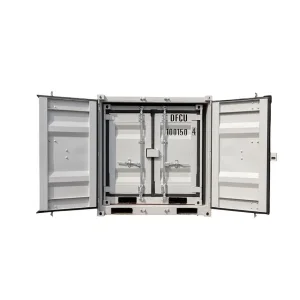
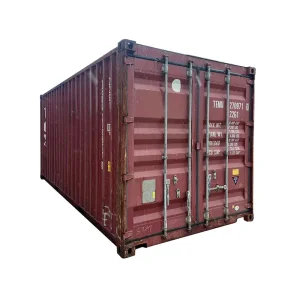
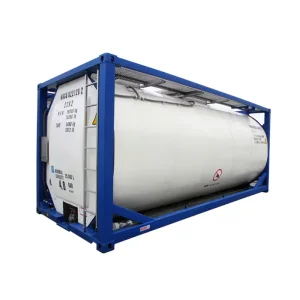
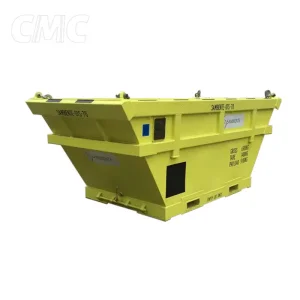
Priority Production Fleet

Standard & Hazardous Liquid Transit Containers for Korea

Engineered to KGS (Korea Gas Safety Corporation) standards, IMDG, ASME VIII, and ISO 1496/3. Optimized for intermodal delivery between Chinese manufacturing hubs and key South Korean ports including Busan, Ulsan, and Gwangyang.

Industry Whitepaper & Strategic Intelligence

South Korea's Industrial Demands & The Cross-Border ISO Tank Pipeline

A rigorous examination of supply chain resilience, safety certifications, and localized industrial operations fueling high-specification tank container requirements throughout South Korea.

36-48h
Transit Lead Time (Tianjin to Busan/Incheon)
99.8%
Weld Seam Radiographic Pass Rate
100%
KGS, ASME & IMDG Type Approval Compliance
316L+PTFE
Electronic-Grade Ultra-Pure Chemical Linings

Petrochemical & Refining Hubs (Ulsan & Yeosu)

The petrochem clusters in Ulsan, Yeosu, and Daesan represent one of the world's most concentrated chemical refining bases. Tank containers imported from our China factory operate on continuous multi-trip rotations handling hazardous monomers, aromatic hydrocarbons, specialty glycols, and polymers, demanding precision stainless steel builds (SUS316L) with calibrated thermal relief systems.

  • Steam heating & glycol thermal tracing integration
  • Heavy insulation with polyurethane and aluminum cladding
Semiconductor Mega-Clusters (Pyeongtaek & Yongin)

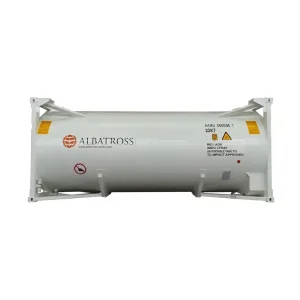
South Korea's massive investments in memory and logic chip fabrication create unmatched demand for ultra-high purity (UHP) chemical transit. Hydrofluoric acid (HF), ammonium hydroxide, hydrogen peroxide, and TMAH necessitate fluoropolymer-lined tanks (ECTFE, PTFE, PFA) manufactured in dust-controlled facilities to avoid micro-particle contamination down to parts-per-trillion levels.

  • Electro-polished internal surfaces to Ra ≤ 0.2 μm
  • Cleanroom-assembled top & bottom discharge valves

Energy Transition & LNG/Hydrogen Infrastructure

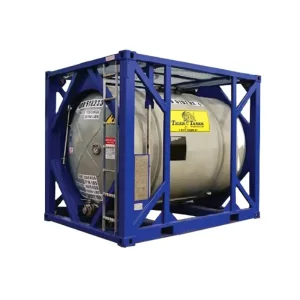
Korea's commitment to industrial decarbonization accelerates demand for T75 cryogenic containers for LNG, liquid nitrogen, argon, and high-density liquid CO2 for offshore carbon capture trials. Our factory produces vacuum-insulated multishield cryogenic tanks with high thermal retention properties, providing up to 90 days of holding time without venting.

  • Austenitic stainless internal vessel with structural outer jacket
  • Dual safety relief valves with 3-way diverter assembly
Comparative Manufacturing Advantage

Why South Korean Fleet Operators Choose Our Factory

Combining heavy automated manufacturing scale in Tianjin with strict international maritime oversight, ensuring competitive unit economics, immediate shipping line dispatch, and zero-defect compliance.

Automated Submerged Arc Welding (SAW)

Longitudinal and circumferential seams are joined using fully automated submerged arc welding systems under strict metallurgical monitoring. Every completed pressure vessel is submitted to 100% digital radiographic testing (RT) and hydrostatic testing at 1.5x design pressure, exceeding Korea Gas Safety (KGS) statutory criteria.

Tianjin Hub Proximity to Korea Corridors

Our primary fabrication bases in Tianjin and Suzhou are within 100 km of container terminals offering daily short-sea liner services to Busan, Incheon, Pyeongtaek, and Gwangyang. This geographical leverage cuts shipping lead times by weeks compared to European competitors and reduces repositioning overheads dramatically.

Dual International Certification Protocols

Every tank container leaves our facilities fully stamped and certified by accredited third-party classification societies (Bureau Veritas, DNV, Lloyd's Register) as well as ASME "U" stamp credentials. Units entering the Korean regulatory framework are delivered with complete documentation ready for immediate KGS validation.

Tank Class Standard Volume Vessel Material & Thickness Working / Test Pressure Target Korean Industries
T11 ISO Tank 21,000L – 26,000L S30408 / S31603 (4.4mm - 6.0mm) 4.0 Bar / 6.0 Bar General chemicals, paints, solvents, edible oils (Busan & Incheon logistics)
T14 / T20 Acid Tank 17,500L – 21,000L Carbon steel / 316L + PTFE/FEP Lining 4.0 Bar / 6.0 Bar Corrosive acids, battery manufacturing raw materials, semiconductor etchants
T50 Gas Tank 24,000L – 25,500L Fine-grain high tensile steel (Q420R/16MnDR) 15.0 – 27.5 Bar LPG, ammonia, propane, butadiene, chemical propellants (Yeosu / Daesan)
T75 Cryogenic 20,000L – 22,500L Inner: SS304 / Outer: Carbon Steel + High Vacuum 8.0 – 22.0 Bar Liquid Nitrogen, Oxygen, Argon, LNG bunkering, medical gases
Technical & Procurement FAQ

Frequently Asked Questions: Tank Containers for Korea

Essential regulatory, shipping, and engineering insights for fleet managers, chemical manufacturers, and procurement directors in South Korea and across the global trade lanes.

What specific requirements are needed for tank containers operating in South Korea?

Tank containers deployed within South Korea must comply with the High-Pressure Gas Safety Control Act managed by the Korea Gas Safety Corporation (KGS). For pressurized gas and chemical transit, tanks must possess valid design registration, factory inspection documentation, and test verifications recognized by KGS. Our engineering team routinely prepares KGS-compliant drawing dossiers, material test reports (MTR), and inspection certificates alongside standard ISO, IMDG, CSC, and ASME certifications.

How does your factory ensure purity for semiconductor-grade chemicals?

For electronic-grade chemicals (semiconductor manufacturing at Samsung, SK Hynix, and their Tier-1 suppliers), we construct tank vessels with electro-polished 316L surfaces (Ra ≤ 0.2 μm) or install high-integrity ETFE/PTFE linings. Shell construction is carried out with dust-shielded tooling, and pass-through cleaning includes DI-water ultra-sonic rinsing, cleanroom valve installation, and high-purity dry nitrogen blanket sealing before departure.

What is the typical transit duration from your factory to Korean ports?

Our main manufacturing facilities sit approximately 100 km from Tianjin Port. Sea voyages on direct feeder and liner services from Tianjin Port to Busan Port or Incheon Port take between 36 and 48 hours. This allows procurement teams in South Korea to receive custom-built fleets with minimal ocean transit delay and zero repositioning penalties compared to European or American suppliers.

Can you customize heating, thermal insulation, and telemetry systems?

Yes. We offer steam heating systems, electrical tracing (explosion-proof certified), and high-efficiency glycol cooling circuits. Insulation options include rockwool or high-density polyurethane clad in marine-grade 304 stainless steel or GRP sheeting. In addition, we install ATEX/IECEx-certified GPS, temperature, and pressure IoT telemetry units for real-time tracking across international maritime and rail routes.

What are your manufacturing tolerances and non-destructive testing (NDT) standards?

Our manufacturing workflow operates under ISO 9001 and ASME Section VIII Div 1 quality management systems. All pressure boundary butt-welds undergo 100% radiographic examination (RT) or ultrasonic testing (UT), paired with liquid penetrant testing (PT) on nozzle attachments. Hydrostatic pressure testing is held for a minimum of 30 minutes at 1.5x maximum allowable working pressure (MAWP) with calibrated monitoring watched by third-party inspectors.

Initiate Your Korea Tank Container Fleet Build

Connect with our technical engineering department in Tianjin. Receive full technical drawings, ASME/KGS compliance verification, and transparent CIF Busan / Incheon quotations within 24 hours.

Send Inquiry Now