Primary Logistics Array
Featured Marine & Intermodal Systems
Explore heavy-load containment architectures, generator-supported mobile chillers, and specialized offshore transport equipment manufactured under DNV/BV maritime guidelines.
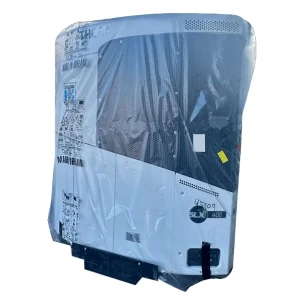
TK SLXI Mobile Power Generation Trailer Cooling Unit
View Details & Quotes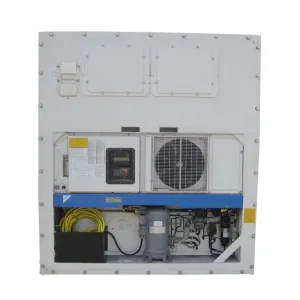
Cooling Unit For Refrigerated Containers
View Details & Quotes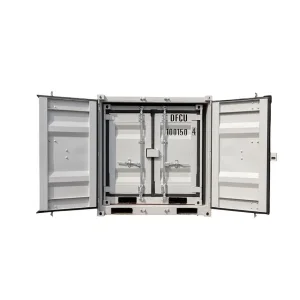
Durable Mini Storage Nested Shipping Container
View Details & Quotes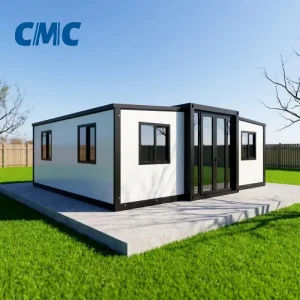
OEM 20ft Modular Expandable Steel Container House
View Details & Quotes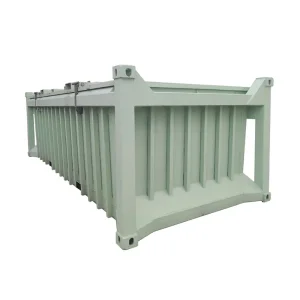
New Half Height Ore Carrier Offshore Container
View Details & Quotes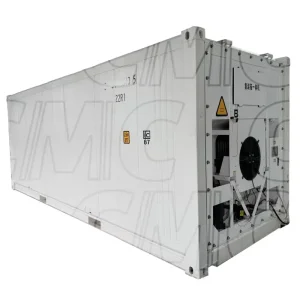
Solar Refrigerated 20ft/40ft Cold Storage Container
View Details & Quotes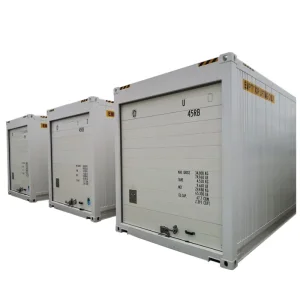
China 40ft High-Cube Roll Up Reefer Container
View Details & Quotes
Manufacturing Capabilities
Industrial Advantages of Chinese Container Fabrication
Analyzing the competitive operational framework that makes coastal Chinese manufacturing facilities the epicenter of specialized intermodal engineering and structural steel fabrication.
Fully Integrated Supply Ecosystems
The manufacturing ecosystem in Tianjin and Jiangsu links specialized Corten-A steel mills, automated roll-forming lines, and eco-friendly robotic powder/zinc-rich primer coating facilities directly within a 50-mile radius. This deep industrial clustering completely removes supply bottlenecks for cold-chain components, insulated PU sandwich panels, and certified corner castings.
Stringent Multi-Standard Compliance
Chinese OEM/ODM production processes follow strict testing regimes audited by Bureau Veritas (BV), Det Norske Veritas (DNV 2.7-1 / EN 12079), Lloyd's Register, and ISO 1496/1. Rigorous testing protocols include comprehensive destructive weld analysis, cyclic hydraulic load validation, water-spray watertightness testing, and high-efficiency thermal leakage indexing.
Port Proximity & Rapid Export Dispatch
Positioned less than 100 kilometers from the Xingang (Tianjin) and Shanghai/Taicang maritime terminals, specialized manufacturing units eliminate internal haulage latency. Equipment arrives directly quay-side ready for 'One-Way' international positioning or bareboat charter deployment, saving up to 14% on total logistics procurement costs.
40+
Years Engineering Track Record
100 km
Average Haul to Deep-Water Ports
100%
Full Welding Inspection Audit
DNV / BV
Global Marine Certification
Future Trajectory
Emerging Trends in Intermodal Fabrication
How the convergence of Internet-of-Things (IoT), lightweight composite metallurgy, and aggressive ESG policies are reshaping container asset lifecycles.
IoT-Enabled Smart Monitoring
Modern reefer and specialized intermodal containers feature edge-computing sensors, satellite-linked telemetry, and remote real-time atmosphere regulators. These telematics modules track reefer compressor run-rates, inner temperature variations, supply/return air metrics, and geographic anomalies across land and sea transit.
Renewable Off-Grid Power Integration
Meeting clean-energy demands, contemporary cold-storage containers deploy high-efficiency monocrystalline solar panels with direct DC-inverter refrigeration compressors. This dual hybrid engineering drops auxiliary diesel consumption during long idle cycles at non-electrified terminals or inland depots.
Structural Composites & Eco-Coatings
By replacing heavy inner linings with ultra-light fiber-reinforced polymers (FRP) and low-VOC waterborne epoxy paint coatings, new manufacturing systems reduce equipment tare weights by 4% to 9%. This directly yields greater payload limits and fewer round-trip carbon emissions across deep-sea operations.
Macro Solutions
Industrial Application Matrices & Case Scenarios
Analyzing high-stress logistical, extractives, and infrastructural deployment contexts globally.
Offshore Exploration & Rig Support
DNV 2.7-1 silt baskets, half-height cargo boxes, and custom lifting skips undergo stringent sub-zero impact testing (-20°C). These units safely transport heavy drill bits, subsea equipment, and core samples in rough open-ocean lifting conditions.
Cross-Border Cold Chain Logistics
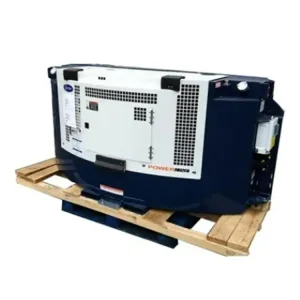
Integrated clip-on diesel generator sets provide steady 460V 3-phase power across intercontinental rail trips, like the Belt and Road trans-Eurasian route. This ensures perishable dairy, pharmaceuticals, and fresh produce maintain an uninterrupted temperature range.
High-Density Mining Logistics
Specially built half-height ore containers feature reinforced underfloors, high-yield abrasion plates, and tippler-friendly top structures. This purpose-built design simplifies the volume-dense export of bauxite, lithium, copper concentrates, and heavy minerals.
Modular Infrastructure & Living Pods
OEM steel container structures act as fire-resistant, well-insulated modular frames for field offices, battery energy storage systems (BESS), and emergency accommodation facilities that can be rapidly set up on site.
Procurement Intelligence
Global Enterprise Sourcing Architecture
Key risk management, inspection protocols, and procurement strategies for corporate sourcing executives.
Pre-Engineering Drawing Validation
Tier-one sourcing begins with a detailed review of 3D CAD modeling, structural finite element stress checks, and thermal bridge calculations. Catching design adjustments at the blueprint stage prevents costly delays when building side doors, roll-up shutters, or specialized machinery anchor plates.
In-Line Third-Party Quality Inspection
Global procurement teams should always deploy independent inspection firms (e.g., BV, SGS, ABS) to audit critical production checkpoints: verifying primer thickness (DFT) on crossmembers, testing door gasket sealing with ultrasonic sensors, and reviewing vacuum helium leak checks on cooling loops.
Fleet Balancing & Repositioning
To reduce the cost of moving empty containers across long ocean routes, enterprise supply chains frequently use "Cabotage" or one-way loaded delivery programs out of Chinese load-ports. By filling newly built units with commercial cargo on their initial transit, buyers recoup up to 70% of shipping positioning expenses.
Direct Clarification
Technical & Commercial FAQ
Clear, direct technical answers for procurement directors, logistics operators, and project engineers.
How do factory customizations affect ISO and CSC marine safety certification?
Any custom changes—such as adding side-entry doors, rolling shutters, customized HVAC openings, or interior equipment mounts—are designed based on approved base designs with certified finite element calculations. After assembly, prototypes undergo formal CSC testing, including dynamic racking, end-wall strength, floor load, and 2R lifting tests supervised directly by classification societies like Bureau Veritas or Lloyd’s Register. Once passed, the unit receives an official CSC safety approval plate for unrestricted global transport.
What distinct steel grades are used for specialized offshore vs standard ISO shipping containers?
Standard ISO dry boxes and reefers use atmospheric corrosion-resistant SPA-H or Corten-A steel, which provides dependable atmospheric corrosion resistance. In contrast, offshore units designed to DNV 2.7-1 / EN 12079 use high-strength structural steels like S355NL or Q355D/E. These materials undergo Charpy V-notch impact testing down to -20°C or -40°C to guarantee structural toughness against brittle fractures in severe subsea conditions.
Can customized generator configurations support deep-freeze cooling needs for extended transit?
Yes. Modern clip-on or underslung diesel generators integrate high-capacity permanent magnet alternators paired with advanced electronic governors. When linked to high-capacity refrigeration units, these systems easily sustain deep ultra-low temperatures down to -35°C or even -60°C across 120+ hours of continuous, unattended rail or road journeys.
What typical lead times apply to custom-engineered OEM/ODM container orders?
Typical custom fabrication runs on a 4 to 7-week production cycle once technical drawings are signed off: 10 to 14 days for initial design and tool alignment, 15 to 20 days for primary forming, welding, and corrosion coating, followed by 7 to 10 days for hardware fitting, load testing, and class society sign-offs. Urgent requirements can often leverage pre-stocked Corten inventories to compress overall schedules.
What maintenance advantages do modular containers provide for remote site installations?
Modular containers built on ISO-dimensioned structural frames can be loaded, secured, and handled using standard port spreaders and container flatbeds, requiring no oversize permits. Their standardized, hot-dip galvanized corner posts, rust-treated wall profiles, and quick-connect electrical systems streamline on-site assembly, cutting project setup times by up to 60% compared to traditional field builds.
Secondary Logistics Array
Advanced Special Containment & Tank Systems
Review our specialized dry-freight boxes, offshore handling frames, bulk liquid ISO tank containers, and deep-freeze reefer products engineered for global industrial transit.
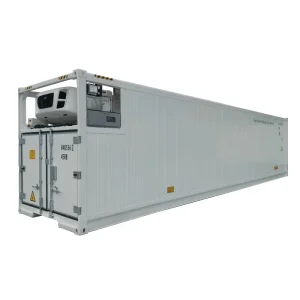
New 40ft HC / 45ft Railway Refrigerated Container
View Details & Quotes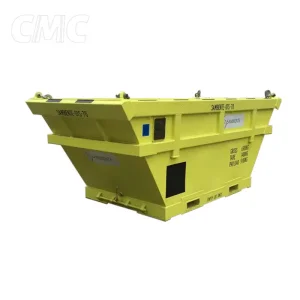
DNV Certification Offshore Silt Basket Container
View Details & Quotes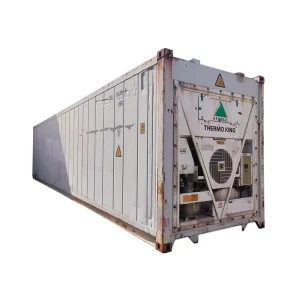
ODM New 40ft Refrigerated Freezer Container
View Details & Quotes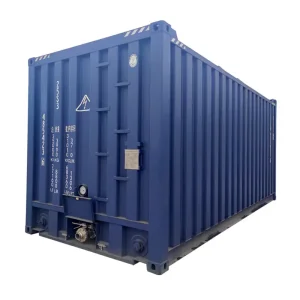
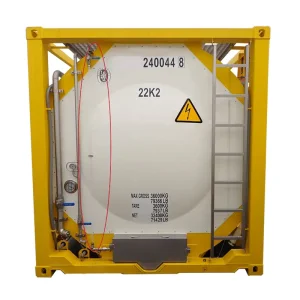
New 20ft Square Liquid Storage & Transport Container
View Details & Quotes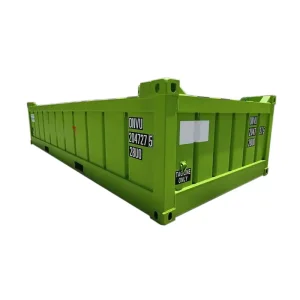
DNV Certified Offshore Half-Height Open Top Container
View Details & Quotes
OEM Ultra-Low Temperature Deep Freezer Container
View Details & Quotes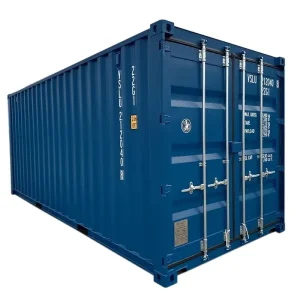
New 20ft Double Door Dry Cargo Shipping Container
View Details & Quotes