Specialized Roll-Up & Intermodal Reefer Systems
Explore our flagship 40ft roll-up door reefer configurations, power gensets, offshore units, and specialized containers engineered for harsh environments.
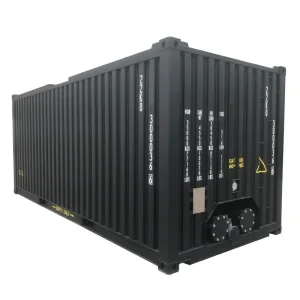
China 40ft High-Cube Roll Up Reefer Container Customized Shipping Containers Factory, Manufacturers
Explore Specifications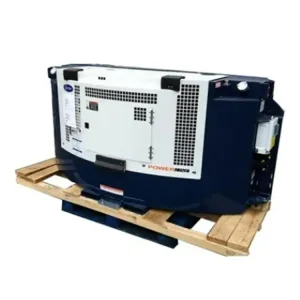
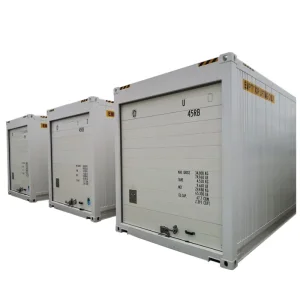
China Refrigerated container diesel generator Exporter, Quotes
Explore Specifications
Famous TK SLXI Mobile power generation trailer cooling unit Product, Manufacturers
Explore Specifications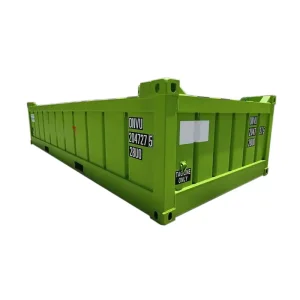
ODM New DNV Certification Offshore Half-Height Open Top Container Products, Exporters
Explore Specifications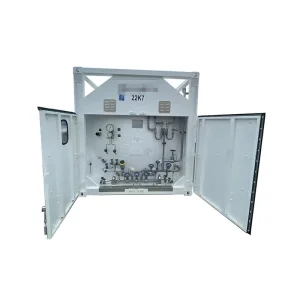
Famous T75 20ft Cryogenic Liquid Tank Container Products, Exporters
Explore Specifications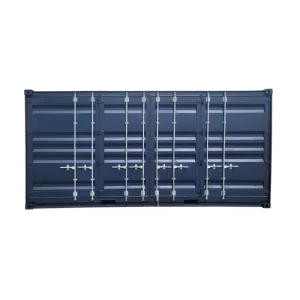
High-Quality New 20ft Customized Side Door Dry Cargo Shipping Container Factory, Product
Explore Specifications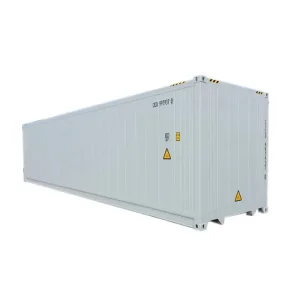
Buy New 40ft High Cube Thickened Foam Insulation Container Factory, Exporters
Explore Specifications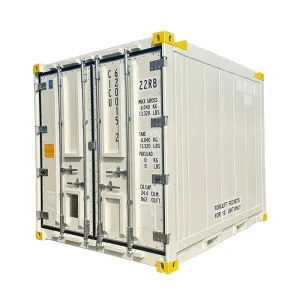
High-Quality New 10ft Certified Thermo King Freezer Container Exporter, Manufacturers
Explore SpecificationsThe Industrial Transition: Standard Swing Doors vs. High-Frequency Roll-Up Systems
Evaluating structural thermodynamics, urban cold chain constraints, and operational velocity in modern cold-storage logistics.
In standard global shipping operations governed by ISO 1496-2 standards, heavy industrial refrigerated containers have relied on dual-cam swing doors fitted with multi-lip EPDM compression gaskets. While these traditional closures provide high structural rigidity across transoceanic voyages, they introduce substantial operational friction in decentralized cold chain logistics, rapid intermodal transfers, and micro-fulfillment distribution.
Modern distribution hubs, pharmaceutical distribution lines, and rapid perishable consolidation centers demand cycle velocities that swing doors cannot support. Every access requires a 1.2-meter exterior clearance per leaf, exposing interior volumetric thermal reserves to atmospheric moisture and causing aggressive ice loading on refrigeration evaporator coils. The introduction of insulated overhead roll-up doors has revolutionized rapid-cycle cold chains by resolving space constraints while minimizing thermal loss during high-frequency loading.
Aerothermal Dynamics and Infiltration Control
Opening a standard container door initiates convective air turnover, instantly displacing dry, refrigerated air with humid ambient air. Roll-up doors with pneumatic or rapid electric drives cycle in 4 to 8 seconds compared to 45 to 90 seconds for mechanical swing doors. In field evaluations across regional food hubs, roll-up reefer configurations yielded a 34% reduction in compressor thermal recovery cycles, stabilizing internal pulp temperatures for sensitive cargo like biologics, berries, and fresh aquaculture.
| Engineering Attribute | Standard Swing Door Reefer | CIMIC Precision Roll-Up Reefer | Performance Delta & Impact |
|---|---|---|---|
| Operating Clearance Footprint | Requires 1,250 mm radial clearance per door | Zero external projection; vertical coil path | Allows dock positioning in tight logistics bays |
| Cycle Time (Open → Close) | 45 – 90 seconds (manual multi-cam latches) | 4 – 12 seconds (electric / counterbalanced) | Up to 75% reduction in convective thermal loss |
| Gasket Joint Architecture | Perimeter double-lip EPDM compression | Dual-density neoprene sweep + side thermal break | Guaranteed continuous air barrier across cycles |
| Insulation Composition | Cyclopentane-blown PUF core (k=0.019 W/mK) | Multi-tier CFC-free PU panel + aero-seal joints | Equivalent core U-factor maintained across wall joints |
| Defrost Interval Frequency | Every 3 – 4 hours during high-access staging | Every 7 – 9 hours under rapid-cycle access | Significantly reduced evaporator coil frosting |
Energy Conservation Under Multi-Stop Use
Average Access Cycle Duration
Dock Bay Clearance Flexibility
Low-Temperature Freezing Capability
Localized Engineering Solutions for Critical Environments
Standard cold boxes fail when exposed to extreme operational environments. Our engineering designs are tailored to diverse regional climates and industrial demands.
GCC & Middle East High-Ambient Operations
Designed for conditions exceeding 55°C dry-bulb temperatures. Features dual UV-reflective polysiloxane coatings, high-static condenser fans, and insulated roll-up curtains with internal thermal breaks to prevent seal calcification and maintain internal stability at -25°C.
Sub-Saharan Mobile Agricultural Depots
Configured for agricultural cold staging in remote rural areas. Built with heavy-duty Corten steel, reinforced fork pockets, integrated clip-on diesel generator frames, and dust-resistant roll-up guide channels to protect components from red laterite particulate abrasion.
Nordic Deep-Freeze Intermodal Corridors
Built for Arctic rail corridors operating down to -40°C. Engineered with low-temperature impact-tested steel structural members, electric heating trace wires within the roll-up door guide rails, and auxiliary synthetic oil sump heaters to prevent mechanical seizure.
Urban Micro-Fulfillment Quick Hubs
Engineered for dense urban environments where exterior clearance is limited. Zero-swing doors allow flush placement in alleyways and tight loading bays, with optional high-speed low-noise electric roll-up motors for 24-hour inner-city operation.
GDP-Compliant Biopharmaceutical Storage
Configured with 316-grade stainless steel sanitary interior linings, precision digital airflow baffling, dual-temperature zone separation, and continuous multi-sensor telemetry for mission-critical cold chain management.
Chinese Manufacturing Resilience & Supply Chain Integration
Over 40 years of precision container manufacturing expertise, supported by vertical supply networks and optimized port logistics.
The manufacturing infrastructure of container manufacturing in Tianjin and Suzhou represents an integrated ecosystem combining metallurgical production, chemical polymer formulation, and automated refrigeration integration. Since our founding in 1983, CIMIC has developed manufacturing methodologies that balance structural durability with thermal efficiency.
Unlike regional fabricators who rely on fragmented third-party supply chains, our production lines benefit from raw material integration, high-grade SPA-H atmospheric corrosion-resistant steel, and custom continuous coil automated cold-roll lines. Automated continuous robot welding platforms guarantee consistent weld bead penetration, eliminating the microscopic fissures that cause moisture migration into insulation layers.
Vertical Integration and Port-Proximate Hubs
Operating out of the Tianjin Pilot Free Trade Zone and Suzhou industrial corridors approximately 100 kilometers from deep-water container terminals, our facilities offer major logistics advantages: lower inland transit costs, rapid staging for vessel dispatch, and reliable export turnaround times. Every unit undergoes automated factory acceptance testing (FAT), pressure-decay air leakage evaluations, and refrigeration load-profiling prior to port hand-off.
Automated Robotic Line
Multi-axis automated seam welding delivers high structural consistency across ISO corner castings, bottom side rails, and reinforced roof panels.
High-Pressure PUF Injection
High-pressure cyclopentane foaming rigs deliver balanced density distribution without voids, maintaining stable thermal resistance across years of field service.
Rigorous Testing Standards
Every unit undergoes strict Bureau Veritas testing, including TIR air leakage checks, vacuum drop evaluations, and full refrigeration pull-down runs.
100 km Port Proximity
Strategic positioning near Tianjin and Shanghai ports enables faster ship loading, cuts ground transport overhead, and ensures predictable export schedules.
Technology Roadmap: The Future of Thermal Rolling Shutter Containers
Pioneering advancements across thermal insulation, IoT edge computing, and zero-emission hybrid power systems.
Aerogel-PU Hybrid Insulation Formulations
Integrating nanoporous silica aerogel blankets within sandwich wall sections to lower thermal conductivity to 0.014 W/mK. This profile increases usable internal volume by 6% while maintaining an equivalent overall heat transfer coefficient.
Predictive Neural Defrost & AI Telematics
Replacing timer-based defrost cycles with machine-learning algorithms that analyze ambient moisture, coil thermal delta, and roll-up actuation data to trigger micro-defrost cycles only when frost actually forms.
Solar-Battery Hybrid Micro-Power Systems
Low-profile flexible monocrystalline PV panels mounted flush along roof corrugations, coupled with 48V LFP battery storage, provide standby power for roll-up actuation, internal lighting, and baseline monitoring during transit interruptions.
Comprehensive Compliance and Global Certifications
Full compliance testing and third-party certifications for intermodal, maritime, and international road transit.
ISO 1496-2 & CSC Certified
Fully certified for corner-casting stack loads up to 192,000 kg, allowing safe integration into international intermodal container vessels and block trains.
ATP Class FRC Approval
Classified for overland perishable transport across Europe and Central Asia, guaranteeing sustained internal temperatures below -20°C in 30°C ambient conditions.
DNV 2.7-1 / EN 12079
Engineered for offshore platforms, featuring specialized lifting pad eyes, dynamic impact testing, and low-temperature material certification for open-sea handling.
TIR Customs Verification
Built to international customs security regulations, featuring tamper-evident seals along the roll-up door guide rails and locking gear for cross-border transit.
Frequently Asked Technical Questions
Engineering and procurement insights from our container specialists.
How do roll-up doors maintain air seals compared to standard multi-point locking reefer doors?
Our roll-up systems use continuous dual-durometer elastomeric seals recessed within structural side guides, paired with a dynamic bottom pneumatic sweep gasket. When the door fully closes, an integrated mechanical downward cam forces the bottom edge into compression against the threshold, while dual-side vertical guides restrict air infiltration. Testing confirms leakage rates below 0.5 m³/h per meter of seal at 250 Pa, meeting ATP Class FRC standards.
Can roll-up door reefer containers handle multi-tier stacking on container vessels?
Yes. The roll-up curtain is housed within a reinforced rear frame header that does not compromise corner-post load transmission. Our containers meet full ISO 1496-2 structural parameters, including the standard 9-high 30,480 kg gross mass stacking requirement (tested to 848 kN per post), backed by valid CSC safety approvals.
Which cooling machinery configurations can be integrated with roll-up reefer units?
Our structures offer universal front-bulkhead cutouts compatible with all major global refrigeration systems: Thermo King (Magnum Plus), Carrier Transicold (PrimeLINE, ThinLINE), and Daikin (LXE series). We also supply integrated or clip-on diesel generator sets for independent power during intermodal road and rail transport.
What anti-freezing mechanisms protect the roller tracks in sub-zero applications?
Units for low-temperature operation (-20°C to -30°C) feature low-wattage self-regulating PTC heating trace elements within the vertical track extrusion and the floor threshold. These run automatically off the cooling unit's 24V/230V aux bus, preventing ice buildup from internal condensation and ensuring smooth operation across repeated access cycles.
What lead times and testing protocols apply to custom OEM/ODM builds?
Custom engineering drawings are typically completed within 5 to 7 business days. Following drawing sign-off, factory production runs 25 to 35 days depending on component availability and custom fit-outs. Every unit undergoes automated structural inspection, air leakage testing, and a comprehensive 4-hour temperature pull-down and hold test documented under BV/ISO standards before release.
Specialized Modular, Offshore & Cold Storage Fleet
Explore our complete catalog of industrial reefer equipment, deep freezers, side-access designs, and offshore transport solutions.
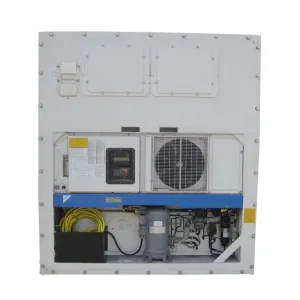
Buy Refrigeration Equipment /Cooling Unit For Refrigerated Containers Products, Exporters
Explore Specifications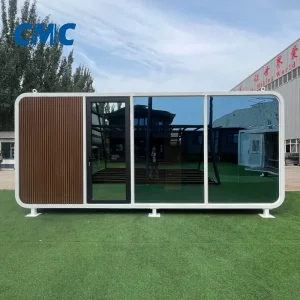
Famous 20ft Prefab Container House Flat Pack Modular House Office Tiny House Outdoor apple Cabin Office Pod Garden Office Pod Manufacturer, Product
Explore Specifications
China 40ft High-Cube Roll Up Reefer Container Customized Shipping Containers Factory, Manufacturers
Explore Specifications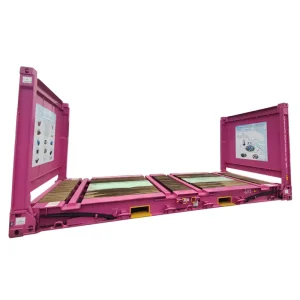
ODM New 20ft Platform Frame Container Pricelist, Exporters
Explore Specifications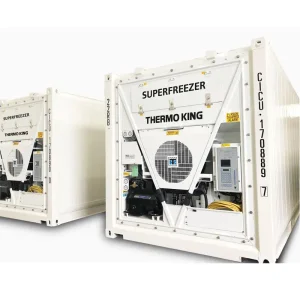
OEM New Deep Freezer Refrigerator Container For Sale Factory, Quotes
Explore Specifications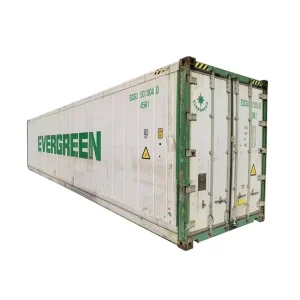
Buy Used 40ft HC Shipping Reefer Container Manufacturers, Exporters
Explore Specifications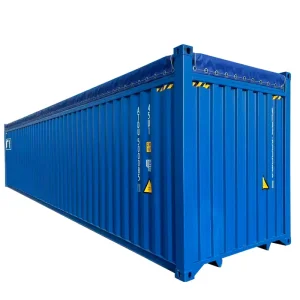
Buy 40ft High-Cube New Soft Open Top Shipping Container with Tarpaulin Cover Manufacturer, Product
Explore Specifications