
Featured Heavy-Duty Intermodal & Specialized Logistics Containers
Engineered in ISO-certified intelligent production plants in Tianjin and Suzhou, our standardized and customized container units adhere strictly to BV, DNV, and CSC international freight certifications.
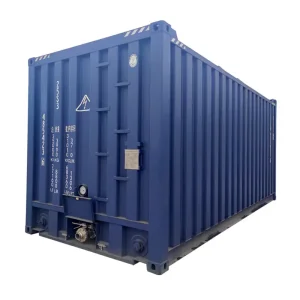
Buy New 20ft Square Liquid Container Factory, Product
Explore Unit Specs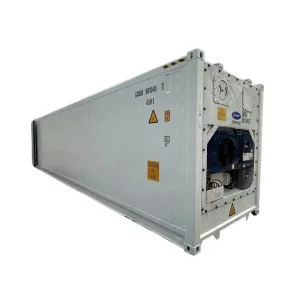
Buy Ninety Percent New Used 40ft HC Carrier Refrigerated Container Product, Quotes
Explore Unit Specs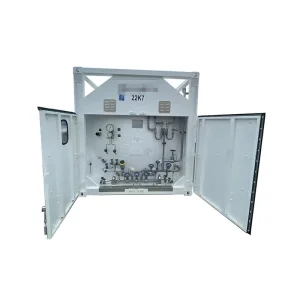
Famous T75 20ft Cryogenic Liquid Tank Container Products, Exporters
Explore Unit Specs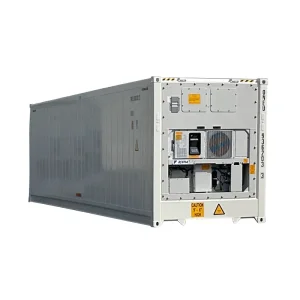
OEM New 40ft High-Cube Daikin Freezer Container Cold Storage Room Manufacturer, Products
Explore Unit Specs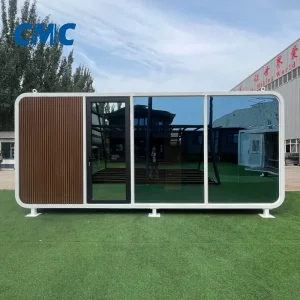
Famous 20ft Prefab Container House Flat Pack Modular House Office Tiny House Outdoor apple Cabin Office Pod Garden Office Pod Manufacturer, Product
Explore Unit Specs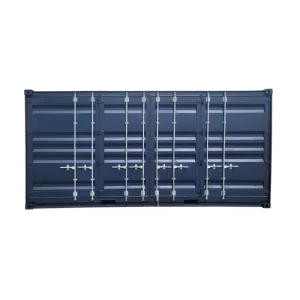
High-Quality New 20ft Customized Side Door Dry Cargo Shipping Container Factory, Product
Explore Unit Specs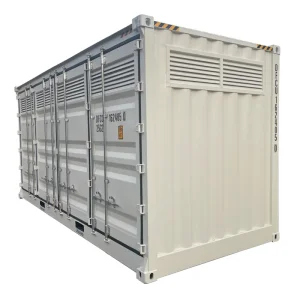
Famous 20FT High-cube Dangerous Goods Container Side Open Door with Ventilation Opening Manufacturer, Exporter
Explore Unit Specs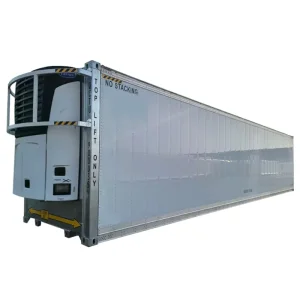
China Carrier X4-7300 Refrigeration and Electricity Integrated Container Exporter, Products
Explore Unit SpecsComprehensive 10 Ft Shipping Container Cost Analysis & Factory Economics
Navigating the commercial acquisition of 10-foot shipping containers requires dissecting total cost of ownership (TCO) beyond baseline FOB unit pricing. While 20-foot and 40-foot containers represent high-volume maritime intermodal standards, the 10-foot container occupies a specialized engineering niche. Produced either as custom single-build units or paired as "duocon" sets (two 10ft units conjoined by heavy-duty bridge fittings to create a single 20ft ISO footprint for international maritime transport), 10ft container cost parameters are dictated by non-standard tooling, manual welding stages, and specialized lifting hardware.
New Factory Build (Corten-A)
Factory-direct pricing for standard dry cargo 10ft units typically ranges from $2,200 to $3,800 USD FOB China ports. Premium configurations with certified DNV 2.7-1 offshore slings, thermal insulation, or hazardous material sumps range between $5,200 and $9,500 USD depending on metallurgy and testing requirements.
Refurbished / Cargo Worthy (CW)
Depot-cleared used 10ft units generally cost $1,600 to $2,400 USD. However, because true 10ft units are rarely abandoned by maritime carriers, the secondary market frequently relies on "cut-down" containers—re-welded 40ft units converted into 10ft compartments, which requires structural inspection of newly fabricated corner posts.
Duocon Intermodal Shipping Advantage
Shipping a solitary 10ft container incurs high slot penalties on ocean vessels. By manufacturing 10ft units as paired Duocon configurations sharing standard 20ft corner casting centers, logistics buyers reduce ocean freight surcharges by up to 42%, decoupling the containers upon arrival at destination depots.
| Container Classification | Dimensions (L × W × H) | Tare Weight (kg) | Max Payload (kg) | Estimated Factory Cost (USD) | Typical Application Sector |
|---|---|---|---|---|---|
| 10ft Standard Dry ISO (10GP) | 2.99m × 2.44m × 2.59m | 1,250 kg | 8,910 kg | $2,200 – $3,200 | Urban distribution, secured field tool vaults |
| 10ft High Cube (10HC) | 2.99m × 2.44m × 2.89m | 1,380 kg | 8,780 kg | $2,450 – $3,600 | Battery Energy Storage (BESS), mobile micro-datacenters |
| 10ft DNV 2.7-1 Offshore Mini | 2.99m × 2.44m × 2.59m | 2,100 kg | 10,000 kg | $5,400 – $8,200 | Subsea maintenance tools, offshore drilling platforms |
| 10ft Cold Storage Reefer | 2.99m × 2.44m × 2.59m | 1,950 kg | 6,500 kg | $8,900 – $14,500 | Pharmaceutical cold chains, offshore catering reserves |
| 10ft Dangerous Goods (DG) | 2.99m × 2.44m × 2.59m | 1,650 kg | 8,500 kg | $3,800 – $5,900 | Chemical bunded storage, paint lockers, fuel transfer |
Global Enterprise Demand: Why Micro-Footprints are Surging Across Core Industries
While high-cube 40-foot containers dominate global oceanic bulk shipping, macro shifts in decentralized energy infrastructure, urban last-mile micro-fulfillment, and specialized engineering deployments have sparked explosive growth in the 10ft form factor.
Decentralized Energy Storage (BESS)
Renewable power installations and microgrid developers configure 10ft High Cube containers into self-contained Battery Energy Storage Systems. Integrated with HVAC cooling, fire suppression, and battery racking, their structural compactness simplifies rapid regional crane deployment on constrained industrial pads.
Urban Construction & High-Density Sites
Civil engineering contractors operating within dense metropolitan zones face severe footprint restrictions. A 10ft dry container occupies less than 7.3 square meters, fitting inside elevator construction hoists, parking bays, and pedestrian alleyways where 20ft units would block critical thoroughfares.
Edge Computing & Telecom Micro-Hubs
As 5G connectivity and private enterprise IoT nodes scale, telecom infrastructure operators house liquid-cooled server racks inside 10ft electromagnetic-shielded (EMP) shelters. Factory-prefabricated housings eliminate on-site civil works and dramatically shorten commissioning timelines.
Defense, Humanitarian & Rapid Tactical
Military logistics divisions, peace-keeping forces, and international disaster relief agencies deploy 10ft shelters via rotary-wing helicopters and tactical transport aircraft (C-130 Hercules), utilizing them as instant surgical outposts, water purification hubs, and command bunkers.
Structural Anatomy of an Industrial-Grade 10ft Shipping Container
Achieving rigorous load ratings while maintaining compact dimensional tolerances demands uncompromising structural engineering. Unlike low-grade residential storage sheds constructed of standard carbon mild steel, industrial 10ft shipping containers fabricated by CIMIC Group utilize fully traceable atmospheric corrosion-resistant Corten steel across all primary load-bearing members.
1. Corten-A (SPA-H) Structural Steel Shell
The sidewalls (1.6mm or 2.0mm corrugated Corten profiles) and roof panels (2.0mm die-stamped corrugated steel) generate an integrated monocoque framework. Under ambient atmospheric exposure, Corten-A forms a tightly adhered passivating oxide layer (patina) that retards continuous oxidation, delivering superior resilience in salt-laden marine and chemical operating environments.
2. Cast Steel Corner Fittings & Critical Uprights
Eight precision cast steel corner castings (manufactured to ISO 1161 standards from weldable SCW480 steel) sit at every corner. Corner posts feature 6.0mm cold-formed steel sections designed to endure dynamic 9-high fully loaded stacking pressures during maritime voyages and yard operations.
3. Heavy-Duty Flooring Options & Crossbearers
Supported by 4.0mm pressed steel crossmembers set at strict 300mm centers, floors can be equipped with 28mm certified marine-grade apitong or keruing hardwood plywood (water-boil-proof WBP bonded and Australian Quarantine fumigation treated), or optional 4.5mm steel chequer plate with floor drain sumps.
4. Multi-Layer Marine C5-M Coating Regimes
Corrosion mitigation involves full SA 2.5 automatic centrifugal shot blasting to eliminate mill scale. Surfaces receive a 30μm zinc-rich epoxy primer, a 40μm high-build epoxy intermediate coat, and a 40μm chlorinated rubber or polyurethane topcoat (total dry film thickness ≥ 110μm) providing robust ISO 12944 C5-M marine life expectancy.
Macro Industry Solutions: Specialized 10ft Container Deployments
From harsh offshore platforms in the North Sea to mission-critical cold chain corridors in sub-Saharan Africa, CIMIC Group manufactures tailor-made 10-foot operational modules engineered around client payloads, duty cycles, and environmental hazards.
Offshore Oil & Gas (DNV 2.7-1 / EN 12079)
Dynamic wave-impact forces during offshore vessel-to-rig crane transfers demand specialized materials. Our 10ft offshore mini containers are fabricated with Charpy V-notch impact-tested steel (-20°C structural toughness), external padeyes welded directly to the structural framework, and supplied with proof-tested 4-leg wire rope lifting slings with master links.
Pharma & Biological Cold Storage
Outfitted with Carrier Transicold, Thermo King, or Daikin refrigeration machinery, 10ft reefer containers deliver high-precision temperature stability from -40°C to +30°C. High-density polyurethane foam walls (up to 120mm core thickness) and interior food-grade 304 stainless steel cladding protect vaccines, biologics, and premium catering provisions.
Hazardous Chemical Bunded Storage
For safe storage of paints, volatile hydrocarbons, lithium batteries, and agrochemicals, our 10ft Dangerous Goods (DG) units integrate heavy-duty secondary containment sumps capable of holding 25% of total container volume, spark-proof ventilation louvers, explosion-proof internal lighting, and internal safety escape push-bars.
Mobile High-Voltage Switchgear & VFDs
Heavy industry and mine sites require mobile power distribution. 10ft High Cube containers serve as insulated e-houses featuring fire-rated rockwool partitions, floor-routed cable gland plates, automatic clean-agent fire suppression (FM-200 / Novec 1230), and customized structural side-access hatches for rapid field maintenance.
Military Field Laboratories & Water Hubs
Modularized 10ft platforms integrate reverse-osmosis filtration systems, field blood-banking refrigeration, and deployable tactical command consoles. Equipped with internal leveling jack brackets and CSC international safety approval plates, units move seamlessly across intermodal flatbed, sea, and heavy-cargo rail links.
Urban Micro-Fulfillment & Self-Storage
E-commerce fulfillment centers and self-storage facility operators capitalize on 10ft units partitioned into dual 5ft lockers or custom roll-up shutter access bays. Their stackable profile allows high-density volumetric utilization of underutilized urban real estate without permanent foundation zoning permits.
Smart Factory Production & Industrial Quality Assurance
At our manufacturing hubs located in Tianjin and Suzhou, container production is an automated science. Rooted in continuous engineering refinement since 1983, our facilities merge CNC precision plasma profiling, multi-axis robotic seam welding, and environmental-controlled surface treatment lines.
Stage 1: Automated Profiling
High-tonnage hydraulic roll-forming machines corrugate high-grade Corten steel coils. Computerized CNC laser cutting stations slice panel perforations and post joints with sub-millimeter tolerances, ensuring structural geometry prevents racking during multi-tier stacking.
Stage 2: Robotic Submerged Arc Welding
Main underfloor beams, front headers, and corner post junctions are welded using multi-torch robotic systems under gas-shielded CO2/argon environments. This eliminates human fatigue variability and ensures deep weld penetration across high-stress tensile points.
Stage 3: Shot Blasting & Painting
Entire fabricated 10ft container shells enter automated enclosed blasting cabins where high-velocity steel grit scours surface rust and oils to Swedish SA 2.5 cleanliness, immediately followed by primer electrostatic spray painting to prevent flash oxidization.
Stage 4: Rigorous Quality Benchmarking
Every production batch is subjected to hydrostatic floor deflection tests, weather-tightness water deluge spraying at 200 kPa pressure, lifting lug magnetic particle inspection (MPI), and paint dry film thickness (DFT) electronic eddy-current auditing.
Compliance Safeguards, Maritime Certifications & Regional Support
International transport of freight containers is strictly regulated to safeguard vessel stability, harbor worker safety, and cargo integrity. Procuring 10ft containers through CIMIC guarantees comprehensive compliance documentation backed by world-renowned third-party classification societies.
CSC (Convention for Safe Containers)
All dry and reefer 10ft units destined for sea transit are issued official stainless steel CSC safety approval plates, validating rigorous end-wall, sidewall, transverse racking, and vertical stacking load test compliance under International Maritime Organization (IMO) mandates.
Bureau Veritas & DNV Certification
Our quality management infrastructure operates under audited ISO 9001:2015 processes. Offshore 10ft models carry full design appraisal documents, mill test certificates (EN 10204 Type 3.1), and type-approval certificates signed by Bureau Veritas (BV) and DNV GL surveyors.
Customs TIR & UIC Approval
For intermodal Eurasian rail transit and cross-border road freight, our container door locking gear and hinge assemblies comply with TIR (Transport International Routier) customs sealing conventions and UIC railway structural specifications.
Engineering Roadmap: The Next Generation of 10ft Smart Containers
The evolution of specialized containers merges structural metallurgy with digital telemetry. CIMIC Group’s technical research division is pioneering four core technological advances for upcoming 10-foot container releases:
IoT Telematics & Ambient Condition Monitoring
Embedded, solar-powered satellite transponders fitted directly within the corrugated roof rib recess provide real-time GPS tracking, internal humidity mapping, door breach alerts, and 3-axis shock detection during offshore handling.
Zero-VOC Ultra-Durable Waterborne Coatings
In response to tightening international ESG guidelines, our paint lines have integrated high-performance waterborne zinc and polyurethane polymers that reduce volatile organic compound emissions by 75% without compromising ASTM B117 salt spray ratings.
Composite Lightweighting Metallurgy
Select industrial units incorporate ultra-high-strength thin-gauge steel corrugated side panels and recycled high-density composite floor panels, shedding up to 220 kg of dead tare weight to maximize net payload margins.
Modular Quick-Lock Coupling Interfaces
Proprietary high-tensile locking inter-connectors simplify field pairing of two 10ft units into a unified 20ft block without needing specialized mobile gantry welding crews or uncertified manual tie-down brackets.
10 Ft Shipping Container Cost, Sourcing & Manufacturing FAQ
Direct answers to the most critical technical, commercial, and logistical questions encountered by industrial procurement officers, project managers, and logistics coordinators.
A new 10ft standard dry shipping container typically costs between $2,200 and $3,800 USD FOB China ports, whereas a standard 20ft ISO container costs roughly $1,900 to $2,800 USD. While a 10ft box utilizes less raw steel, its cost per square meter is higher because production lines in China are optimized for standard 20ft and 40ft frames. 10ft containers require dedicated jig recalibration, manual handling of non-standard crossmembers, specialized duocon interlocks, and equivalent sets of high-cost components (such as two heavy-duty locking bars, four cam retainers, and eight full corner castings).
To avoid single-container slot surcharges and irregular crane handling penalties, factories build 10ft containers in connected pairs called Duocon configurations. Two 10ft units are temporarily joined end-to-end via CSC-certified heavy-duty bridge clamp fittings, creating an identical dimensional envelope and corner-casting footprint of a standard 20ft ISO dry container (6.058m length). The pair travels on standard container vessels at ordinary 20ft TEU slot rates and is easily separated using standard wrench tooling upon arrival at the destination yard.
An ISO standard 10ft container is engineered for static container yard stacking and intermodal rail or highway transport. In contrast, a DNV 2.7-1 / EN 12079 certified offshore mini container is specifically designed to survive harsh dynamic loads, wave slams, and snatch-lifting shocks from offshore support vessels in open seas. Offshore units feature heavy structural steel tubular skid frames, Charpy impact-tested steel capable of resisting brittle fracture at -20°C, welded external lift padeyes, thicker 2.5mm side corrugated plates, non-removable door hinge pins, and certified 4-leg wire rope lifting slings tested to proof loads exceeding 2.5 times maximum gross weight.
Yes, provided the container holds an active CSC (Convention for Safe Containers) safety approval plate certified by an IACS member society such as Bureau Veritas, Lloyd's Register, or ABS. Factory-built 10ft containers undergo transverse racking, shear resistance, and vertical stacking testing up to 72,000 kg, allowing safe multi-tier stacking inside automated container yards and vessel cellular guide rails when coupled or positioned in designated modular stowage tiers.
CIMIC provides full OEM/ODM engineering customization. Popular modifications include full side-opening bi-fold doors, industrial roller-shutter doors, thickened polyurethane or mineral wool thermal insulation panels, high-load chequer steel flooring with drainage valves, certified electrical pass-through glands, interior partition bulkheads, explosion-proof ventilation, air conditioning cut-outs, and custom exterior RAL color electrostatic powder coatings.
For standard 10ft ISO dry containers, production lead times average 3 to 5 weeks following final CAD technical drawing sign-off. Highly customized units (such as DNV offshore builds, hazardous bunded containers, or insulated units with specialized HVAC integration) typically require 5 to 7 weeks to complete material procurement, robotic profiling, third-party surveyor witnessing, and coating application.
Procuring directly from our Tianjin and Suzhou manufacturing plants eliminates multiple intermediary broker margins, saving volume buyers 25% to 40% per unit compared to regional depot markup prices. Furthermore, direct factory ordering empowers buyers to specify precise steel gauges, floor coatings, door configurations, and paint DFT parameters rather than settling for generic inventory stock held in secondary domestic yards.
Every commercial export order includes an official Commercial Invoice, Detailed Packing List, Clean On-Board Ocean Bill of Lading, Certificate of Origin (CO / Form E / Form A), Factory Quality Inspection Certificate, CSC Safety Approval Certificate, Mill Test Certificates (MTC) verifying Corten SPA-H steel chemistry, and third-party inspection releases from Bureau Veritas or equivalent surveyors.
Specialized Industrial Solutions: Offshore, Open-Top & Modular Fleet Units
Explore our broader industrial inventory covering deep-freeze refrigerated storage, open-top heavy bulk transport, offshore equipment baskets, and expandable modular architectural frameworks built to global ISO quality benchmarks.
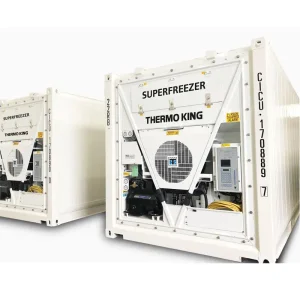
OEM New Deep Freezer Refrigerator Container For Sale Factory, Quotes
Explore Unit Specs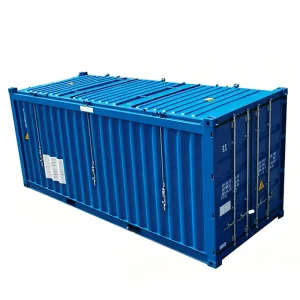
China 20ft New Hard Open Top Shipping Container Manufacturer, Factories
Explore Unit Specs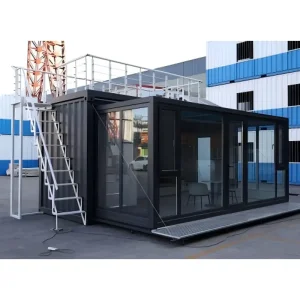
Famous 20ft Foldable Prefab Modular Homes Mobile Expandable Container House Prefabricated House with Bathroom Manufacturer, Exporters
Explore Unit Specs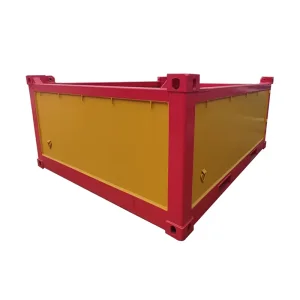
High-Quality New Offshore Basket Container for Offshore Operations Exporter, Exporters
Explore Unit Specs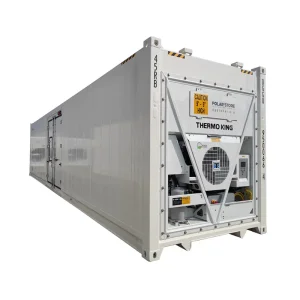
Famous 40ft High-Cube Side Open Door Reefer Container Manufacturer, Factories
Explore Unit Specs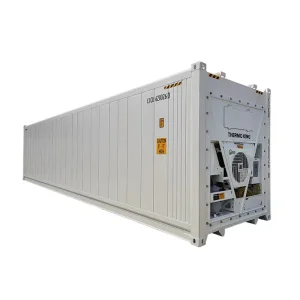
OEM New 40ft High-Cube Certified Reefer Shipping Cargo Container Pricelist, Product
Explore Unit Specs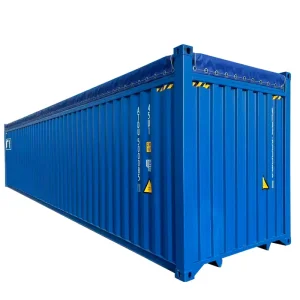
Buy 40ft High-Cube New Soft Open Top Shipping Container with Tarpaulin Cover Manufacturer, Product
Explore Unit Specs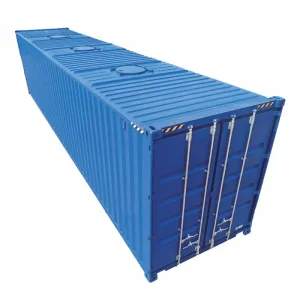
Buy 20 Feet Shipping Bulk Container Manufacturer, Exporters
Explore Unit SpecsPartner with an Established ISO Shipping Container Manufacturer
Direct engineering support, CAD drawing confirmation within 48 hours, competitive factory FOB/CIF quotes, and certified multi-modal logistics from Tianjin Port to major destinations across Africa, Europe, the Americas, and Australasia.