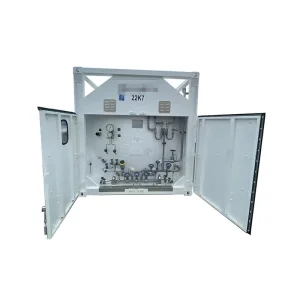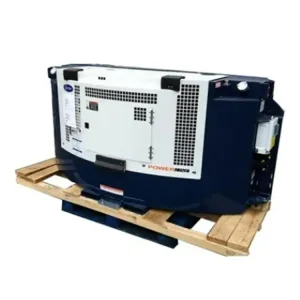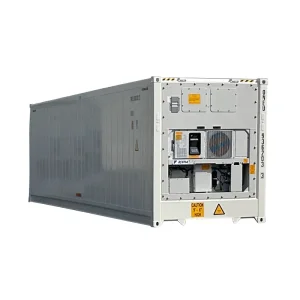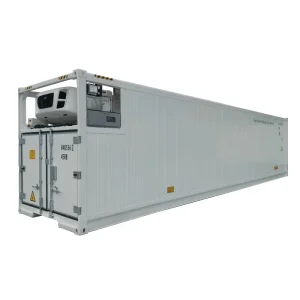
Priority Production Lines
Featured Engineering Containers & Turnkey Modules
Review ready-to-deploy intermodal assets, specialized high-cube thermal units, and heavy-payload mineral logistics equipment manufactured under rigorous Bureau Veritas and ISO 9001 quality audits.
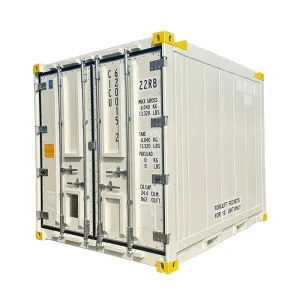
Standard Intermodal
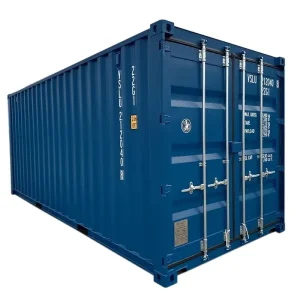
Buy New 20ft Double Door Dry Cargo Shipping Container Products, Manufacturers
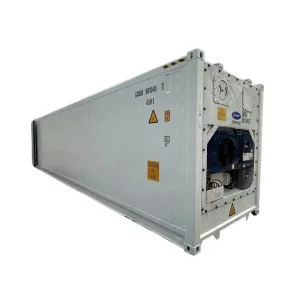
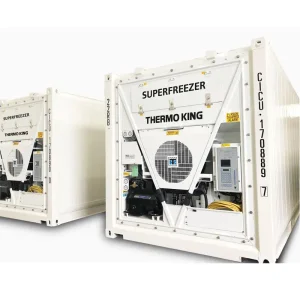
Certified Second-Hand
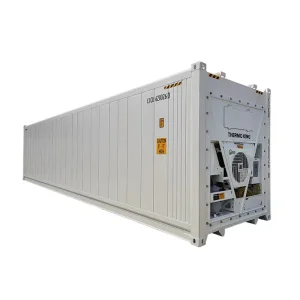
Buy Ninety Percent New Used 40ft HC Carrier Refrigerated Container Product, Quotes
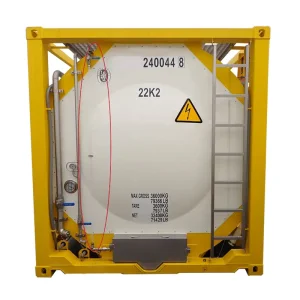
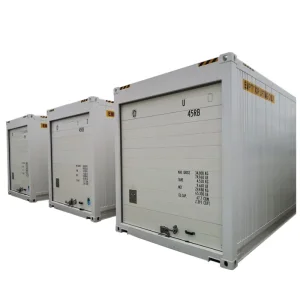
ISO Liquid Tank
ODM 20ft Tank Container for Alcohol Manufacturer, Quotes
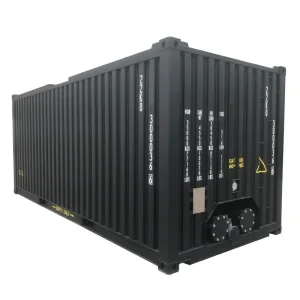
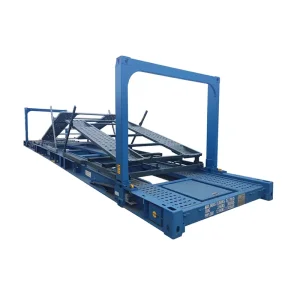
Enterprise Procurement Demands
Global Sourcing Dynamics for Industrial Fabricators
Modern container fabricator procurement has evolved from simple box leasing to mission-critical infrastructure integration across global supply routes and dynamic regulatory frameworks.
Corrosion-Grade Corten Steel (SPA-H)
Global shipping lines and offshore operators require high-yield atmospheric corrosion-resistant steel. Fabricators formulate heavy structural profiles to counter saltwater spray, chemical fumes, and mechanical fatigue across intercontinental transits.
Telematics & Active Cold Chain Telemetry
Procurement teams demand integrated IoT sensors for live GPS positioning, door status monitoring, and real-time internal temperature/humidity tracking compatible with Carrier, Daikin, and Thermo King micro-controllers.
DNV 2.7-1 / EN 12079 Offshore Rigour
Energy operators moving equipment to deep-sea platforms require specialized pad-eyes, four-point sling assemblies, non-destructive weld testing (NDT), and documented Bureau Veritas certification to endure extreme dynamic ocean lifting.
Macro Industry Architecture
Integrated Heavy-Duty Logistic Solutions
From heavy bulk minerals to cryogenic LNG and asphalt distribution, specialized fabrication provides customized structural reinforcements matching unique material properties.
Heavy Mineral & Ore Logistics
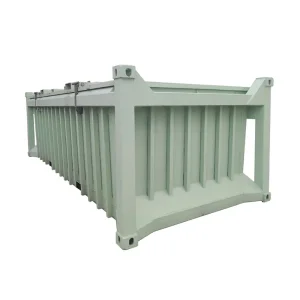
Dense bulk minerals require specialized low-center-of-gravity half-height containers. Reinforced floor beams, automated tipper locking mechanisms, and removable tarp covers withstand heavy loading impact while preventing environmental spillage.
Specialized Liquid & Cryogenic Containment
High-grade stainless steel (316L) T75 cryogenic liquid vessels and heated asphalt containers maintain temperature stability. High-density polyurethane foam and multi-layer vacuum insulation prevent boil-off during cross-border railway transits.
Modular Architecture & Data Centers
Beyond traditional freight, fabricated containers serve as plug-and-play battery energy storage systems (BESS), mobile water treatment plants, and modular housing, engineered with precision acoustic dampening and fire-rated walls.
Technical Roadmap & Foresight
The Future of Container Engineering: 2025–2030
Forward-looking container fabricators are transitioning toward net-zero manufacturing, automated robotic seam welding, and digital-twin predictive maintenance protocols.
Automated Submerged-Arc & Laser Seam Welding
Fabrication plants are adopting full-robotic welding tracks that decrease structural pore defects, achieve micron-level corner-casting alignments, and verify tensile tolerances against extreme stacking pressures.
Low-GWP Refrigerants & Hybrid Inverters
Aligning with the Kigali Amendment, reefer engineering is shifting toward ultra-low Global Warming Potential refrigerants (R-513A, CO2/R-744) paired with 220V/380V DC inverter compressors that slash operational diesel generator draw by up to 34%.
Digital Twins & Structural Life Assessment
Embedded strain gauges and sensor arrays now deliver real-time data on structural fatigue, floor deflection, and rust degradation across international railway corridors, enabling condition-based overhauls.
Standardization Blueprint
Comprehensive ISO Technical Specifications
Verified dimensional and loading data for structural engineers, project procurement coordinators, and multimodal logistic planners.
| Container Classification | External Dimensions (L × W × H) | Internal Dimensions (L × W × H) | Max Gross Mass (MGM) | Tare Weight | Payload Capacity | Primary Industrial Sector |
|---|---|---|---|---|---|---|
| 20ft Dry Cargo (20GP) | 6.058 × 2.438 × 2.591 m | 5.898 × 2.352 × 2.393 m | 30,480 kg | 2,230 kg | 28,250 kg | Heavy Machinery, Dense Freight |
| 40ft High-Cube Dry (40HC) | 12.192 × 2.438 × 2.896 m | 12.032 × 2.352 × 2.698 m | 32,500 kg | 3,900 kg | 28,600 kg | Voluminous Consumer Goods, BESS |
| 40ft High-Cube Reefer (40RH) | 12.192 × 2.438 × 2.896 m | 11.583 × 2.290 × 2.555 m | 34,000 kg | 4,580 kg | 29,420 kg | Pharma, Seafood, Cold Chain Export |
| 20ft Half-Height Ore Carrier | 6.058 × 2.438 × 1.295 m | 5.850 × 2.230 × 0.990 m | 32,000 kg | 2,850 kg | 29,150 kg | Concentrated Ores, Metal Ingots |
| 20ft ISO Tank (T75 Cryogenic) | 6.058 × 2.438 × 2.591 m | Vacuum Insulated Tank | 36,000 kg | 8,200 kg | 27,800 kg | LNG, Liquid Nitrogen, Argon |
Compliance & Quality Architecture
Regulatory Governance & Factory Verification
International trade mandates rigorous classification standards. Every fabricated series undergoes rigorous factory acceptance tests (FAT) witnessed by accredited marine surveyors.
Classification Society Approvals
Containers are stamped with CSC safety approval plates witnessed by Bureau Veritas (BV), ABS, or DNV. Compliance with the International Convention for Safe Containers ensures smooth maritime handling worldwide.
Coating Systems & ISO 12944 C5-M
Fabrication plants utilize zinc-rich epoxy primers, high-build epoxy intermediate coats, and polyurethane topcoats engineered for C5-M marine exposure, backed by salt-spray testing exceeding 1,440 hours.
Strategically Proximate Coastal Hubs
Situated within 100 km of Tianjin and Suzhou major port terminals, container fabricators reduce inland dead-head drayage costs, accelerate custom clearance declarations, and optimize vessel berths.
Procurement Knowledge Base
Frequently Asked Technical Questions
Comprehensive engineering, logistic, and contractual clarifications direct from the factory fabrication floor.
What steel specifications are utilized in industrial container fabrication?
Our manufacturing facilities exclusively employ Corten-A / SPA-H atmospheric corrosion-resistant steel for all exterior corrugation sheets, corner posts, and main chassis structural rails. High-stress lifting corners feature cast steel conforming to ISO 1161 requirements (grade SCW480), fully certified by Bureau Veritas to withstand repeated stacking loads up to 192,000 kg.
Can container fabricators modify layouts for energy storage systems (BESS) or modular plants?
Yes. OEM/ODM engineering accounts for over 45% of our manufacturing volume. We design custom side-access rollup shutters, laser-cut ventilation louvers, structural penetration collars for piping/cables, reinforced internal mezzanine sub-floors, and fire-resistant rockwool or calcium silicate thermal panel linings conforming to EN 13501-1 standards.
How do you ensure thermal efficiency and airtightness in reefer containers?
Thermal units are built using automated high-pressure polyurethane foaming with cyclopetane blowing agents, achieving an overall Heat Leakage Coefficient (U-factor) below 0.38 W/m²K. Doors feature multi-lip EPDM compression gaskets that pass standardized smoke and vacuum pressure-decay tests under classification oversight.
What lead times and minimum order quantities (MOQ) apply to custom OEM builds?
Standard ISO dry container modifications usually require an MOQ of 1 to 2 units for specialized conversions, whereas full-custom roll-formed assemblies maintain an MOQ of 10 TEU. Production turnaround spans 20 to 35 business days post-engineering drawing sign-off, facilitated by automated rolling lines and proximity to major seaports.
How are pre-shipment inspections (PSI) and customs paperwork coordinated?
Every fabrication unit comes with a full documentation pack: Mill Test Certificates (MTC), dry film thickness (DFT) paint reports, weld NDT records, CSC safety registration plates, and custom surveyor certificates (BV/LR/DNV). Overseas buyers are supported via scheduled live video audits or authorized third-party inspector visits (SGS/TUV).
Turnkey Equipment & High-Cube Systems
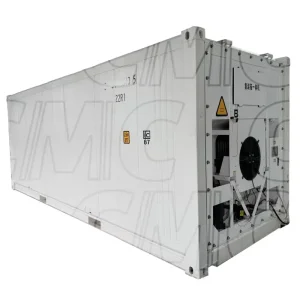
Specialized Modular & Cold Storage Fleet Assets
Explore our full line of refrigerated units, solar-assisted cold stores, heavy roll-up conversions, and railway containers built to expand intermodal capacity.