
High-Performance Intermodal & Tank Containers Ready for Global Deployment
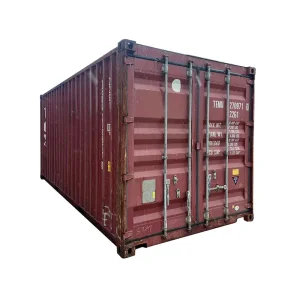
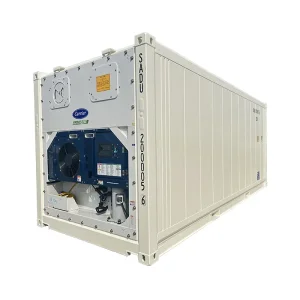
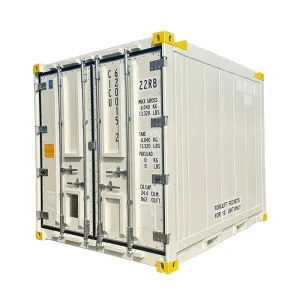
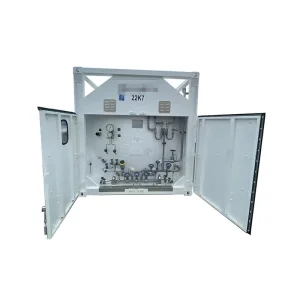
Direct manufacturer supply for certified food-grade ISO tanks, gas pressure vessels, double-door dry cargo containers, advanced cryogenic modules, and refrigerated maritime cold rooms.
The Global Steamship Container Paradigm: Structural Trends & Next-Gen Metallurgy
How the interplay of strict International Maritime Organization (IMO) decarbonization mandates, advanced Corten structural chemistry, and smart IoT sensor suites is transforming container engineering.
Corten-A Weathering Steel Alloys
Modern steamship containers depend on high-tensile SPA-H / Corten-A weathering steel. Under atmospheric cycles of wetting and drying, copper, chromium, and nickel micro-alloy additions produce an adherent protective oxide patina. This self-sealing barrier dramatically retards marine salt mist corrosion, ensuring structural integrity through 15-20 years of aggressive intercontinental service under ISO 1496-1 design loads.
Smart IoT Telematics & Sensorization
Next-generation fleets integrate permanent digital intelligence directly at the production line. Autonomous battery-less IoT edge transceivers harness solar harvesting and micro-vibration power to beam real-time geographic GPS coordinates, internal tri-axial shock signatures, door tamper alerts, and ambient relative humidity to maritime satellite constellations and cellular terrestrial base stations.
Zero-VOC Waterborne Zinc Coatings
Driven by ESG standards and strict air quality environmental regulations, steamship container manufacturing has transitioned comprehensively away from solvent-borne epoxies toward waterborne zinc-rich primers and polyaspartic topcoats. This coating system eliminates volatile organic compounds (VOCs) while achieving salt-spray corrosion resistance that easily exceeds 1,500 continuous testing hours under ASTM B117 validation.
Enterprise Sourcing Intent: De-risking Capital Allocations Across Maritime Assets
A systematic framework for fleet operators, third-party logistics providers (3PLs), intermodal railroad consortiums, and engineering EPC contractors evaluating total cost of ownership (TCO).
CAPEX versus OPEX Lifecycle Optimization
Corporate equipment buyers frequently face the strategic trade-off between investing in brand-new factory builds versus acquiring certified cargo-worthy (CW) or wind-and-watertight (WWT) off-lease units. While secondary market containers offer immediate availability at 40-60% lower capital expenditure for regional stationary storage, primary international trade corridors strictly demand new one-trip ISO standard units.
Virgin builds eliminate hidden structural stress fatigue in cold-formed corner castings, guarantee intact fluoropolymer door gaskets, and avoid structural micro-deflections in transverse cross-members that trigger terminal crane handling exceptions. Furthermore, custom builds permit tailored payload ratings up to 34,000 kg gross weight, lowering transport cost per freight-ton over a 15-year operational lifecycle.
Classification Society Verification & CSC Compliance
Procurement teams must ensure that steamship containers are manufactured under strict survey by accredited IACS members, such as Bureau Veritas (BV), Det Norske Veritas (DNV), Lloyd's Register (LR), or the American Bureau of Shipping (ABS). Every unit destined for deep-sea service must display a valid International Convention for Safe Containers (CSC) safety approval plate.
Factory audits must verify automated nondestructive testing (NDT), radiographic examination of pressure vessel welds (for T-code tank containers), transverse racking tests up to 150 kN, and longitudinal floor strength proof-loads simulating 7,260 kg axle loads under ISO 1496 forklift handling conditions.
Chief Procurement Officer Checklist: When issuing Requests for Proposal (RFPs) for container fleet expansion, specify SPA-H raw coil source traceability, shot blasting cleanliness to Swedish Standard Sa 2.5, primer zinc dry film thickness (DFT) ≥ 30μm, bamboo/aphitong hardwood floor ply ratings, and customized corner casting metallurgy (SCW480 cast steel).
China Factory 4.0: Production Precision, Metallurgy, and Seaport Clusters
Why China's coastal manufacturing corridors represent an irreplaceable convergence of integrated upstream supply chains, robotic assembly automation, and unhindered ocean export infrastructure.
Robotic Tandem Submerged Arc Welding
Modern container fabrication plants in Tianjin and Eastern economic zones have replaced manual stick welding with automated 6-axis robotic gantries. Corrugated side panels, header tubes, and corner post sub-assemblies undergo computerized laser vision seam tracking, providing uniform penetration profiles, zero porosity, and fatigue resilience against severe oceanic torsional racking.
Upstream Steel & Component Clustering
The strategic proximity of primary blast furnaces and rolling mills (producing customized coil thicknesses of 1.6mm to 4.5mm SPA-H Corten steel) eliminates raw material transshipment lag. Local clusters fabricate cast steel corners, EPDM multi-lip door seals, and marine-grade stainless hardware within short trucking radiuses, insulating production from global supply shocks.
Port-Proximate Staging Yards
Situated approximately 100 kilometers from primary deepwater terminals, manufacturing centers utilize direct arterial expressways and dedicated heavy-haul rail spurs. This geographical advantage minimizes inland drayage expenses, guarantees rapid container depot gate-ins, and enables vessel loading without intermediary terminal congestion.
The Direct Factory Export Advantage
Procuring directly from certified Chinese container manufacturing facilities bypasses multiple layers of overseas equipment brokers and leasing middlemen. Buyers gain transparent access to mill test certificates (MTC), third-party witness testing protocols, and complete customization freedom over structural dimensions, interior lining insulation, and specialized multi-door access configurations.
- 100% Helium Leak Testing on all ISO Cryogenic and Gas Tanks
- ISO 9001:2015 & ISO 14001:2015 Environmental System Certification
- Pre-Delivery Inspection (PDI) with High-Pressure Hydro-Testing
- Full Material Traceability from Steel Mill Heat Numbers
Standardized ISO Dimensions, Capacities, and Operational Parameters
Detailed dimensional engineering metrics for naval architects, port master planners, and corporate logistics dispatchers evaluating fleet volume allocations.
| ISO Container Classification | External Dimensions (L × W × H) | Internal Volume | Tare Weight | Max Gross Mass (Payload + Tare) | Primary Cargo Application Profile |
|---|---|---|---|---|---|
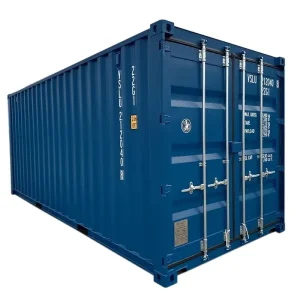
| 20ft General Purpose (20GP) | 6,058 × 2,438 × 2,591 mm | 33.2 m³ | 2,200 kg | 30,480 kg (67,200 lbs) | Dense, heavy commodities: machinery, mining minerals, packaged steel, ceramic tiles. |
| 40ft High-Cube Dry (40HC) | 12,192 × 2,438 × 2,896 mm | 76.4 m³ | 3,900 kg | 32,500 kg (71,650 lbs) | Voluminous, low-density cargo: consumer electronics, automotive parts, furniture, textiles. |
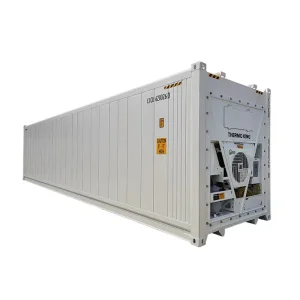
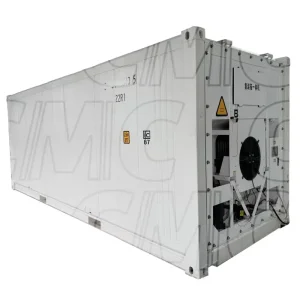
| 40ft High-Cube Reefer (40RH) | 12,192 × 2,438 × 2,896 mm | 67.8 m³ | 4,600 kg | 34,000 kg (74,950 lbs) | Deep-frozen fish, fresh meats, seasonal horticulture, biopharmaceuticals (-30°C to +30°C). |
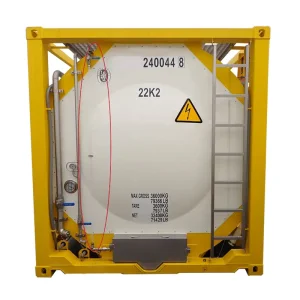
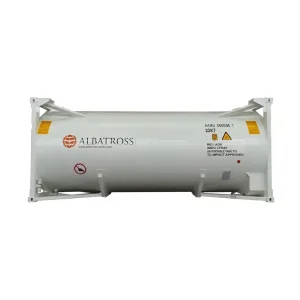
| 20ft ISO Tank (T11 / Food Grade) | 6,058 × 2,438 × 2,591 mm | 21,000 - 26,000 L | 3,650 kg | 36,000 kg (79,365 lbs) | Bulk food-grade spirits, edible oils, industrial non-hazardous and light hazardous chemicals. |
| 20ft Cryogenic Tank (T75) | 6,058 × 2,438 × 2,591 mm | 18,000 - 22,000 L | 7,800 kg | 36,000 kg (79,365 lbs) | Liquid Nitrogen (LIN), Liquid Oxygen (LOX), Argon, and Liquefied Natural Gas (LNG) at -196°C. |
| 10ft Offshore Basket / Tool Tank | 2,991 × 2,438 × 2,591 mm | 15.8 m³ | 2,100 kg | 10,000 kg (DNV 2.7-1) | Rough-sea oil and gas drilling equipment, platform subsea tooling, offshore support vessels. |
Global Intermodal Deployment: Cross-Continental Transshipment Nodes
Examining the operational environments, corridor regulatory frameworks, and dynamic cargo flows defining container utilization across critical world trade lanes.
Trans-Pacific & Far East-Europe
These ultra-high-volume deep-sea trade lanes demand maximum volumetric efficiency via 40ft High-Cube dry boxes and automated Controlled Atmosphere (CA) reefer systems. Containers undergo extreme wave-induced roll and pitch forces, demanding full compliance with ISO 1496 longitudinal racking tolerances and UIC 592 railway dynamic clearance gauges for European intermodal feeder integration.
African Emerging Trade & Mining Nodes
The rapid expansion of African infrastructure development drives heavy demand for robust 20ft dry containers, side-door units, and half-height open-top ore carriers. Unpaved inland haulage, severe thermal shifts, and high humidity require heavy-duty 28mm hardwood marine plywood flooring, extra lashing rings (rated to 2,000 kg each), and heavy-duty corner cast reinforcing.
North & South American Cold Chains
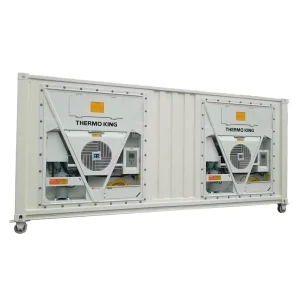
From the agricultural belts of South America exporting protein and fruit to North American grocery distribution centers, cold chain reliability is paramount. Buyers specify dual-temperature Carrier Transicold and Thermo King refrigeration machinery, integrated with automated digital data recorders and real-time remote reefer monitoring systems to ensure strict FDA FSMA compliance.
Beyond Traditional Shipping: Specialized Industrial Adaptations
How the structural rigidity, modular repeatability, and standardized ISO lifting envelope of steamship containers are being leveraged across high-growth alternative engineering industries.
Utility-Scale BESS Enclosures
ISO shipping container structural shells serve as the prime structural framework for Battery Energy Storage Systems (BESS). Reinforced floors handle dense lithium-iron-phosphate (LFP) rack weights exceeding 30 metric tons, while custom thermal break insulation and NFPA 69 explosion relief venting ensure absolute grid safety.
Modular Living & Smart Office Pods
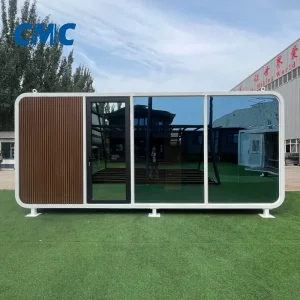
Modern architectural pods, tiny houses, and luxury apple cabins transform Corten structural envelopes into rapidly deployable living environments. Integrating rockwool acoustic thermal insulation, concealed wiring conduits, and floor-to-ceiling double-glazed tempered facades, they ship as standard freight worldwide.
Remote Field Laboratories & Mining
For mining and offshore exploration sites, ISO containers are converted into blast-resistant on-site water purification plants, electrical switchgear control rooms, and mobile chemical assay laboratories. Standard ISO dimensions allow rapid transport aboard common flatbed trailers and roll-on/roll-off barges.
Offshore DNV Energy Modules
Built to DNV 2.7-1 / EN 12079 dynamic offshore lifting standards, these heavy-duty units withstand extreme wave acceleration forces and sub-zero impact shock loading. Certified 4-part wire rope lifting slings and padeyes ensure fail-safe transfers between offshore supply vessels (OSVs) and deepwater drilling rigs.
Specialized Logistics Assets, Modular Buildings & Energy Units
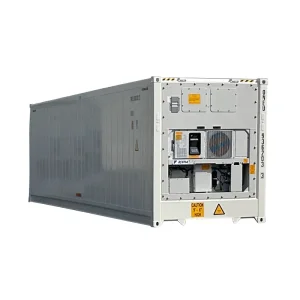
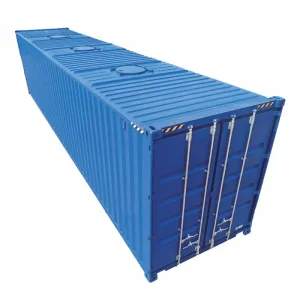
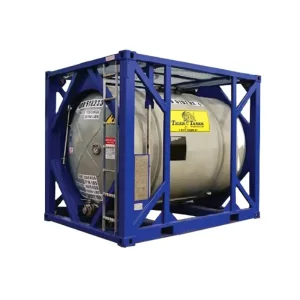
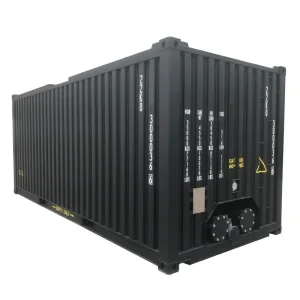
Explore our second production tier featuring customized modular architectural pods, Daikin cold storage freezers, bulk containers, blast reefers, offshore DNV equipment, and heated liquid asphalt transports.

Engineering, Procurement, & Compliance Inquiries Answered
Expert answers addressing the primary technical, commercial, and operational questions encountered by international corporate buyers when procuring shipping containers from China.
What specific steel chemistry is utilized to prevent marine atmospheric corrosion?
Our standard intermodal steamship containers are constructed almost entirely from SPA-H or equivalent atmospheric corrosion-resistant steel (commonly known as Corten-A). This steel grade incorporates calculated micro-alloy elements including Carbon (≤0.12%), Silicon (0.25-0.75%), Manganese (≤0.60%), Phosphorus (0.07-0.15%), Sulfur (≤0.03%), Chromium (0.50-1.25%), Nickel (≤0.65%), and Copper (0.25-0.55%).
Upon exposure to the cyclic wet-dry atmospheric environment of ocean transit, these alloys react to create a dense, amorphous oxy-hydroxide protective layer (patina) that limits oxygen and electrolyte diffusion into the base metal, extending the operational life expectancy beyond 15 to 20 years.
How do classification societies certify new-build steamship containers?
Every commercial intermodal container must comply with the International Convention for Safe Containers (CSC 1972) regulations and ISO 1496-1 design standards. Major international classification societies (such as Bureau Veritas, ABS, or DNV) conduct comprehensive prototype testing and ongoing factory surveillance.
Prototype testing requires: (1) Stacking proof load tests where each corner post supports up to 86,400 kg (equivalent to nine fully loaded 24-ton containers stacked above); (2) Lifting from top corner fittings at 2x Max Gross Weight; (3) Floor strength testing utilizing a loaded steel wheeled vehicle exerting 7,260 kg axle loads; (4) Transverse and longitudinal racking and rigidity tests; and (5) High-pressure watertightness hose testing delivering 100 kPa pressure from a 12.5mm nozzle at a distance of 1.5 meters.
What are the key technical differences between T11, T14, and T75 ISO tank containers?
UN Portable Tanks are classified under the International Maritime Dangerous Goods (IMDG) code according to their working pressures, discharge mechanisms, and cargo danger ratings:
- T11 Tank Containers: Specified for non-hazardous and low-hazard liquids (such as food-grade alcohol, juices, lubricants, and mild chemicals). They operate with bottom discharge valves and test pressures of 4.0 bar (typical working pressure 1.5 - 2.65 bar).
- T14 Tank Containers: Engineered for highly corrosive, toxic, or hazardous chemical substances (such as concentrated acids). They feature top-only discharge fittings with zero bottom shell penetrations, thicker 316L stainless steel shells, and higher test pressure ratings (typically 6.0 bar).
- T75 Tank Containers: Specialized vacuum-insulated double-walled cryogenic pressure vessels. The inner vessel is composed of austenitic stainless steel, surrounded by multi-layer insulation (MLI) and an outer carbon steel vacuum jacket, designed to transport liquefied gases like LIN, LOX, LAr, and LNG at temperatures as low as -196°C with holding times exceeding 30 to 45 days without venting.
What is the difference between One-Trip (New) and Used Cargo Worthy (CW) containers?
One-Trip (New) Containers: These units are fresh from the factory in China and carry a single payload of cargo on their maiden voyage to the destination market. They feature pristine original paint, immaculate hardwood flooring without oil or chemical stains, perfect door gasket geometry, zero structural denting or corrosion, and a CSC plate valid for a full 5 years from manufacture.
Used Cargo Worthy (CW) Containers: Typically retired after 10 to 14 years of intensive shipping line service. While certified by an IICL container surveyor to be structurally sound, weather-tight, and legally stackable aboard vessels, they display surface oxidization, repair patches, minor denting, and degraded floor varnish. CW units are widely favored for static warehouse storage and land-based modular conversions where lower acquisition cost takes precedence over cosmetic perfection.
Can shipping containers be customized with OEM/ODM modifications prior to export?
Yes. Our factory provides turnkey OEM and ODM design engineering. Customizations include full-side access bi-folding door arrays, industrial heavy-duty roll-up shutters, high-density non-flammable rockwool or polyurethane insulation lining, internal recessed lashing channels, structural roof openings for generator sets, customized electrical cable gland plates, and factory application of high-durability marine corporate liveries with specific RAL color formulations.
What lead times and logistical terms govern batch container procurement?
For standard 20ft and 40ft dry containers, baseline production lead times range between 20 and 35 calendar days depending on batch scale and seasonal factory slot allocations. Specialized ISO tanks, cryogenic modules, and custom architectural pods typically require 45 to 60 days to allow for detailed engineering reviews, material testing, and classification survey verification.
Logistical dispatch is executed via FOB Tianjin / Shanghai / Qingdao, or full CIF/DAP terms to major global discharge ports. Buyers may opt for empty container positioning or coordinate "one-way free-use" cargo loading agreements with international freight forwarders to offset initial repositioning freight expenditures.