
Engineered Fleet Units: High-Cube & Specialized Intermodal Solutions
Explore high-capacity dry, offshore, and modular configurations engineered for hazardous freight, extreme temperature stability, and intermodal versatility directly from our automated production lines.
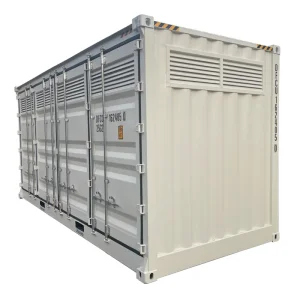
Famous 20FT High-cube Dangerous Goods Container Side Open Door with Ventilation Opening
Configure Model
Buy New Half Height Ore Carrier Container Offshore Container Manufacturers, Quotes
Configure Model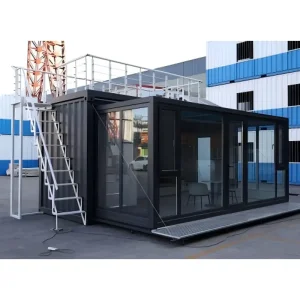
Famous 20ft Foldable Prefab Modular Homes Mobile Expandable Container House with Bathroom
Configure Model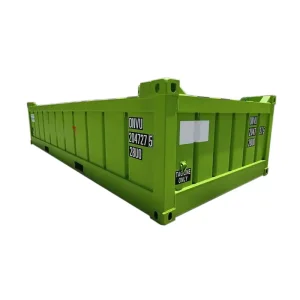
ODM New DNV Certification Offshore Half-Height Open Top Container Products, Exporters
Configure Model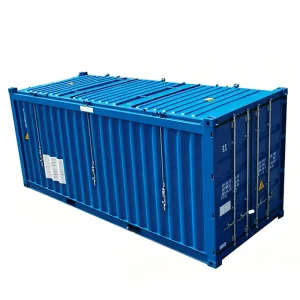
China 20ft New Hard Open Top Shipping Container Manufacturer, Factories
Configure Model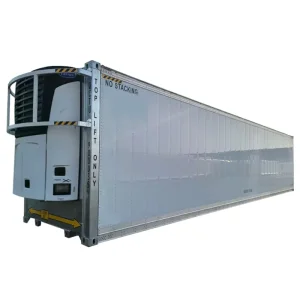
China Carrier X4-7300 Refrigeration and Electricity Integrated Container Exporter
Configure Model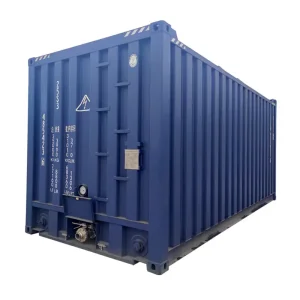
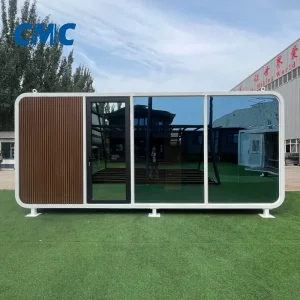
Famous 20ft Prefab Container House Flat Pack Modular House Office Apple Cabin Pod
Configure ModelStructural Dimensionality & The Microeconomics of High Cube Volumes
Within international multimodal freight systems, the high-cube container—principally specified under ISO 668 designation 1AAA (for 40-foot units) and customized 20-foot tall variations—represents a fundamental evolutionary shift in freight volumetric density. Standard general-purpose (GP) shipping containers are manufactured to an exterior height dimension of 8 feet 6 inches (2,591 mm). Conversely, high cube (HC) profiles extend this vertical axis to precisely 9 feet 6 inches (2,896 mm), yielding an extra 305 mm (12 inches) of nominal vertical loading space.
This 1-foot vertical differential produces massive macroeconomic compounding benefits across global logistics value chains. For a standard 40ft GP container, maximum internal usable volume hovers at approximately 67.7 m³ (2,390 cu ft). In a 40ft High Cube container, available usable volumetric capacity expands to 76.4 m³ (2,698 cu ft)—an absolute gain of approximately 8.7 m³, representing a 12.85% net volume expansion without altering the chassis footprint, twist-lock alignment, corner casting tolerances, or crane spreader interfaces.
In modern intermodal freight economics, the vast majority of consumer goods, cross-border e-commerce parcels, electronics, automotive assemblies, and palletized dry goods "cube out" long before they "weigh out." That is, a container reaches its volumetric limit well before its structural payload rating of roughly 28,000 to 30,000 kilograms is breached. By deploying High Cube platforms, transnational enterprises achieve significant reductions in ocean freight costs per cubic meter, lower domestic drayage expenses per freight unit, and streamline storage terminal dwell times.
| ISO Dimensional Parameter | 20ft Standard GP | 20ft High Cube (Custom) | 40ft Standard GP | 40ft High Cube (1AAA) |
|---|---|---|---|---|
| External Height | 2,591 mm (8'6") | 2,896 mm (9'6") | 2,591 mm (8'6") | 2,896 mm (9'6") |
| Internal Clear Height | 2,393 mm (7'10") | 2,698 mm (8'10") | 2,393 mm (7'10") | 2,698 mm (8'10") |
| Door Opening Height | 2,280 mm (7'5.7") | 2,585 mm (8'5.7") | 2,280 mm (7'5.7") | 2,585 mm (8'5.7") |
| Internal Cubic Volume | 33.2 m³ (1,172 cu ft) | 37.4 m³ (1,320 cu ft) | 67.7 m³ (2,390 cu ft) | 76.4 m³ (2,698 cu ft) |
| Tare Weight (Nominal) | 2,200 kg (4,850 lbs) | 2,420 kg (5,335 lbs) | 3,750 kg (8,267 lbs) | 3,940 kg (8,686 lbs) |
| Max Gross Operating Mass | 30,480 kg (67,200 lbs) | 30,480 kg (67,200 lbs) | 32,500 kg (71,650 lbs) | 34,000 kg (74,957 lbs) |
Critical Metallurgical Standard: Atmospheric Corrosion Resistance
Every high cube container fabricated across premier Chinese industrial plants utilizes high-tensile SPA-H atmospheric corrosion-resistant Corten steel (JIS G3125 standard). The alloying composition—incorporating copper, chromium, and nickel—creates an impermeable protective patina when exposed to maritime chloride environments, yielding four to six times the longevity of standard carbon steel (Q235) under ASTM B117 salt fog endurance cycles.
China Supply Chain Primacy: Ecosystem Synergy & Metallurgy
China supplies more than 90% of global intermodal container infrastructure. This absolute industrial concentration is not merely an outcome of manufacturing capacity, but of an end-to-end, vertically integrated industrial cluster.
Upstream Smelting & Corten Integration
Direct pipeline agreements with top-tier steel complexes (Baosteel, Ansteel, and Shougang) guarantee continuous coil feeding of genuine JIS SPA-H Corten steel with strict control over carbon equivalents (Ceq < 0.40). This continuous material availability eliminates raw material price shocks and stabilizes production schedules during international procurement surges.
Automated Robotics & VOC Coating Lines
Modern Chinese manufacturing facilities run high-cadence automated fabrication cells: multi-torch robotic sub-arc corrugation welders, CNC hydraulic press-brake bending of structural sills, and automatic zinc-rich waterborne paint systems. Strict environmental compliance with zero-VOC mandates preserves longevity while conforming to EU REACH chemical standards.
Port Clusters (Tianjin & Suzhou Corridors)
Strategically situated within 100 kilometers of deepwater export docks in Tianjin and the Yangtze River Delta hubs (Shanghai/Ningbo), factories eliminate domestic freight overheads. Built containers can be moved directly into ocean carrier marshaling yards, saving significant drayage and terminal staging costs.
This integration enables Chinese manufacturers to maintain consistent structural output, tight delivery schedules, and rigorous quality control. Turnaround times from 3D CAD stress-simulation approval to production line rollout are drastically shorter than in competing regions, giving fleet operators, military logistics contractors, and multinational leasing corporations rapid scalability without supply chain interruptions.
Global Procurement Metrics: Total Cost of Ownership (TCO) & Spec Matrices
Industrial buyers evaluate High Cube container procurement far beyond simple initial purchase price. A thorough Total Cost of Ownership (TCO) calculation must incorporate life expectancy, structural fatigue resistance, seal durability, and resale liquidation values across international depots.
Floor Structure & Concentrated Axle Loadings
Standard container floors use 28 mm marine-grade hardwood plywood or 19-ply bamboo composites tested to meet ISO 1496-1 concentrated cargo loads. High-volume buyers verify the floor against 7,260 kg (16,000 lbs) per axle wheel loading tests to withstand heavy forklift operations during tight turnaround cycles without delamination or deflection of transverse bottom crossmembers.
EPDM Double-Lip Perimeter Gasket Dynamics
Air-tightness and water-tightness depend heavily on door perimeter seal design. Modern high-spec units use extruded EPDM rubber gaskets with dual inner-outer lips and integrated vulcanized corners. These retain high elasticity and compression set resistance across extreme temperatures ranging from -40°C in Arctic rail runs to +70°C in equatorial marine conditions.
Corner Casting Tolerances & Stacking Loads
Corner castings forged from cast steel (SCW480 or equivalent) must maintain tight dimensional tolerances under ISO 1161. In nine-high stacking configurations on container vessels, the lowest container's four corner posts support up to 192,000 kg (423,280 lbs) of superimposed static load. High-strength Corten corner posts (6.0 mm thickness) ensure zero structural buckling even during severe sea roll angles.
Coating Chemistry & Dry Film Thickness (DFT)
Marine corrosion protection relies on multi-layer coatings: zinc-rich epoxy primer (30–40 μm), epoxy intermediate tie-coat (40–50 μm), and polyurethane/acrylic topcoats (40–50 μm), reaching a total Dry Film Thickness exceeding 120 μm. This coating system protects against salt mist, ultraviolet degradation, and mechanical abrasion over an extended service life.
Compliance Assurance: Maritime Certifications & Regional Standards
Deploying intermodal assets across international customs territories, national rail networks, and offshore petroleum fields requires strict compliance with multilateral safety compacts and third-party inspection certifications.
CSC Safety Approval
Certified under the International Convention for Safe Containers (1972). Every unit bears a stainless steel CSC Safety Plate displaying structural gross rating, stacking weight limit, and transverse racking test values, verified by Bureau Veritas (BV), ABS, or Lloyd's Register.
DNV 2.7-1 / EN 12079
Units destined for offshore platforms, subsea support ships, and mining outposts must withstand dynamic ocean crane hoisting. These feature non-destructive testing (NDT), charpy impact-tested structural steel, and integrated lifting pad-eyes.
TIR & Customs Seal
Built to Customs Convention on the International Transport of Goods (TIR). Fasteners, locking bars, and cam retainers are engineered to prevent cargo compartment access without breaking customs-applied seal wires.
UIC / Rail Transit
Meets UIC 592 regulations for cross-border rail systems (including China-Europe Railway Express and European corridors), ensuring the 9'6" height clears track tunnels, catenary lines, and platform clearances.
Local Support Services: Factory Stocking & Port-Side Customization
Beyond initial production, manufacturers provide essential regional support: depot-level storage across Tianjin, Qingdao, and Shanghai; rapid custom modifications (such as side-opening doors, custom vents, or blast relief panels); and bundled shipment of knocked-down flat-pack frames to reduce oceanic repositioning costs.
Technological Evolution: Smart Telematics, Energy Storage & Green Materials
The high-cube container sector is moving beyond basic structural steel fabrication toward smart intermodal equipment, sustainable raw materials, and high-performance energy system enclosures.
IoT Telematics & Sensor Integration
New High Cube builds frequently integrate factory-installed IoT telematics. Low-power, satellite-linked transceivers monitor internal temperature, relative humidity, door openings, GPS locations, and shock events in real time. This automated telemetry feeds directly into enterprise ERP systems via cloud APIs, protecting high-value cold chain and dangerous goods shipments.
Eco-Friendly Bamboo Composites
Traditional tropical apitong hardwood flooring is increasingly replaced by sustainable, multi-layer laminated bamboo flooring and high-tensile hot-dip galvanized steel grid plates. Bamboo composites match or exceed 7,260 kg floor tests, resist insect damage naturally, and lower lifecycle emissions without heavy chemical preservatives.
High Cube BESS & Modular Conversion
The global energy transition has driven surging demand for modified High Cube structures as Battery Energy Storage Systems (BESS). The 9'6" height provides the clearance needed for overhead HVAC ducting, automated aerosol fire suppression lines, liquid-cooling manifolds, and heavy LFP battery racks, without exceeding standard ISO transport profiles.
Localized Field Applications: Demands Across Strategic Verticals
Different operational environments place distinct engineering demands on High Cube container builds. Below is how specialized designs address these real-world requirements.
E-Commerce & Consumer Logistics
High-cube units allow double-stacking of standard Euro pallets (1,200 × 800 mm) and ISO pallets (1,200 × 1,000 mm) for light, high-volume products like footwear, apparel, and electronics. This extra vertical space maximizes load density, lowering drayage costs across regional fulfillment networks.
Pharmaceutical & Fresh Agri Cold Chains
Using 40ft High Cube reefers equipped with high-efficiency Carrier, Daikin, or Thermo King refrigeration units, operators maintain precise temperatures between -35°C and +30°C. Deep "T-bar" aluminum floors circulate cold air evenly, preventing hot spots and keeping sensitive pharmaceutical products fully compliant with GDP standards.
Offshore Energy & Subsea Extraction
Half-height and full-profile offshore units deployed across the North Sea and Gulf of Mexico feature DNV 2.7-1 certifications. Reinforced side frames, heavy-duty sling sets, and pad-eyes withstand dynamic lifting forces from supply vessels even in rough sea states (Beaufort force 6+).
Prefabricated Commercial & Residential Pods
Urban housing developers convert 20HC and 40HC steel shells into modular offices, retail spaces, and emergency clinics. The 2,698 mm interior ceiling clearance leaves room for acoustic insulation, recessed lighting, and plumbing without compromising standard living headroom.
Mining, Heavy Aggregates & Heavy Slurry
Bulk resource operations use specialized half-height open-top containers and reinforced square liquid tanks. Low centers of gravity make handling dense ores, concentrates, and chemicals safe, while hard/soft tops speed up overhead hopper loading and tipper discharge cycles.
Hazardous Goods & Battery Chemical Transit
High Cube dangerous goods containers feature explosion-proof ventilation, anti-spark interior coatings, bunded containment sumps with drain valves, and side-opening doors. These allow fast forklift access while meeting strict IMDG Code regulations for flammable and chemical storage.
Expanded Production Line: Insulated, Reefer & Heavy-Duty Units
Explore high-cube insulated, certified reefer, side-opening dry freight, and specialized platform units available for immediate export from Chinese maritime depots.
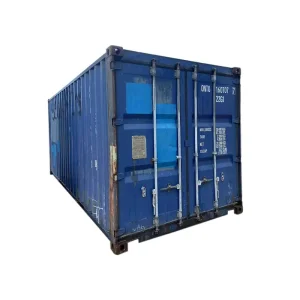
ODM 40ft Used Dry Cargo Shipping Container Manufacturers, Quotes
Configure Model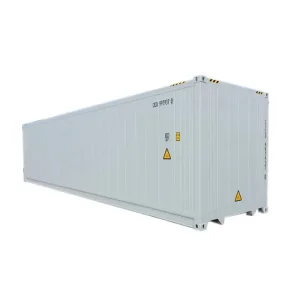
Buy New 40ft High Cube Thickened Foam Insulation Container Factory, Exporters
Configure Model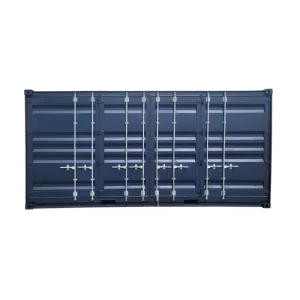
High-Quality New 20ft Customized Side Door Dry Cargo Shipping Container Factory
Configure Model
China Used 40ft High-Cube Certified Reefer Container Pricelist, Exporter
Configure Model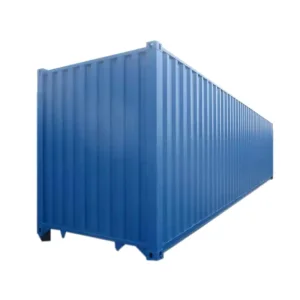
China 40ft High Cube Certified Dry Cargo Shipping Container Factory, Product
Configure Model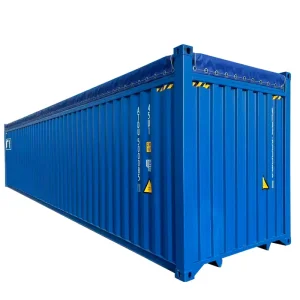
Buy 40ft High-Cube New Soft Open Top Shipping Container with Tarpaulin Cover
Configure Model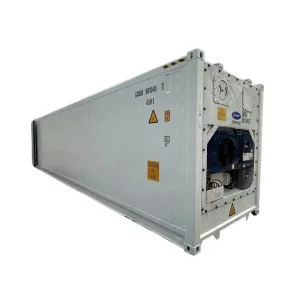
Buy Ninety Percent New Used 40ft HC Carrier Refrigerated Container Product, Quotes
Configure Model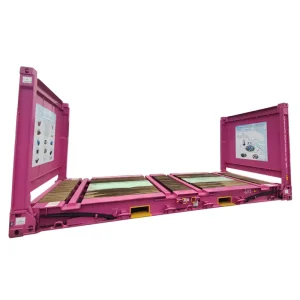
Frequently Asked Questions: High Cube Engineering & Sourcing
Direct technical and commercial answers addressing common engineering specifications, lead times, international certifications, and customization parameters.
How does a 40ft High Cube container differ from a standard 40ft GP container in structure and payload?
The structural difference lies in the 12-inch (305 mm) vertical extension of the corner posts and corrugated side panels, increasing exterior height from 8'6" (2,591 mm) to 9'6" (2,896 mm). This increases usable internal volume from 67.7 m³ to 76.4 m³, providing roughly 12.8% more space.
Structurally, High Cube units use thicker 6.0 mm Corten corner posts and reinforced header sills to safely handle nine-high stacking loads (up to 192,000 kg). While tare weight increases by approximately 190–220 kg, total maximum gross operating mass is typically certified up to 32,500 kg or 34,000 kg under ISO 1496-1, ensuring net payload is not compromised.
Can Chinese manufacturers customize High Cube containers with side doors, vents, and internal linings under OEM/ODM contracts?
Yes. OEM and ODM customizations are standard across modern Chinese plants. Structural modifications include full-access side-opening bi-fold doors, heavy-duty rolling shutters, floor-level louvered vents with flame arrestors, and internal insulation with polyurethane foam or mineral rock wool.
Before fabrication begins, engineering teams provide complete 3D SolidWorks models and finite element analysis (FEA) reports to verify that modified frame members continue to meet ISO racking, bending, and shear stress standards.
Which classification societies certify High Cube units for international service?
Production units are inspected and certified by international classification societies, including Bureau Veritas (BV), ABS (American Bureau of Shipping), DNV, and Lloyd's Register (LR). These bodies witness prototype testing: vertical stacking, transverse racking, bottom crossmember deflection, longitudinal restraint, and watertightness under ISO 1496-1 testing protocols.
Once certified, each unit receives a permanent stainless steel CSC safety approval plate and a Customs Convention on Containers (CCC/TIR) certificate for international customs transit.
What are typical minimum order quantities (MOQs) and production lead times for custom High Cube builds?
For standard dry freight 40ft High Cube containers, many factories accept orders starting at 2 to 5 units, with large-scale production runs exceeding 50 to 500 units. For specialized builds—such as side-door dangerous goods containers or custom BESS enclosures—MOQs typically range from 1 to 4 units.
Production lead times for standard builds average 2 to 3 weeks following drawing sign-off. Custom configurations requiring non-standard raw materials, specialized paint systems, or third-party electrical integration generally require 4 to 6 weeks to roll off the line.
Why do refrigerated (Reefer) High Cube containers have smaller internal dimensions than dry containers?
Reefer containers incorporate polyurethane foam insulation (usually 50–75 mm thick on side walls and up to 100 mm in ceiling panels) to achieve low thermal conductivity (U-values around 0.35 W/m²K). In addition, the nose of the container houses an integrated refrigeration machinery package (Carrier Transicold, Daikin, or Thermo King) that extends roughly 400 mm into the interior.
Because of this insulation and machinery footprint, an ISO 40ft High Cube reefer provides an internal usable volume of approximately 67.6 m³ compared to 76.4 m³ in an uninsulated dry cargo unit.
How are High Cube containers shipped to international buyers to keep shipping costs manageable?
Containers are commonly exported via "One-Way Shipper Owned Container" (SOC) arrangements, where the container carries commercial export cargo on its initial voyage, substantially offsetting ocean freight repositioning costs. Alternatively, empty units can be moved as standard ISO slots on container vessels or repositioned as four-in-one interlocking flat-packs where applicable.
With factories located within 100 kilometers of the major ports of Tianjin, Qingdao, and Shanghai, local drayage is direct and economical, allowing units to transition smoothly from the paint line into international maritime carrier slots.