
Insulated / 40HC
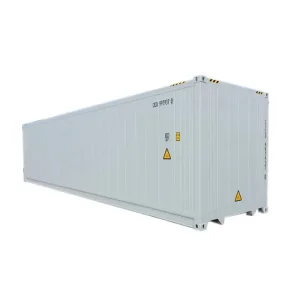
Engineered to ISO 1496-1 and certified by Bureau Veritas (BV) and DNV for deep-sea, intermodal rail, and specialized overland operations.
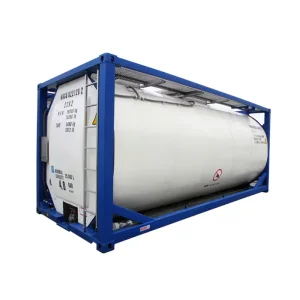
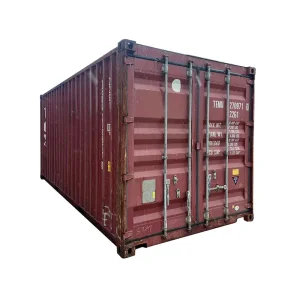
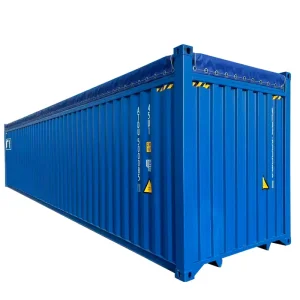
An extra foot of vertical clearance increases internal volume from 67.7 m³ to 76.4 m³—a critical 12.8% capacity gain for volume-constrained global freight corridors.
Standard 40GP containers restrict double-stacked euro-pallets and tall industrial machinery. The 40ft High Cube (40HC) provides 2,698 mm interior height, allowing shippers to capture up to 30.5 metric tons of structural payload without hitting early cube-out limits, dropping landed logistics costs per CBM by an average of 11.4%.
Manufactured using cold-rolled atmospheric corrosion-resistant SPA-H Corten steel. Yield strength exceeds 355 MPa, paired with an adherent copper-chromium-phosphorus oxide layer that stops rust penetration even under extreme maritime saline mist (ASTM B117 1,000-hour exposure standards).
High Cube structures experience elevated bending moments when stacked 9-high on 24,000 TEU ultra-large container vessels. CIMIC designs integrate heavy-gauge 6.0 mm inner corner posts and reinforced cast steel ISO corner blocks tested to 848 kN stacking proof loads, compliant with ISO 1496-1.
For standard dry freight, a 40ft High Cube holds up to 25 standard Euro-pallets (1,200 × 800 mm) or 21 standard American pallets (1,200 × 1,000 mm) in single-tier configurations. With engineered intermediate mezzanine racking systems, available internal headroom yields an aggregate 32% increase in lightweight packaged cargo handling efficiency.
Base FOB prices from Tianjin Port & Shanghai Hubs. Volume discounts apply at 10+ TEU increments. Certified with BV, ABS, and CCS approval.
| Spec Class / Dimensional Model | Dimensions (Ext. L×W×H) | Tare Weight / Max Gross | Volumetric Cap | Unit Core Machinery | Baseline FOB China (USD) | Target Sector |
|---|---|---|---|---|---|---|
| 40ft High Cube Standard Dry (SPA-H) | 12,192 × 2,438 × 2,896 mm | 3,900 kg / 32,500 kg | 76.4 m³ | Heavy-Duty Lockrods | $2,750 – $3,450 | General Freight / Intermodal |
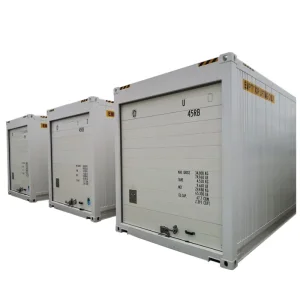
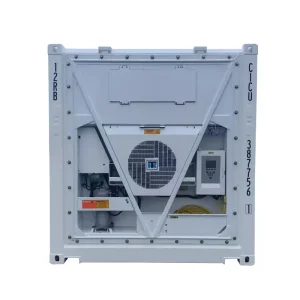
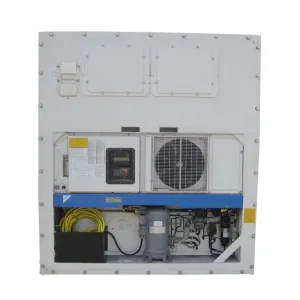
| 40ft HC Thickened Polyurethane Reefer | 12,192 × 2,438 × 2,896 mm | 4,620 kg / 34,000 kg | 67.6 m³ | Carrier Transicold / Daikin | $12,800 – $15,900 | Cold Chain Logistics (-30°C to +30°C) |
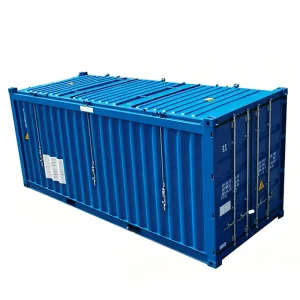
| 40ft HC Soft Open Top (Tarpaulin) | 12,192 × 2,438 × 2,896 mm | 4,100 kg / 32,500 kg | 74.2 m³ | Removable Roof Bows + PVC | $4,600 – $5,400 | Overheight Cargo / Top Crane Loading |
| 40ft HC Roll-Up Door Reefer Pod | 12,192 × 2,438 × 2,896 mm | 4,850 kg / 34,000 kg | 65.8 m³ | Thermo King Magnum Plus | $16,200 – $18,800 | Express Cold Distribution Hubs |
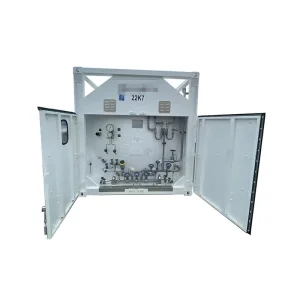
| 20ft HC Offshore DNV 2.7-1 Refrigerator | 6,058 × 2,438 × 2,896 mm | 3,850 kg / 15,000 kg | 29.2 m³ | DNV Lifting Slings + Daikin | $14,500 – $17,200 | Offshore Oil & Gas Subsea Supply |
| 20ft ISO Standard Chemical Tank (T11/T14) | 6,058 × 2,438 × 2,591 mm | 3,600 kg / 36,000 kg | 24,000 L | 316L Stainless Steel Vessel | $18,500 – $24,000 | Hazardous / Industrial Liquid Bulk |
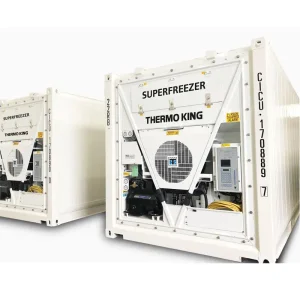
| 40ft HC Deep-Freezer (-60°C Ultra-Low) | 12,192 × 2,438 × 2,896 mm | 4,980 kg / 34,000 kg | 64.5 m³ | Thermo King SuperFreezer | $22,000 – $28,500 | Sashimi Tuna / Biological Vaccines |
Approximately 55–62% of a dry high cube container's production cost is tied to hot-rolled Corten-A coil pricing. Fluctuations in raw iron ore directly influence baseline unit rates week-over-week.
Low-VOC waterborne zinc-rich primer systems and bamboo-composite floors add $180–$260 per unit but prevent delamination under humid transit and comply with EPA/EU REACH safety standards.
Carrier PrimeLINE units offer high energy efficiency; Daikin provides precise inverter scroll-compressor control (±0.25°C); Thermo King Magnum Plus leads in rapid pull-down capabilities down to -40°C.
Analyzing TEU production capacity, empty box trade deficits, and regional fleet modernization initiatives across major shipping corridors.
Transpacific and Asia-Europe shipping routes generate structural imbalances. With empty container repositioning costing carriers over $20 billion annually, purchasing new 40HC units directly at Chinese departure hubs (Tianjin, Qingdao, Ningbo) presents a distinct economic advantage via One-Way Free Use cabotage agreements.
Under the CII (Carbon Intensity Indicator) framework, container lines are upgrading reefer fleets to variable-frequency scroll compressors and low-GWP refrigerants (R-513A, R-1234yf, CO2 R-744), reducing electrical consumption on containership auxiliary diesel generators by up to 35%.
CIMIC's strategic manufacturing clusters in Tianjin and Suzhou are within 100 kilometers of the world's most active sea terminals. This direct link eliminates high inland drayage surcharges, mitigates road transport delays, and simplifies port loading procedures.
Every High Cube container undergoes multi-stage structural load validation, weather tightness verification, and non-destructive weld testing before issuance of the CSC safety approval plate.
International Convention for Safe Containers (1972) certification stamped on stainless steel data plates, guaranteeing cross-border sea interchangeability.
Type-tested under strict surveillance: 9-high stacking load tests (up to 216,000 kg total column burden), floor deflection load, and dynamic transverse racking.
Special offshore refrigerated and dry cargo models tested for harsh dynamic sea conditions, including -20°C charpy impact resistance and integral pad-eye design.
Equipped with customs security seals, TIR cord conduits, and UIC 592 markings, enabling uninterrupted movement between maritime ships and European railway networks.
| Standard / Regulation | Governing Agency | Structural Assessment Criterion | Factory QC Test Benchmark |
|---|---|---|---|
| ISO 1496-1: Series 1 Freight Containers | ISO / TC 104 | Stacking, lifting, longitudinal/transverse restraint | Passed (Stacking: 86,400 kg/post) |
| ISO 668: Classification, Dimensions & Ratings | ISO Technical Board | External boundary tolerance and diagonal squareness | Tolerance < 3 mm corner-to-corner |
| Customs Convention on Containers (CCC/TIR) | United Nations ECE | Security against covert tampering or contraband insertion | 100% Blind-riveted Hinge Pins |
| ATP Agreement on Perishable Foodstuffs | ECE Inland Transport | Insulation K-factor and thermal loss rate | K-factor ≤ 0.40 W/(m²·K) |
Beyond traditional containerized maritime shipping, high-cube shells are an established structural foundation for modern industrial modular projects.
40HC and 20HC shells house utility-scale lithium iron phosphate (LiFePO4) battery racks. The extra headroom simplifies top-mounted HVAC ducting, liquid cooling piping, and NFPA 68/69-compliant explosion relief vents.
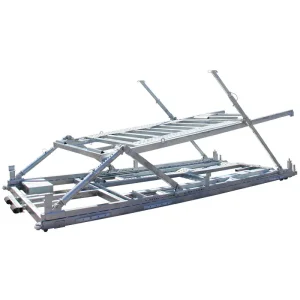
Utilizing high cube clearance allows vehicle transport racks to double-stack SUVs, crossover vehicles, and electric sedans without roofline interference, reducing export transit costs per vehicle by nearly 40%.
Fitted with high-accuracy Carrier or Thermo King refrigeration, 40HC reefers maintain +2°C to +8°C cold chains for vaccines, insulin, and active biopharmaceuticals with zero temperature drift across ocean voyages.
Sealed Corten steel bodies lined with polyurethane spray-foam insulation house high-density server racks. The high cube profile accommodates underfloor cold-aisle air systems and overhead cable trays.
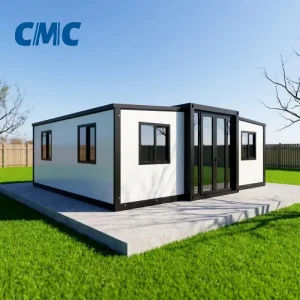
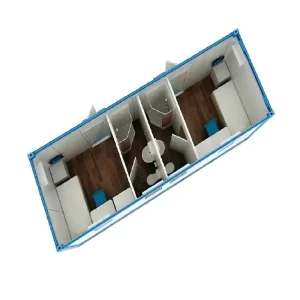
Architectural modular dwellings use 40HC expandable units. With an interior clear height of 2.5 meters after dry-walling and insulation, they offer comfortable living conditions for remote mining and disaster recovery sites.
Heated asphalt containers and cryogenic tank high-frames maintain steady viscosities for hazardous and industrial fluid transport across deep-sea and railway lines without product degradation.
Tracing the technological transition toward autonomous smart boxes, lightweight carbon-neutral composites, and IoT-enabled predictive asset management.
Factory-integrated solar-powered GPS/temperature sensors track cargo condition, door openings, and internal atmosphere (CO2/O2 levels) in real time over maritime satellite networks.
Replacing traditional polyurethane foam with thin vacuum insulation panels (VIPs). This upgrade cuts insulation wall thickness by 45%, adding internal cargo volume without losing thermal efficiency.
Automated fiber laser seam-welding reduces heat distortion, boosts joint shear strength by 28%, and delivers clean, paint-ready surface profiles for lower maintenance over long service lives.
Migrating to hydrogen-reduced direct reduced iron (H2-DRI) green steel for container panel fabrication, lowering the lifecycle embedded carbon footprint per TEU by more than 60%.
Authoritative answers covering dimensional clearance, reefer machine selection, steel grades, custom alterations, and factory acceptance testing.
A standard 40ft General Purpose (GP) container has an exterior height of 8 feet 6 inches (2,591 mm), yielding an interior clearance height of roughly 2,393 mm (7 ft 10 in) and an internal volume of 67.7 m³. In contrast, a 40ft High Cube (HC) container measures 9 feet 6 inches (2,896 mm) externally, providing an interior height of 2,698 mm (8 ft 10 in) and an internal volume of 76.4 m³. This adds 305 mm (12 inches) of vertical clearance and approximately 8.7 m³ (307 cu. ft.) of extra space, which is ideal for voluminous or overheight palletized freight.
SPA-H (JIS G3125 specification) is a specialized atmospheric corrosion-resistant copper-chromium alloy steel. When exposed to ocean moisture and salt spray, it forms an insoluble passivating patina rather than shedding destructive rust flakes. This oxide layer seals the base metal, extending structural service life to 15–25 years under rugged open-deck marine conditions. It also has a minimum yield strength of 355 MPa, providing the rigidity needed to stack containers up to 9-high on container vessels.
Each refrigeration brand has distinct operational benefits:
Carrier Transicold (e.g., PrimeLINE): Features a digital scroll compressor with low lifecycle power use, wide global spare parts availability, and stable performance for general perishable cargo (+0°C to +15°C).
Daikin (e.g., LXE10E): Employs proprietary inverter technology with precise temperature regulation (±0.25°C) and durable components, making it popular for high-value stone fruit and chilled meats.
Thermo King (e.g., Magnum Plus): Designed for deep-freezing down to -40°C with rapid pre-cooling pull-down times, making it well-suited for frozen seafood, poultry, and ice cream cold chains.
Every newly manufactured container includes a complete compliance document package:
1. Valid CSC Safety Approval Certificate and a fitted stainless steel CSC plate (stamped by BV, ABS, CCS, or LR).
2. TIR Customs Sealing Certification verifying intermodal transit security.
3. Factory Acceptance Testing (FAT) Report covering corner-post stack loads, hydraulic door-seal water tightness, floor deflection, and paint dry-film thickness (DFT).
4. Reefer Machinery PTI (Pre-Trip Inspection) Certificate verifying 24-hour continuous temperature logging.
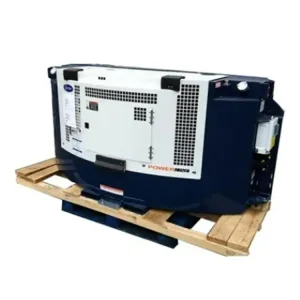
Yes. CIMIC provides full OEM/ODM engineering customization. We build full side-opening doors (providing a clear 11.8-meter side access opening), heavy-duty roll-up shutters, end double-doors, open tops with tarpaulins or steel hard-lids, intermediate floor mezzanines, and reinforced cutouts for generator sets or BESS battery exhausts—all while retaining the structural rigidity required for CSC certification.
Our plants are situated roughly 100 km from the Port of Tianjin and the Port of Shanghai/Taicang. This short distance lowers domestic trucking drayage expenses by $200–$450 per box compared to inland factories. It also reduces dispatch turnarounds down to 24–48 hours from final inspection to container yard hook-on, ensuring on-schedule departures and consistent export vessel sailings.
Heavy-duty, offshore-rated, modular accommodation, and specialized tank equipment engineered to meet global industrial cargo demands.
Connect with our container engineering group in Tianjin and Suzhou. We review your cargo specs, route demands, and volume schedules to issue full general arrangement (GA) drawings and transparent FOB/CIF pricing within 24 hours.