Precision Transport & Specialized Units
Explore heavy-duty intermodal enclosures, certified ISO tank frames, and modular micro-cold chain solutions built to exacting global logistics standards.
Macro Industry Solutions & Global Sourcing Paradigms
How Tier-1 engineering contractors, chemical distributors, and intermodal carriers leverage mini cargo containers to solve last-mile delivery and structural fragmentation.
High-Density Urban Intermodal Hubs
Standard 40ft or 20ft containers often pose impossible geometric hurdles within dense inner-city retail distribution hubs and historical port infrastructures. Mini cargo containers (6ft, 8ft, and 10ft configurations) provide an agile answer, functioning as granular modular cells that can be grouped into 20ft ISO envelopes via specialized interconnecting twist-locks or dispatched individually via light urban freight vehicles.
Decentralized Hazardous & Chemical Storage
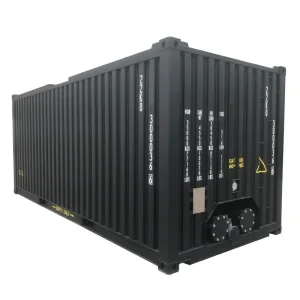
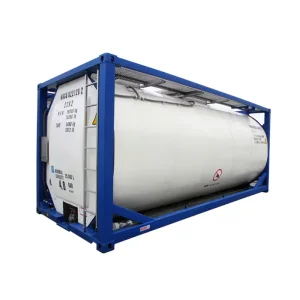
Regulatory frameworks such as IMDG and regional environmental mandates restrict bulk consolidation of incompatible hazardous materials. Utilizing ISO-certified mini tank and isolated dry units guarantees that small-batch reagent distribution, active pharmaceutical ingredients (APIs), and offshore fueling can operate under strictly compartmentalized fire suppression zones, isolating failure points effectively.
Decentralized Cold Chain Logistics
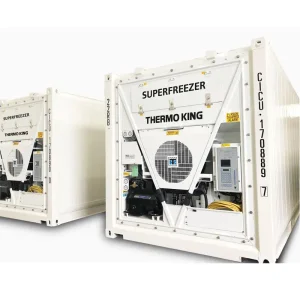
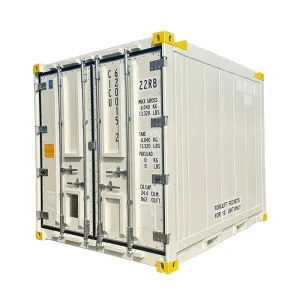
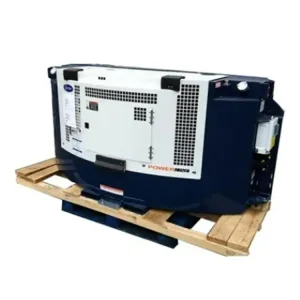
The rise of localized e-grocery fulfillment and bio-specimen transshipment requires active mini reefer containers capable of deep-freeze maintenance down to -30°C or even -60°C. With integrated micro-compressor architectures engineered alongside Carrier, Daikin, or Thermo King, procurement directors achieve multi-temperature routing inside standard dry trailers without running centralized high-cube reefers partially empty.
China Factory 4.0: Supply Chain Resilience & Quality Scalability
Leveraging automated submerged arc welding, robotic plasma profiling, and digital twin metallurgy to deliver unmatched production cycle reliability.
Automated Metallurgical Assembly
Utilizing high-tensile SPA-H Corten steel, our fabrication lines incorporate automated multi-axis seam tracking welding. This eliminates thermal degradation hotspots across corner casting junctions, guaranteeing structural integrity capable of enduring internal pressure spikes and multi-tier vessel stacking cycles up to 9-high configurations.
Proximity to Maritime Corridors
Our strategic operational clusters in Tianjin FTA and Suzhou position container inventory directly within 100 kilometers of the world's most active transshipment hubs. This coastal integration cuts inland drayage lead times by 72% and slashes secondary intermodal tariffs, affording rapid FOB, CIF, or DDP deployment directly onto primary trade lanes.
Strict Non-Destructive Testing (NDT)
Every batch of mini cargo containers undergoes radiographic, ultrasonic, and dye-penetrant testing alongside standardized hydraulic load rig deflection tests. We maintain complete material traceability logs from raw billet melt certificates down to paint thickness gauge (DFT) records exceeding C5-M marine exposure parameters.
Next-Generation Engineering & Future Outlook
Transitioning intermodal hardware from passive steel containment vessels into intelligent, sensor-monitored, self-sustaining logistical node networks.
IoT-Enabled Telematics & Predictive Maintenance
Integration of narrow-band IoT (NB-IoT) sensors directly into container side-wall profiles enables perpetual visibility. Fleet dispatchers monitor geographic coordinates, 3-axis shock impacts, door-opening telemetry, and ambient thermal-humidity fluctuations via real-time satellite handshakes, reducing cargo theft and streamlining cold-chain auditing.
Thermal Insulation & Aerogel Composite Infusion
Traditional rigid polyurethane foams are being supplemented with vacuum-insulated panels (VIP) and silica aerogels. This advanced thermal architecture delivers a 35% reduction in wall thickness while preserving identical heat transfer coefficients (U-values), significantly boosting internal volumetric capacity for pharmaceuticals and frozen perishables.
Circular Lifecycle & Low-VOC Powder Systems
Meeting European REACH regulations and global carbon-neutral mandates, manufacturing lines have shifted toward waterborne zinc-rich epoxy primers and automated electrostatic powder coating. This technology decreases hazardous VOC emissions by over 80% while enhancing resistance against salt-spray corrosion beyond 1,500 continuous salt chamber testing hours.
Engineering Specifications & Structural Classifications
Comparative structural matrix detailing typical mini container dimensions, certified lifting weights, and intermodal compatibility ratings.
| Container Model & Type | External Dimensions (L × W × H) | Internal Dimensions (L × W × H) | Max Gross Mass (MGM) | Tare Weight | Payload Capacity | Certifications |
|---|---|---|---|---|---|---|
| 6ft Mini Dry Box | 1,980 × 1,950 × 1,910 mm | 1,800 × 1,820 × 1,690 mm | 5,000 kg | 950 kg | 4,050 kg | ISO 1496-1, BV |
| 8ft Mini Dry Intermodal | 2,438 × 2,200 × 2,260 mm | 2,280 × 2,100 × 2,040 mm | 8,000 kg | 1,200 kg | 6,800 kg | CSC, BV, ISO 668 |
| 10ft High Cube Dry | 2,991 × 2,438 × 2,896 mm | 2,831 × 2,348 × 2,690 mm | 10,000 kg | 1,450 kg | 8,550 kg | CSC, ISO, TIR |
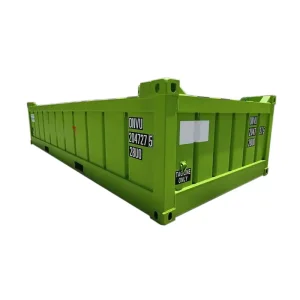
| 10ft DNV Offshore Tool Box | 2,991 × 2,438 × 2,591 mm | 2,800 × 2,240 × 2,250 mm | 10,500 kg | 2,100 kg | 8,400 kg | DNV 2.7-1 / EN 12079 |
| 10ft Precision Reefer | 2,991 × 2,438 × 2,591 mm | 2,390 × 2,280 × 2,160 mm | 10,200 kg | 2,250 kg | 7,950 kg | ATP, ISO, BV, CE |
| 20ft Standard Intermodal | 6,058 × 2,438 × 2,591 mm | 5,898 × 2,352 × 2,393 mm | 30,480 kg | 2,230 kg | 28,250 kg | CSC, UIC, TIR, ISO |
Localized Support & International Compliance Assurance
Ensuring frictionless cross-border customs clearing, rigorous class society inspections, and targeted structural warranties across all major trading corridors.
Classification Society Verification
Every mini container manufactured for export can be provisioned with comprehensive Class certification through Bureau Veritas (BV), ABS, Lloyds Register, or DNV. Inspections cover raw material heats, mill certificates, welding procedure specifications (WPS), welder qualifications (PQR), and hydro-pneumatic integrity audits.
CSC & Custom Seal Compliance
Equipped with official International Convention for Safe Containers (CSC) plates, our container units meet customs sealing mandates under the Customs Convention on Containers (CCC/TIR). This enables seamless intermodal transit across rail networks in Central Asia, Europe, and maritime terminals across North America without custom re-inspection delays.
Regional Spare Parts & Technical Guidance
Maintaining long-term operational uptime requires dependable components. We supply fully cataloged consumable replacements—including EPDM perimeter door gaskets, forged locking cams, stainless steel door hinge pins, and reefer compressor components—shipped directly to regional depots in Rotterdam, Houston, Durban, and Dubai.
Frequently Asked Questions for Sourcing Directors
In-depth responses covering procurement workflows, structural certifications, logistics arrangements, and custom engineering options.
What types of shipping containers does CIMIC manufacture and export?
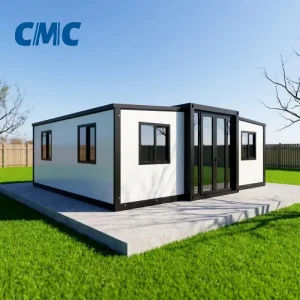
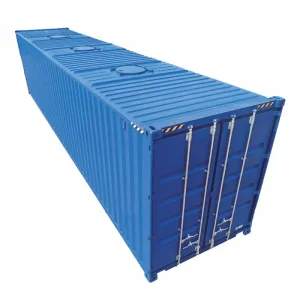
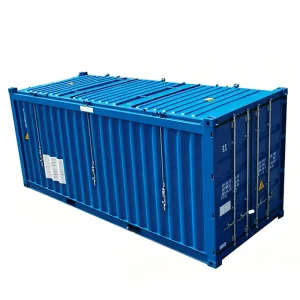
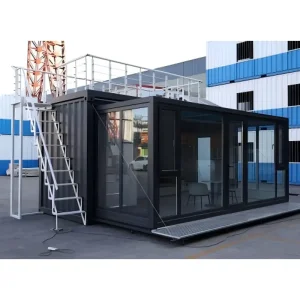
We manufacture and export an extensive line of logistics equipment, including reefer (refrigerated) containers, dry cargo containers, offshore containers, insulated containers, ISO tank containers, modular expandable container structures, and specialized containers such as side-open-door, roll-up-door, and open-top units. High-quality used reefer and used dry containers are also provisioned through our coastal depot networks.
Can you execute specialized OEM/ODM custom container fabrications?
Yes. Tailor-made OEM and ODM projects form a core pillar of our manufacturing operations. Our engineering department works directly from client technical drawings or develops end-to-end structural specifications based on cargo density, transport routes, climate extremes, and functional fit-outs—including integrated machinery cradles, interior lining modifications, and non-standard dimensional formats.
Which international quality certifications and maritime standards are satisfied?
Our facilities maintain ISO 9001 quality management certification and formal factory approval by Bureau Veritas (BV). Standard cargo units comply with ISO 668, ISO 1496-1, and CSC requirements. Offshore units are engineered to meet DNV 2.7-1 (EN 12079) dynamic impact and marine lifting standards.
Which refrigeration brands are integrated into your mini and standard reefer units?
We integrate premier global refrigeration machinery from Carrier (PrimeLINE/ThinLINE), Thermo King (Magnum Plus), and Daikin. These units can be specified in 10ft, 20ft, and 40ft standard and High Cube profiles, backed by international service and warranty networks across all major marine transshipment ports.
How are second-hand and used containers inspected and stored?
Our certified used dry and reefer inventory is strategically maintained in key Chinese maritime shipping hubs, including Tianjin, Qingdao, Shanghai, and Shenzhen. Each unit undergoes multi-point IICL-5 structural and wind/watertight (WWT) audits. Photographic records, machinery running logs, and third-party inspection releases are issued for customer sign-off prior to departure.
Where is the primary manufacturing hub located, and how are exports distributed?
Our primary manufacturing and export management centers are situated in Tianjin FTA Pilot Area and Suzhou, approximately 100 kilometers from deep-water container terminal facilities. From these origins, regular breakbulk, flat-rack, and one-way shipper-owned container (SOC) shipments are routed across Europe, North America, Africa, the Middle East, and Latin America.
High Cube, Bulk Cargo & Specialized Logistics Enclosures
Engineered for high-volume intermodal freight, temperature-critical warehousing, and specialized industrial transport cycles worldwide.