
Featured Length Specifications & Cold-Chain Solutions
Explore our certified 10ft, 20ft, and 40ft length configurations engineered for extreme maritime and intermodal freight durability.
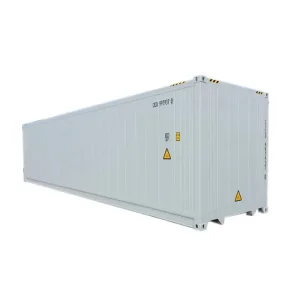
Buy New 40ft High Cube Thickened Foam Insulation Container Factory, Exporters
- Length Class: 40ft (12.192 m)
- Thermal Core: Thickened PU Foam
- Tare Weight: 4,250 kg
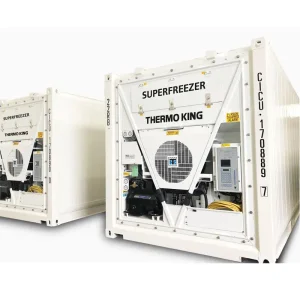
OEM New Deep Freezer Refrigerator Container For Sale Factory, Quotes
- Thermal Range: -35°C to +30°C
- Reefer Unit: Carrier / Daikin / TK
- Payload Max: 29,580 kg
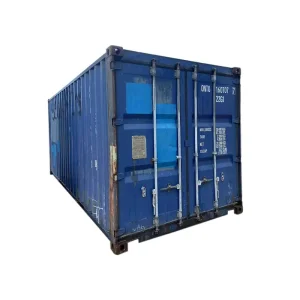
ODM 40ft Used Dry Cargo Shipping Container Manufacturers, Quotes
- Grade: Cargo Worthy (CW)
- Floor Spec: 28mm Marine Hardwood
- Capacity: 67.7 m³
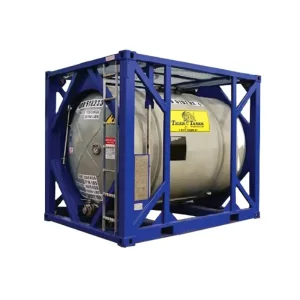
Buy New DNV Certification 10ft Offshore Tank Container Factory, Products
- Standard: DNV 2.7-1 / EN 12079
- Length: 10ft (2.991 m)
- Pressure Vessel: T11 Stainless Steel
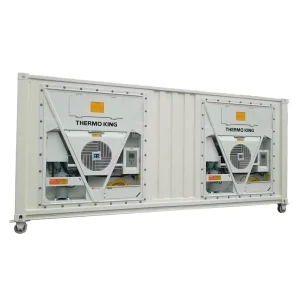
High-Quality The new blast reefer containers are certified by classification societies Manufacturers, Factories
- Cooling Rate: Rapid Shock Freezing
- Approval: BV / CCS / LR Certified
- Airflow: High Static Pressure
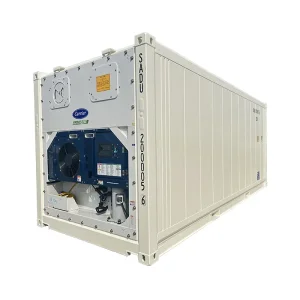
High-Quality New 40ft High Cube Carrier Refrigerator Freezer Cold Room Product, Exporters
- External Height: 9ft 6in (2.896 m)
- Compressor: Carrier ThinLINE / PrimeLINE
- Internal Floor: T-bar Airflow Inset
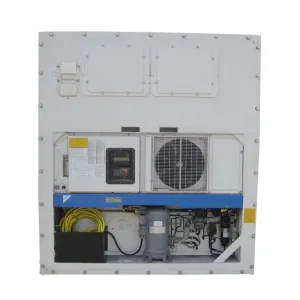
Buy Refrigeration Equipment /Cooling Unit For Refrigerated Containers Products, Exporters
- Refrigerant: R134a / R452A Eco
- Power Supply: 380V/460V 3-Phase 50/60Hz
- Controller: Digital Microprocessor
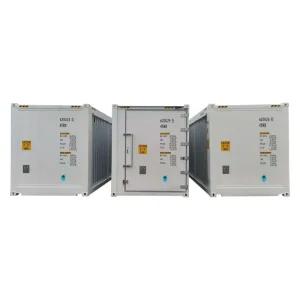
China OEM 40ft High-Cube Customized Three-in-One Combination Reefer Storage Container Manufacturer, Quotes
- Zones: Multi-Temp Triple Chamber
- Partition: Movable Insulated Bulkhead
- External Length: 12.192 m (40ft)
Commercial Status & Dimensional Physics of Cargo Container Lengths
A rigorous examination of standard ISO dimensions, payload mechanics, and the strategic logistical shift across international maritime corridors.
Standardization Under ISO 668 & ISO 1496
The global commerce network is structurally bound to the dimensional codifications defined by ISO 668 (Series 1 freight containers). The exact physical length governs everything from ship bay guides and twistlock spreads to reach stacker spreader arms and rail well car clearances. A standard nominal 20ft container measures exactly 19 ft 10.5 in (6.058 m), allowing two 20ft units to sit on a 40ft ship cell with precisely 3 inches of handling buffer clearance. Our Tianjin manufacturing lines strictly uphold tolerances within ±2.0mm, ensuring zero binding during transshipment cycles across automated container cranes.
The TEU vs. FEU Volumetric Economy
Logistical procurement evaluates length not merely in linear meters, but through the lens of density optimization. Dense cargo—including concentrated ores, ceramic tiles, and heavy industrial machinery—maximizes the legal road gross weight limit (often 30,480 kg) well before filling volumetric capacity, rendering the 20ft Twenty-Foot Equivalent Unit (TEU) the premier cost-effective asset. In contrast, e-commerce, consumer appliances, and chilled produce demand the volumetric expansion of the 40ft High Cube (FEU), delivering 76.3 cubic meters of stowage capacity to prevent premature dead-freight loss.
Regional Length Divergence (45ft, 48ft, & 53ft)
While ocean-going vessels operate on 20ft and 40ft modular grids, inland intermodal networks feature localized length divergences. In North American railway corridors, 53-foot domestic containers dominate intermodal double-stack operations, matching highway semi-trailer capacities. In European short-sea shipping, 45-foot pallet-wide units provide optimal internal width (2.44m) to fit 33 Euro-pallets side-by-side without load shift. CIMIC's engineering department bridges these regional variations with dual-certified corner casting positions.
Emerging Trends Transforming Cargo Container Manufacturing
How metallurgical advancements, IoT sensor integration, and decarbonization directives are reshaping standard container engineering.
Smart IoT Telematics & Digital Twin Length Profiles
Every newly engineered container length is progressively transitioning into an intelligent edge computing node. Modern dry and reefer containers exported by CIMIC feature recessed chassis cutouts designed for ATEX-certified satellite and 5G IoT telematics modules. Sensors continuously monitor internal temperature gradients, door access integrity, longitudinal structural stress during heavy sea swell, and real-time GPS tracking. This continuous stream of telemetry allows logistics managers to identify internal load shift across long container lengths before structural deflection occurs.
Next-Gen Corten Steel & Eco-Friendly Waterborne Coatings
In response to international environmental regulations, container corrosion protection has evolved beyond traditional solvent paints. Our fabrication process uses high-tensile SPA-H atmospheric corrosion-resistant Corten steel treated with automated shot-blasting to SA 2.5 cleanliness, followed by multi-tier waterborne zinc-rich primers and epoxy intermediate coats. This coating integrity provides over 1,500 hours of continuous salt-spray resistance while drastically lowering VOC emissions, preserving structural longevity in harsh trans-Pacific and trans-Atlantic trade lanes.
Ultra-Low GWP Cold Chain Electrification
The reefer container sector is experiencing a mandatory shift toward refrigerants with ultra-low Global Warming Potential (GWP), such as R-513A and natural CO2 (R-744). Integrated with advanced scroll compressors from Carrier, Daikin, and Thermo King, our 20ft and 40ft High-Cube cold storage units achieve unmatched energy efficiency ratings. Deep-freeze units maintain consistent -35°C core temperatures even during +50°C ambient equatorial passages, preventing hot-spot formation across lengthy 12-meter air ducts.
Engineering Cargo Lengths to Fit Exact Operational Realities
Tailored physical profiles designed for harsh environments, specialized lifting dynamics, and multi-modal handling infrastructure.
1. Offshore Energy & DNV 2.7-1 Extreme Lifting
Standard ISO containers are prohibited from direct offshore platform lifting due to dynamic shock factors at sea. For North Sea, Gulf of Guinea, and Southeast Asian oil & gas rigs, our factory builds 10ft and 20ft offshore containers certified to DNV 2.7-1 / EN 12079 standards. These compact lengths limit internal shifting, feature heavy pad-eyes welded directly to strengthened corner posts, and include certified four-point wire rope slings engineered to withstand severe vertical and horizontal wave acceleration.
2. Eurasia Intermodal Rail Corridors
Traversing 10,000 kilometers from Chinese rail hubs through Kazakhstan to Duisburg, Germany involves severe climatic extremes ranging from -40°C Siberian winters to +40°C summer deserts. Our 40ft High Cube thickened foam insulated dry containers eliminate condensation cycles (cargo sweat) without requiring continuous mechanical refrigeration. Standardized 40ft lengths facilitate high-speed transloading between standard 1,435 mm and broad 1,520 mm track gauges.
3. Heavy Mining Concentrates & Half-Height Bins
High-density payloads like copper concentrates, iron ores, and bauxite quickly breach gross vehicle limits in standard high containers. For regional mining operations across Western Australia, Chile, and Southern Africa, CIMIC exports specialized 20ft half-height containers with integrated removable hard lids. The shortened vertical profile lowers the center of gravity during transit, optimizing tipping cycles via heavy-duty rotator spreaders.
4. Rapid Deployment Modular Living & Healthcare
The structural rigidity of 20ft and 40ft High-Cube steel containers provides the optimal chassis for disaster relief complexes, military barracks, and modular workforce housing. Utilizing our automated precision laser cutting and robotic welding lines, structural cutouts for doors and window frames maintain structural balance without compromising the container's structural stackability.
5. Port Side Cold Storage & Agricultural Consolidation
Agricultural cooperatives in emerging coastal markets often lack fixed, capital-intensive cold storage infrastructure. Our 40ft High-Cube 3-in-1 combo containers serve as decentralized packing and chilling stations directly at harvest points. With independent dual or triple evaporators, fresh fruits can be chilled while meats remain deeply frozen within the same 12-meter footprint before final export consolidation.
6. Hazardous Chemical ISO Liquid Transportation
Transporting bulk chemicals demands absolute dimensional compatibility combined with high chemical resistance. Our 20ft Square Liquid Containers (ISO Tank Containers) sit within an ISO standard structural frame measuring 6.058 meters long. This configuration fits directly into standard container terminal bays while securely carrying toxic, flammable, or food-grade bulk liquids under international IMO Type 1 / IMDG requirements.
ISO Cargo Container Length & Capacity Engineering Matrix
Verified technical parameters for procurement officers, naval architects, and freight forwarders.
| ISO Series Code | Nominal Length | External L × W × H (mm) | Internal L × W × H (mm) | Cubic Vol (m³) | Tare Weight (kg) | Max Gross (kg) | Euro-Pallet (1200x800) |
|---|---|---|---|---|---|---|---|
| 10ft Standard (1D) | 10 ft (2.99 m) | 2,991 × 2,438 × 2,591 | 2,840 × 2,350 × 2,390 | 15.9 | 1,300 | 10,000 | 4 units |
| 20ft General Purpose (20GP) | 20 ft (6.06 m) | 6,058 × 2,438 × 2,591 | 5,898 × 2,352 × 2,393 | 33.2 | 2,200 | 30,480 | 11 units |
| 20ft High Cube (20HC) | 20 ft (6.06 m) | 6,058 × 2,438 × 2,896 | 5,898 × 2,352 × 2,698 | 37.4 | 2,340 | 30,480 | 11 units |
| 40ft General Purpose (40GP) | 40 ft (12.19 m) | 12,192 × 2,438 × 2,591 | 12,032 × 2,352 × 2,393 | 67.7 | 3,750 | 30,480 | 25 units |
| 40ft High Cube (40HC) | 40 ft (12.19 m) | 12,192 × 2,438 × 2,896 | 12,032 × 2,352 × 2,698 | 76.3 | 3,900 | 30,480 | 25 units |
| 20ft Reefer (20RF) | 20 ft (6.06 m) | 6,058 × 2,438 × 2,591 | 5,444 × 2,290 × 2,275 | 28.3 | 3,080 | 30,480 | 10 units |
| 40ft HC Reefer (40RH) | 40 ft (12.19 m) | 12,192 × 2,438 × 2,896 | 11,583 × 2,290 × 2,555 | 67.6 | 4,600 | 34,000 | 23 units |
| 45ft High Cube Pallet-Wide | 45 ft (13.72 m) | 13,716 × 2,500 × 2,896 | 13,556 × 2,444 × 2,698 | 89.2 | 4,820 | 34,000 | 33 units |
Enterprise Sourcing Solutions: OEM/ODM & Port-Centric Logistics
Mitigating cross-border procurement vulnerabilities through structured fabrication, automated quality assurance, and direct port proximity.
Turnkey OEM/ODM Engineering & Structural Customization
Global procurement teams often face non-standard project requirements that off-the-shelf containers cannot accommodate. Operating from extensive industrial facilities in Tianjin and Suzhou, CIMIC deploys a dedicated structural engineering team equipped with advanced 3D FEA (Finite Element Analysis) software. We develop custom container lengths, specialized side-opening configurations with uninterrupted load spans, roll-up shutter access points for rapid inventory turnover, and reinforced heavy-machinery flatracks. Every customized revision is certified by leading classification societies (Bureau Veritas, Lloyd's Register, or DNV) before volume production begins.
Port-Proximate Strategic Positioning & Lead-Time Control
Supply chain delays frequently originate during inland factory-to-port drayage. Situated approximately 100 kilometers from the seaport hubs of Tianjin and Shanghai/Taicang, CIMIC leverages direct rail and expressway corridors to deliver export-ready containers directly to container yards. This geographical advantage shortens lead times, shields buyers from inland freight volatility, and simplifies container release approvals. Furthermore, for budget-conscious initiatives, we maintain substantial inventories of thoroughly inspected, cargo-worthy used containers situated at major maritime gateways throughout China.
Need Custom Container Lengths or Engineering Drawings?
Consult with our naval architects and container structural engineers to obtain validated general arrangement CAD files, weight distributions, and volume pricing.
Technical Roadmap: Autonomous Logistics & Lightweight Materials
A strategic overview of emerging manufacturing shifts anticipated across the global intermodal landscape through 2035.
Ultra-High-Strength Composite Wall Panels
To reduce tare weight and optimize fuel efficiency during ocean transit and road haulage, next-generation prototypes incorporate carbon-fiber-reinforced polymers (CFRP) and recycled PET composite cores. These materials preserve structural shear strength while reducing container tare weight by up to 22%, directly increasing lawful payload capacities for 40ft and 45ft formats without sacrificing stackability under 9-high laden conditions.
Automated Robotic Welding & Ultrasonic NDT Inspection
CIMIC continues to invest in fully automated manufacturing cells where continuous seam welding of corrugated Corten side walls is executed by multi-axis robotic arms. Non-destructive testing (NDT), utilizing phased array ultrasonic testing (PAUT), verifies weld penetration across critical high-stress corner castings and header joints, virtually eliminating the risk of micro-fracturing under rough marine handling.
Autonomous Terminal Interface Adaptability
As deep-water port terminals integrate autonomous automated guided vehicles (AGVs) and automated stacking cranes (ASCs), structural alignment tolerances are increasingly critical. Our precision corner fittings comply with ISO 1161 and include high-durability chamfered apertures to ensure reliable engagement with robotic twistlocks during rapid vessel turnaround cycles.
Frequently Asked Questions on Cargo Container Lengths & Export
Detailed technical, regulatory, and logistics answers from CIMIC's engineering and operations specialists.
How does the external length of a 40ft High Cube container compare to its usable internal clear length?
While the external length of a standard 40ft High Cube container is precisely 40 feet 0 inches (12,192 mm), the interior clear length is 39 feet 5.7 inches (12,032 mm). The discrepancy of 160 mm (approximately 6.3 inches) accounts for the front end corrugated steel panel, corner post structural thickness, and the rear double-door locking assemblies. For refrigerated containers (40RH), internal length drops further to 11,583 mm due to the front bulkhead housing the mechanical refrigeration machine and approximately 75mm of foamed-in-place polyurethane wall insulation.
What certifications do CIMIC containers hold for international maritime customs clearance?
All newly manufactured CIMIC shipping containers carry a valid CSC plate (International Convention for Safe Containers) issued under classification verification from Bureau Veritas (BV), Lloyd's Register (LR), or China Classification Society (CCS). This plate certifies structural payload capacity, transverse racking resistance, and stacking strength (standard 192,000 kg stacking test). Additionally, units conform to the Customs Convention on Containers (TIR approval) to facilitate seamless multi-modal transit without cargo inspection delays at border frontiers.
Why choose a 20ft container over a 40ft container for mineral ores and heavy industrial machinery?
The decision between a 20ft and a 40ft container is primarily dictated by density rather than physical volume. Highway regulations across North America, the European Union, and East Asia enforce stringent gross vehicle weight (GVW) limits, typically capping containerized road payloads between 20,000 kg and 26,000 kg. Because heavy industrial machinery, steel coils, and concentrated ores exceed this weight threshold within a compact cubic footprint, placing them in a 40ft container would lead to considerable unused empty space (dead-freight). A 20ft unit safely carries the maximum permissible payload while minimizing dead volume and reducing container purchasing and shipping costs.
Can CIMIC fabricate bespoke container lengths outside the standard ISO series?
Yes. CIMIC routinely engineers and manufactures customized non-standard container lengths, including 8ft, 10ft, 12ft, 16ft, 24ft, and 30ft configurations, alongside extended 45ft and 53ft formats. For intermodal transport involving non-standard dimensions, our engineers design intermediate ISO corner casting locations or construct modular sub-frames so that the units can still be locked and transported on standard ISO twistlock trailers and ship cell guides.
What is the difference between DNV 2.7-1 offshore containers and standard ISO containers?
Standard ISO containers are engineered for land and calm-water crane lifting through vertical twistlocks. DNV 2.7-1 / EN 12079 offshore containers are specially designed for harsh marine dynamic environments where offshore supply vessels encounter extreme wave chop and heave alongside rigs. They feature heavy structural steel tubular frames, high-toughness steel chemistry certified for -20°C low-temperature impact loading, integrated heavy lifting pad-eyes, and verified four-point wire rope slings capable of withstanding dynamic snatch forces during offshore crane lifting.
How are reefer container internal airflow channels maintained across lengthy 40ft containers?
Maintaining consistent temperature throughout a 40ft High Cube reefer relies on a bottom-air delivery design. The refrigeration unit discharges high-pressure conditioned air downward into an extruded aluminum T-bar floor. These deep T-channels act as ducting conduits, distributing cold air evenly along the full 12-meter length of the container. The air then rises through the cargo pallets and circulates back across the ceiling to the return air bulkhead, keeping temperature variances within ±0.25°C across the entire length.
Heavy-Duty, Platform, Open-Top & Modular Length Solutions
Discover our versatile 20ft and 40ft specialized models, modular accommodation pods, and bulk liquid transport systems.
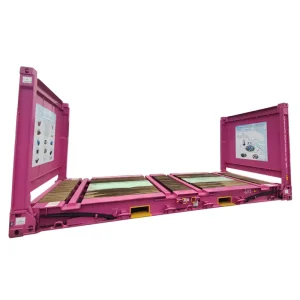
ODM New 20ft Platform Frame Container Pricelist, Exporters
- Configuration: Flatrack / Platform
- Base Structure: High-Tensile I-Beam
- Use: Out-of-Gauge (OOG) Cargo
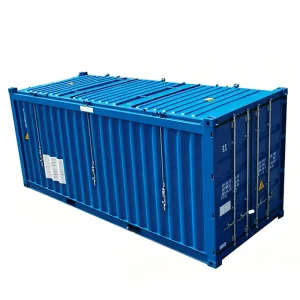
China 20ft New Hard Open Top Shipping Container Manufacturer, Factories
- Roof Type: Removable Steel Hard Top
- Door Header: Swing-Out Movable Bar
- Handling: Overhead Crane Top Loading
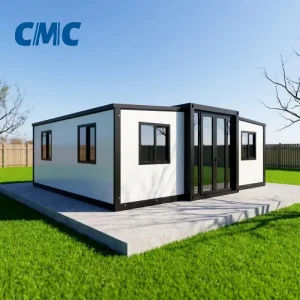
OEM 20ft Modular Container Houses Expandable Steel Container House Excellent Thermal Insulation and Sealing Performance Manufacturer, Manufacturers
- Structure: Expandable Galvanized Frame
- Insulation: Fire-Rated Rockwool/PU
- Application: Rapid Site Deployment
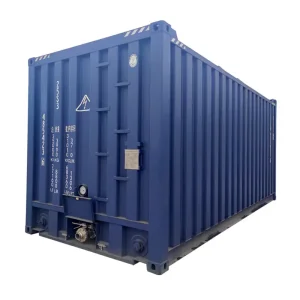
Buy New 20ft Square Liquid Container Factory, Product
- Vessel Profile: Square Section Tank
- Standard: ISO 1496-3 Certified
- Volume: 26,000 Liters Capacity
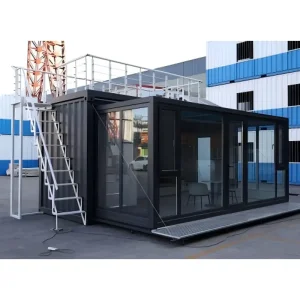
Famous 20ft Foldable Prefab Modular Homes Mobile Expandable Container House Prefabricated House with Bathroom Manufacturer, Exporters
- Fitout: Integrated Bathroom / Kitchen
- Footprint: Foldable Expandable Wings
- Erection Time: 15 Minutes Setup
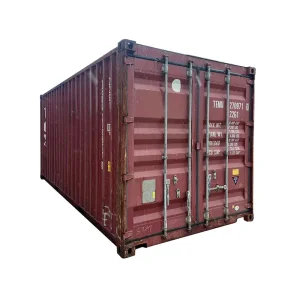
Buy 20ft Used Shipping or Storage Container Manufacturer, Products
- Condition: Wind & Water Tight (WWT)
- Floor: Solid Marine Plywood
- Availability: Port Depot Ready Stock
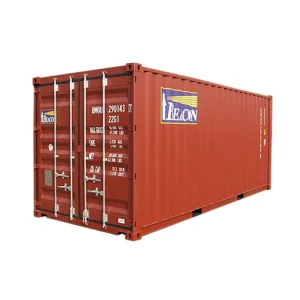
ODM 40ft New Certified Dry Shipping Container Pricelist, Exporters
- Paint System: Waterborne Eco Coating
- Certification: BV / ISO Full Approvals
- Stacking Rating: 192,000 kg (9-High)
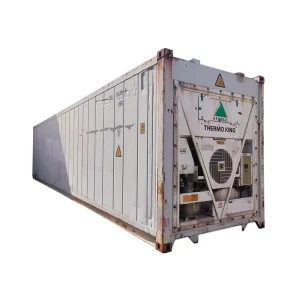
ODM New 40ft Refrigerated Freezer Container for Sale Factory, Exporter
- Inner Liner: Food-Grade Stainless Steel
- Temp Range: -30°C to +30°C
- Length: 12.192 m (40ft Nominal)
Plan Your Fleet Procurement with CIMIC Container Group
Backed by more than 40 years of precision engineering experience since 1983, our Tianjin and Suzhou manufacturing facilities supply global shipping operators, mining enterprises, and offshore infrastructure projects worldwide.