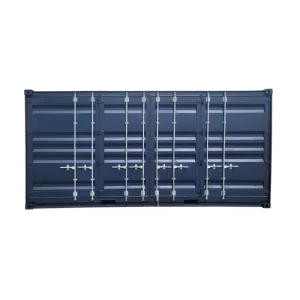
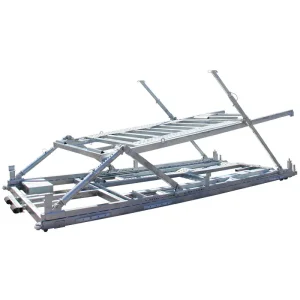
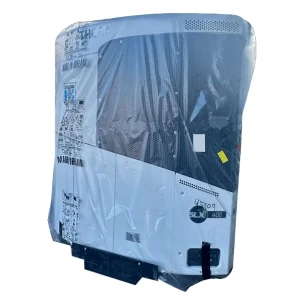
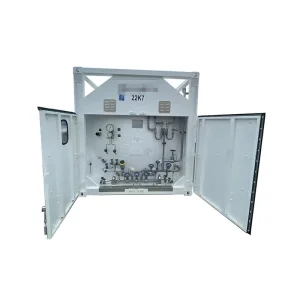
Specialized Intermodal Fleet Deployment
Precision-engineered intermodal units configured for harsh maritime routing, heavy industrial minerals, and ultra-accurate cold-chain storage ecosystems.

Engineering Roadmap: Decarbonization & Telematics
The standard ISO steel box is undergoing a generational shift toward active sensory arrays, lighter composites, and circular metallurgy.
IoT-Integrated Sensor Telematics
Every newly cast intermodal unit can be retrofitted with embedded ambient transceivers, measuring internal barometric pressure, real-time load deflection, humidity anomalies, and kinematic shock profiles over global cellular and satellite networks.
Micro-Alloy High-Strength Steels
Transitioning from baseline Corten-A (SPA-H) to advanced micro-alloyed, hot-rolled atmospheric corrosion-resistant structural steel sheets. This transition strips up to 8% off tare weight while scaling load tolerance, cutting lifecycle fuel burn during haulage.
Zero-VOC Waterborne Paint Schemes
Industrial lines now rely on automated three-coat waterborne paint systems, dramatically lowering VOC emissions while delivering 1,500+ hours of continuous salt-spray testing compliance without micro-pitting or osmotic delamination.
Macro-Scale Logistics Strategies
Targeted adaptations built to satisfy structural stress, safety mandates, and volumetric efficiencies across four core operating environments.
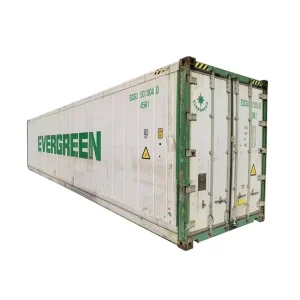
Cold Chain Continuity
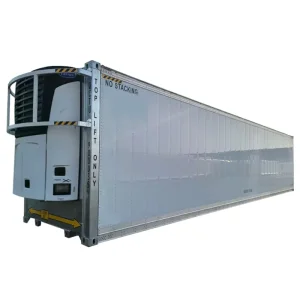
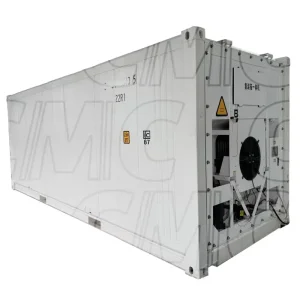
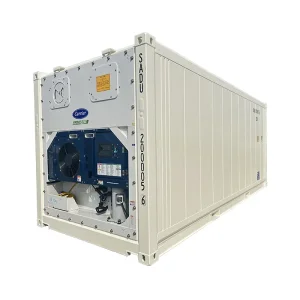
Active multi-stage scroll refrigeration coupled with CFC-free injected polyurethane foam insulation creates a microclimate buffer capable of holding setpoints down to -35°C even through high tropical ambient spikes.
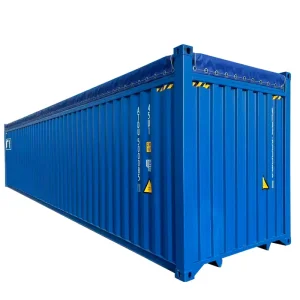
Extreme Bulk Mineral Haulage
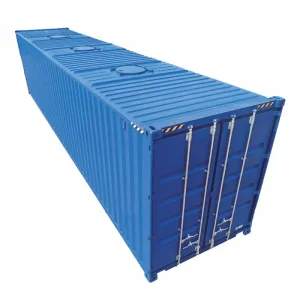
Low-profile, half-height ore containers built using Hardox-grade or reinforced abrasive-resistant side sheeting allow direct pit-to-port bottom-dump and roll-over tipping without buckling floor crossmembers.
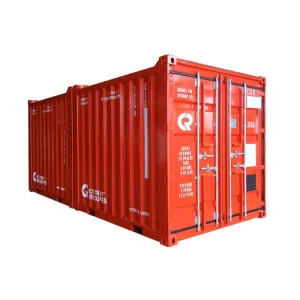
Energy Storage Systems (BESS)
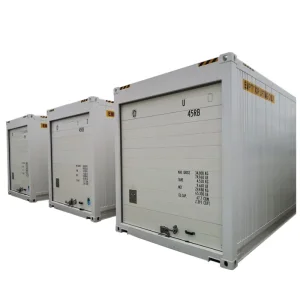
Custom structural frameworks configured to hold utility-scale lithium-ion battery racks, paired with pre-engineered fire suppressant channels, blast-relief ceilings, and internal ducted thermal runaways.
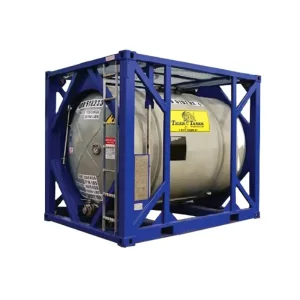
DNV 2.7-1 Offshore Rigs
Dynamic lifting compliance designed for deepwater transport, equipped with certified pad-eyes, specialized marine coatings, and impact-tolerant metallurgy designed to absorb deck-to-crane pendulum shocks.
China Factory 4.0: Scale, Precision, and Traceability
Operating near Tianjin and Suzhou terminals, our automated production ecosystem guarantees consistent dimensional accuracy and stable, rapid delivery cadences.
Automated Robotic Seam Welding
Corrugated panels, top rails, and bottom side rails are joined using automated multi-axis submerged arc welding stations, eliminating cold shuts, burn-throughs, and internal seam air pockets.
Integrated Plate Shot-Blasting
Every structural member passes through an automated centrifugal wheel shot-blasting process to reach an SA 2.5 surface cleanliness standard, providing an ideal mechanical key for high-build epoxy zinc primers.
Complete Material Traceability
From mill test certificates of Corten coils to torque records for lock-rod brackets, each unit is tied to a central digital production passport, making compliance reviews smooth and verifiable.
Engineering Reference: ISO Standard Dimensions & Ratings
Core reference matrix for commercial sizing, volumetric capacities, and structural thresholds based on ISO 668 and ISO 1496-1 design controls.
| Container Configuration | External Dims (L × W × H) | Internal Volume | Max Gross Weight | Primary Application Profile |
|---|---|---|---|---|
| 20ft General Purpose (20GP) | 6.058 × 2.438 × 2.591 m | 33.2 m³ (1,172 cu ft) | 30,480 kg (67,200 lbs) | High-density industrial dry bulk, minerals, engine components |
| 40ft General Purpose (40GP) | 12.192 × 2.438 × 2.591 m | 67.7 m³ (2,390 cu ft) | 30,480 kg (67,200 lbs) | Volumetric cargo, crated FMCG, palletized consumer goods |
| 40ft High Cube (40HC) | 12.192 × 2.438 × 2.896 m | 76.3 m³ (2,694 cu ft) | 30,480 kg (67,200 lbs) | Volumetric conversions, modular structures, light electronics |
| 20ft Refrigerated (20RF) | 6.058 × 2.438 × 2.591 m | 28.3 m³ (1,000 cu ft) | 30,480 kg (67,200 lbs) | Pharmaceuticals, perishables, regional cold buffer hubs |
| 40ft HC Refrigerated (40RH) | 12.192 × 2.438 × 2.896 m | 67.6 m³ (2,387 cu ft) | 34,000 kg (74,950 lbs) | Seafood, fresh fruit exports, frozen meat supply corridors |
Localized Support & International Compliance
Navigating strict regional and maritime transport standards with third-party tested manufacturing processes.
Bureau Veritas (BV) Type Approval
Every standard production run holds BV design and manufacturing inspection certificates, verifying structural rigidity under ISO 1496 racking, bottom-lift, and end-wall deflection tests.
CSC Safety Approval Plates
Containers are stamped with International Convention for Safe Containers (CSC) plates, complete with allowable stacking weights (up to 216,000 kg for 9-high stacking) and racking test values.
Customs & Quarantine Readiness
Wooden flooring is systematically treated in accordance with Australian Timber Quarantine Requirements (TCT), paired with fumigation declarations and material data sheets for customs clearance.
Frequently Asked Technical & Logistics Questions
Detailed insights to streamline engineering approvals, procurement decisions, and global intermodal asset tracking.
What specific steel grade is utilized in the structural framing?
Our containers use SPA-H atmospheric corrosion-resistant Corten steel across all structural members, including corner posts, bottom side rails, header crossmembers, and corrugations. This micro-alloy forms an oxidized protective patina that slows oxidation in high-salinity oceanic environments.
How is thermal performance maintained across extreme ambient ranges?
Our reefer and insulated boxes use high-pressure injected polyurethane foam between internal food-grade stainless steel/aluminum linings and the outer Corten envelope. This structure achieves thermal conductivity values below 0.038 W/m·K, verified through heat leakage and thermal decay rate testing.
Can containers be customized for localized OEM power setups?
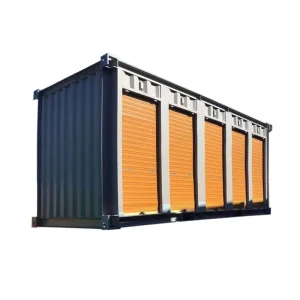
Yes. Our engineering departments produce bespoke electrical enclosures, dual-voltage transformers (380V/460V 3-phase and 220V single-phase), explosion-proof junction networks, and custom side-door/roll-up access openings certified under finite element analysis (FEA) to maintain overall box integrity.
What inspection documentation is provided prior to vessel dispatch?
Clients receive full QA/QC documentation binders, including Mill Test Reports (MTRs), Dry Film Thickness (DFT) paint reports, weld non-destructive testing (NDT) logs, light-tightness certificates, floor load deflection logs, and third-party BV/DNV class certificates.
How are used units inspected, graded, and prepared for export?
Used containers undergo structural inspections based on Institute of International Container Lessors (IICL-5) criteria. We verify door gear performance, inspect structural squareness, conduct light leak testing, and reseal bottom door gaskets so units remain cargo-worthy and watertight prior to export.
What lead-time advantages result from Tianjin and Suzhou factory hubs?
Located within 100 km of deepwater marine terminals, our production plants minimize domestic drayage risks. Finished containers can be routed directly to berth positions, loaded with one-way cargo (SOC), or marshaled into container yards with minimal repositioning expenses.
Industrial Logistics, Cryogenics & Modular Infrastructure
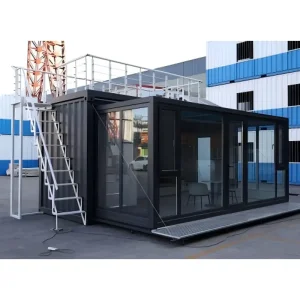
Heavy-duty, specialized intermodal units engineered for rail logistics, bulk storage, cryogenic liquids, and turnkey field infrastructure.