
Engineered Intermodal Shipping Fleet Solutions
Explore BV and ISO certified intermodal solutions engineered from SPA-H Corten steel, high-performance insulation polyurethane, and specialized cryogenic grade assemblies.
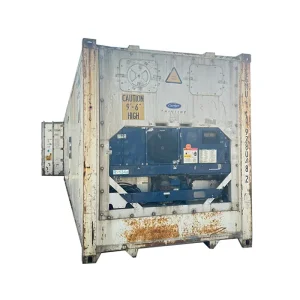
China Used 40ft High-Cube Certified Reefer Container Pricelist, Exporter
View Product Specs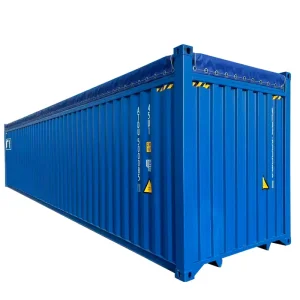
Buy 40ft High-Cube New Soft Open Top Shipping Container with Tarpaulin Cover Manufacturer, Product
View Product Specs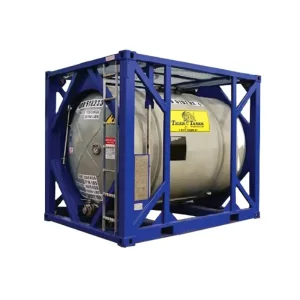
Buy New DNV Certification 10ft Offshore Tank Container Factory, Products
View Product Specs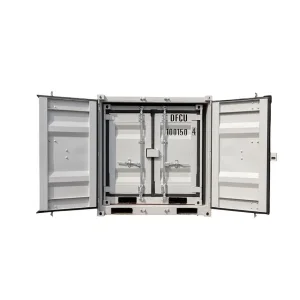
High-Quality Durable Cargo Shipping Container Mini Storage Nested Manufacturers
View Product Specs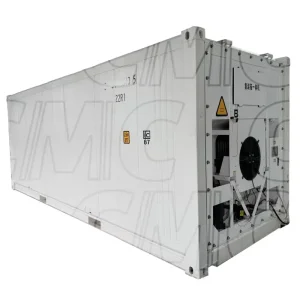
ODM Smart Chain Cold Storage 20ft/40ft Solar Refrigerated Container DC Inverter
View Product Specs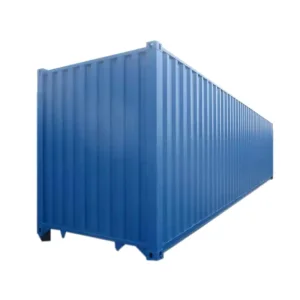
China 40ft High Cube Certified Dry Cargo Shipping Container Factory, Product
View Product Specs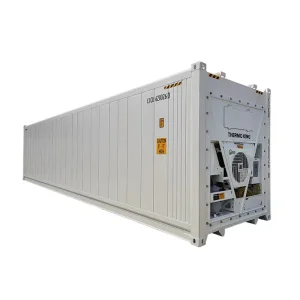
OEM New 40ft High-Cube Certified Reefer Shipping Cargo Container Pricelist
View Product Specs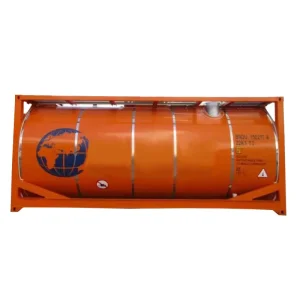
China 20 Foot ISO Liquid Tank Container for Water Manufacturer, Product
View Product SpecsGlobal Logistics Containers: Market Evolution & Strategic Procurement Shifts
How structural decarbonization, geopolitical lane shifts, and precision cold chain asset requirements are fundamentally rewriting capital expenditure strategies for world-class freight forwarders and shippers.
IoT Integration & Real-Time Telematics
Modern intermodal container fleets are no longer passive steel boxes. Leading global logistics players require ODM containers embedded with cellular, satellite, and Bluetooth-low-energy (BLE) sensors to monitor structural shock, door security status, and cold-chain temperature deviations down to ±0.1°C inside pharmaceutical and perishable payloads.
TCO & Lifecycle Capital Optimization
Total Cost of Ownership (TCO) replaces initial purchase price as the deciding procurement metric. High-tensile anti-corrosion SPA-H Corten steel, automated robotic seam welding, and solvent-free zinc-rich primers extend maritime operational lifespans past 15 years, vastly lowering depreciation rates and secondary terminal repair costs.
Decarbonization & Circular Materials
With Scope 3 emissions reporting tightening across European and North American customs jurisdictions, supply chain directors seek low-carbon steel formulations, recycled structural bamboo flooring, and high-efficiency R513A or low-GWP refrigerant compressors engineered by Daikin, Carrier, and Thermo King.
China Factory 4.0: Precision Industrial Engineering & Cost Moats
Inside our Tianjin and Suzhou production centers, computerized multi-axis fabrication lines, rigorous Finite Element Analysis (FEA), and seamless port logistics deliver unyielding structural integrity at competitive mill rates.
In modern intermodal container fabrication, structural uniformity under dynamic ocean loading conditions is paramount. China’s manufacturing edge is grounded in an unparalleled upstream metallurgical cluster, localized precision stamping, and an end-to-end digitally integrated production pipeline. At our production hubs, raw SPA-H atmospheric corrosion-resistant steel coils are uncoiled, laser-straightened, and shot-blasted to Sa 2.5 standard within minutes, stripping away all microscopic surface impurities before automated continuous-welding gantries assemble the core chassis.
Robotic Seam Welding & Structural Stress Certification
Corner castings, side wall corrugations, and heavy I-beam gooseneck tunnels undergo computerized multi-point robotic welding. This methodology eliminates human fatigue variables, ensuring deep weld penetration, minimal thermal warping, and an absolute hermetic seal. Every ODM container model is verified through rigorous ISO 1496-1 structural tests, including transverse racking stresses of over 150 kN, longitudinal restraint loads of 2g, and internal bottom-floor wheel-load ratings exceeding 7,260 kg (16,000 lbs) to withstand heavy industrial forklifts.
Automated Anti-Corrosion Zinc-Rich Primer Application
Marine environments are notoriously hostile; saltwater aerosol and industrial exhaust rapidly degrade inferior paint systems. Our manufacturing lines implement closed-loop multi-tier coating chambers: an initial 30-micron inorganic zinc silicate primer provides sacrificial galvanic protection, followed by a high-build epoxy intermediate barrier, and capped with a high-solids polyurethane topcoat tested to survive 3,000+ hours of continuous salt-spray exposure (ASTM B117 standards).
Tier-1 Component Sourcing
We partner directly with leading refrigeration manufacturers—Carrier Transicold, Daikin Reefer, and Thermo King—incorporating factory-calibrated digital PID controllers directly onto our assembly lines.
100km Port Direct Delivery
Situated within 100 kilometers of northern China’s deepest container terminals (Tianjin Xingang Port) and Yangtze River delta hubs, inland logistics transfer costs are compressed to the bare physical minimum.
Full Inspection Dossiers
Every dispatch comes accompanied by BV (Bureau Veritas), DNV, or ABS surveyor release notes, mill test certificates (MTC), non-destructive weld testing (NDT), and pre-trip inspection (PTI) reefer telemetry records.
ODM Custom Prototype Cadence
Our dedicated R&D engineering wing can translate complex operational drawings—from open-side hydraulic canopies to nested mini-storage units—into verified production-ready tooling in under 18 business days.
Engineering Data & Standard Dimension Matrix
Compare structural dimensions, volume envelopes, and certified maximum gross weights across primary ISO and specialized ODM freight configurations.
| Equipment Model | External Dimensions (L × W × H) | Internal Dimensions (L × W × H) | Cubic Volume | Tare Weight | Max Gross Mass (MGM) | Structural Compliance |
|---|---|---|---|---|---|---|
| 20ft Dry Cargo (20GP) | 6,058 × 2,438 × 2,591 mm | 5,898 × 2,352 × 2,393 mm | 33.2 m³ | 2,230 kg | 30,480 kg | ISO 1496-1, BV Certified |
| 40ft High Cube Dry (40HC) | 12,192 × 2,438 × 2,896 mm | 12,032 × 2,352 × 2,698 mm | 76.4 m³ | 3,880 kg | 32,500 kg | ISO 1496-1, TIR, CSC |
| 40ft HC Reefer (Carrier/Thermo King) | 12,192 × 2,438 × 2,896 mm | 11,583 × 2,290 × 2,557 mm | 67.9 m³ | 4,520 kg | 34,000 kg | ISO 1496-2, ATP Class FRC |
| 20ft ISO Liquid Tank (T11 Standard) | 6,058 × 2,438 × 2,591 mm | Cylindrical 316L SS Tank | 25,000 Liters | 3,550 kg | 36,000 kg | IMDG, ASME VIII, ADR/RID |
| 10ft Offshore DNV Cargo/Tank | 2,991 × 2,438 × 2,591 mm | 2,800 × 2,260 × 2,280 mm | 14.4 m³ | 2,100 kg | 10,000 kg | DNV 2.7-1 / EN 12079 |
| 40ft Soft Open Top (Tarpaulin) | 12,192 × 2,438 × 2,896 mm | 12,024 × 2,342 × 2,650 mm | 74.6 m³ | 4,100 kg | 32,500 kg | ISO 1496-1, Removable Header |
*Specifications reflect standardized ISO testing baselines. Custom modifications to structural frame thicknesses, floor beam profiles, and lashing point tensile ratings are accommodated via individual engineering drawings.
Pricelist Drivers & Procurement Cost Modeling
Demystifying the variable components of container production costs to empower fleet asset managers, EPC project directors, and supply chain analysts.
Steel Raw Material Dynamics
Between 55% and 65% of a dry freight container's base cost is tied to hot-rolled SPA-H Corten alloy market quotes. By maintaining strategic volume reserves at our Tianjin plant, we cushion international buyers against sharp spot-market swings, offering locked-in price stability across multi-month delivery schedules.
Thermal Fit-Out & Compressor Selection
For reefer and insulated units, pricelist variances depend directly on the insulation density (high-pressure expanded polyurethane foam at 42-45 kg/m³) and machinery brand specifications. Integrated micro-channel aluminum condenser coils and digital telemetry transceivers deliver long-term power savings that offset initial price differentials.
Certification & Batch Testing Overheads
Units destined for heavy offshore rig lifting must comply with DNV 2.7-1 / EN 12079 protocols, requiring Charpy V-notch impact testing at -20°C or -40°C, third-party weld ultrasonic scans, and dedicated lifting sling proofs. Standard maritime ISO 1496 CSC testing, by contrast, spreads verification costs efficiently across high-volume factory runs.
Global Operational Scenarios & Specialized Logistics Blueprints
From intercontinental high-seas shipping lanes to remote desert mining camps and sub-zero railway links, our custom ODM units satisfy rigorous mission-critical requirements.
Intercontinental Maritime & Deep-Sea Freighting
Engineered to survive nine-high vertical stacking under rough ocean swell conditions. Heavy-duty corrugated side panels and laser-aligned corner castings withstand continuous dynamic shear loads on ultra-large container vessels (ULCVs) navigating trans-Pacific and Asia-Europe routes.
Overland Intermodal Rail Corridors
Vibration-resistant structural sub-assemblies built specifically for long-distance block trains operating across the Eurasian overland network and China-Europe Express routes, accommodating sudden thermal drops to -40°C in Central Asian territory without metal embrittlement.
Harsh Offshore Petrochemical Exploration
Offshore 10ft and 20ft tool racks and ISO liquid tanks constructed under DNV 2.7-1 certifications. Equipped with anti-spill baffles, explosion-proof electrical fittings, and certified four-point lifting padeyes engineered for dynamic crane lifts onto offshore drilling rigs.
Specialized Logistics Fleet & Industrial Enclosure Catalog
From oversized breakbulk flat racks and automotive transport frames to specialized cryogenic tanks and high-performance modular living habitats.
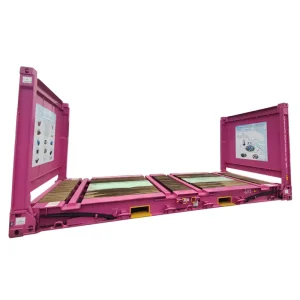
ODM New 20ft Platform Frame Container Pricelist, Exporters
View Product Specs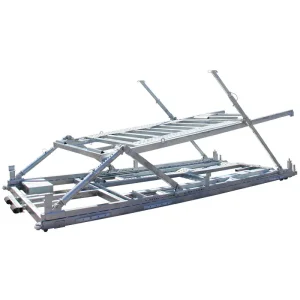
China vehicle transport rack Product, Exporters
View Product Specs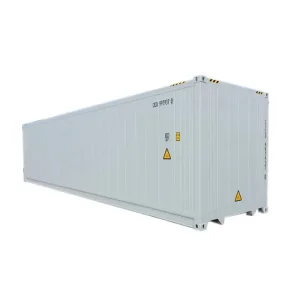
Buy New 40ft High Cube Thickened Foam Insulation Container Factory
View Product Specs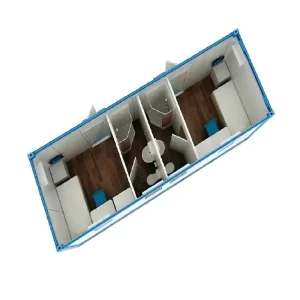
Famous 20ft 40ft Standard Accommodation Modular House Container
View Product Specs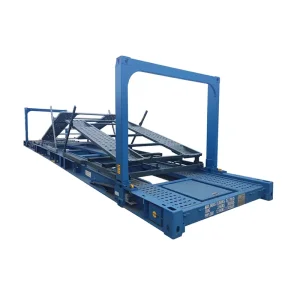
China New 20ft Car Carrier Container Special Container Exporter, Quotes
View Product Specs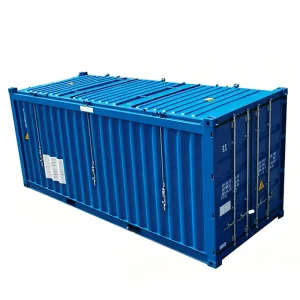
China 20ft New Hard Open Top Shipping Container Manufacturer, Factories
View Product Specs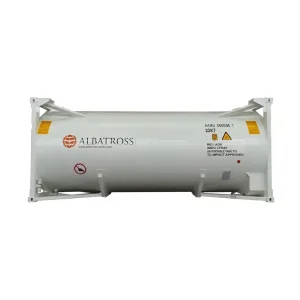
China 25000 Liters ISO 20ft Gas Tank Container for Sale Product, Factories
View Product Specs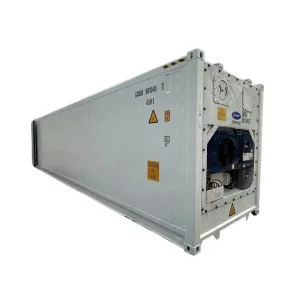
Buy Ninety Percent New Used 40ft HC Carrier Refrigerated Container Quotes
View Product SpecsFrequently Asked Questions: Global Sourcing & Engineering
Detailed engineering, classification, and logistics answers compiled by our senior export directors for procurement teams worldwide.
What metallurgical advantages does SPA-H Corten steel deliver over standard carbon steel?
SPA-H atmospheric corrosion-resistant steel incorporates specific micro-alloying elements, including copper, chromium, and nickel. When exposed to maritime and industrial atmospheric moisture cycles, it generates a dense, protective amorphous patina layer that seals the raw substrate against oxygen infiltration. Unlike structural Q235 carbon steel which flakes and pits continuously, SPA-H rust rates drop asymptotically over time, guaranteeing that side wall corrugations maintain their 1.6mm/2.0mm structural load-bearing capacity throughout a 15-year marine lifespan.
How does your factory accommodate custom ODM dimensions and structural deviations?
Our ODM engineering workflow begins with a 3D CAD and Finite Element Analysis (FEA) model submitted by our design department. We analyze client requirements—such as full-opening side doors, hydraulic fold-out platforms, non-standard lengths (10ft, 45ft, 53ft), or reinforced floor loading for battery energy storage systems (BESS). Once structural stress distribution is simulated and safety factors conform to CSC and ISO 1496 guidelines, our facility cuts bespoke stamping dies and fabricates a certified pre-production unit within 15–20 business days.
What are the differences between new build containers and “IICL-5 certified” used containers?
A new build (one-trip) container features pristine factory coatings, zero floor oil contamination, full 5-year CSC plate validity, and maximum resale value. A used container certified to IICL-5 (Institute of International Container Lessors) standards is an inspected second-hand asset that has completed several ocean voyages. It will display minor surface abrasions, cosmetic touch-ups, and localized panel dings, but its structural framing, corner castings, floor integrity, and door weather seals remain 100% wind-and-watertight (WWT) and cargo-worthy. For clients optimizing project CAPEX, 90% new or IICL-5 units provide substantial savings of 30% to 50% relative to new factory builds.
Which refrigeration systems are recommended for ultra-low temperature cargo?
For standard food-grade shipments (-25°C to +25°C), Daikin LXE and Carrier PrimeLINE scroll compressor systems offer optimal energy efficiency and low global service costs. For pharmaceutical, deep-frozen tuna, or biotech payloads requiring sub-zero climates down to -40°C or -60°C, we configure units with Thermo King Magnum Plus or Carrier ThinLINE dual-stage reciprocating compressors utilizing low-GWP refrigerants. These units feature high-efficiency microprocessors with data-logging for up to 365 days of continuous temperature records.
What testing protocols must offshore containers pass to earn DNV 2.7-1 certification?
Unlike standard maritime ISO containers handled primarily by container cranes via corner castings, offshore units are subject to dynamic snatch forces from vessel-to-rig cranes under severe sea states. DNV 2.7-1 (BS EN 12079) certification mandates: (1) Charpy V-notch impact testing of structural steel and welding consumables at -20°C to ensure ductility; (2) 2.5× maximum gross mass vertical drop testing; (3) 2-point and 4-point dynamic lifting trials using certified wire-rope slings; and (4) 100% magnetic particle or ultrasonic non-destructive examination (NDE) on primary structural joints.
How does factory proximity to Tianjin and Yangtze Delta ports streamline export lead times?
Inland haulage across China can introduce unnecessary expense and scheduling delays if manufacturing hubs are situated deep in the interior. Our assembly facilities in Tianjin and Suzhou are within 100 kilometers of deep-water berths. This proximity allows immediate gate-in access, reduces pre-carriage drayage costs by up to 60%, and enables our dispatch team to quickly match newly completed batches to closing shipping vessel feeder windows.
Connect With Our Fleet Engineering Specialists
Whether you require standard 40HC containers, custom cold-chain solar reefers, or DNV-certified offshore assemblies, our engineering office delivers full CAD drawings, BV inspection reports, and firm FOB/CIF pricelists within 24 hours.