Standard Length Precision Hardware Portfolio (Part I)
Industrial-grade intermodal containers, engineered under stringent tolerance profiles for cryogenic, bulk, offshore, and controlled-atmosphere storage.
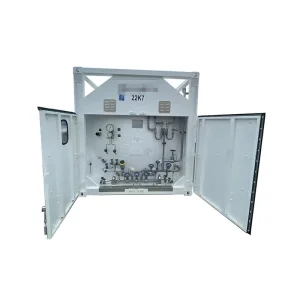
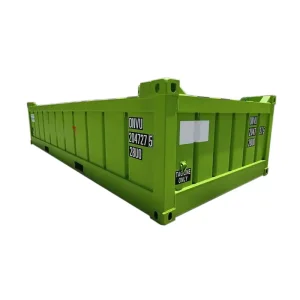
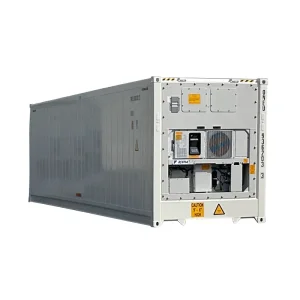
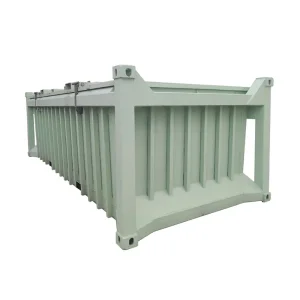
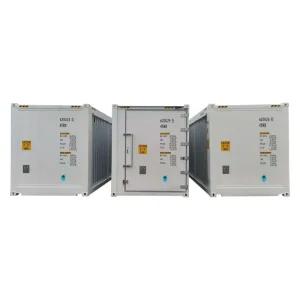
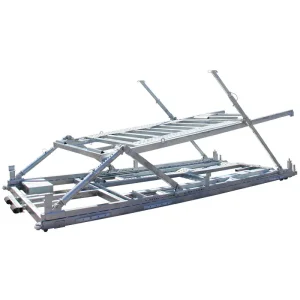
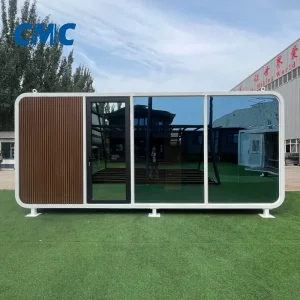
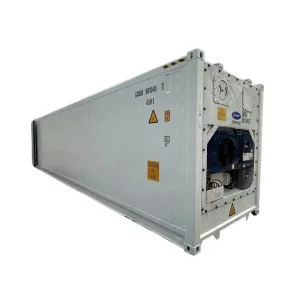
Engineering Standards: ISO 668 Container Length Architectures
Technical evaluation of intermodal footprint optimization, volumetric volumetric displacement, and load-bearing tolerance profiles across international supply corridors.
| Nominal Length | Exterior Dimensions (L × W × H) | Interior Dimensions (L × W × H) | Tare Weight | Payload Capacity | Volumetric Displacement |
|---|---|---|---|---|---|
| 10ft Mini Container | 2.991 m × 2.438 m × 2.591 m (9'11" × 8' × 8'6") | 2.840 m × 2.352 m × 2.393 m | 1,300 kg (2,866 lbs) | 8,860 kg (19,533 lbs) | 16.0 m³ (565 cu.ft.) |
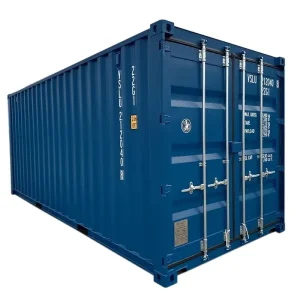
| 20ft Standard (20GP) | 6.058 m × 2.438 m × 2.591 m (19'10.5" × 8' × 8'6") | 5.898 m × 2.352 m × 2.393 m | 2,230 kg (4,916 lbs) | 28,250 kg (62,280 lbs) | 33.2 m³ (1,172 cu.ft.) |
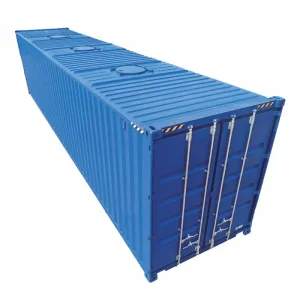
| 40ft Standard (40GP) | 12.192 m × 2.438 m × 2.591 m (40'0" × 8' × 8'6") | 12.032 m × 2.352 m × 2.393 m | 3,740 kg (8,245 lbs) | 26,740 kg (58,951 lbs) | 67.7 m³ (2,390 cu.ft.) |
| 40ft High Cube (40HC) | 12.192 m × 2.438 m × 2.896 m (40'0" × 8' × 9'6") | 12.032 m × 2.352 m × 2.698 m | 3,900 kg (8,598 lbs) | 26,580 kg (58,600 lbs) | 76.4 m³ (2,698 cu.ft.) |
| 45ft High Cube (45HC) | 13.716 m × 2.438 m × 2.896 m (45'0" × 8' × 9'6") | 13.556 m × 2.352 m × 2.698 m | 4,800 kg (10,582 lbs) | 27,700 kg (61,068 lbs) | 86.5 m³ (3,054 cu.ft.) |
Localized Support & Cross-Border Regulatory Assurance
Bridging Chinese manufacturing excellence with turnkey compliance protocols across European, Trans-Pacific, and Pan-African jurisdictions.
CSC & Class Society Verification
Every standard container length manufactured at our facility is backed by Bureau Veritas (BV), Lloyd's Register (LR), or ABS certification. Pre-certified with full CSC plates (International Convention for Safe Containers) for multi-tier vessel stacking limits exceeding 192,000 kg.
DNV 2.7-1 / EN 12079 Offshore Mandates
Custom offshore models are built specifically to counter harsh sub-arctic and North Sea operational stresses. Tested dynamically for four-point slings, pad-eye proof load testing, and Charpy impact toughness testing down to -40°C.
Customs Clearance Documentation
Eliminate demurrages with streamlined single-window export clearances. We provide original Mill Test Certificates (MTC), Fumigation/Phytosanitary Timber Treatment (ISPM 15 compliance), and certified structural layout schematics.
Integrated Industrial Moat: China's Smart Container Ecosystem
Combining heavy raw material procurement efficiencies, robotic automation, and strategic multimodal port logistics in Tianjin and Suzhou.
SPA-H Weathering Steel Proximity
Immediate access to primary steel processing centers ensures zero supply bottlenecks. High-tensile Cor-Ten steel sheets feature elevated atmospheric corrosion resistance against severe ocean salinity.
100 km Port Gate Transit Speed
Strategically deployed around Tianjin and Suzhou manufacturing nodes, slashing inland transit drayage costs and guaranteeing real-time vessel feeder injection under tight booking timeframes.
Turnkey ODM Scalability
Rapid conversion from customized 3D CAD/CAM designs to stamped steel prototypes within 7 to 10 working days, backed by 40+ years of high-volume manufacturing pedigree.
Zinc-Rich Eco Coating Lines
Automated shot-blasting to Sa 2.5 standard paired with VOC-compliant waterborne epoxy and polyurethane finishes, offering verified salt-spray resistance reaching up to 1,500 hours.
Enterprise Sourcing Intent: Emerging Structural Demands
How fleet directors, forwarders, and modular architects are recalibrating standard container length allocations in response to modern economic shifts.
Intermodal Decarbonization Pressures
Shippers are transitioning heavier cargo allocations into standard 20ft Dry units to balance weight-to-payload ratios over rail lines, minimizing carbon taxation across international multimodal networks.
High Cube Reefer Surges (40HC & 45HC)
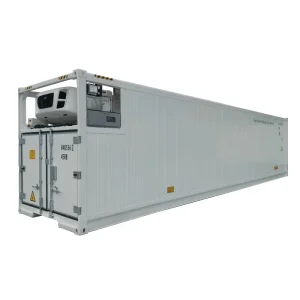
Rapid growth in fresh produce, pharmaceutical biologics, and lithium battery cells demands expanded thermal interiors. High Cube designs optimize airflow circulation while housing advanced Daikin, Carrier, or Thermo King machinery.
Modular Habitation Conversions
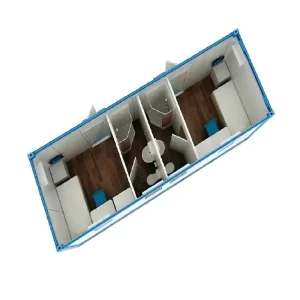
Standard 20ft and 40ft frames serve as global chassis benchmarks for off-grid prefab villas, data center pods, battery energy storage systems (BESS), and specialized command posts.
Operational Scenarios: Length Allocation by Industrial Domain
Field-proven deployments matching standard shipping container dimensions to specific global logistical challenges.
Dense Bulk Commodities (20ft Units)
Because shipping weight regulations impose strict axle limits on highway transit, dense commodities like mineral concentrates, liquid IBC bladders, industrial fasteners, and heavy steel coils deploy standard 20ft profiles to achieve maximum legal payload without wasted volume.
Volumetric Retail Goods (40ft High Cube)
E-commerce, fast-moving consumer goods (FMCG), apparel, and lightweight electronics exploit the 76.4 m³ volume of the 40HC, loading up to 25 standard Euro-pallets (1200×800mm) or 21 standard American pallets (1016×1219mm) per vessel movement.
Extreme Remote Bases (10ft & 20ft Offshore)
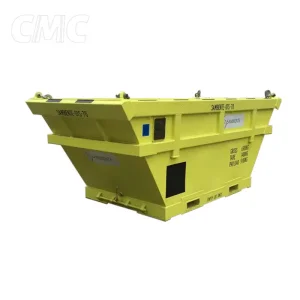
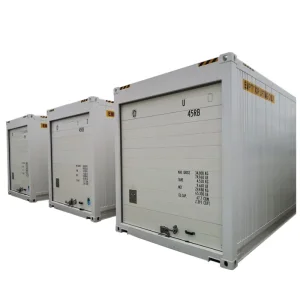
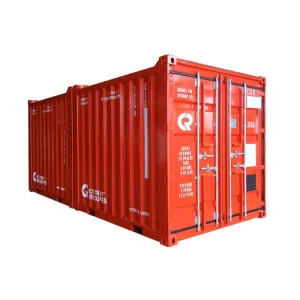
Offshore oil platforms, subsea trenching vessels, and Arctic exploration hubs utilize DNV 2.7-1 certified 10ft mini containers and 20ft half-height units where crane swing footprints are limited and storm survivability is mandatory.
Frequently Answered Technical & Sourcing Inquiries
Definitive engineering answers to critical logistics, dimensional tolerances, and ODM manufacturing specifications.
What are the exact external and internal length differences between standard 20ft and 40ft containers?
How does wall insulation affect internal dimensions in refrigerated (Reefer) containers?
Can your factory build custom container lengths such as 10ft, 45ft, or 53ft under ODM contracts?
What steel specifications and anticorrosion treatments are applied on your production lines?
How is freight handled when purchasing empty new containers from China?
Standard Length Precision Hardware Portfolio (Part II)
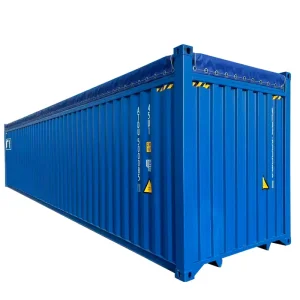
Specialized open-top, multi-door, roll-up reefer, modular dwelling, and DNV-certified structural variants ready for procurement.