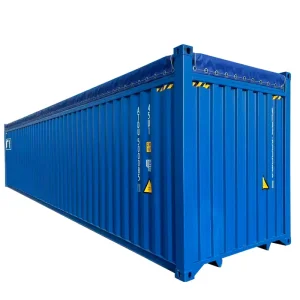
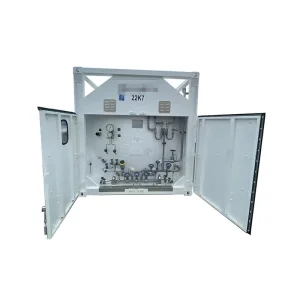
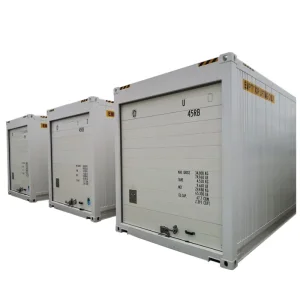
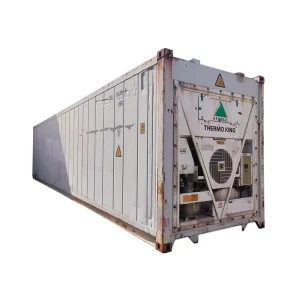
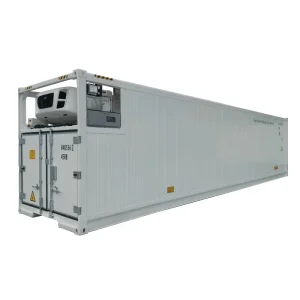
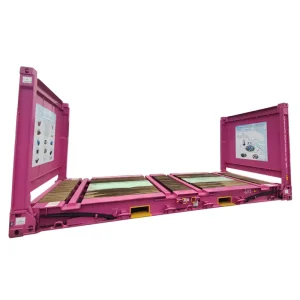
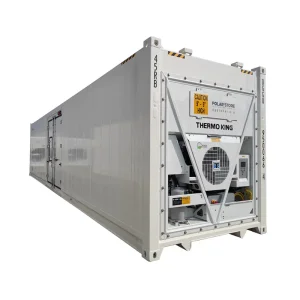
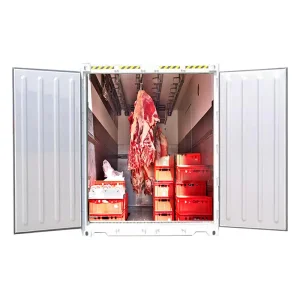
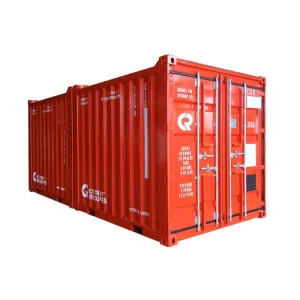
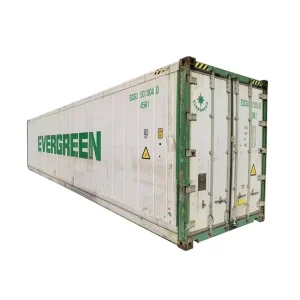
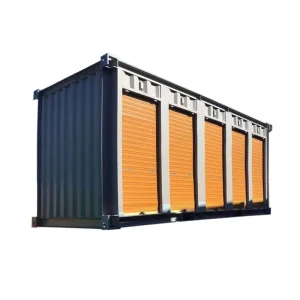
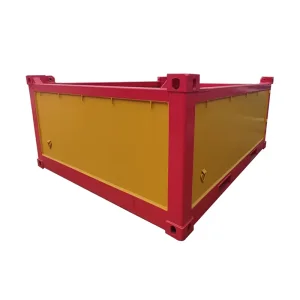
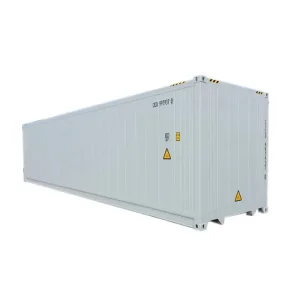
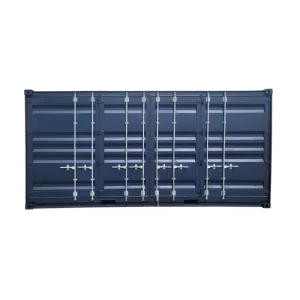
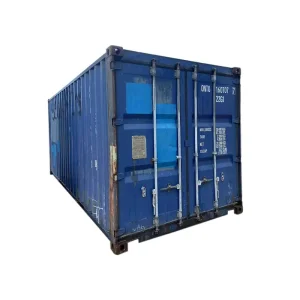
Featured Intermodal & Offshore Container Lineup
Engineered to strict ISO 668 and DNV 2.7-1 specifications for international maritime logistics, harsh offshore environments, and tactical field storage.
1. Executive Industry White Paper: Global Trade Dynamics & The 20 Ft Benchmark
In modern intermodal freight transport, the 20-foot dry general purpose container (ISO Type Code 22G1) remains the fundamental baseline unit of global commercial trade volume—the standard Twenty-foot Equivalent Unit (TEU). Despite the widespread usage of 40-foot High Cube (40HC) containers for low-density volumetric cargo, the 20 Ft dry container maintains an irreplaceable strategic status across international supply chains due to its structural payload efficiency for high-density commodities, structural rigidity, and universal logistics compatibility.
As global logistics shifts toward smart intermodal routing, high-capacity industrial equipment transport, and specialized modular deployments, demand for OEM (Original Equipment Manufacturer) customized 20 Ft containers has accelerated. Off-the-shelf standard ISO containers frequently fall short when tailored for tactical operational needs, heavy machinery containment, side-loading efficiency, or specialized hazardous material storage. Commercial procurement entities, logistics fleet operators, and project engineering procurement teams require rigorous insights into raw material integrity, manufacturing engineering, coating longevity, and direct factory quotation structures.
The macroeconomic drive for OEM procurement stems directly from total cost of ownership (TCO) optimization. Standardized ISO boxes are designed for general dry cargo, but when modified post-factory by local fabricators, their structural CSC (Container Safety Convention) certifications can be invalidated, and anti-corrosive coating integrity compromised. Sourcing directly from certified OEM production lines ensures structural modifications—such as reinforced floor crossmembers, custom side doors, internal recessed lashing points, roll-up shutter access, and HVAC cutouts—are structurally integrated during fabrication, fully tested, and certified prior to factory exit.
2. China Supply Chain Resilience & Manufacturing Efficiency
Analyzing the industrial cluster advantages, metallurgy ecosystem, and logistical advantages of Chinese manufacturing hubs like Tianjin and Suzhou.
Upstream Metallurgy Integration
Direct integration with tier-1 steel mills provides immediate access to atmospheric corrosion-resistant Cor-Ten A (SPA-H) steel sheets and hot-rolled profiles, eliminating raw material supply fluctuations.
Automated Robotic Welding
Advanced pulse-MIG welding automation guarantees continuous seam welds along side panels, corner castings, and top/bottom side rails, minimizing thermal distortion and structural fatigue risks.
Port-Proximate Staging
Manufacturing facilities situated within 100 kilometers of major deep-water seaports (such as Tianjin Port) reduce inland drayage costs, enabling immediate One-Way Load positioning or direct SOC export shipments.
Factory direct quotation models for OEM 20 Ft Dry Containers are driven by three primary variables: global hot-rolled Corten coil steel market index, engineering customization complexity (e.g., custom side-door cutouts, non-standard height profiles, specialized floor undercoating), and international quality classification agency audits (such as Bureau Veritas, ABS, or Lloyd's Register). Sourcing through established Chinese OEM manufacturing networks provides an estimated 22% to 35% capital expenditure advantage over regional retrofit fabricators while maintaining full ISO compliance.
3. Technical Specifications, Engineering Roadmap & Customization
Engineering an OEM 20 Ft Dry Container requires strict adherence to structural mechanics, steel chemistry, and weatherproofing standards. Below is a comparative engineering reference matrix outlining standardized baseline specifications versus advanced OEM options engineered on our factory lines.
| Engineering Parameter | Standard ISO 20GP Specification | OEM Customization Roadmap Options |
|---|---|---|
| Structural Frame Steel | Cor-Ten A (SPA-H) High Tensile Steel | Thickened corner posts, reinforced top rails, DNV 2.7-1 offshore frames |
| Flooring System | 28mm Marine-Grade Hardwood Plywood | Heavy-duty steel checker plate, bamboo-composite, integrated oil drip trays |
| Access & Door Configuration | Standard End Double Swing Doors (4 lock bars) | Full side-opening doors, roll-up shutters, double-ended doors, hatch cutouts |
| Coating System | Zinc-rich Primer + Epoxy + Acrylic Polyurethane | C5-M Ultra-high durability marine paint, thermal barrier insulation coatings |
| Lashing Points | 5x D-rings per bottom side rail (2,000 kg capacity) | Recessed heavy-duty floor tie-downs rated up to 5,000 kg each |
| Environmental Resistance | Standard EPDM Door Gaskets (-40°C to +70°C) | Low-temperature silicone seals (-60°C), explosion-proof vent louvers |
Next-Generation Technological Roadmap
Smart Telematics & IoT Integration
Modern OEM 20 Ft dry containers are increasingly fitted during manufacturing with recessed sensor channels. These support cellular and satellite IoT gateways for real-time tracking of geolocation, internal humidity, door open/close state, and impact forces without external mounting vulnerabilities.
Eco-Friendly Waterborne Coatings
Transitioning from traditional solvent-based paints to VOC-compliant waterborne zinc-rich coating lines dramatically reduces environmental impact during manufacturing while providing equivalent salt-spray protection under ASTM B117 standards.
4. Localized Application Scenarios & Industrial Implementations
How customized 20 Ft dry containers solve specialized operational challenges across globally diverse commercial environments.
Offshore Energy & Mining Operations
In harsh marine environments or remote desert mining sites, standard containers degrade rapidly. OEM 20 Ft dry containers upgraded to DNV 2.7-1 certifications or fitted with heavy-duty side doors serve as offshore tool stores, explosive storage units, and heavy equipment transport modules capable of dynamic crane lifting.
Urban Self-Storage & Tactical Logistics
Metropolitan self-storage facilities utilize specialized 20 Ft containers customized with smooth roll-up doors, interior partition walls, and anti-condensation thermal roof coatings. These allow rapid, secure drive-up customer access and optimized footprint utilization.
Intermodal Railway & "Belt and Road" Corridors
Cross-border rail networks stretching across Central Asia to Europe demand high structural floor loads to withstand continuous vibrations. Reinforced 20 Ft containers are crucial for high-density bulk cargo, machinery parts, and industrial minerals.
5. Quality Assurance, International Compliance & Certification
International intermodal transport requires strict adherence to regulatory testing protocols. OEM manufacturing must fulfill clear technical validation criteria before shipping containers can be legally loaded onto ocean vessels or rail chassis.
CSC Plate Certification (ISO 1496-1)
Every 20 Ft dry container built for maritime freight undergoes rigorous structural testing overseen by classification societies (e.g., Bureau Veritas, ABS, LR). Key tests include:
- Stacking Test: Minimum offset capability testing up to 216,000 kg (equivalent to 9-high fully laden stacking).
- Transverse & Longitudinal Racking: Simulating dynamic forces during heavy sea movements.
- Floor Strength Test: Testing floor panels under axle loads of 5,460 kg (7,260 kg heavy-duty option available).
- Weather-Tightness Test: High-pressure water jet spraying along all door seal perimeters.
Customs & Trade Compliance (TIR / UIC)
For cross-border freight clearing, containers must adhere to Customs Convention on Containers (CCC) and International Union of Railways (UIC) standards. OEM customization guarantees that locking mechanisms, custom door hinges, and rivet placements prevent unauthorized access, protecting sealed bonded cargo throughout international transit.
6. Frequently Asked Questions (Procurement & Technical Q&A)
Detailed technical and commercial answers for international procurement managers, fleet operators, and engineering buyers.
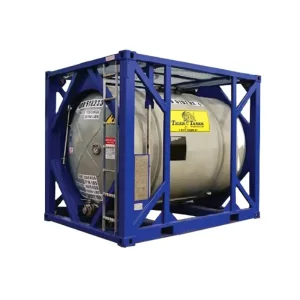
Specialized, Reefer & Tank Container Solutions
Explore our expanded container products ranging from soft open-tops and cryogenic tanks to specialized railway reefer units and hanging meat refrigerated boxes.