
High-Efficiency OEM Cubic Foot Logistics Units
Engineered to maximize volumetric loading metrics across specialized intermodal corridors, marine freight, and offshore energy infrastructure.
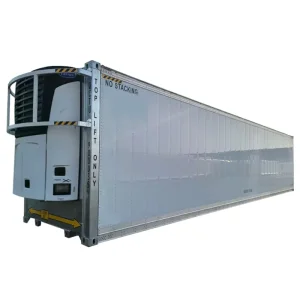
China Carrier X4-7300 Refrigeration and Electricity Integrated Container Exporter, Products
Explore Specifications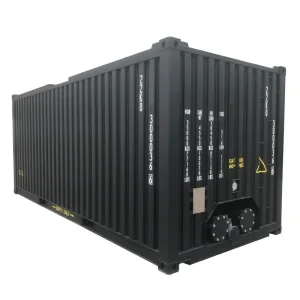
China 20 Feet Heated Shipping Asphalt Container Exporter, Manufacturers
Explore Specifications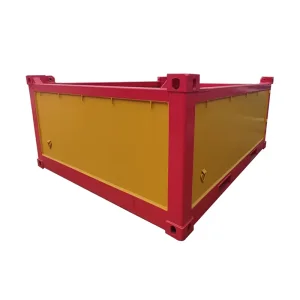
High-Quality New Offshore Basket Container for Offshore Operations Exporter, Exporters
Explore Specifications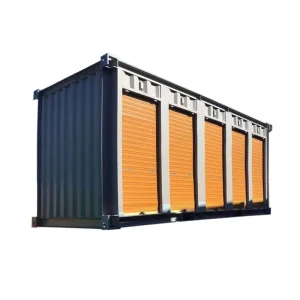
OEM New 20ft Storage Roll-Up Door Dry Cargo Container Pricelist, Product
Explore Specifications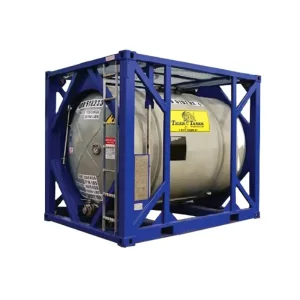
Buy New DNV Certification 10ft Offshore Tank Container Factory, Products
Explore Specifications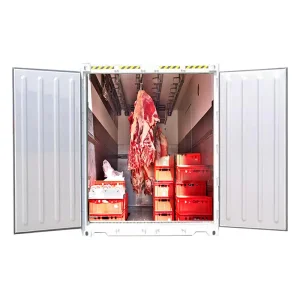
High-Quality Brand new hanging meat container for low temperature fresh transportation Pricelist, Products
Explore Specifications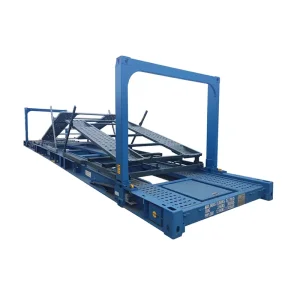
China New 20ft Car Carrier Container Special Container Exporter, Quotes
Explore Specifications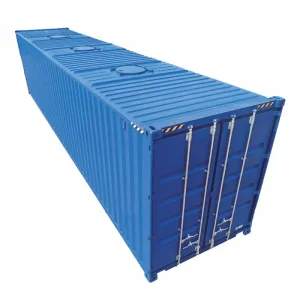
Buy 20 Feet Shipping Bulk Container Manufacturer, Exporters
Explore SpecificationsEngineering Volumetric Efficiency: Decoding Cubic Foot Optimization in Heavy-Duty Freight
A rigorous examination of tare weight ratios, structural cubic utilization, and boundary envelope mechanics in specialized ISO container manufacturing.
In modern international supply chains, transport economics are dictated by the fine margin between physical mass boundaries and volumetric utilization. Global logistics managers often balance weight-limited cargo and cube-limited freight. This dynamic elevates the strategic importance of OEM cubic foot containers. Maximizing the internal cubic foot volume while remaining fully compliant with ISO 668 external envelope envelopes is an advanced structural engineering challenge. As a specialized OEM exporter operating from world-class maritime manufacturing centers in China, our design philosophy focuses on maximizing internal usable space without sacrificing stacking strength or fatigue resistance.
Structural Thin-Wall Technology & Micro-Corrugation Geometry
Standard ISO containers rely on corrugated sidewalls and roof panels pressed from SPA-H or equivalent atmospheric corrosion-resistant Corten steel. Our engineering departments have refined the corrugation profile using Finite Element Analysis (FEA). By optimizing the pitch, trapezoidal depth, and radius of the side-panel corrugations, our manufacturing plants have expanded internal cubic clearance by up to 1.8% while maintaining structural load ratings under dynamic transverse racking and ISO 1496/1 longitudinal stress tests.
For custom volume-critical dry freight, wall panels are cold-formed to tight tolerances, paired with high-yield corner posts (Q345D/E or equivalent) capable of withstanding dynamic deceleration loads exceeding 2.0g vertically and 1.0g longitudinally. In specialized thermal equipment, such as Carrier- or Thermo King-powered refrigerated units, optimizing cubic capacity involves designing thin, high-insulation panel sandwiches. Using cyclically blown polyisocyanurate (PIR) insulation foam cores with thermal conductivity values (λ) as low as 0.019 W/(m·K), our custom builds minimize boundary insulation thickness without compromising thermal leakage rates (≤ 24 W/K for 40ft reefers).
| Container Classification | External Dimensions (L × W × H) | Internal Volume (Cubic Feet / m³) | Max Gross Mass (Payload + Tare) | Target Volumetric Freight Class |
|---|---|---|---|---|
| 20ft Standard Dry (20GP) | 20' × 8' × 8'6" (6.058 × 2.438 × 2.591m) | 1,172 cu. ft (33.2 m³) | 30,480 kg (67,200 lbs) | High-density metals, chemical drums, dry bulk |
| 40ft High Cube Dry (40HC) | 40' × 8' × 9'6" (12.192 × 2.438 × 2.896m) | 2,694 cu. ft (76.3 m³) | 32,500 kg (71,650 lbs) | High-cube consumer goods, e-commerce pallets, machinery |
| 40ft HC Reefer (Integrated Unit) | 40' × 8' × 9'6" (12.192 × 2.438 × 2.896m) | 2,387 cu. ft (67.6 m³) | 34,000 kg (74,950 lbs) | Temperature-sensitive perishables, meat, biopharma |
| 20ft Half-Height Offshore / Bulk | 20' × 8' × 4'3" (6.058 × 2.438 × 1.295m) | 540 cu. ft (15.3 m³) | 25,000 kg (55,115 lbs) | Dense mineral ores, pipeline components, subsea tools |
China Factory 4.0: Supply Chain Resilience, Automation & Material Science
How state-of-the-art robotic assembly lines, automatic submerged arc welding, and clean surface protection create dependable structural longevity.
The global shipping equipment market demands tight quality assurance. For international container leasing corporations, sovereign logistics operators, and intermodal transport groups, manufacturing inconsistencies can lead to structural failure, water ingress, and cargo damage. Operating from high-throughput facilities in Tianjin and Suzhou, our manufacturing hubs leverage digital Factory 4.0 principles to produce high-specification dry, reefer, tank, and offshore container units.
Robotic Laser Blanking & Forming
Automated fiber laser-cutting tables operate with positioning repeatability down to ±0.05 mm, preventing thermal distortion in high-tensile corrugated Corten sidewalls and corner reinforcements.
Multi-Axis Submerged Arc Welding
Robotic welding gantries apply continuous submerged arc welds across bottom side rails, corner fittings, and crossmembers, minimizing internal stress concentrations and improving fatigue resistance under 9-high fully laden stacking loads.
Eco-Friendly Surface Passivation
Shot blasting to ISO 8501-1 Sa 2.5 removes mill scale before automated lines apply waterborne, zinc-rich epoxy primers and polyurethane topcoats, delivering 1,500+ hours of ASTM B117 salt-spray protection.
Supply Chain Integration: 100km Port Proximity Advantage
Logistical friction between fabrication yards and deep-water container terminals can add lead time and expense to volume exports. Our facilities sit approximately 100 km from major container hubs in Tianjin and eastern seaboard ports. This geographic alignment cuts drayage, simplifies barge transfers, and allows flexible handling for project cargo, side-open reefers, offshore tank units, and special rail-transport boxes.
We work directly with domestic steel mills like Baosteel and Shougang to secure batch-certified, mill-traceable SPA-H raw coils. Every batch undergoes Charpy V-notch impact testing to ensure fracture toughness down to -40°C, meeting the mechanical requirements for intermodal transport across challenging regions like the Arctic, Central Asian corridors, and offshore platforms.
Macro-Industry Solutions: Multi-Modal Fleet Deployment
Custom container variants engineered for global shipping lines, chemical processing, offshore energy, and pharmaceutical supply chains.
Intercontinental Maritime Logistics
Standard and High Cube dry freight containers built to CSC safety standards, optimized for automated port handling, automated spreader locks, and high-cube intermodal rail lines like the China-Europe railway corridor.
Global Cold Chain & Controlled Atmosphere
Integrated Carrier, Thermo King, and Daikin units feature microprocessor-managed airflow, variable-speed scroll compressors, and deep-freeze options (-35°C to -70°C) for seafood, biologics, and fresh fruit.
Offshore Energy & DNV 2.7-1 Operations
Specialized half-height open tops, offshore basket containers, and ISO tank units built to DNV 2.7-1 / EN 12079 dynamic lifting standards. Features include certified 4-point sling sets, pad eyes, and marine crash frames.
Modular Energy Storage & Data Centers
Custom cubic foot enclosures for battery energy storage systems (BESS), mobile diesel generators, and edge computing. Includes reinforced floors, fire barrier insulation, and pre-engineered HVAC cutouts.
Automotive & Specialized Rolling Stock
Internal racking, internal hoisting brackets, and dual-level vehicle carrier frames convert high-cube containers into secure transport for electric vehicles, CKD kits, and machinery, keeping payload safe from salt air.
Total Cost of Ownership (TCO) & Enterprise Procurement Modeling
A structured approach to capital expenditure, maintenance intervals, floor-wear cycles, and resale liquidity for long-distance asset management.
For corporate asset buyers, procurement decisions extend beyond the initial unit quote. Fleet profitability depends on the total life-cycle cost per cubic foot per voyage over a typical 12- to 15-year operational window. Choosing custom cubic foot units from an experienced OEM exporter helps mitigate maintenance, down-time, and refurbishment expenses.
| Evaluation Parameter | Standard Market Specification | CIMIC OEM Engineered Standard | Lifecycle TCO Impact |
|---|---|---|---|
| Base Steel Metallurgy | Commercial carbon steel / Q235B | SPA-H Corten High-Corrosion Resistance | Extends paint lifespan by 40%; limits rust creep after impacts |
| Floorboard Chemistry | 19-ply tropical hardwood with standard seal | 28mm bamboo-hardwood composite; apitong veneer | Withstands 7,260 kg forklift axle loads (ISO 1496/1) with minimal deflection |
| Door Gasket Composition | Dual-lip standard EPDM gasket | Double-lip Santoprene / co-extruded EPDM with nylon slip | Maintains seal elasticity between -40°C and +80°C, preventing moisture ingress |
| Corner Casting Toughness | SCW480 cast steel standard casting | Low-temp impact-tested SCW480 (tested to -40°C) | Prevents brittle micro-cracking in extreme cold intermodal operations |
Localized Support, CSC Safety Compliance, and Regulatory Certifications
Exporting equipment across international jurisdictions requires strict adherence to international maritime safety compacts. All units produced at our manufacturing yards are built under supervision and certified by classification societies, including Bureau Veritas (BV), DNV GL, American Bureau of Shipping (ABS), and Lloyd's Register (LR). Units ship with stamped Stainless Steel CSC plates (Convention for Safe Containers) and customs TIR approval plates, enabling smooth port clearance without re-inspection hold-ups.
Our engineering documentation package includes certified general arrangement drawings, weld map protocols, non-destructive testing (NDT) reports for corner casting connections, paint dry film thickness (DFT) logs, and timber treatment certificates that meet Australian DAFF/quarantine biosecurity requirements.
Technical Roadmap: Next-Gen Composites & IoT Telematics
A look ahead at real-time environmental monitoring, structural weight reduction, and circular lifecycle design in volume-optimized shipping containers.
The container manufacturing industry is adapting to lower-carbon supply chains and heightened cargo visibility. Over the next decade, cubic foot optimization will pair with smart telemetry and advanced material formulations. As an export manufacturer with deep industry roots since 1983, our R&D team is testing and qualifying several emerging container technologies:
- Aerogel-Infused Vacuum Insulation Panels (VIPs): In development for next-generation reefers, these thin wall cores could boost internal reefer cubic capacity by 4.2% while reducing compressor power demand by up to 18%.
- Integrated Autonomous Telematics & Digital Twin Linkage: Low-power satellite and cellular IoT nodes set into corner posts stream real-time data on internal temperature, humidity, door-opening status, vibration, and tri-axial shock forces directly to fleet operating systems.
- Thermoplastic Composite Floorings: Recyclable structural polypropylene-fiberglass panels replace traditional imported timber veneers. These panels resist chemical absorption, eliminate moisture-rot issues, and trim tare weight by 140 kg per 40ft container.
- Low-VOC Waterborne and Powder Coating Systems: Next-generation polysiloxane hybrid topcoats provide UV-degradation resistance, helping keep surface temperatures lower on high-cube containers in equatorial sun.
Engineered OEM & ODM Specialized Series
Explore heavy-duty open tops, certified offshore tanks, refrigerated double-door units, and intermodal solutions.
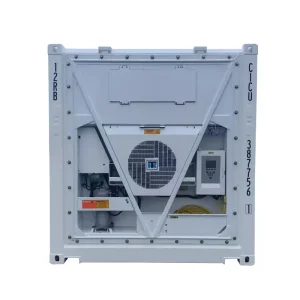
OEM 20ft Offshore Refrigerated Container DNV Certification Is More Durable Exporter, Exporters
Explore Specifications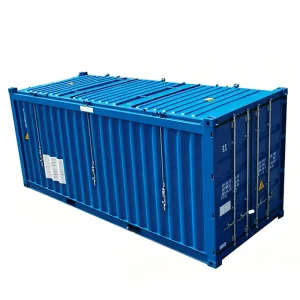
China 20ft New Hard Open Top Shipping Container Manufacturer, Factories
Explore Specifications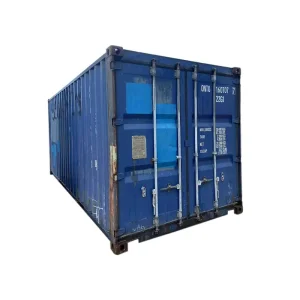
ODM 40ft Used Dry Cargo Shipping Container Manufacturers, Quotes
Explore Specifications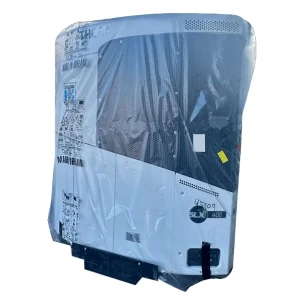
Famous TK SLXI Mobile power generation trailer cooling unit Product, Manufacturers
Explore Specifications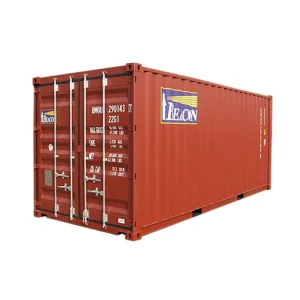
ODM 40ft New Certified Dry Shipping Container Pricelist, Exporters
Explore Specifications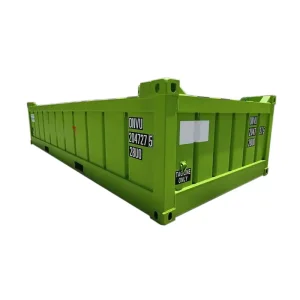
ODM New DNV Certification Offshore Half-Height Open Top Container Products, Exporters
Explore Specifications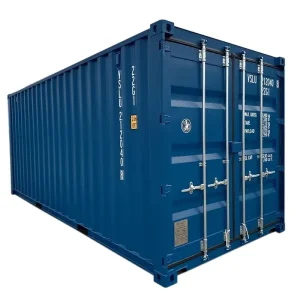
Buy New 20ft Double Door Dry Cargo Shipping Container Products, Manufacturers
Explore Specifications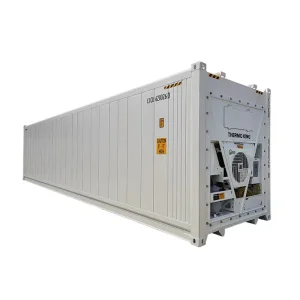
OEM New 40ft High-Cube Certified Reefer Shipping Cargo Container Pricelist, Product
Explore SpecificationsFrequently Asked Questions: Global Sourcing & Engineering
Direct answers for fleet managers, logistics directors, project buyers, and technical procurement teams.
How do you optimize internal cubic capacity while meeting ISO external limits?
We use high-yield Corten steel (SPA-H) alongside Finite Element Analysis (FEA) to reduce corrugation thickness safely. In refrigerated equipment, we apply thin, high-density PIR/VIP thermal wall layers. This approach maintains external ISO clearance while giving shippers extra internal cubic feet for palletized or volume-limited freight.
What quality certifications accompany exported OEM containers?
Units are manufactured under the supervision of leading classification societies, including Bureau Veritas (BV), DNV GL, and ABS. Each container ships with an engraved stainless steel CSC plate, TIR customs approval markings, UIC rail approval plates, and wood treatment certificates compliant with international biosecurity standards.
Can you accommodate custom door placements, side openings, and roll-ups?
Yes. Our engineering facilities produce custom container structures, including full-side access bi-fold doors, end roll-up shutters, double-ended doors, and open-top designs. All custom openings feature reinforced headers and sill framing to maintain longitudinal racking strength and watertight seals.
Which refrigeration machinery options are available for reefer units?
We work directly with major refrigeration brands, including Carrier Transicold (e.g., PrimeLINE, ThinLINE), Thermo King (Magnum Plus), and Daikin (Zestia). We provide pre-trip inspection (PTI) certificates, warranty documentation, and support for optional telematics tracking systems.
What is the typical manufacturing lead time for custom container orders?
Standard ISO production runs typically take 3 to 4 weeks after drawing sign-off. Highly customized equipment (such as DNV offshore units, heated bitumen containers, or specialized car carriers) usually ships within 5 to 7 weeks, supported by testing and classification inspections.
How does your factory handle quality control across large fleet orders?
Every production run follows a clear Quality Inspection Plan (ITP). Key stages include raw steel ultrasonic testing, automated weld inspection, dimensional checks on diagonal tolerances (≤ 5mm), 100% water spray tightness testing at 2 bar, and paint thickness verification via eddy-current gauges.