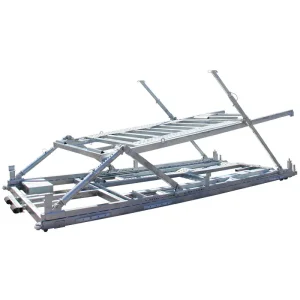
Standard & Heavy-Duty Cold Chain Intermodal Assets
Verified ISO and classification society-certified insulated, offshore, and dynamic reefer container solutions.
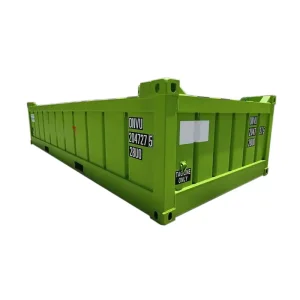
ODM New DNV Certification Offshore Half-Height Open Top Container Products, Exporters
View Specifications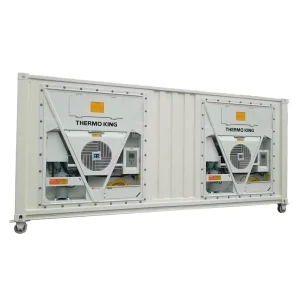
High-Quality The new blast reefer containers are certified by classification societies Manufacturers, Factories
View Specifications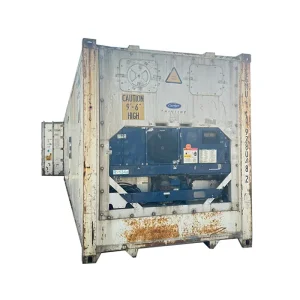
China Used 40ft High-Cube Certified Reefer Container Pricelist, Exporter
View Specifications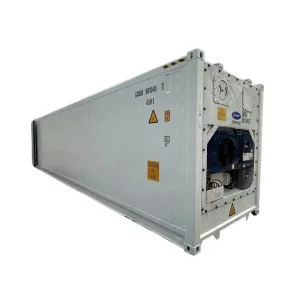
Buy Ninety Percent New Used 40ft HC Carrier Refrigerated Container Product, Quotes
View Specifications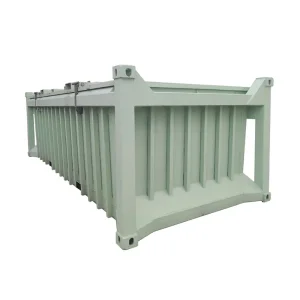
Buy New Half Height Ore Carrier Container Offshore Container Manufacturers, Quotes
View Specifications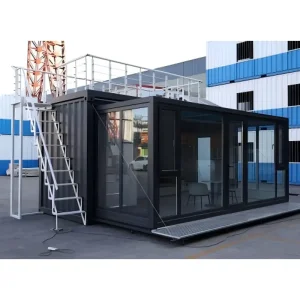
Famous 20ft Foldable Prefab Modular Homes Mobile Expandable Container House Prefabricated House with Bathroom Manufacturer, Exporters
View Specifications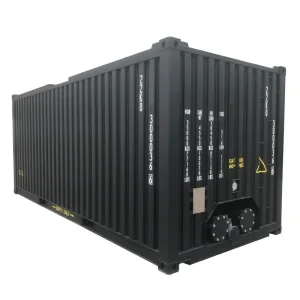
China 20 Feet Heated Shipping Asphalt Container Exporter, Manufacturers
View Specifications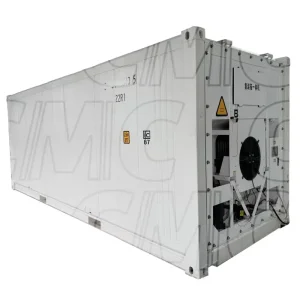
ODM The Smart Chain Cold Storage 20ft/40ft Solar Refrigerated Container 220V With DC Inverter Unit Pricelist, Exporters
View SpecificationsEvolutionary Trends in Refrigerated Intermodal Engineering
Bridging volatile supply chains with high-performance insulation, IoT edge computing, and zero-emission multimodal transit systems.
Next-Gen Thermal Barrier Optimization
The transition from standard polyurethane formulations to high-density, cyclopentane-blown microcellular foams combined with Vacuum Insulation Panels (VIP). This architecture minimizes the overall thermal bridging effect, reducing heat ingress through structural members and lowering daily compressor runtimes by up to 22% under harsh ambient conditions.
Autonomous Edge Telematics & Predictive Monitoring
Modern intermodal operations demand continuous verification. Integrated IoT multi-sensor nodes deliver real-time data packets covering supply/return air temperatures, relative humidity, ethylene concentration, and door events via low-orbit satellite and cellular roaming, preventing cargo claims through dynamic predictive anomaly detection.
Decarbonized Multi-Voltage Drive Architectures
Addressing intermodal seamless transitions from marine vessel aux power (380V/440V 3-phase) to rail gen-sets and autonomous solar-hybrid DC inverter systems. Hybrid electric-cooling engines maintain stringent setpoints even during inland dwell periods, ensuring uninterrupted compliance with international perishable food standards.
Addressing Global Buyer Demands & Operational Friction
Enterprise logistics directors and asset leasing firms navigate tight operational windows. We engineer custom answers to complex procurement challenges.
Structural Longevity & Corrosive Exposure
Extended deep-sea exposure causes marine corrosion and floor degradation. Our solutions utilize SPA-H anti-corrosion Corten steel, heavy-duty stainless steel (SUS304/MGSS) internal linings, and marine-grade aluminum extruded T-bar floor profiles rated to exceed ISO 1496-2 dynamic floor loading standards.
Refrigeration Unit Interoperability
Fleet managers face logistical bottlenecks if machinery lacks standardized parts. We provide factory-direct OEM engineering configured for Carrier Transicold, Thermo King, and Daikin machinery, ensuring global access to certified parts and standardized field servicing worldwide.
Payload Density vs. Tare Weight
Balancing heavy insulation against operational payload requires advanced material selection. Our finite element analysis (FEA) guides optimized profile geometries, delivering lightweight high-cube assemblies that maximize interior payload volumes without compromising structural stiffness.
Total Cost of Ownership (TCO)
Beyond capital expenditure, ongoing operational costs are driven by electrical draw, thermal drift, and cycle depreciation. By achieving an ultra-low U-factor, our containers shorten refrigeration compressor duty cycles, saving significant fuel and electrical power across years of service.
Macro Industry Solutions Across Global Logistics Networks
Engineered cold chain equipment tailored to specific physical dynamics, ambient ranges, and regulatory standards.
Biopharma & High-Value Active Ingredients
Strict GDP (Good Distribution Practice) compliance requires validation protocols down to fractional variances. Our pharma-grade reefer solutions incorporate redundant refrigeration circuits, active ventilation scrubbers, and mapping sensor trees that maintain consistent critical ranges (+2°C to +8°C or deep sub-zero -60°C cryogenic options).
Agro-Commodities & Controlled Atmosphere
Fresh fruit, perishables, and florals require active respiratory gas management. We supply dynamic Controlled Atmosphere (CA) systems that control O₂ and CO₂ concentrations in real-time, slowing natural ripening cycles to deliver export produce with maximum shelf life after weeks at sea.
Offshore Exploration & Extreme Operations
Extreme marine operating conditions require certified strength. Our offshore reefer units and dry baskets comply with DNV 2.7-1 / EN 12079 structural criteria. Featuring certified lifting lugs, impact-resistant corner castings, and marine anti-corrosive coatings, they stand up to high-seas platform transfers.
Engineering Specifications: Standard vs High-Performance Custom Builds
Direct dimensional, mechanical, and thermal metrics for technical review.
| Specification Metric | 20ft ISO Standard Reefer | 40ft High-Cube Insulated Reefer | Custom Multi-Temperature / Offshore |
|---|---|---|---|
| Internal Volume (m³) | 28.3 m³ | 67.6 - 68.0 m³ | Configured by compartmental division |
| Tare Weight (kg) | ~2,980 kg | ~4,580 kg | Dynamic (Engineered per requirement) |
| Thermal Core Insulation | High-Density Rigid PU Foam | Cyclopentane-blown PU + VIP Panels | Reinforced Thickened Foam / Composite Core |
| Set-Point Range (°C) | -30°C to +30°C | -35°C to +30°C (Ultra-freezer: -60°C) | Multi-zone dual independent control |
| Lining Materials | Stainless Steel (SUS 304 / MGSS) | Muffless Food-Grade Stainless / AL | High-Impact Corrosion-Resistant Liner |
| Certifications | ISO 1496-2, CSC, BV, Lloyd's | ISO 1496-2, CSC, BV, ATP Class FRC | DNV 2.7-1, EN 12079, ATEX (Opt.) |
Global Compliance, Safety Standards & Localized Support
Every refrigerated container is backed by third-party testing and comprehensive export compliance documentation.
Classification Society Verification
Units are manufactured to the rigorous standards of Bureau Veritas (BV), ABS, and DNV. We deliver complete documentation packets including CSC safety approval plates, TIR customs seals verification, and ATP certificates for cross-border land transit under the European perishable goods treaty.
Logistical Proximity Advantage
Headquartered in Tianjin and Suzhou, our manufacturing hubs sit within 100 kilometers of the world's most active deepwater container terminals. This geographical advantage cuts inland transit costs, accelerates turnaround times, and simplifies rapid factory acceptance testing (FAT) for international buyers.
Lifecycle Engineering & Second-Life Support
We support every stage of equipment ownership. Alongside new custom fabrication, we maintain depots across major Chinese ports stocking certified used dry and reefer units, complete with structural condition reports, refrigeration diagnostic charts, and fast release schedules.
Engineering the Future of Intermodal Refrigeration
Anticipating international regulatory updates, natural refrigerants, and intelligent power distribution networks.
Ultra-Low GWP Refrigerant Transitions
Aligning with F-Gas regulations and the Kigali Amendment, we are engineering refrigeration systems for next-generation lower-GWP blends (such as R-452A and R-513A) alongside trans-critical CO₂ (R-744) units that operate safely in high ambient environments without compromising energy efficiency.
Solar-Integrated Direct-Drive Architectures
Expanding on solar-assisted reefer container systems, our engineering roadmap integrates high-efficiency, flexible monocrystalline photovoltaic arrays into the container's roof corrugations. These feed advanced battery energy storage systems (BESS) to support off-grid holding cycles during transshipment without external fuel consumption.
Fully Integrated Smart-Contract Sensor Stacks
Future fleets will integrate cryptographic data-logging nodes directly into the structural frame. These automatically record temperature readings, atmospheric gas levels, and chain-of-custody handoffs, generating tamper-proof records for real-time validation and accelerated customs clearing.
Frequently Asked Questions: Specifications & Procurement
Key information on design parameters, international standards, and custom manufacturing runs.
What specific shipping container profiles does CIMIC supply globally?
We manufacture and export specialized reefer (refrigerated) containers, dry cargo ISO boxes, offshore containers (DNV 2.7-1 compliant), vacuum-insulated units, tank containers, expandable modular houses, and customized access structures including side-opening, double-end, and roll-up variations. Certified used reefer and dry containers are also available across strategic domestic deepwater terminals.
What technical capabilities define your custom OEM/ODM process?
Our engineering team works from comprehensive customer specifications to configure structural dimensions, frame reinforcement, custom door placements, insulation densities, and integrated machinery brands. Detailed CAD schematics, dynamic FEA structural simulations, and thermal balance calculations are finalized for client approval before production begins.
Which international quality certifications are provided with deliveries?
We maintain comprehensive manufacturing oversight under ISO 9001 and hold Bureau Veritas (BV) classification certifications. Standard intermodal equipment complies with ISO 1496-2 and CSC regulations, while specialized offshore product lines strictly meet DNV 2.7-1 and EN 12079 dynamic offshore lifting and maritime requirements.
Which industrial refrigeration units can be integrated into custom reefer builds?
Our equipment frames support primary industrial machinery manufacturers, with complete mounting configurations for Thermo King, Carrier Transicold, and Daikin. Available across 10ft, 20ft standard, 20ft high-cube, 40ft standard, and 40ft high-cube layouts, each installation is optimized for airflow and structural balance.
How are used containers inspected and prepared prior to export?
Used shipping and reefer containers undergo systematic depot inspections covering structural integrity, corner post alignment, seal health, and pressure testing. Refrigerated machinery receives an automated Pre-Trip Inspection (PTI) to verify compressor, fan, and control circuitry operation, backed by comprehensive diagnostic photo packets prior to release.
What logistics hubs serve as your main shipping origins?
Primary operations run from manufacturing and depot facilities in Tianjin and Suzhou, approximately 100 kilometers from regional deepwater ports. Direct access to major maritime corridors enables efficient vessel space booking and dependable shipping schedules across Africa, Europe, North America, and South America.
Specialized Logistics & Modular Shipping Solutions
Engineered platforms, dry freight solutions, offshore units, and specialized transport equipment.
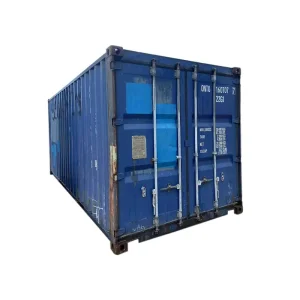
ODM 40ft Used Dry Cargo Shipping Container Manufacturers, Quotes
View Specifications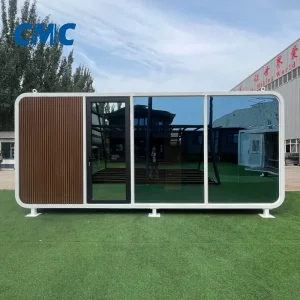
Famous 20ft Prefab Container House Flat Pack Modular House Office Tiny House Outdoor apple Cabin Office Pod Garden Office Pod Manufacturer, Product
View Specifications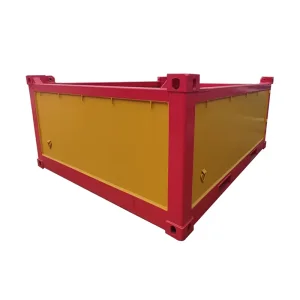
High-Quality New Offshore Basket Container for Offshore Operations Exporter, Exporters
View Specifications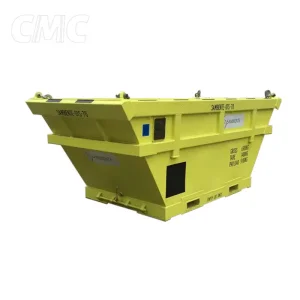
Famous DNV Certification Silt Basket Container Used in Offshore Operations Factories, Exporters
View Specifications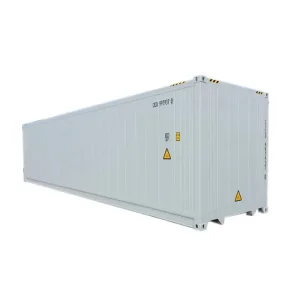
Buy New 40ft High Cube Thickened Foam Insulation Container Factory, Exporters
View Specifications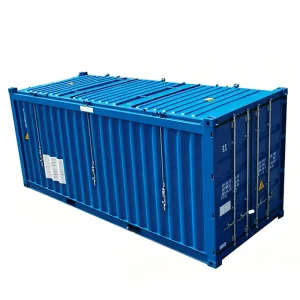
China 20ft New Hard Open Top Shipping Container Manufacturer, Factories
View Specifications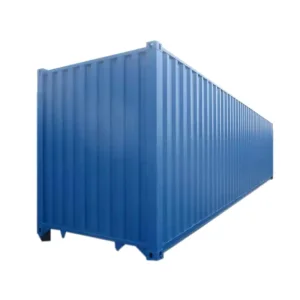
China 40ft High Cube Certified Dry Cargo Shipping Container contaoner Factory, Product
View Specifications