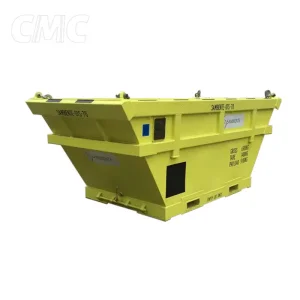
High-Performance Intermodal & Reefer Equipment
Explore BV and ISO certified intermodal steamship containers engineered with high-yield Corten-A weathering steel, Daikin/Carrier/Thermo King thermal units, and multi-tier stacking reinforcement.
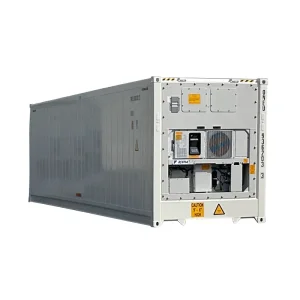
OEM New 40ft High-Cube Daikin Freezer Container Cold Storage Room
View Specifications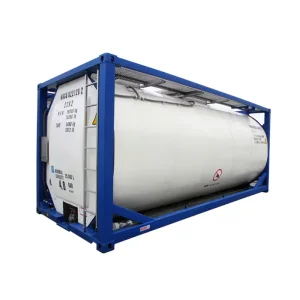
Buy ISO Standard 20ft Versatile Tank Container for Transport Chemicals Exporter
View Specifications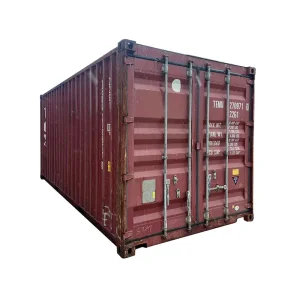
Buy 20ft Used Shipping or Storage Container Manufacturer, Products
View Specifications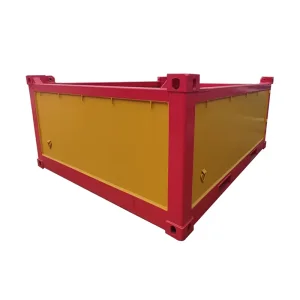
High-Quality New Offshore Basket Container for Offshore Operations Exporter
View Specifications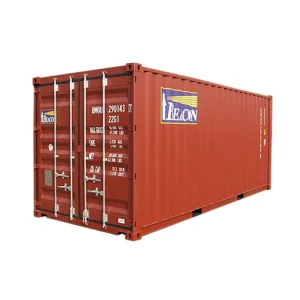
ODM 40ft New Certified Dry Shipping Container Pricelist, Exporters
View Specifications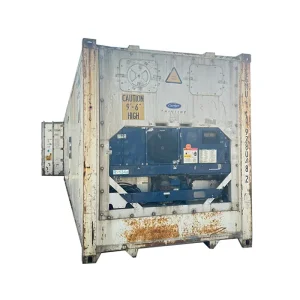
China Used 40ft High-Cube Certified Reefer Container Pricelist, Exporter
View Specifications
OEM New Deep Freezer Refrigerator Container For Sale Factory, Quotes
View Specifications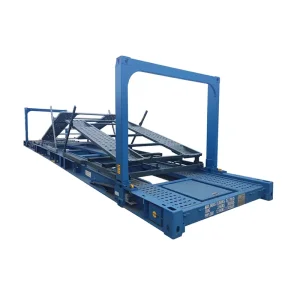
China New 20ft Car Carrier Container Special Container Exporter, Quotes
View SpecificationsThe Global Evolution of Steamship Container Engineering
Navigating structural metallurgy, smart IoT tracking integration, and geopolitical decarbonization imperatives across global maritime trade routes.
In modern intermodal supply chain architectures, the standard steamship container has transitioned from a utilitarian steel vessel into a precision-engineered logistical node. Historically governed by basic ISO standards developed in the late 20th century, contemporary container manufacturing must now address high-frequency multi-modal cycles, volatile marine environmental exposures, and stringent weight-to-payload optimization requirements. Commercial ocean fleets require high-cube and specialized intermodal containers to survive sustained salt-mist corrosion, extreme hydrostatic deck wash forces, and structural stress induced by 9-high container ship cell guide stacking limits (up to 216,000 kg total stack loading).
Critical Technological Vectors Reshaping Maritime Equipment
Procurement teams from Tier-1 ocean freight carriers, international leasing syndicates, and offshore mining conglomerates are no longer procuring basic commodities. The contemporary purchasing specification demands rigorous engineering customization across three primary vectors:
1. Smart Telematics & Autonomous Environmental Monitoring
The convergence of maritime transport with industrial IoT has elevated container intelligence. Active reefer units, specialized dry units, and chemical tank containers now incorporate satellite and cellular modem telematics (operating on global multi-band LTE-M/NB-IoT channels). These onboard systems stream live thermodynamic variables—such as compressor suction pressures, internal chamber return-air temperatures (accurate to ±0.1°C), absolute humidity levels, and 3-axis G-force impact shocks. This dynamic visibility enables predictive maintenance routines before vessels berth at transfer gateways.
2. Eco-Friendly Structural Coating and Anti-Corrosive Chemistries
Global environmental mandates—including REACH regulations and VOC curtailment directives—have forced a complete architectural redesign of paint shop operations. Traditional solvent-heavy zinc paints are entirely superseded by waterborne zinc-rich epoxy primers, combined with high-solid polyurethane topcoats applied via automated electrostatic bell sprayers. These coating systems achieve dry film thicknesses (DFT) of 100 to 140 micrometers, passing 1,000-hour continuous salt spray tests (ASTM B117) with zero blister propagation along scribed margins.
3. Structural Lightweighting for Maximum Cargo Deadweight Utilization
Every kilogram eliminated from tare weight represents direct informational gain and lifetime operational ROI for liner operators. By deploying fine-grain hot-rolled structural steel with micro-alloyed niobium and vanadium additives, wall panel thickness can be safely calibrated down to 1.6mm or 2.0mm corrugated profiles without forfeiting side-wall stiffness test thresholds (0.6P transverse load resistance per ISO 1496-1). This delivers elevated internal volume in 40ft High Cube containers while maintaining the maximum gross operating weight limit of 30,480 kg or custom-rated 34,000 kg configurations.
China Industry 4.0: Manufacturing Prowess & Supply Chain Resilience
How port-proximate mega-facilities synthesize robotic welding, integrated material supply lines, and digital quality monitoring to minimize global procurement friction.
Robotic Plasma & Tandem GMAW
Our manufacturing lines integrate 6-axis multi-jointed industrial robots for profile cutting and tandem gas metal arc welding (GMAW). This eradicates human micro-porosities, delivering continuous weld seams across corner posts, top side rails, and sill plates certified to withstand dynamic racking shears.
Total Surface Shot Blasting to Sa 2.5
Before paint deposition, automated turbine centrifugal shot-blasting machines blast all fabricated steel surfaces to ISO 8501-1 Sa 2.5 purity. Steel grit and shot mixes strip mill scale and contaminants, establishing a uniform anchoring surface profile (Rz 40–75 µm) essential for lifelong paint adhesion.
Port-Centric Logistics Corridor
Operating dual manufacturing complexes in Tianjin and Suzhou, our physical infrastructure sits approximately 100 kilometers from prime ocean terminal berths. This strategic geographical orientation minimizes inland drayage expenses, ensures immediate empty container turnaround, and eliminates customs clearance bottlenecks.
Dedicated Floor Hardwood Treatment
Equipped with 28mm dense Apitong hardwood or high-density bamboo composites, all timber flooring undergoes rigorous fumigation and industrial dipping treatments adhering to Australian Quarantine Inspection Service (AQIS) standards. Panels resist subterranean termites, wood-boring pests, and localized 7,260 kg front-axle forklift loads.
Comprehensive NDT & Hydro Testing
Quality inspectors implement magnetic particle testing (MT) and ultrasonic testing (UT) across primary structural joints. Refrigeration chambers undergo pneumatic helium leakage detection, while finished dry and reefer boxes are challenged in high-volume deluge test bays at 200 kPa pressure to ensure zero ingress.
Agile OEM/ODM Prototyping
Our in-house design engineering department executes parametric 3D CAD modeling, SolidWorks finite element analysis (FEA), and rapid physical prototype validation within 14 working days. Clients receive end-to-end technical documentation matching Lloyd's Register, BV, ABS, and DNV approval protocols.
Standardized Intermodal Specifications & Engineering Tolerances
Precise mechanical data for shipping line planners, cargo superintendents, and logistics procurement directors.
| ISO Classification | External Dimensions (L × W × H) | Internal Dimensions (L × W × H) | Tare Weight (±2%) | Max Payload Capacity | Cubic Volume | Standard Certifications |
|---|---|---|---|---|---|---|
| 20ft General Purpose (20GP) | 6,058 × 2,438 × 2,591 mm | 5,898 × 2,352 × 2,393 mm | 2,230 kg (4,916 lbs) | 28,250 kg (62,280 lbs) | 33.2 m³ (1,172 cu.ft) | ISO 1496/1 · BV · CSC |
| 40ft General Purpose (40GP) | 12,192 × 2,438 × 2,591 mm | 12,032 × 2,352 × 2,393 mm | 3,740 kg (8,245 lbs) | 26,740 kg (58,951 lbs) | 67.7 m³ (2,390 cu.ft) | ISO 1496/1 · BV · CSC |
| 40ft High Cube (40HC) | 12,192 × 2,438 × 2,896 mm | 12,032 × 2,352 × 2,698 mm | 3,900 kg (8,598 lbs) | 26,580 kg (58,600 lbs) | 76.4 m³ (2,698 cu.ft) | ISO · TIR · UIC · BV |
| 20ft High-Cube Reefer (20RF) | 6,058 × 2,438 × 2,896 mm | 5,444 × 2,290 × 2,535 mm | 3,080 kg (6,790 lbs) | 27,400 kg (60,406 lbs) | 31.6 m³ (1,116 cu.ft) | ATP · BV · ISO · CE |
| 40ft High-Cube Reefer (40RH) | 12,192 × 2,438 × 2,896 mm | 11,583 × 2,290 × 2,557 mm | 4,480 kg (9,876 lbs) | 29,520 kg (65,080 lbs) | 67.9 m³ (2,398 cu.ft) | ATP · DNV · BV · ISO |
| 20ft ISO Chemical Tank (T11) | 6,058 × 2,438 × 2,591 mm | 316L SS Vessel (Shell: 4.2mm) | 3,520 kg (7,760 lbs) | 32,480 kg (71,606 lbs) | 24,000–26,000 Liters | IMDG · ASME · ADR/RID |
| DNV 2.7-1 Offshore Cargo Basket | Custom lengths (up to 12.2m) | Heavy-Duty Slotted Profile | 2,100–4,800 kg (Varies) | Up to 18,000 kg Payload | Variable Open Architecture | DNV 2.7-1 · EN 12079 |
Demanding Commercial Applications & Extreme Operating Environments
Field-verified deployments showcasing how specialized structural treatments perform across disparate global climates and rigorous commercial ecosystems.
Sub-Zero Nordic & Trans-Eurasian Rail Corridors
Rail freight across harsh trans-continental climates exposes containers to prolonged temperatures dropping to -40°C. Standard mild steel suffers severe impact brittleness in these conditions. Our arctic-grade dry containers deploy low-temperature impact-tested Corten steel and specialized elastomeric EPDM door gaskets that retain flexural elasticity, preventing thermal leaks and vacuum door lockouts during cross-border transit.
Deepwater Offshore Rigs (North Sea & Gulf of Guinea)
Offshore lifting dynamics require resilience against heavy maritime sea spray and high-energy impact loading during crane transfers to floating production storage and offloading (FPSO) vessels. Manufactured strictly compliant with DNV 2.7-1 and EN 12079, our offshore dry freight units and tool baskets feature integrated lifting pad-eyes, certified wire-rope slings with Crosby shackles, and non-destructive weld testing.
Perishable Cold Chain Corridors across Equatorial Latitudes
High-cube reefers fitted with Daikin LXE10E and Carrier PrimeLINE units handle tropical fresh produce (bananas, pineapples, and high-value biologics) traversing 45°C ambient maritime lanes. Featuring high-density cyclopentane-blown polyurethane foam insulation (42 kg/m³ density) and stainless-steel T-bar flooring, internal temperatures hold flat within ±0.25°C of setpoint while minimizing compressor duty cycles.
Modular Battery Energy Storage Systems (BESS)
Renewable energy providers increasingly commission modified 20ft and 40ft high-cube steamship containers to house utility-scale lithium-ion battery banks. These units undergo extensive OEM engineering, including laser-cut HVAC cutouts, structural floor grid reinforcement exceeding 20 tonnes distributed weight, thermal acoustic Rockwool insulation lining, and fire-rated NFPA 68 explosion venting flaps.
Automotive Intermodal Ro-Ro Substitution
With ocean vehicle-carrier (PCTC) capacity constrained worldwide, global car manufacturers leverage our 20ft and 40ft specialized car-carrier containers equipped with adjustable internal mechanical wheel cassettes. This approach allows three complete SUVs or four sedans to nest safely within a single 40HC container without requiring specialized roll-on/roll-off infrastructure at destination discharge ports.
Bulk Mineral & Ore Half-Height Haulage
High-density payloads like copper concentrates, lithium spodumene, and iron ores exert crushing localized hydraulic pressure. Our half-height containers deploy ultra-thick side walls, tapered internal hoppers, and removable tarpaulin or mechanical hard lids, enabling rapid rotary-tipper discharge directly into smelting bins or bulk vessel holds.
Frequently Asked Questions: Technical & Commercial Procurement
Clear, direct answers regarding ISO compliance, manufacturing certifications, lead times, and custom OEM/ODM production processes.
What specific international classification societies certify your steamship containers?
What is the lead time for standard versus highly customized OEM container builds?
How do you inspect and grade your second-hand (used) container inventory?
What refrigeration machinery configurations do you install in cold chain reefers?
How do your facilities prevent floor delamination and insect infestation?
Can customized liveries, corporate colors, and digital barcodes be applied?
Specialized Freight, Tank, and Offshore Engineering Solutions
From DNV-certified subsea silt baskets to food-grade alcohol tanks and heavy car carriers, browse our turnkey commercial shipping assets ready for export.
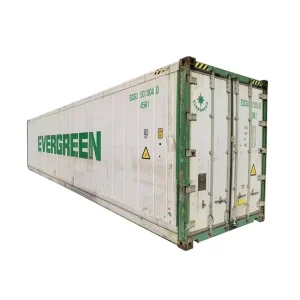
Buy Used 40ft HC Shipping Reefer Container Manufacturers, Exporters
View Specifications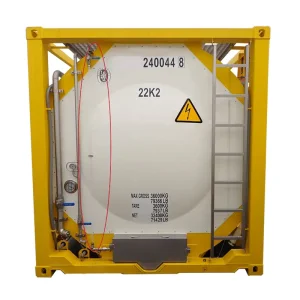
ODM 20ft Tank Container for Alcohol Manufacturer, Quotes
View Specifications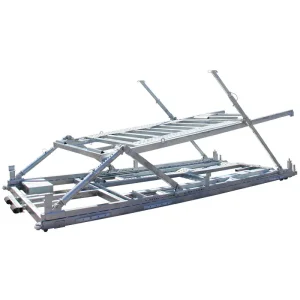
China vehicle transport rack Product, Exporters
View Specifications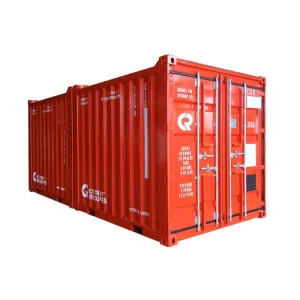
Buy New DNV Certification Offshore Dry Cargo Container Factory, Product
View Specifications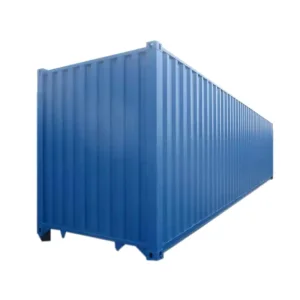
China 40ft High Cube Certified Dry Cargo Shipping Container contaoner Factory
View Specifications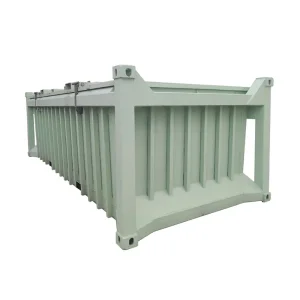
Buy New Half Height Ore Carrier Container Offshore Container Manufacturers
View Specifications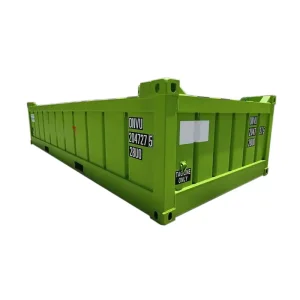
ODM New DNV Certification Offshore Half-Height Open Top Container Products
View Specifications