The Strategic Role of Milan as Southern Europe's Intermodal Crossroads
The Metropolitan City of Milan and the greater Lombardy region constitute the indisputable industrial and financial core of Italy, generating roughly 22% of the national GDP. From an intermodal freight standpoint, Milan acts as the apex inland transit terminal linking maritime traffic arriving via the Ligurian ports (Genoa, La Spezia, and Vado Ligure) with trans-Alpine rail corridors (such as the Gotthard and Simplon axes) reaching Switzerland, Germany, and Benelux markets.
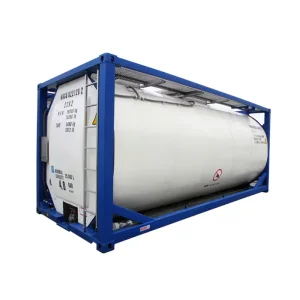
Key dry ports and rail freight villages, notably the Terminal Intermodale Milano Smistamento, Busto Arsizio-Gallarate, and the Melzo (Rail Hub Milano) dry terminal operated by Contship Italia, process hundreds of thousands of TEUs annually. Within these high-throughput centers, ISO Standard Containers are not merely shipping shells; they are the standardized backbone of intermodal manufacturing supply chains handling pharmaceutical, precision mechanical, luxury textile, and food-processing outputs.
Technical Compliance, European Directives & Local Standards
Deploying ISO containers within the Italian and wider European sphere demands rigorous compliance protocols. Purchasing managers and fleet directors must ensure containers conform to:
- CSC (International Convention for Safe Containers): Safety approval plates verified by classification societies such as Bureau Veritas (BV), Lloyd's Register (LR), or RINA for maritime and rail stacking integrity.
- ISO 668 & ISO 1496 Series: Rigid standards for classification, dimensions, handling tolerances, and corner casting strengths.
- EN 283 / EN 284 Swap-Body & Rail Standards: Essential for multimodal road-rail transport traversing the Italian railway network managed by RFI (Rete Ferroviaria Italiana).
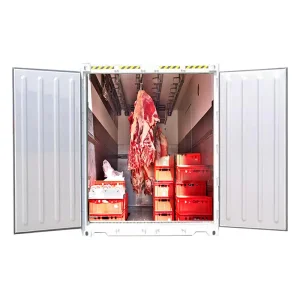
- ATP Certification (Accord Transport Périssable): Mandatory for reefer and insulated containers transporting perishable dairy, wine, and meat across Italian borders.
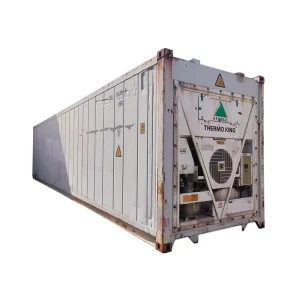
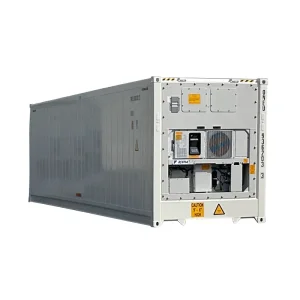
- CE Marking & Electrical Directives: Applicable to reefer cooling units (Carrier, Thermo King, Daikin) regarding electromagnetic emissions, low voltage safety, and eco-friendly refrigerants (such as R452A and R404A phase-outs).
Milan Market Demand Shifts: Specialization Over Generic Dry Cargo
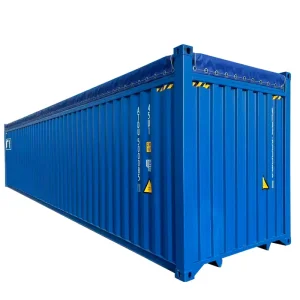
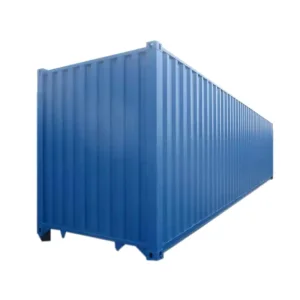
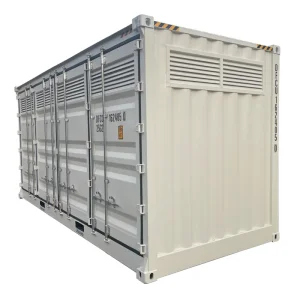
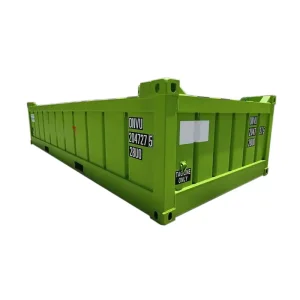
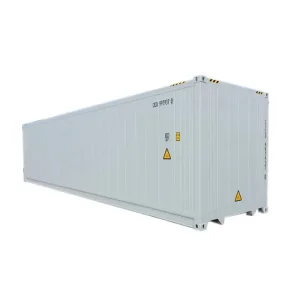
While generic 20ft and 40ft General Purpose (GP) containers remain stable commodities, procurement demands in Northern Italy have skewed sharply toward higher-cube, specialized builds. Lombardy's pharmaceutical clusters require high-efficiency thickened foam insulated containers and precision reefers capable of sub-zero consistency. Concurrently, regional engineering firms specializing in heavy machine tooling demand soft and hard open-top containers capable of handling asymmetrical machinery without dismantling.